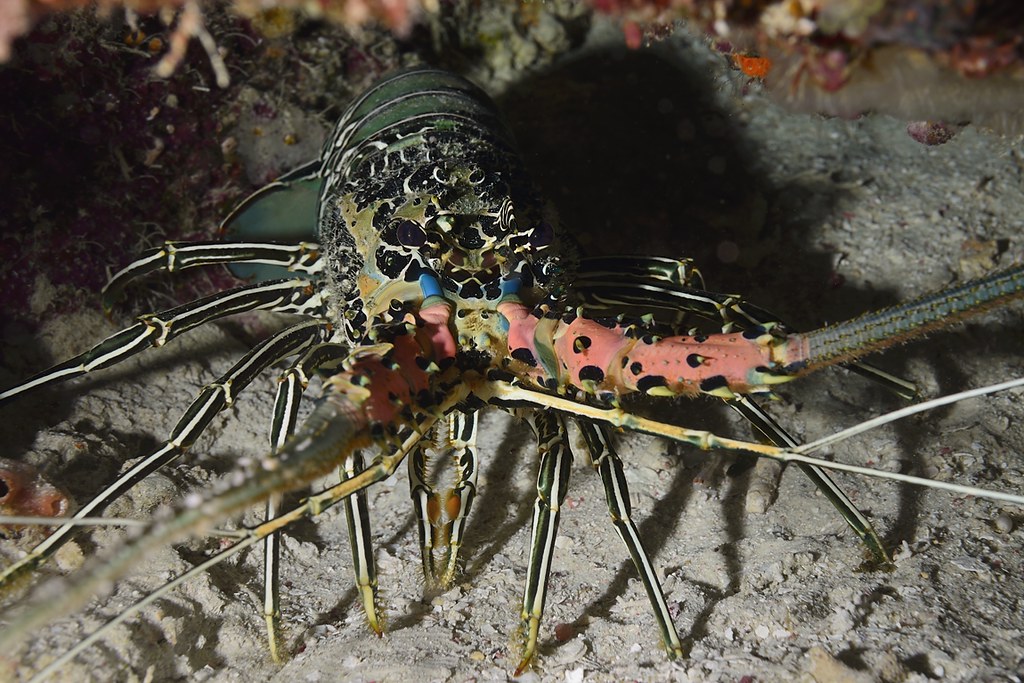
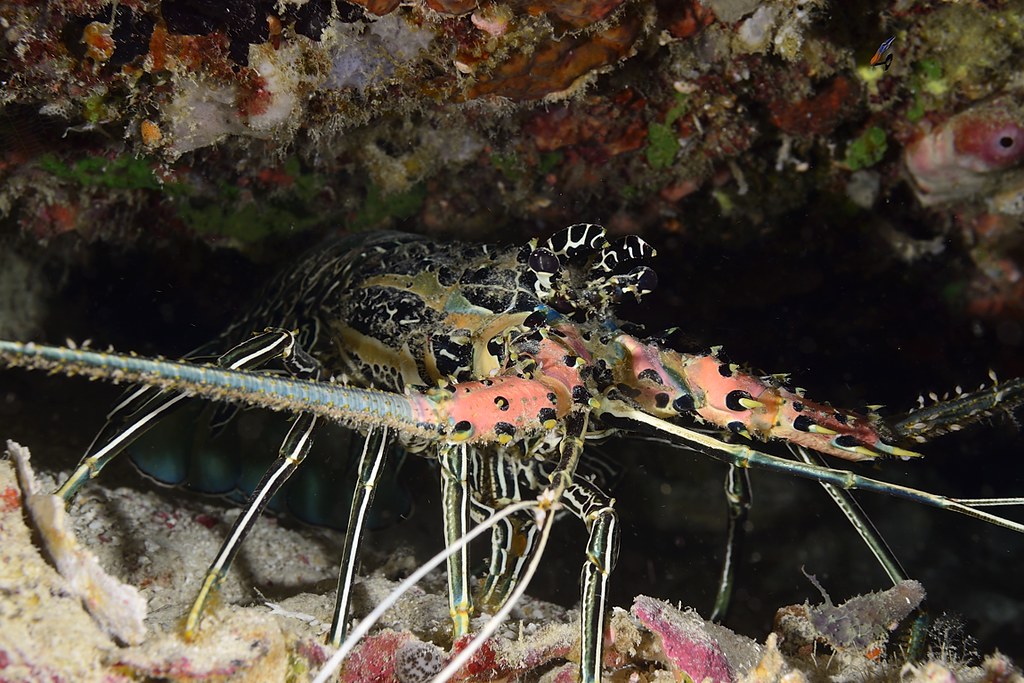
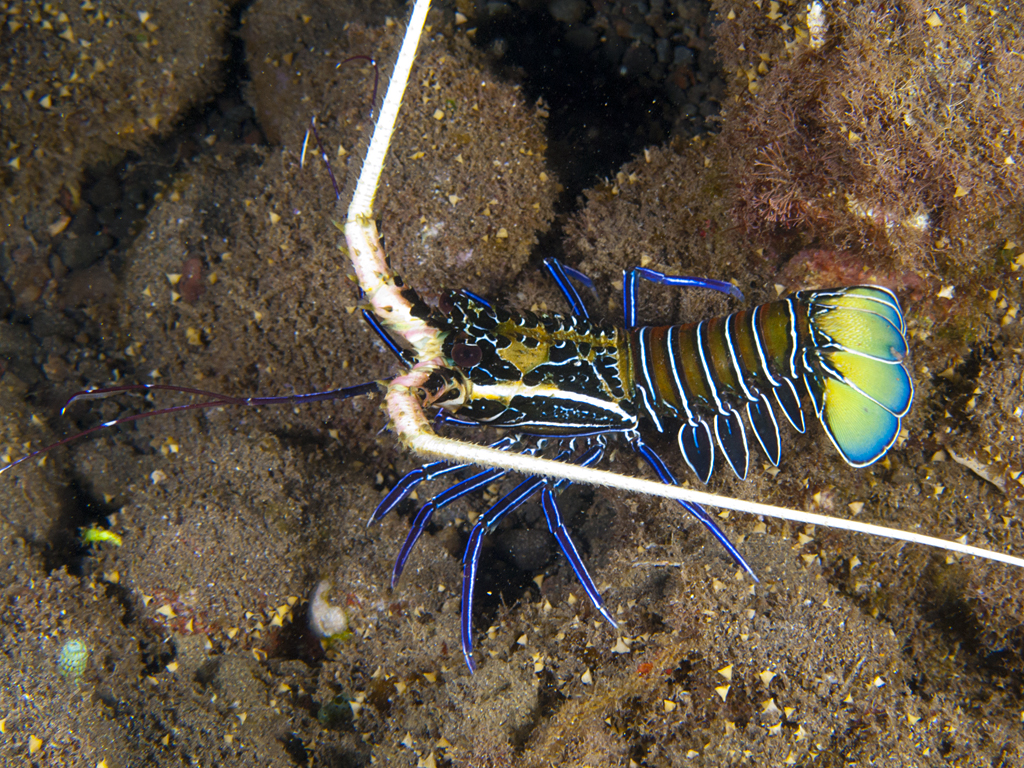
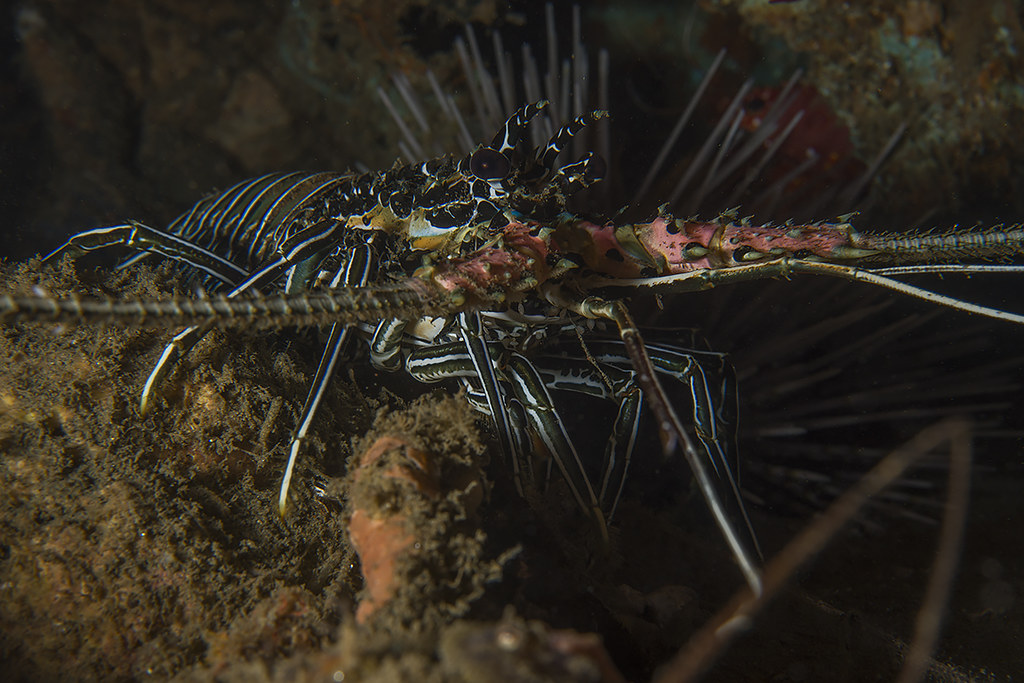
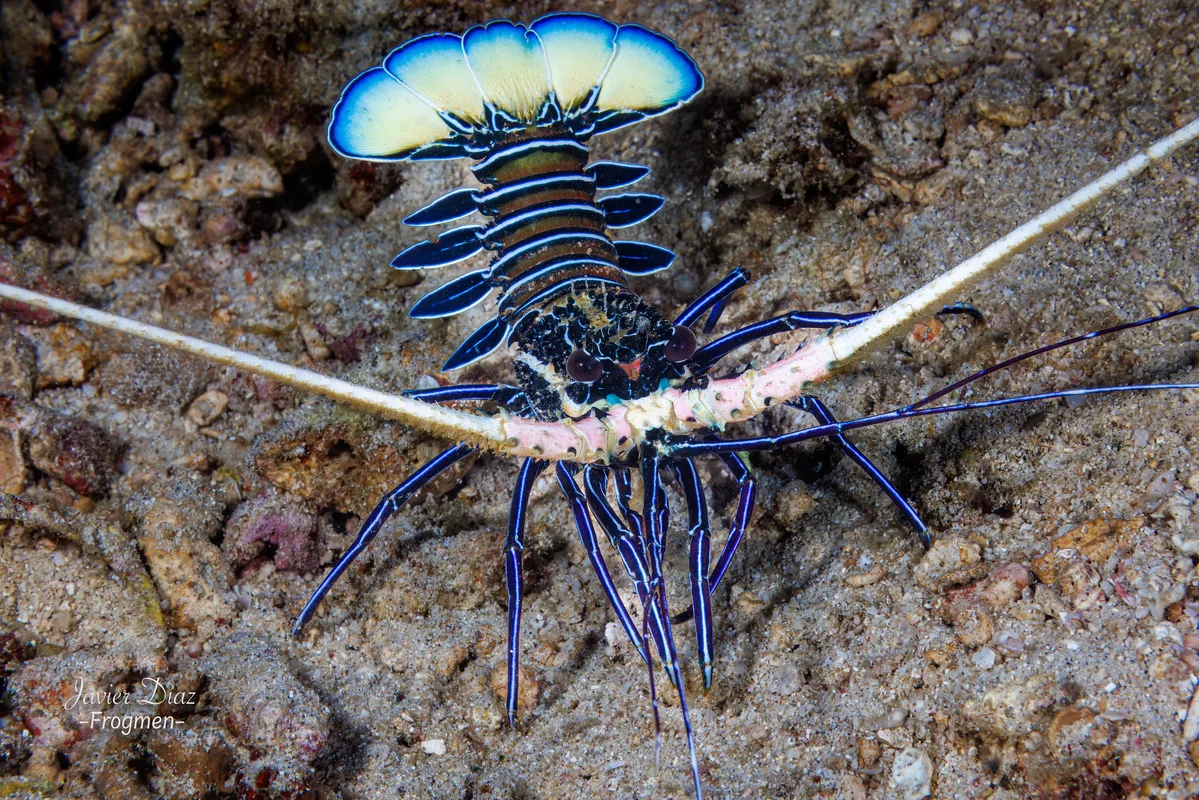
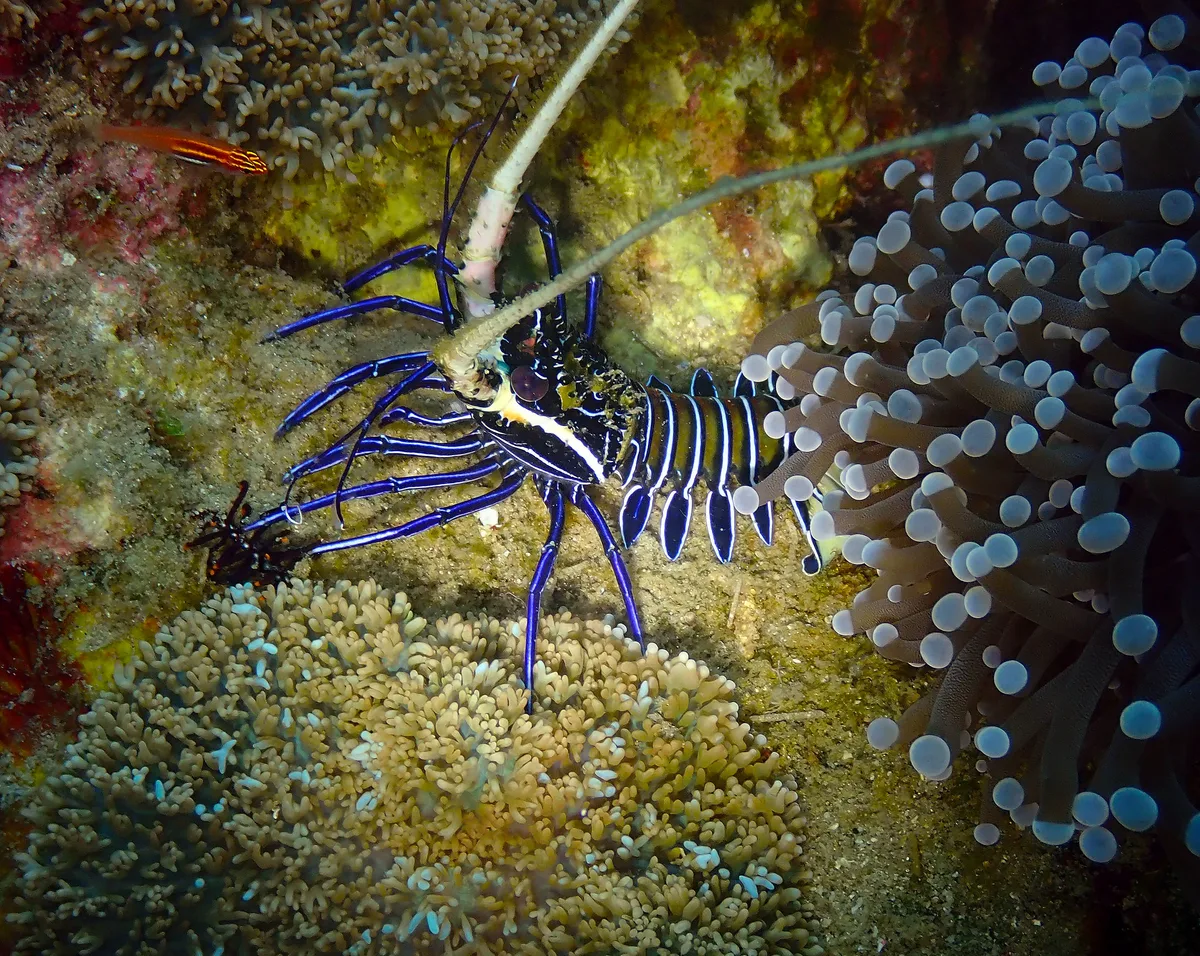
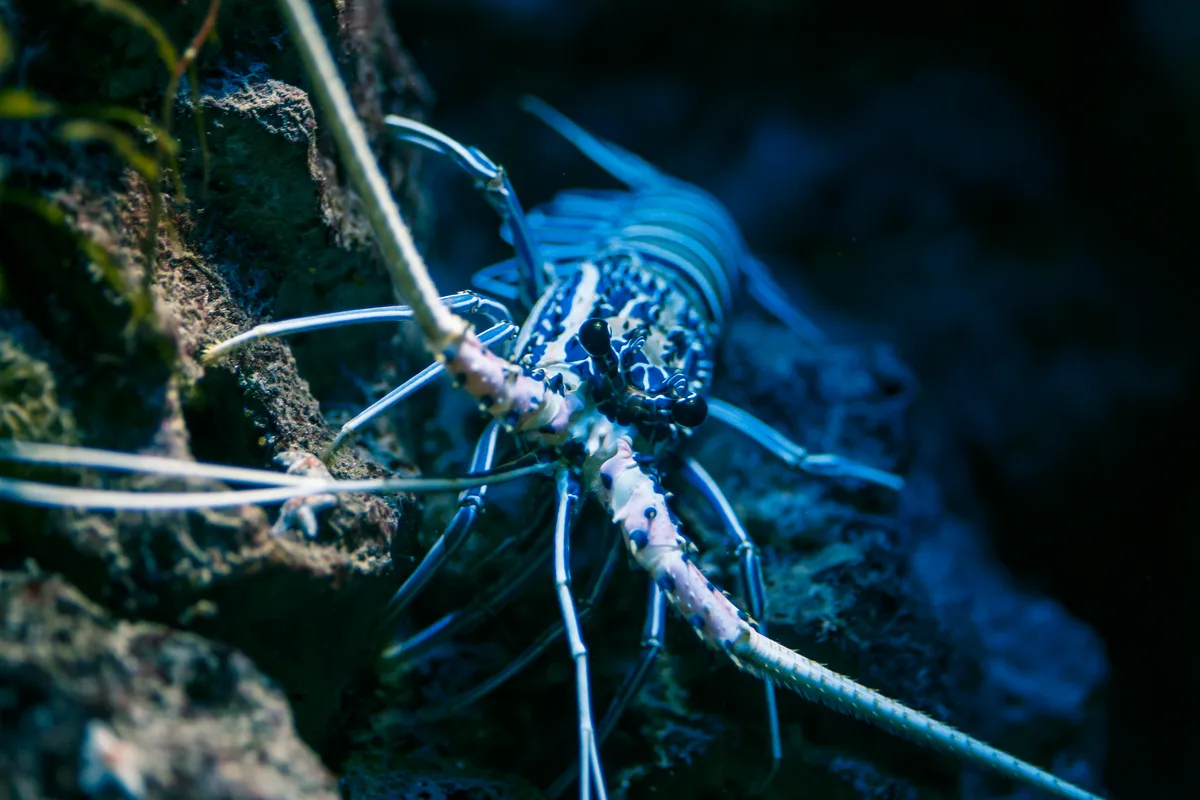
The most strikingly marked spiny lobster on the reef and the easiest to name: a green-black shell crossed by bold white bands, legs striped black and white like a barber's pole, and long antennae that are pink and white with blue bases. Adults reach about 40 cm (16 in). As in all spiny lobsters there are no claws.
It lives in coral caves and under overhangs from about 1 m to 15 m (3 to 50 ft), usually singly rather than in the packed groups other species form, facing outward with antennae sweeping the entrance. Feeding happens after dark and takes in snails, small crabs, urchins and whatever has died nearby. The antennae are not only sensors: dragged against a plate below the eye they make a loud rasping stridulation, and a lobster hauled out will saw away continuously - a sound designed for a predator's mouth, not for a diver's ears. Juveniles are frequently found much shallower than adults, in rubble and among coral fragments where a small animal can disappear entirely.
- bold white transverse bands across a green-black carapace
- legs boldly striped black and white
- pink and white antennae, blue at the base
- length up to 40 cm
Why it's threatened
This species may be experiencing localized declines due to fishing, but this is not believed to impacting upon the global population.
Threat classification from the IUCN Red List.