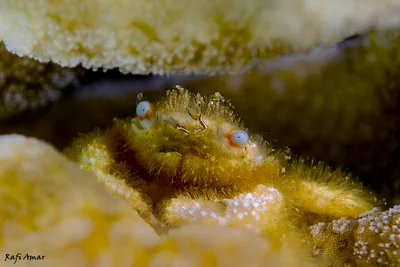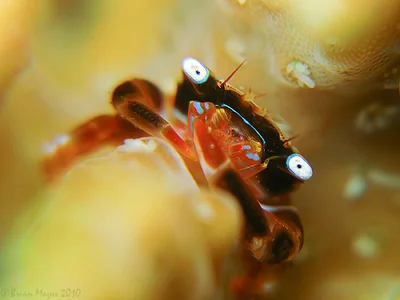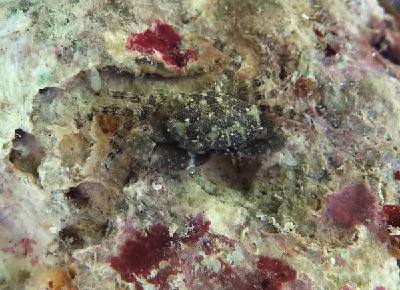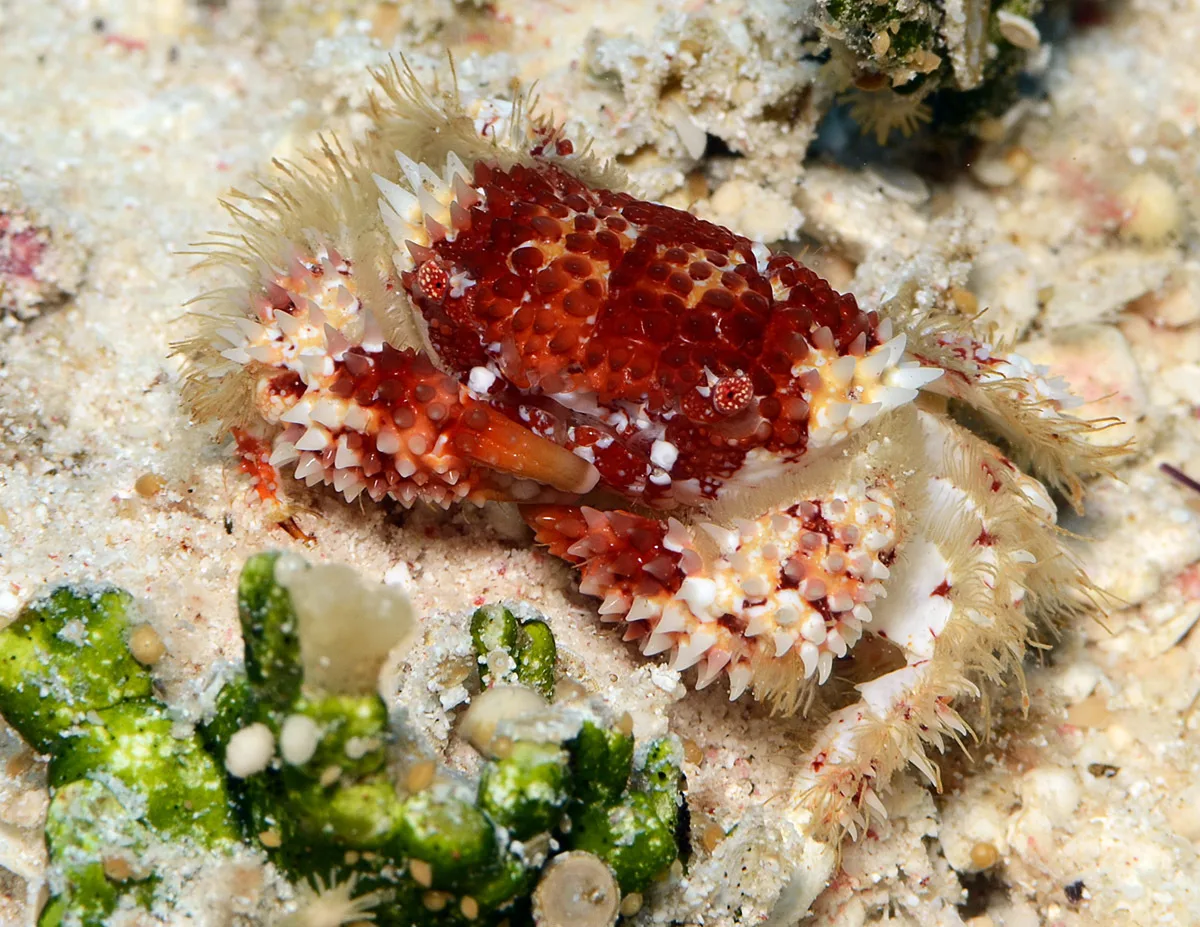
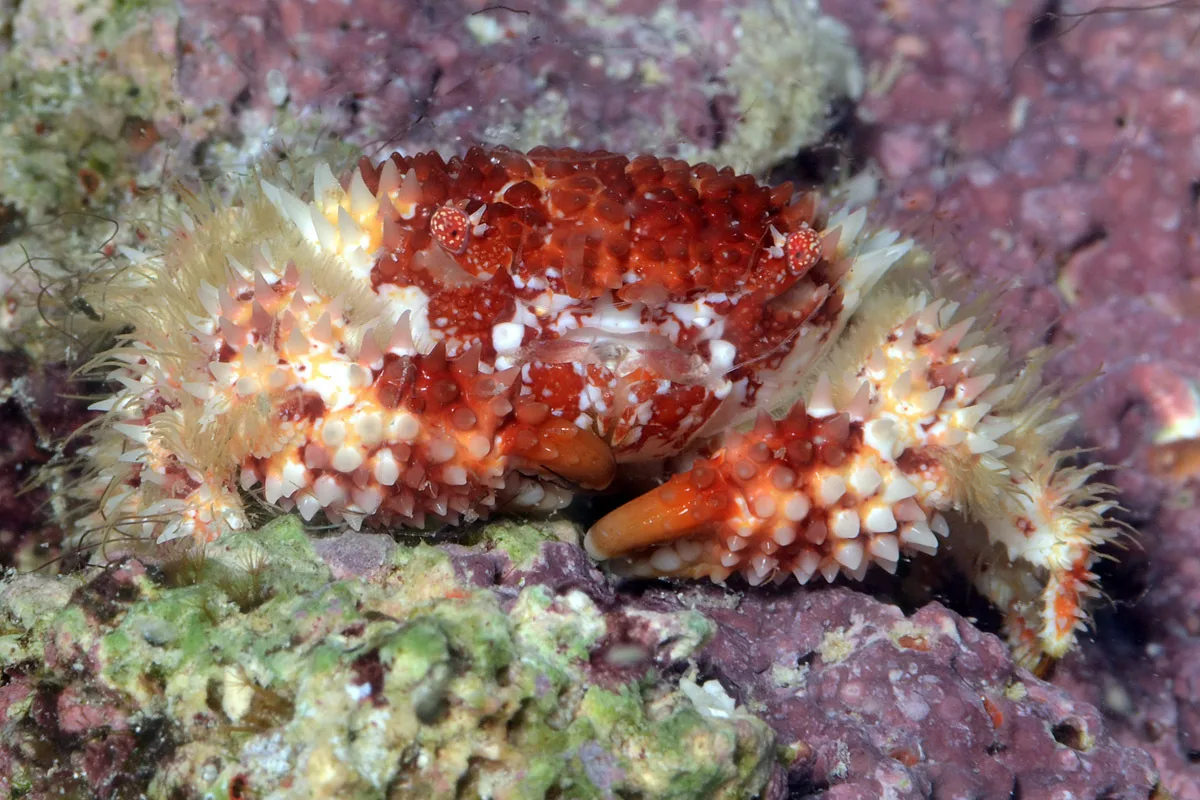
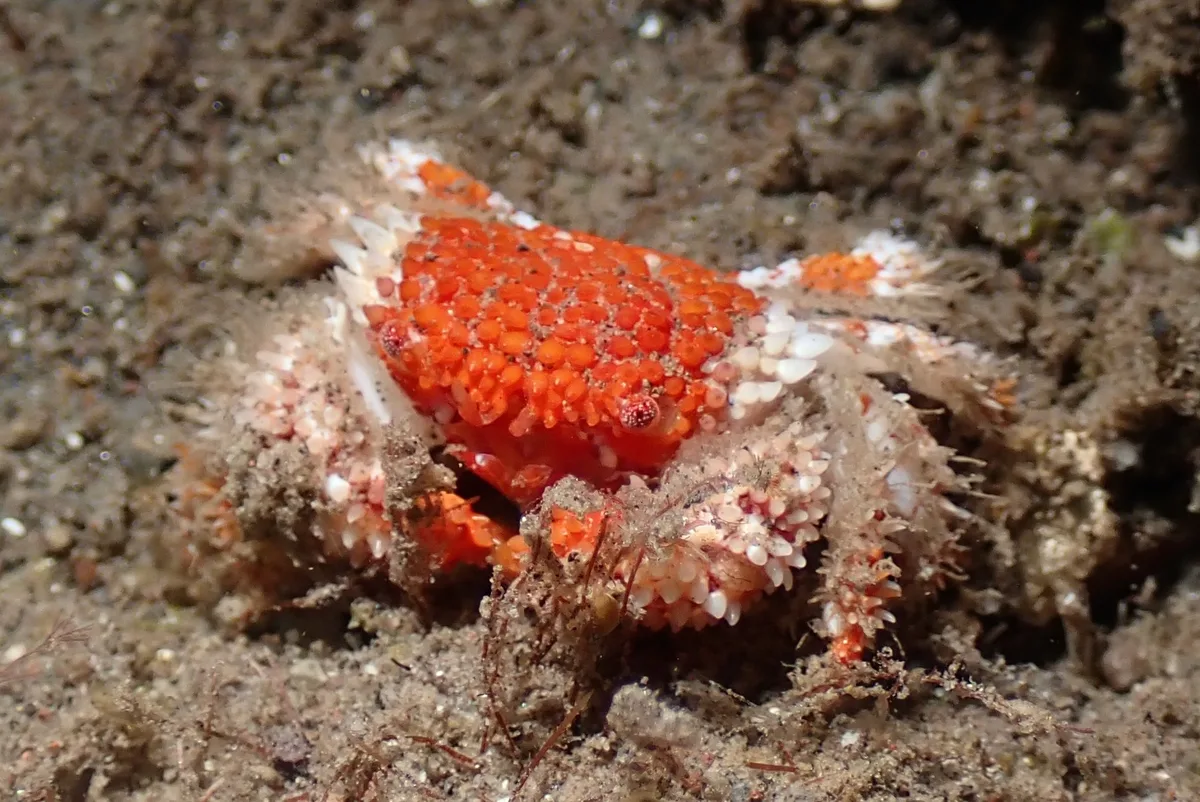
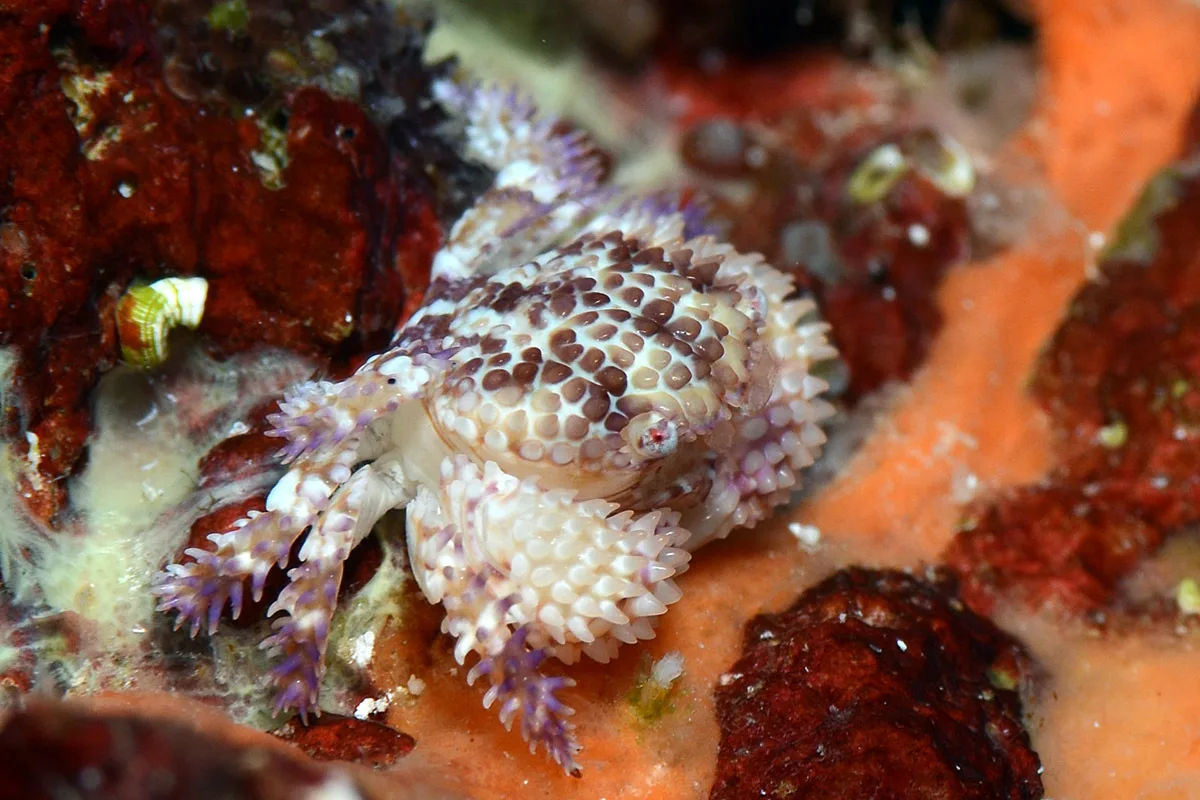
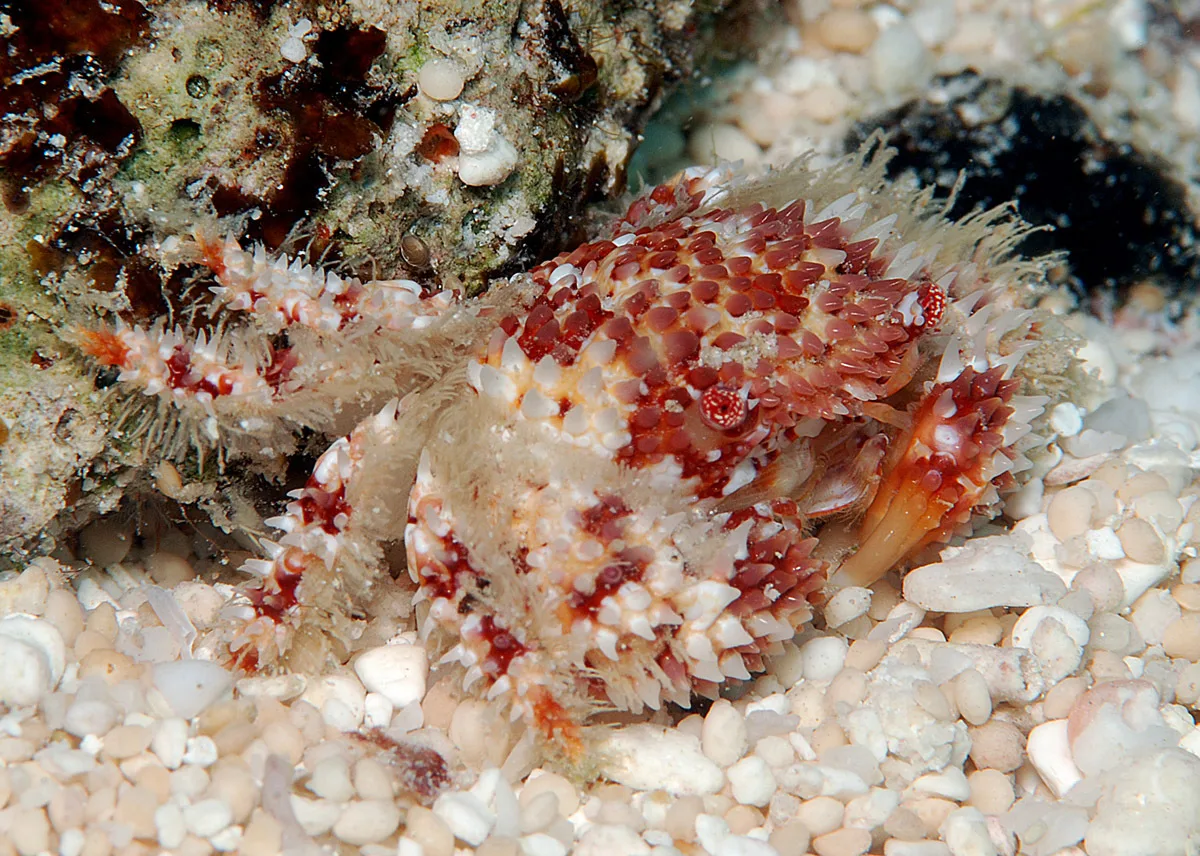
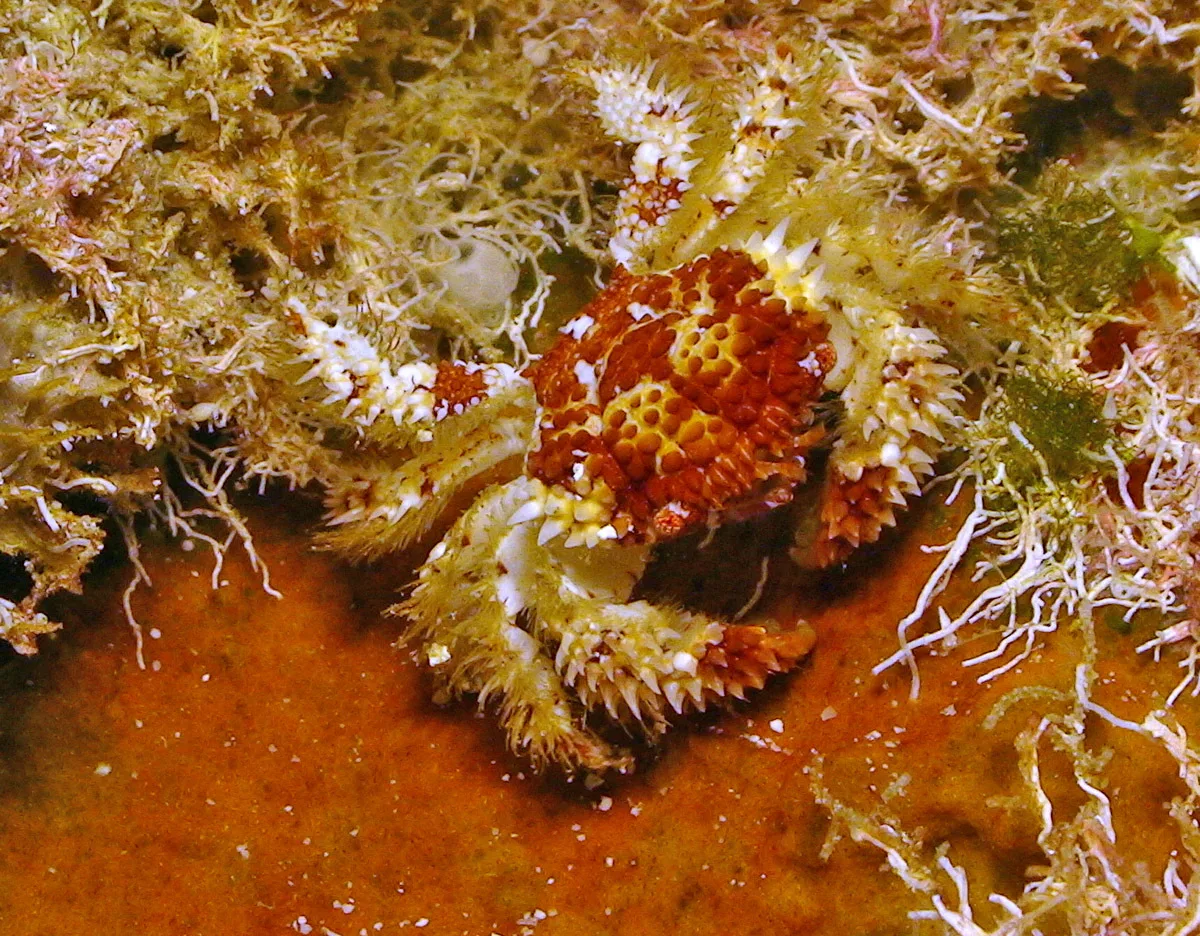
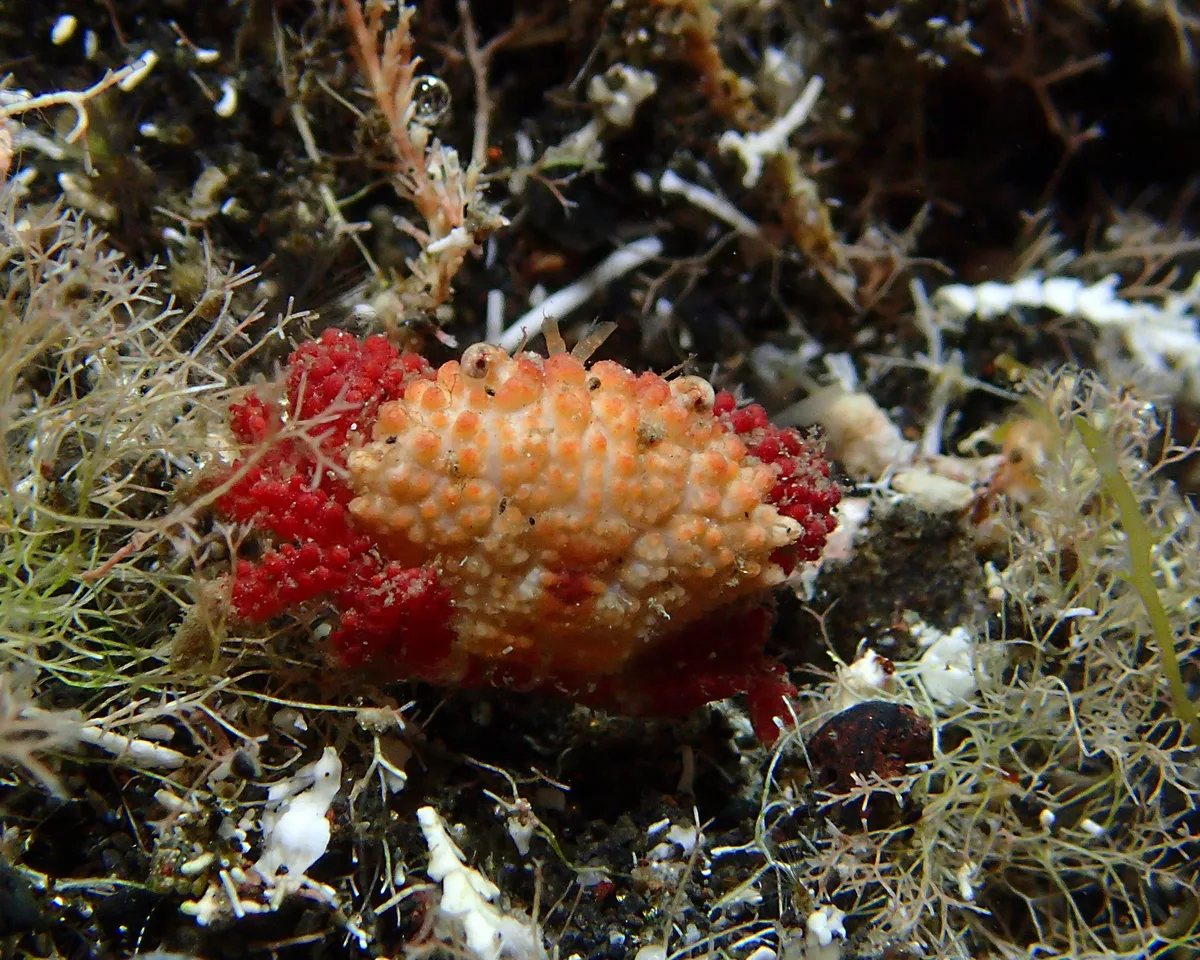
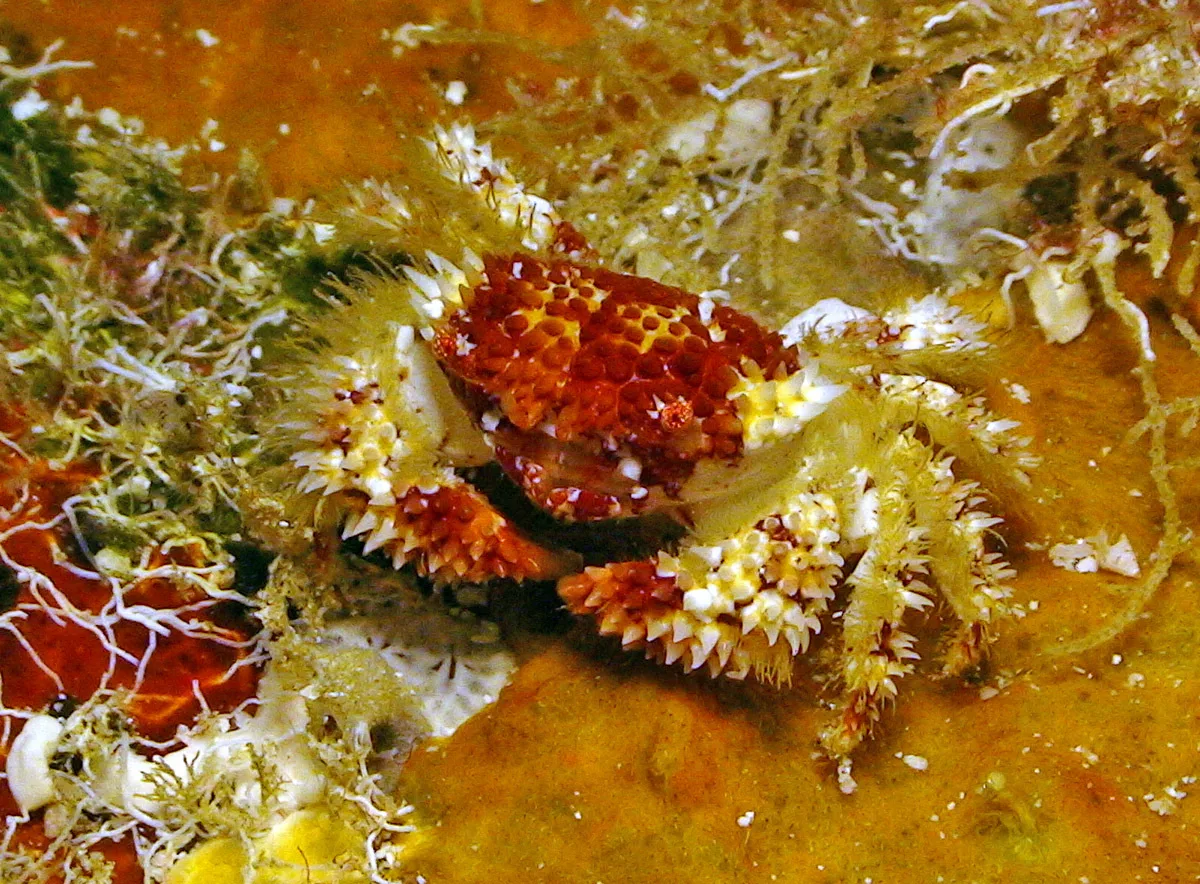
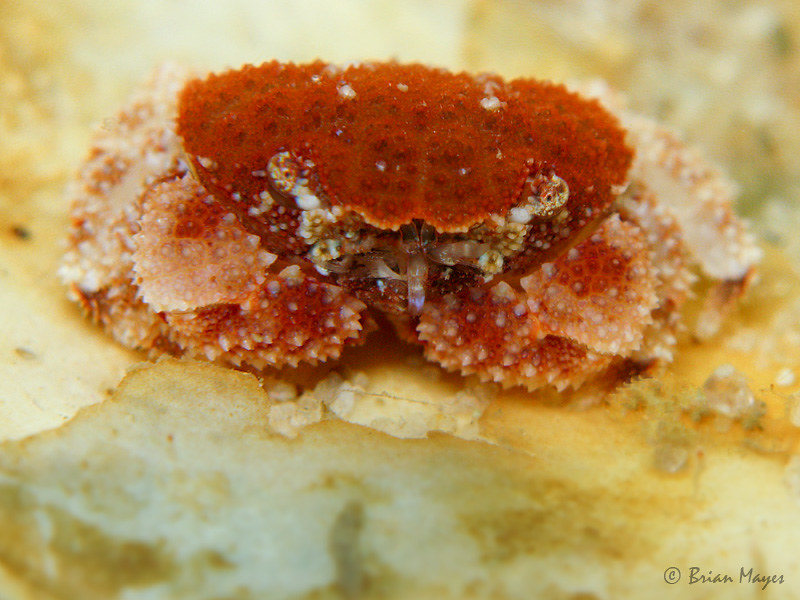
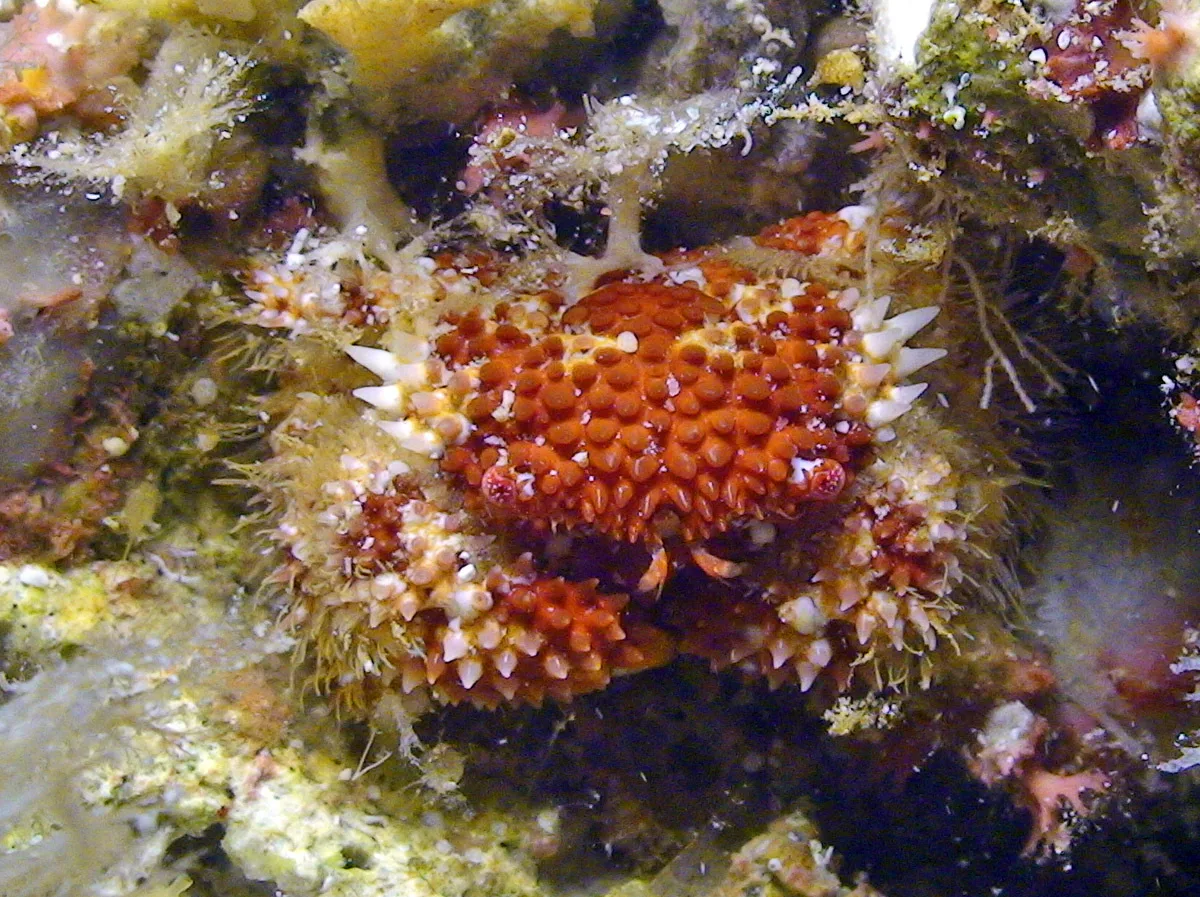
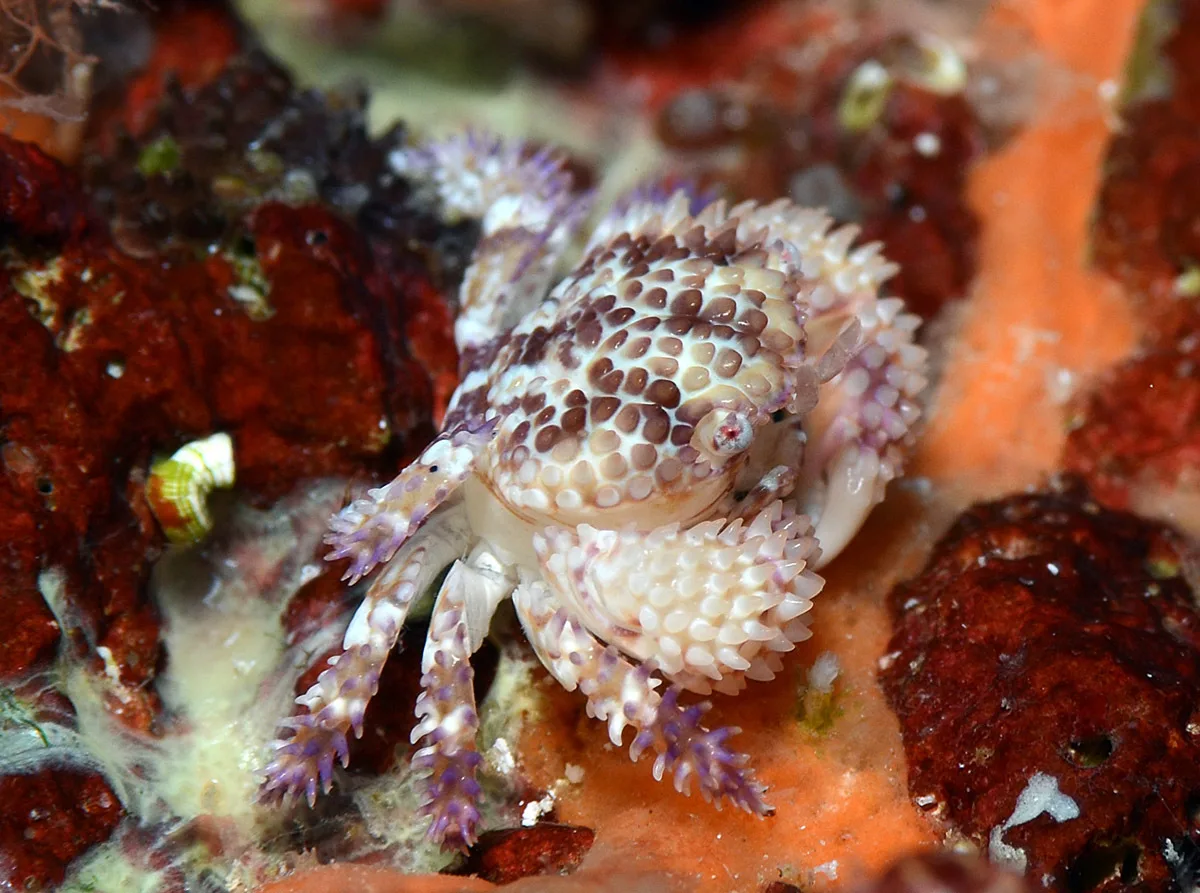
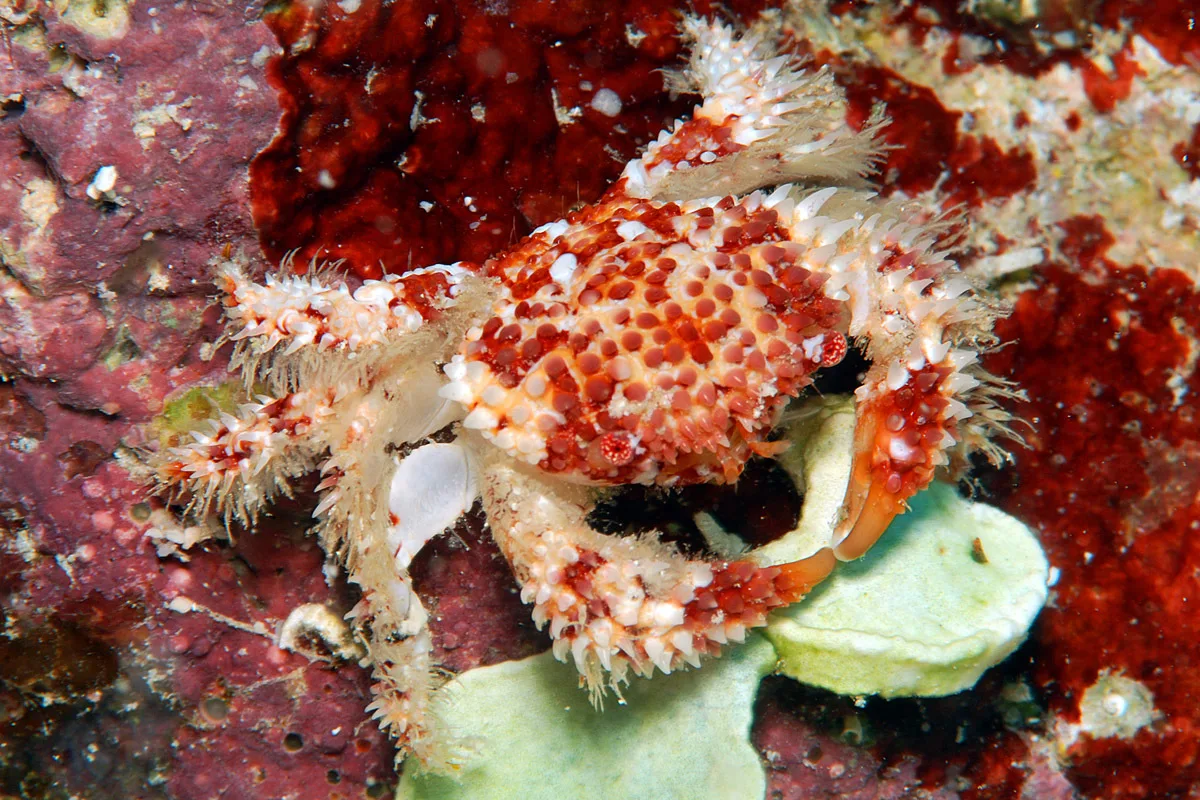
A small knobbly crab wedged in a crevice, so encrusted that its outline stops being a crab at all - which is the point, and the family habit.
These are xanthids, and the family carries a warning that applies to all of them: several species contain saxitoxin and tetrodotoxin in the muscle and shell, in quantities that have killed people, and the poison comes from what they eat rather than from the crab itself. There is no way to tell a toxic individual from a harmless one by looking, cooking does nothing, and the sensible rule is that no small reef crab is food.
This one grazes algae and detritus at night and stays deep in cover by day.
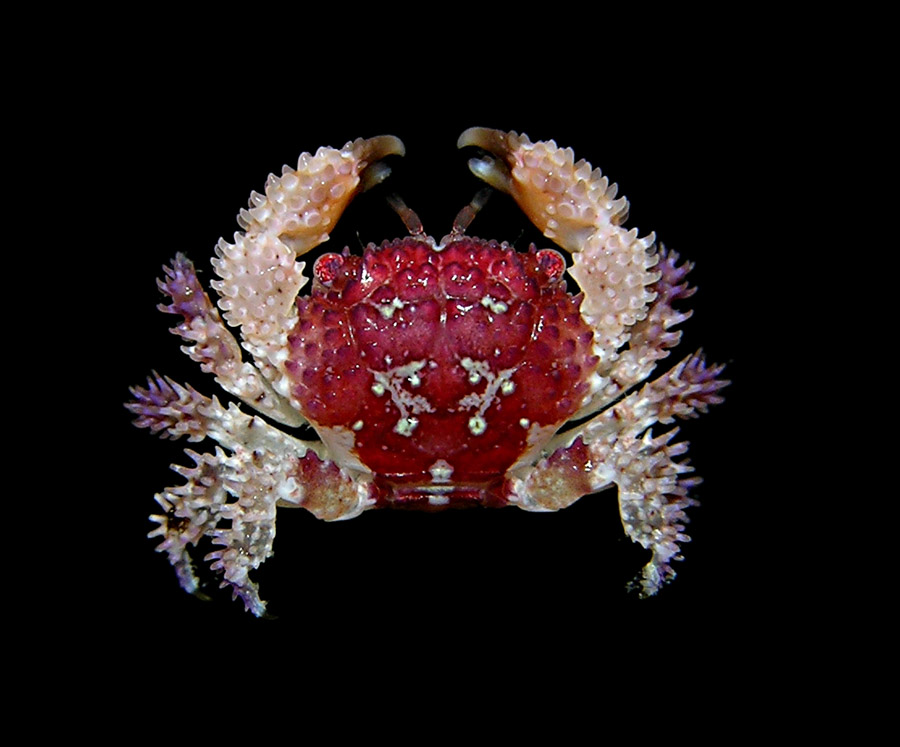
Two centimeters (0.8 in), slow, and almost never noticed. The genus is a taxonomic thicket - dozens of similar species separated by the arrangement of the lumps on the shell - so a photograph names the genus and rarely more.
- small crab with a shell covered in blunt granules and spines
- dull red-brown, often overgrown so the outline disappears
- black-tipped claws
- width up to 2 cm