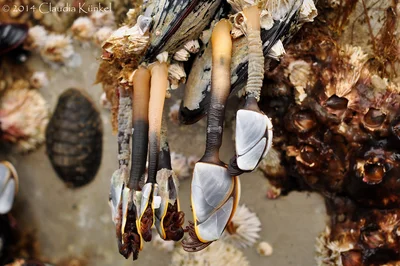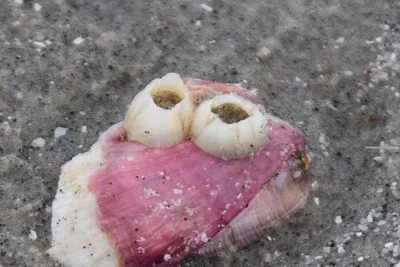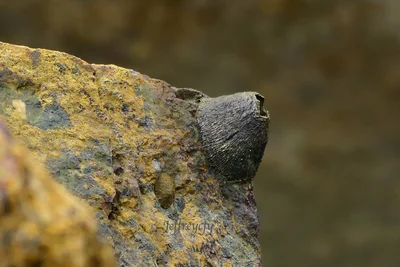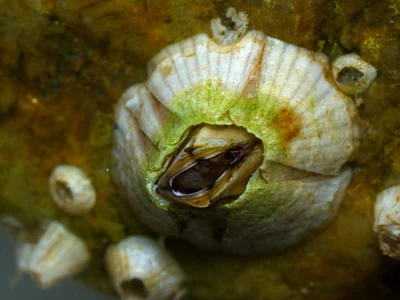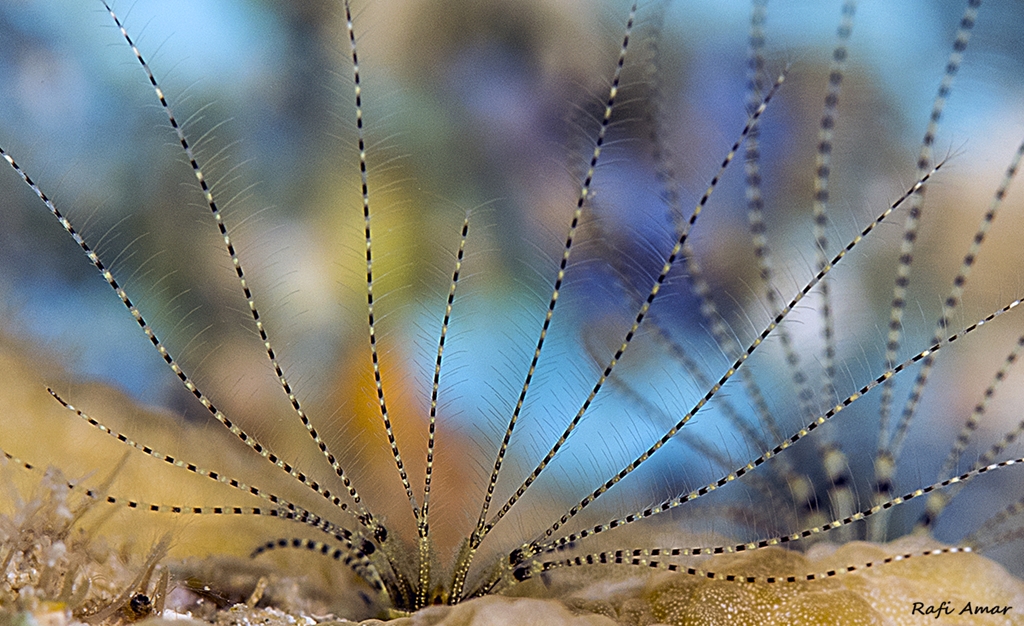
A barnacle that lives inside a coral. Only the opening shows - a small slit set flush into the colony surface, under 1.5 cm (0.6 in) across - and from it a fan of feathery legs sweeps out, curls closed and withdraws, over and over, combing plankton from the water. Anyone who has hovered over a coral head and noticed something flicking in and out has probably watched one without knowing what it was.
The shell itself is buried in the coral skeleton. A settling larva takes hold on a live colony and the coral grows around it, while the barnacle keeps pace by extending its own tube upward, so the two build together for as long as both live. That leaves the animal permanently housed, fed by the same currents the coral uses, and safe from anything that cannot break calcium carbonate. Barnacles are crustaceans, not molluscs, despite the shell - the giveaway is those legs, which are the same limbs a shrimp swims with, repurposed into a net. They are cemented head-down for life, filtering with their feet.
- small slit or hole set flush into the surface of a live coral
- feathery legs sweeping out and snapping back
- shell almost entirely buried, only the opening visible
- opening under 1.5 cm across