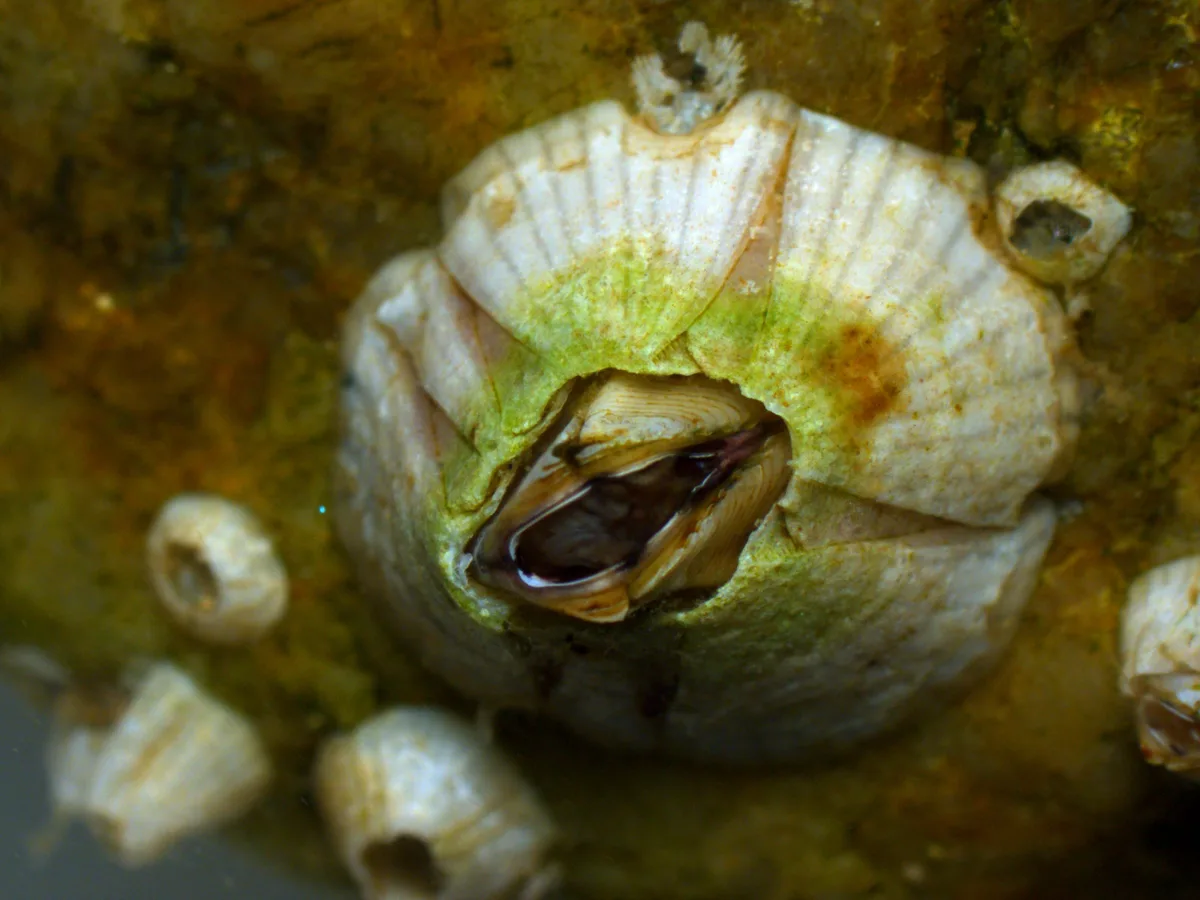
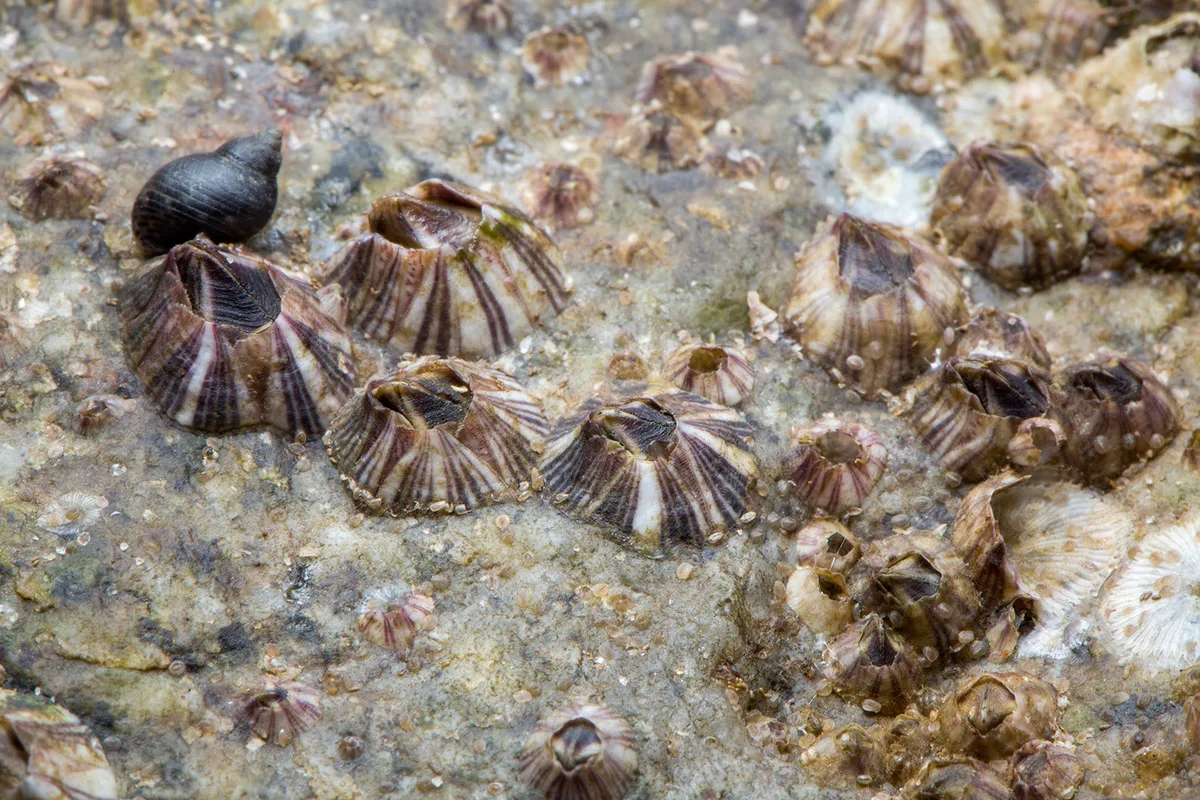
A small conical barnacle to about 2 cm (0.8 in) across, its white shell marked with fine purple or brown vertical stripes, growing in crowded sheets on anything hard and man-made in the shallows: jetty legs, mooring lines, buoys, boat hulls. On natural reef it is scarce; on a pier piling there may be thousands.
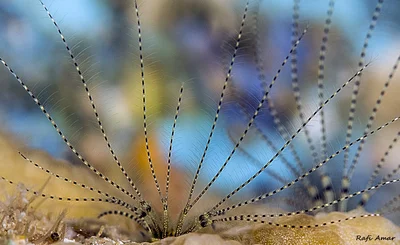
That preference has carried it around the world on shipping, and it is now one of the most widespread fouling organisms anywhere - the single species most responsible for the drag that makes hull cleaning a permanent expense. The larva swims freely, tests a surface with chemical sensors on its antennae, then cements itself head-down using a protein glue that sets underwater and holds against wave force, a material that has been studied for decades by people trying to copy it. Once fixed it never moves again. Feeding is done by kicking the legs out through the shell opening and drawing them back in - a rhythm that quickens when the water carries more food.
- conical white shell with fine purple or brown vertical stripes
- grows in dense crowded sheets
- on jetty legs, hulls and ropes rather than on reef
- diameter up to 2 cm