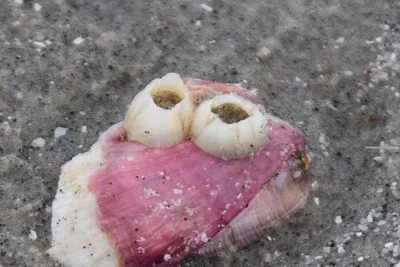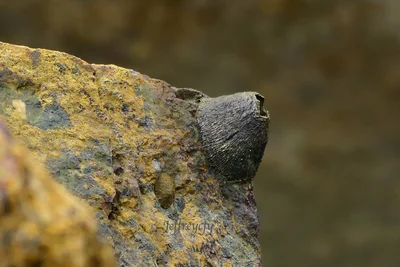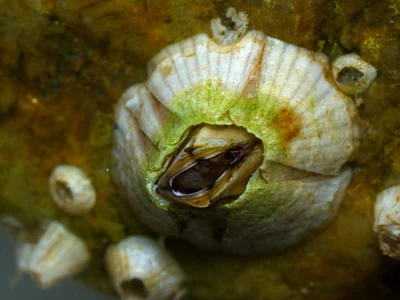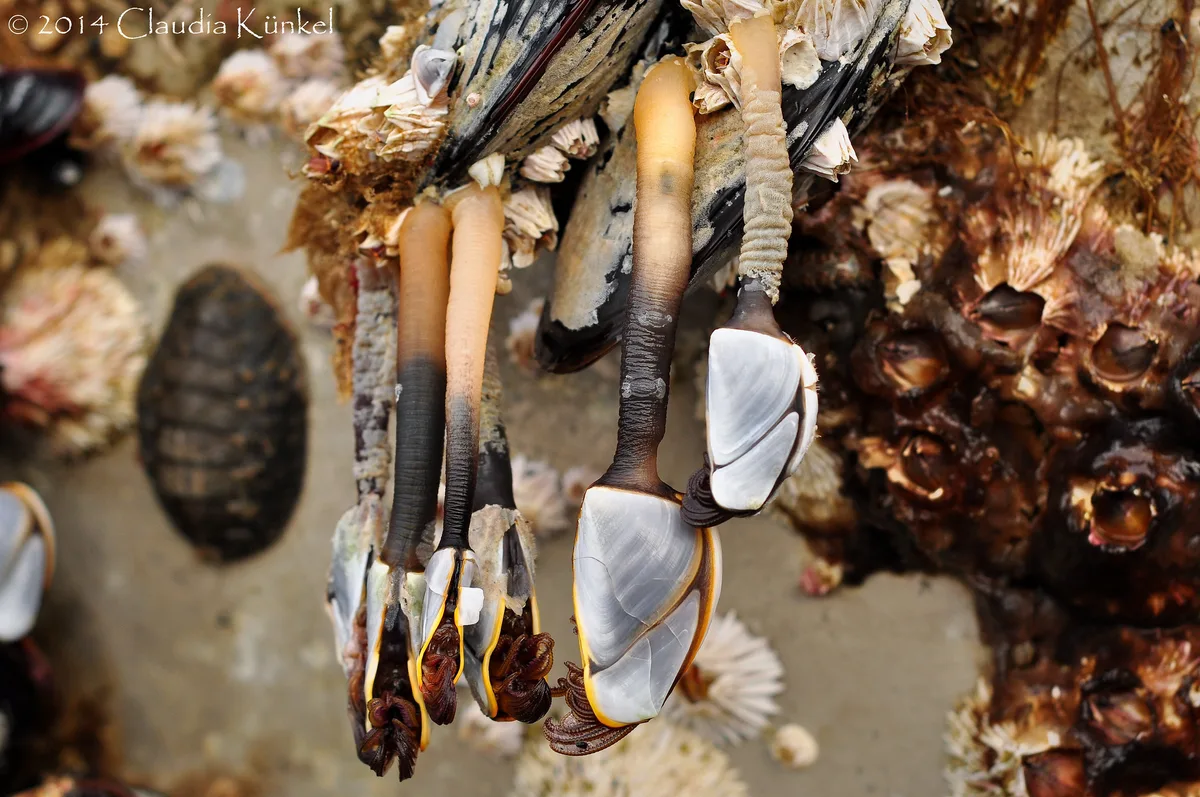
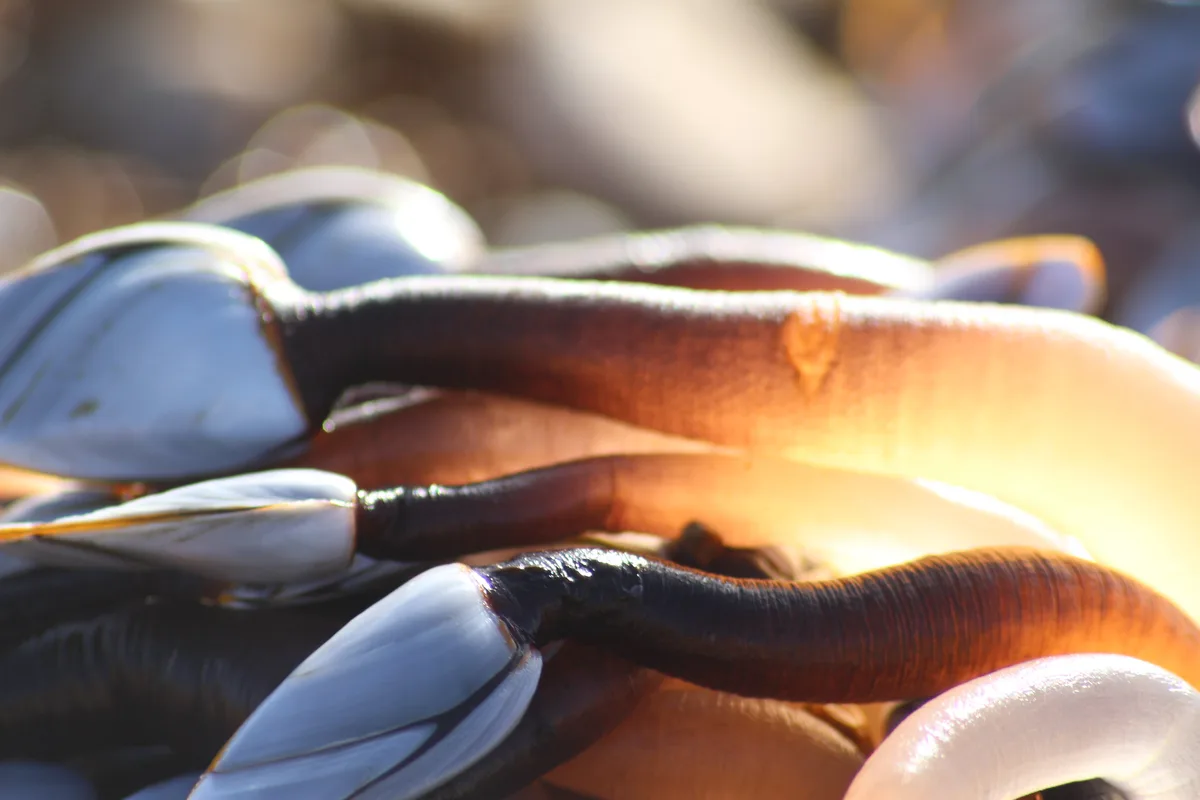
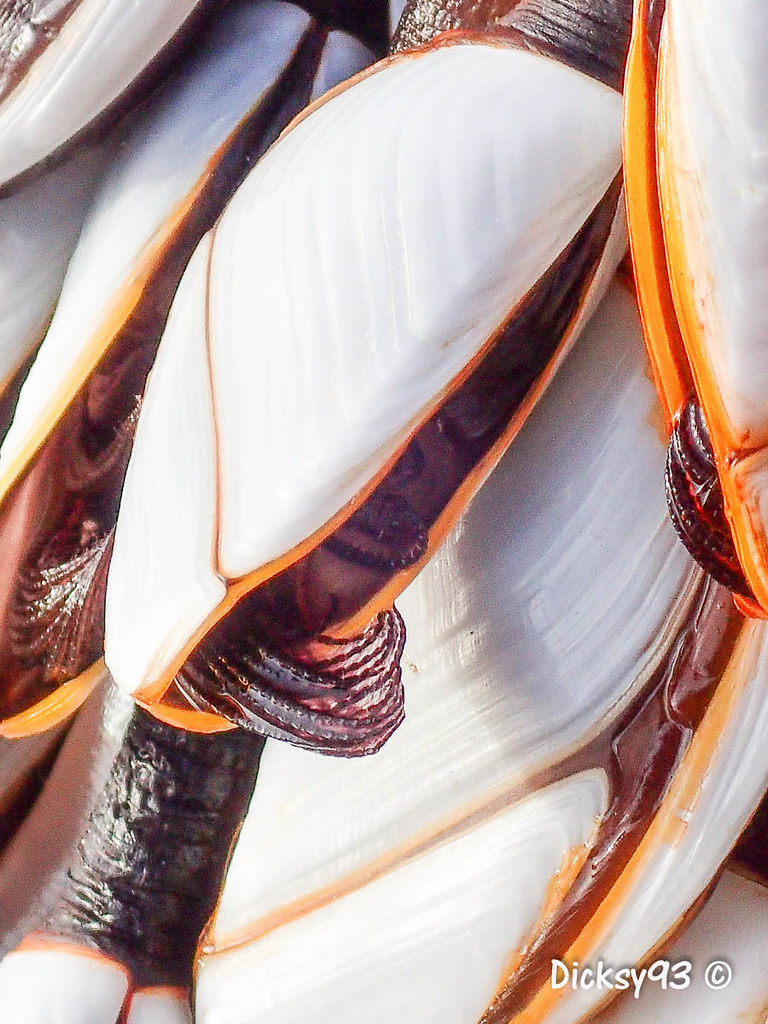
Five bluish-white plates on a long rubbery stalk, hanging in clusters from driftwood, floating plastic, a ship's hull or a lost fender. It belongs to the surface rather than the reef, and divers usually meet it on something that washed up rather than on something they swam to.
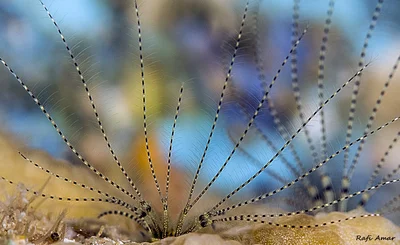
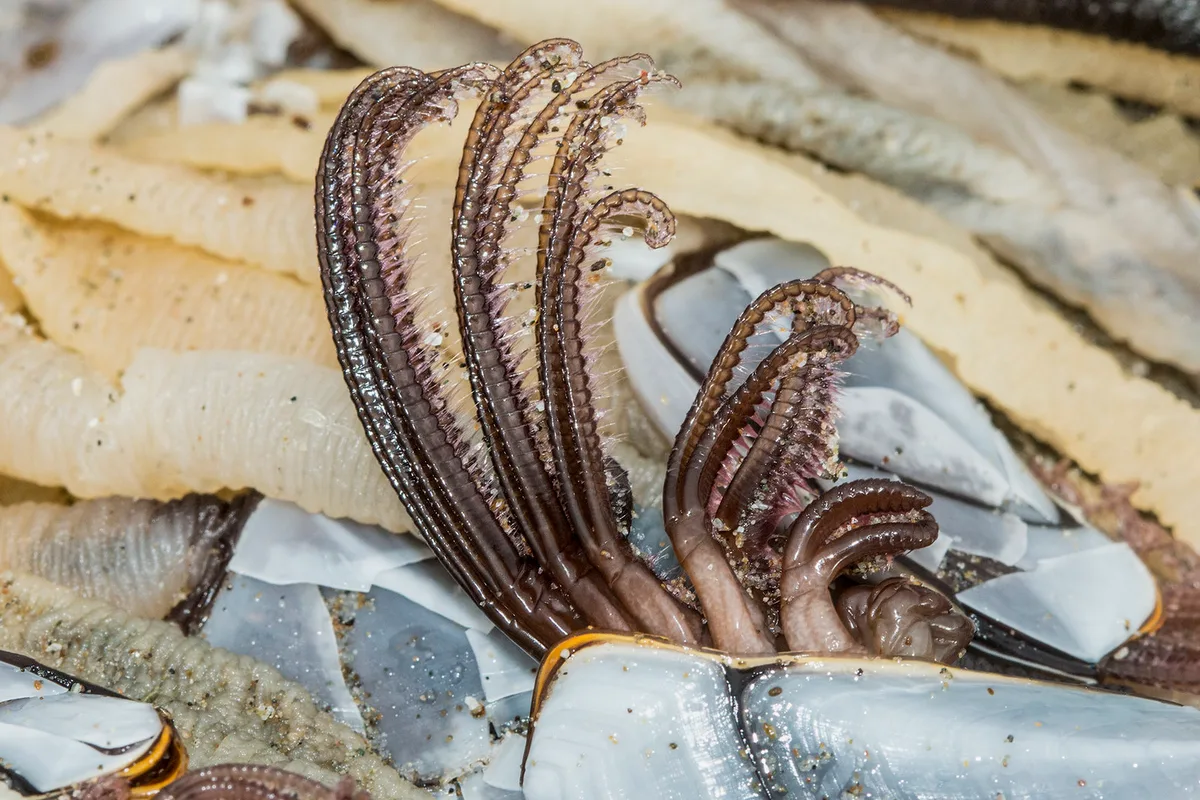
The stalk is the head. As with every barnacle the animal is attached by its front end, and here that end is drawn out into a flexible column that lets the plates swing into the current. Feeding is the same rhythmic sweep of feathery legs, and a raft of goose barnacles in a good current opens and closes like a field of small hands.
The name preserves a medieval mistake worth keeping. Before migration was understood, barnacle geese appeared in Europe each winter with nobody ever finding their nests, and the clusters of stalked barnacles on driftwood were taken for the birds' early stage - beak, feathers and all. The goose was named for the barnacle, and the barnacle for the goose, and both names outlived the theory by centuries.
- bluish-white plates on a long rubbery stalk
- hangs in clusters from anything floating
- stalk up to 20 cm, plates about 5 cm
- never on the reef - only on drifting objects