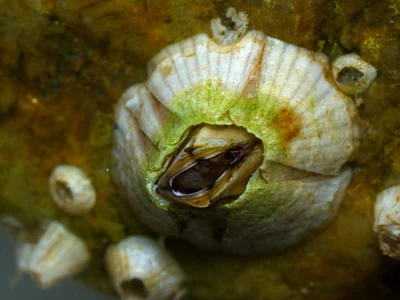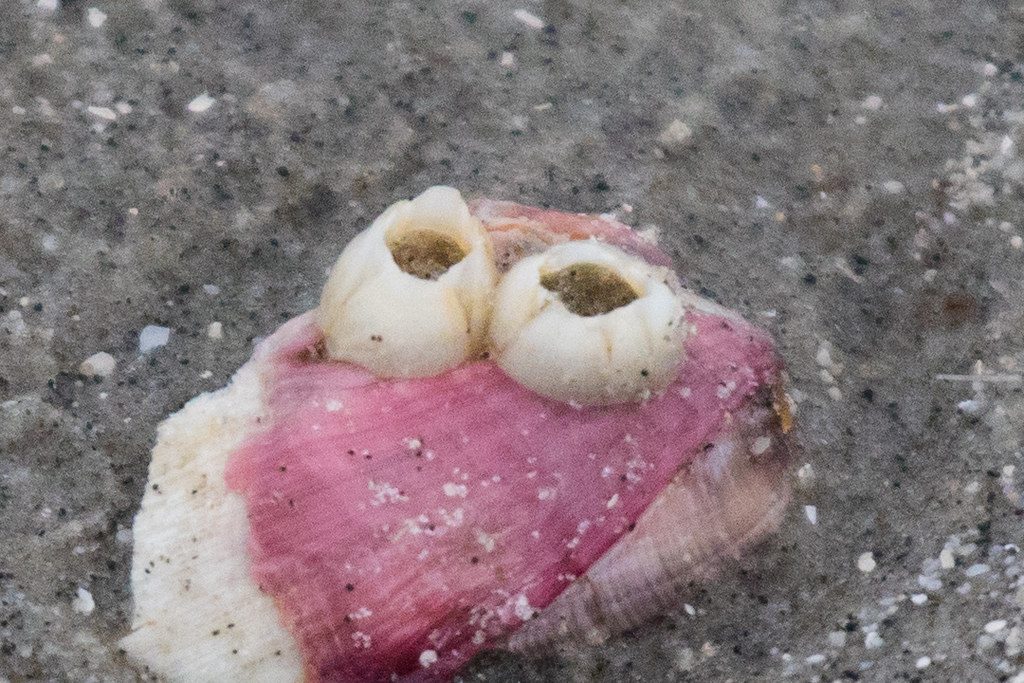
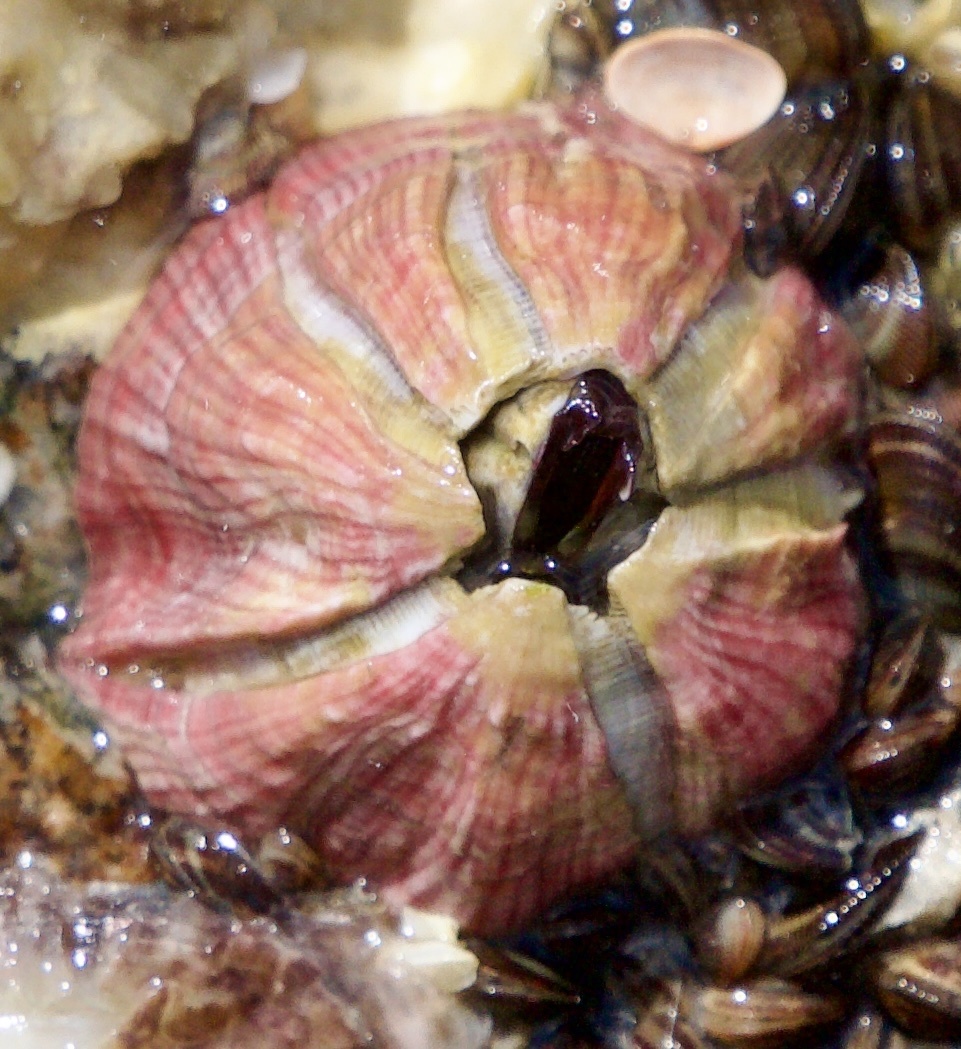
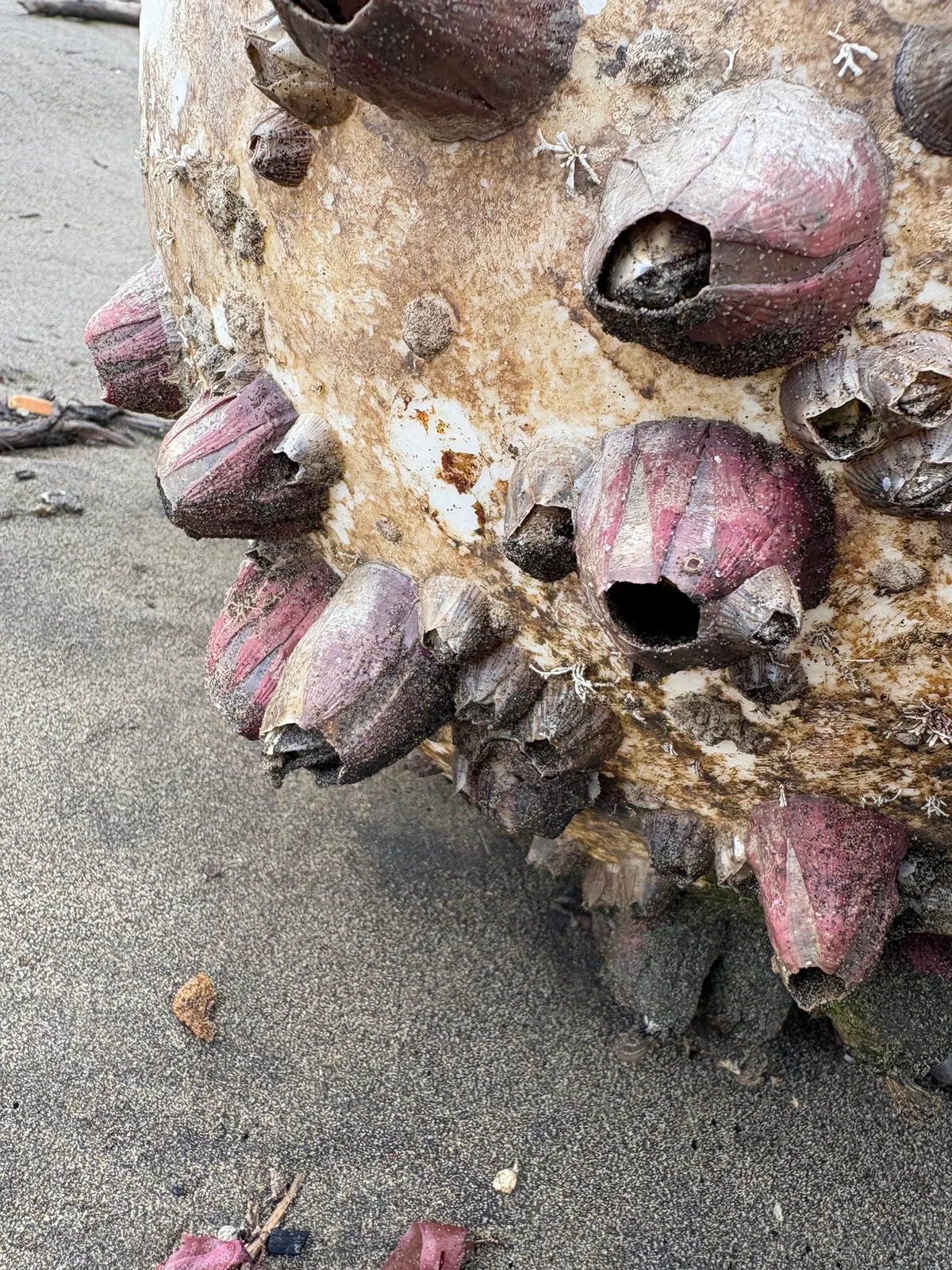
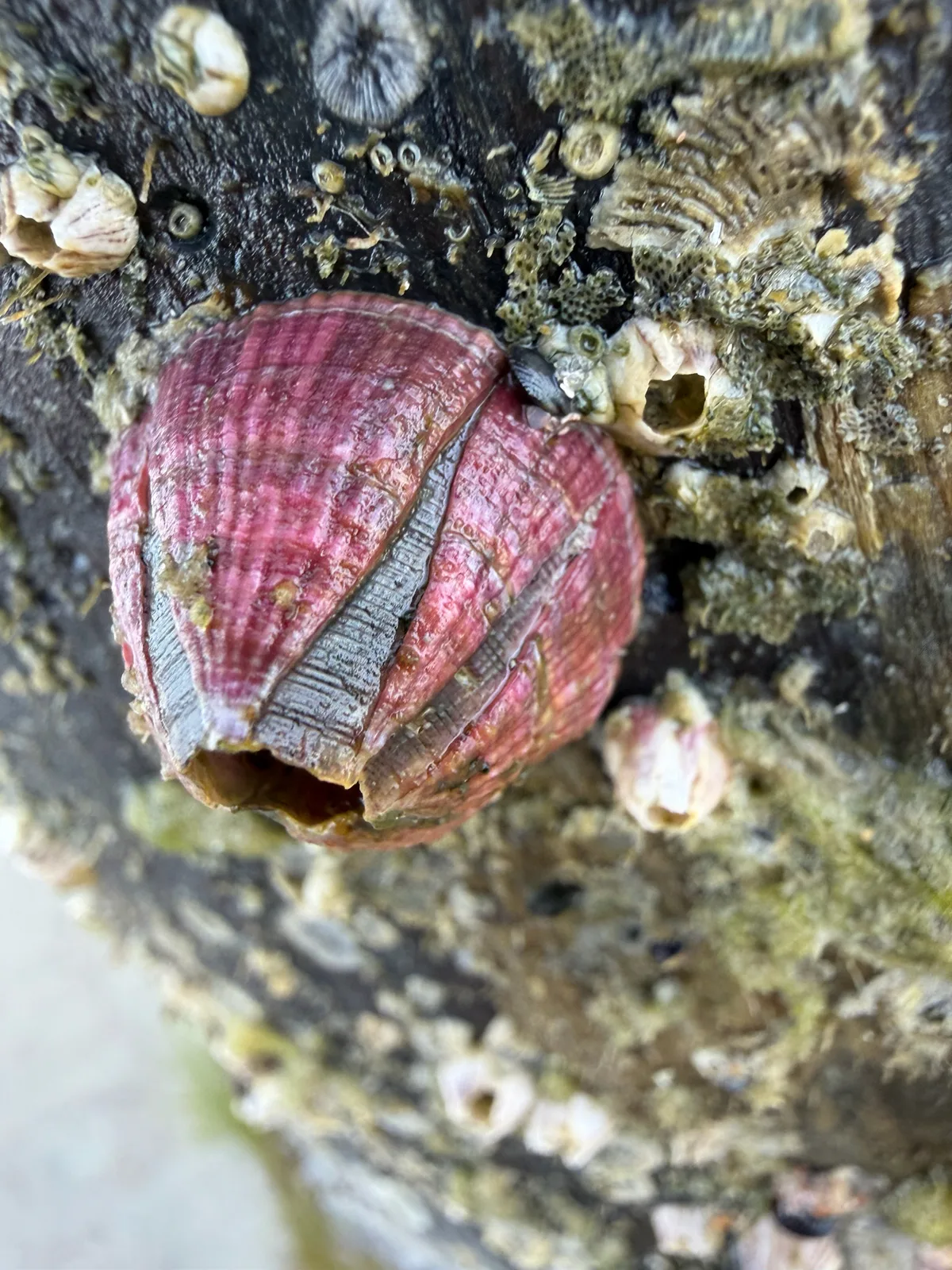
The big one, up to 5 cm (2 in) tall, pink to purple with pale ribs, packed in clusters on wrecks, pilings, mooring buoys and any hard surface that takes a beating from the surge. On a shipwreck they carpet the windward plates and turn a hull into something with texture.
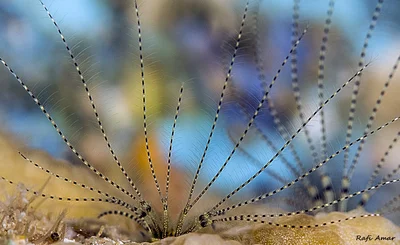
Watch the opening rather than the shell. A feeding barnacle sweeps a fan of feathery legs out into the water in a steady rhythm and folds it back in, straining plankton on every stroke. Those legs are the animal's actual feet: a barnacle is a crustacean that glued its head to the substrate as a larva and now kicks food into its mouth for the rest of its life.
Being cemented in place makes mating awkward, and the solution is famous. Barnacles are hermaphrodites with the longest penis relative to body size in the animal kingdom, several times the shell's width, so a stationary animal can reach a neighbor without leaving home. That is also why they settle in crowds rather than alone.
- large volcano-shaped shell, pink to purple with white ribs
- up to 5 cm tall, growing in dense clusters
- feathery legs sweeping out of the opening in the current
- on wrecks, pilings and buoys more than on reef