Comb jelliesCtenophora
It is not a jellyfish, and it is not a relative of one. Comb jellies are a phylum of their own, about as closely tied to a jellyfish as a starfish is, and on one reading of the animal family tree they split off before everything else alive, sponges included. The resemblance goes no further than being transparent and full of water. They have no stinging cells at all.
They swim by rowing. Eight rows of fused hairs run the length of the body like the teeth of eight combs, and they beat in waves from one end to the other. Beating hairs is how a single-celled animal in a drop of pond water gets around; comb jellies are the largest animals that still travel that way. Light striking those moving rows breaks into a band of color that runs down the flank, which is not a light the animal makes, just ordinary daylight or a torch beam split by a grating that happens to be moving. Many species do glow as well, but that is a separate blue light and only when something disturbs them.
What they use instead of stings is glue. Most trail two long tentacles hung with side branches, and those branches are covered in cells that burst on contact and hold, the way flypaper holds a fly, after which the tentacle wipes the catch across the mouth. For their size they are ruinous. A swarm can strip the plankton out of a body of water, which is what happened when one Atlantic species reached the Black Sea and the anchovy fishery went down behind it. One group skipped tentacles entirely: Beroe swims mouth first and eats other comb jellies whole.
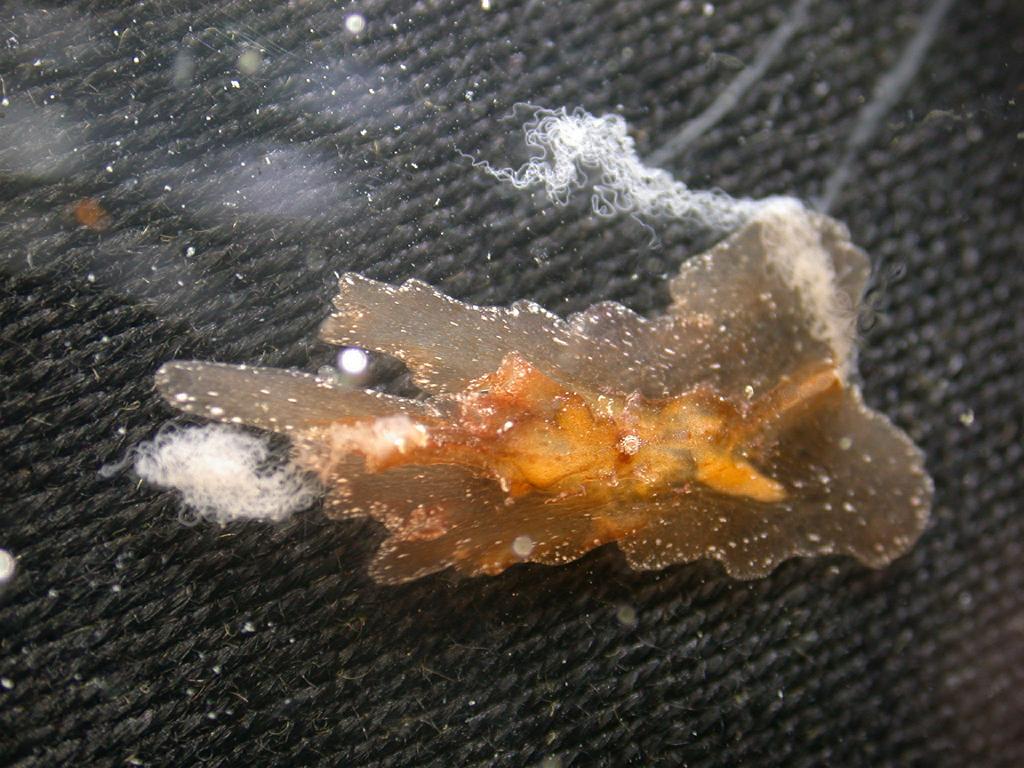
The ones you are most likely to find in this sea are not swimming at all. The creeping comb jellies abandoned open water, flattened themselves and now crawl over soft corals, sponges, sea cucumbers and urchins. The adults lose their comb rows completely, so nothing about them looks like the group they belong to, and they sat among the flatworms for years before anyone worked out what they were. Look closely at the surface of a leather coral on this coast and you may already be looking at one.
- rows of tiny beating combs that split a torch beam into running rainbows
- transparent body with no bell pulsing and no stinging cells
- two long trailing tentacles in most species
- some are flat and creep over corals instead of swimming
3 species in Comb jellies
Other groups in Invertebrate
Nearby in the catalogue.


Last Update: August 23, 2026