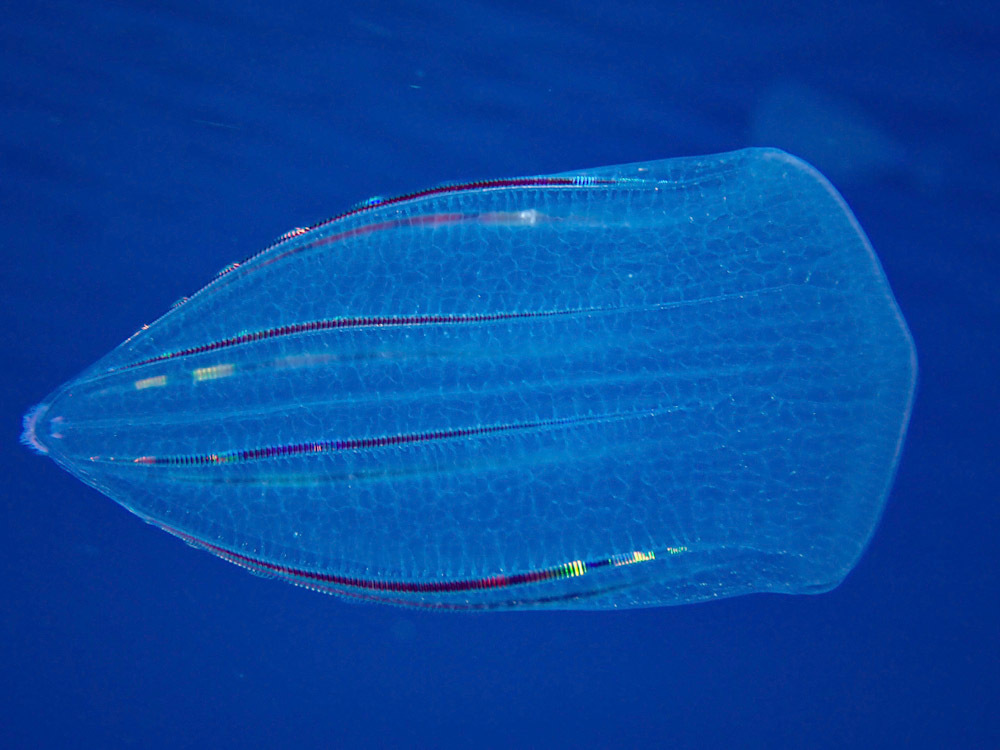
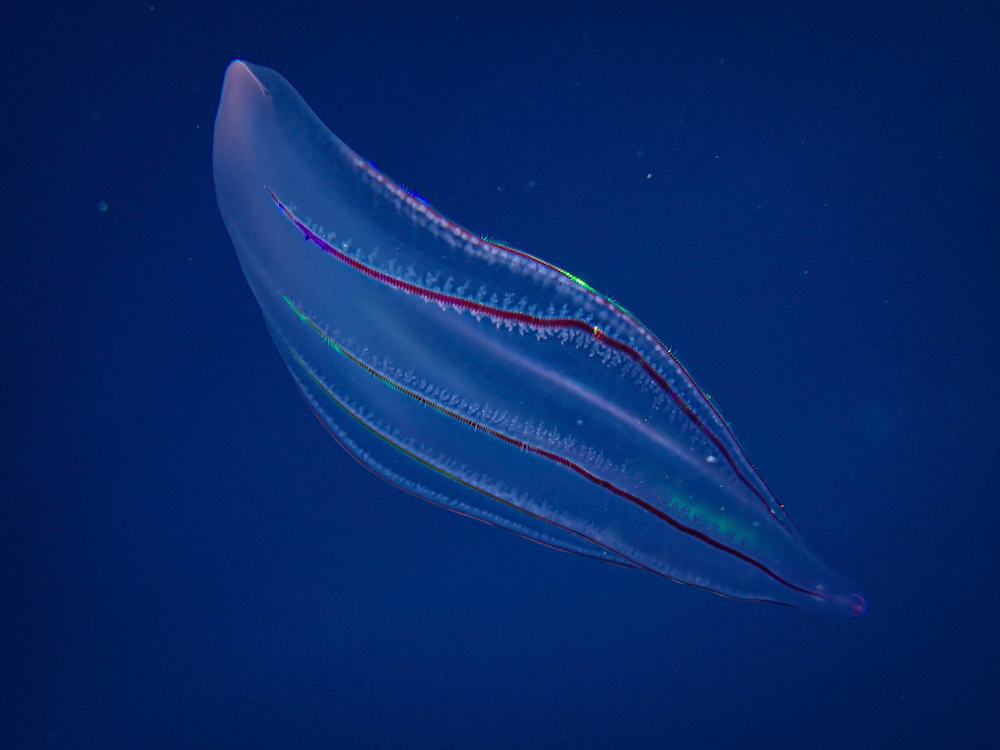
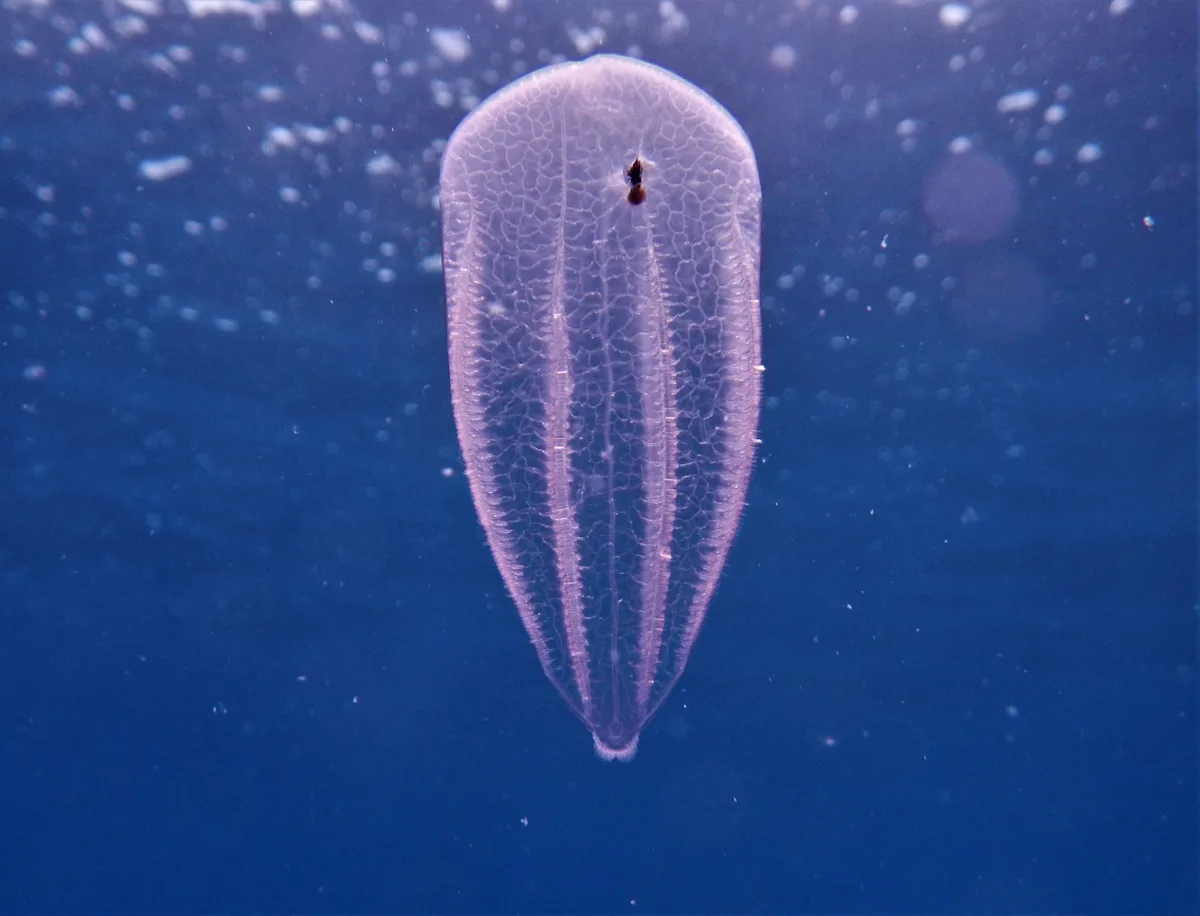
A transparent cone with an enormous mouth at the wide end and no tentacles anywhere - which, in a group defined by hunting with sticky tentacles, is the whole story. This one hunts by swallowing.
It eats other comb jellies, and it does it by opening the mouth wide enough to engulf prey nearly its own size, then closing on it with rows of interlocking cilia that work like teeth. A feeding animal is worth watching precisely once: the shape simply widens, the prey is inside, and the outline goes back to normal.
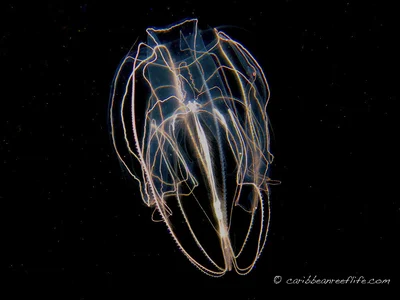
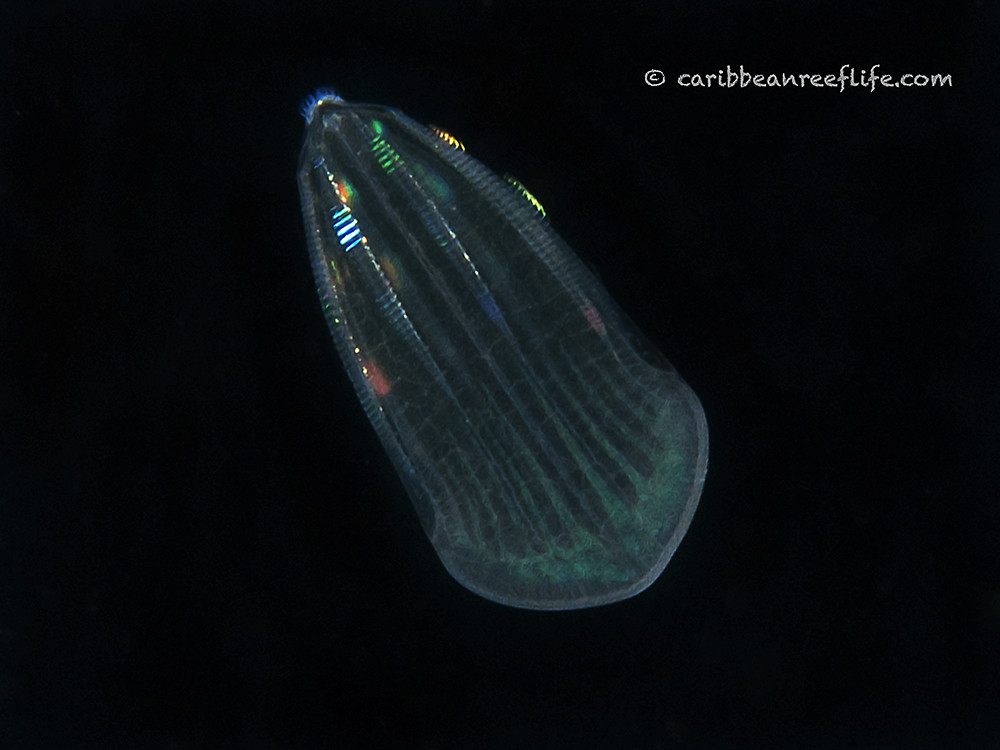
The eight comb rows that drive it run the full length of the body, and in a torch beam they scatter light into a rolling band of color that is the easiest way to find one at night. The name honors Peter Forsskål, who died young on the 1761 expedition that first described much of the life in this sea, and whose name sits on dozens of local species.
- cone or thimble-shaped body with a huge mouth at the wide end
- no tentacles at all
- eight comb rows running the length, splitting light into color
- up to 15 cm