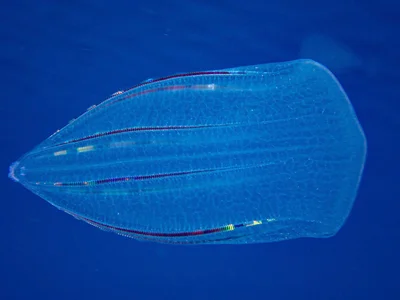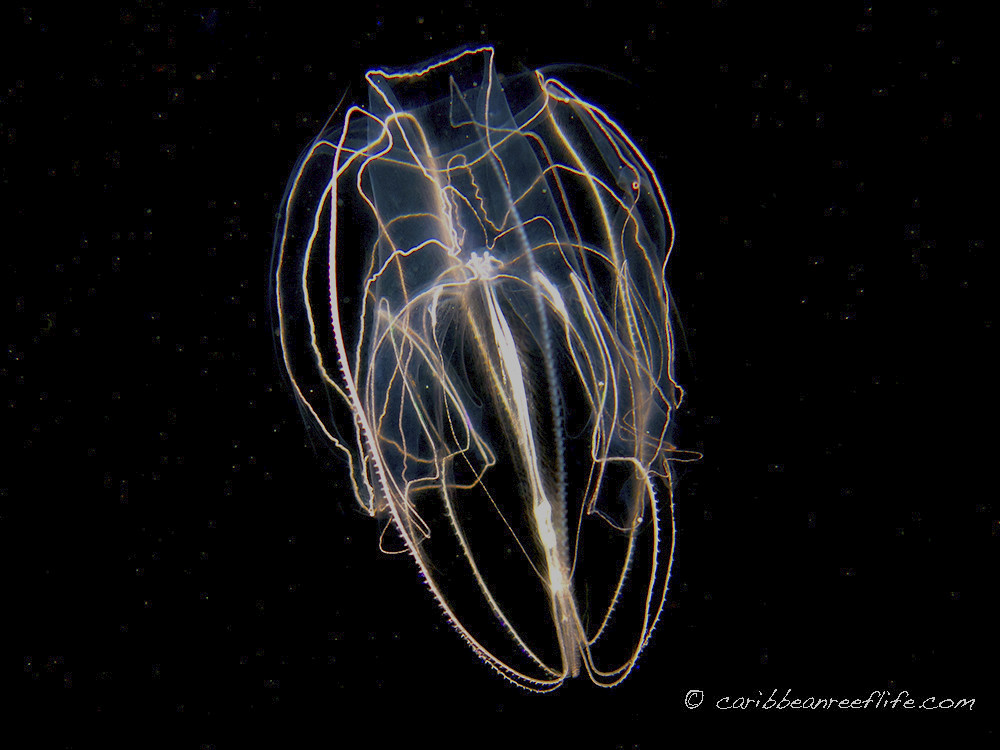
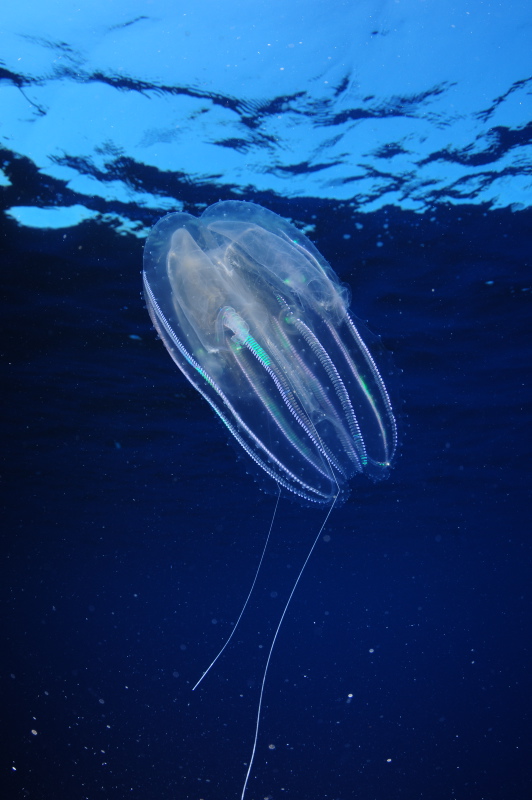
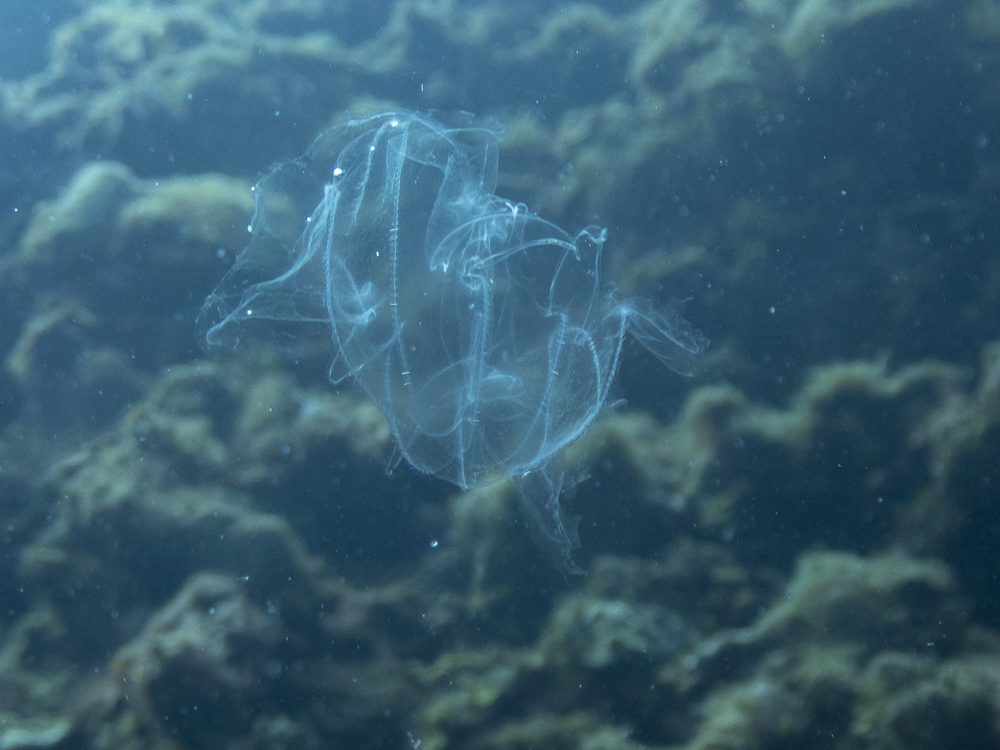
An oval of clear jelly with two large lobes flanking the mouth, up to 10 cm (4 in) long, so transparent that in daylight it registers as a distortion in the water rather than as an animal. At night a torch turns it on: the eight comb rows fire light down their length in a rolling wave of color.
The lobes are the trap. Small plankton drifting between them is drawn in on ciliary currents and passed to the mouth, so the animal feeds by holding a soft funnel open as it moves. It has no stinging cells at all, which is the standing difference between comb jellies and everything that looks like them.
Members of this family are also famous for what they did in the Black Sea: a close relative arrived in ballast water, met no predators, and ate the plankton that the anchovy fishery depended on, contributing to its collapse. A harmless-looking bag of glass turns out to be one of the most consequential invasive animals on record.
- oval glassy body with two large lobes at the mouth end
- eight comb rows running lengthwise, flickering with color
- no trailing tentacles visible
- up to 10 cm