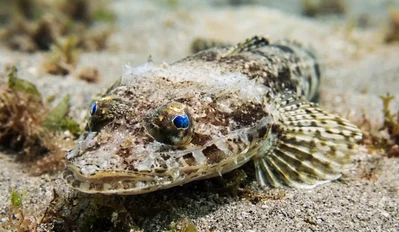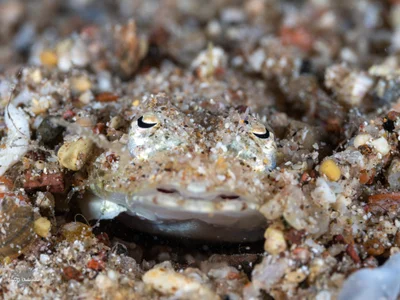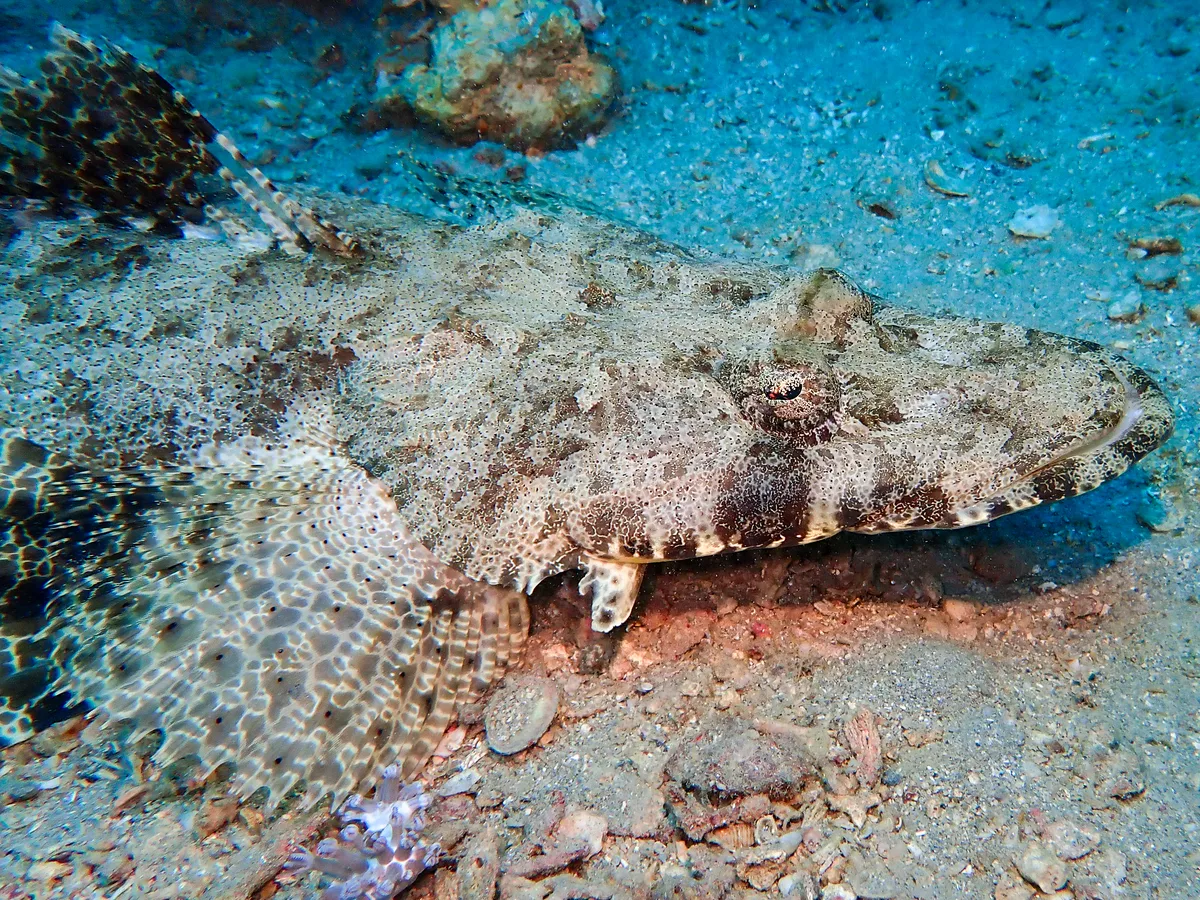
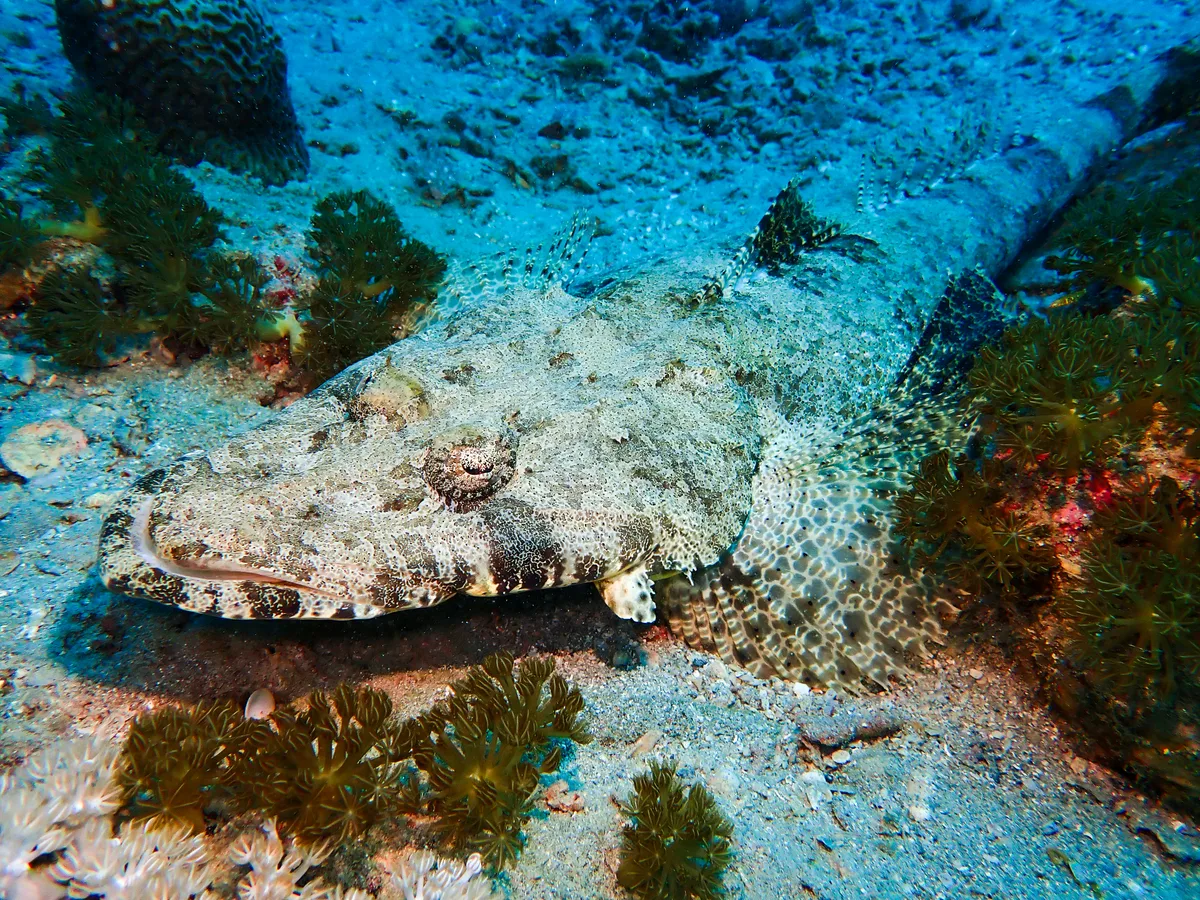
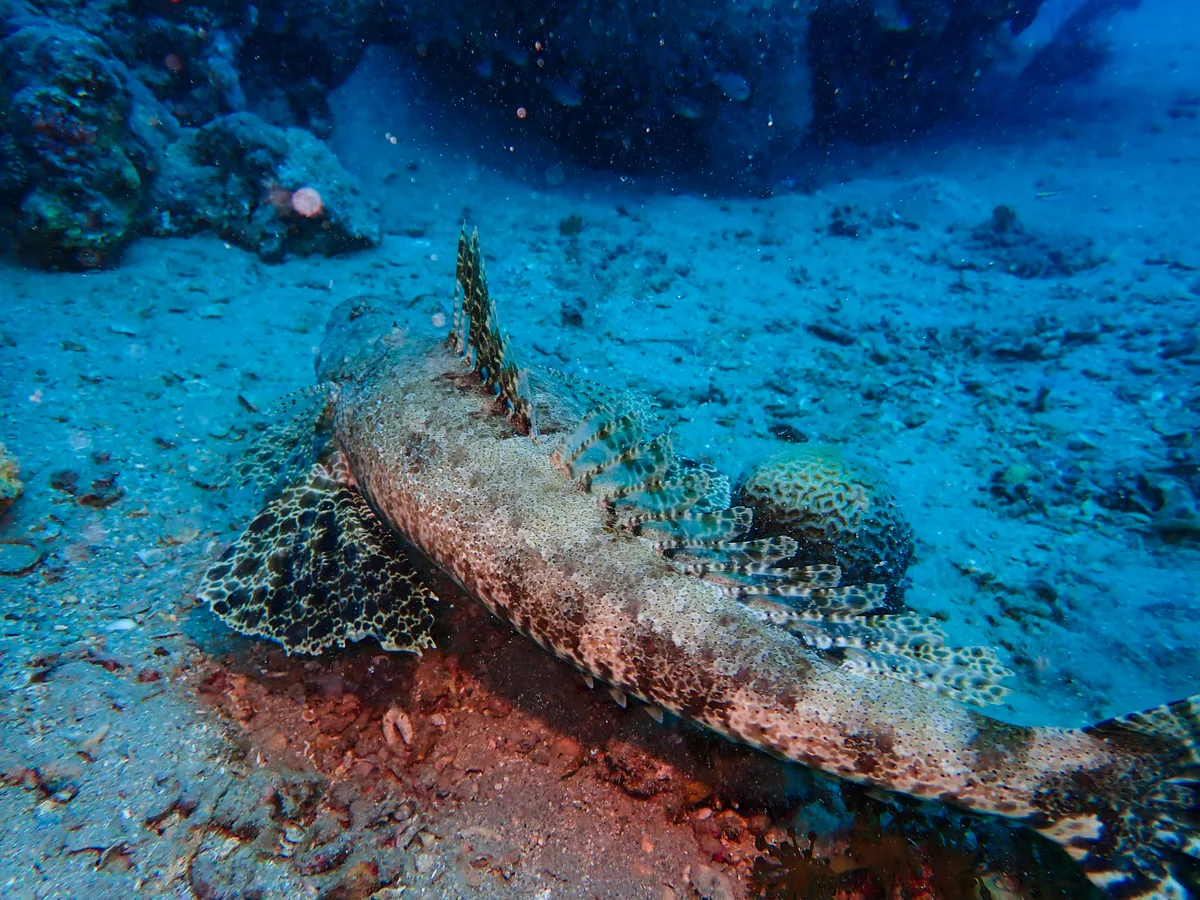
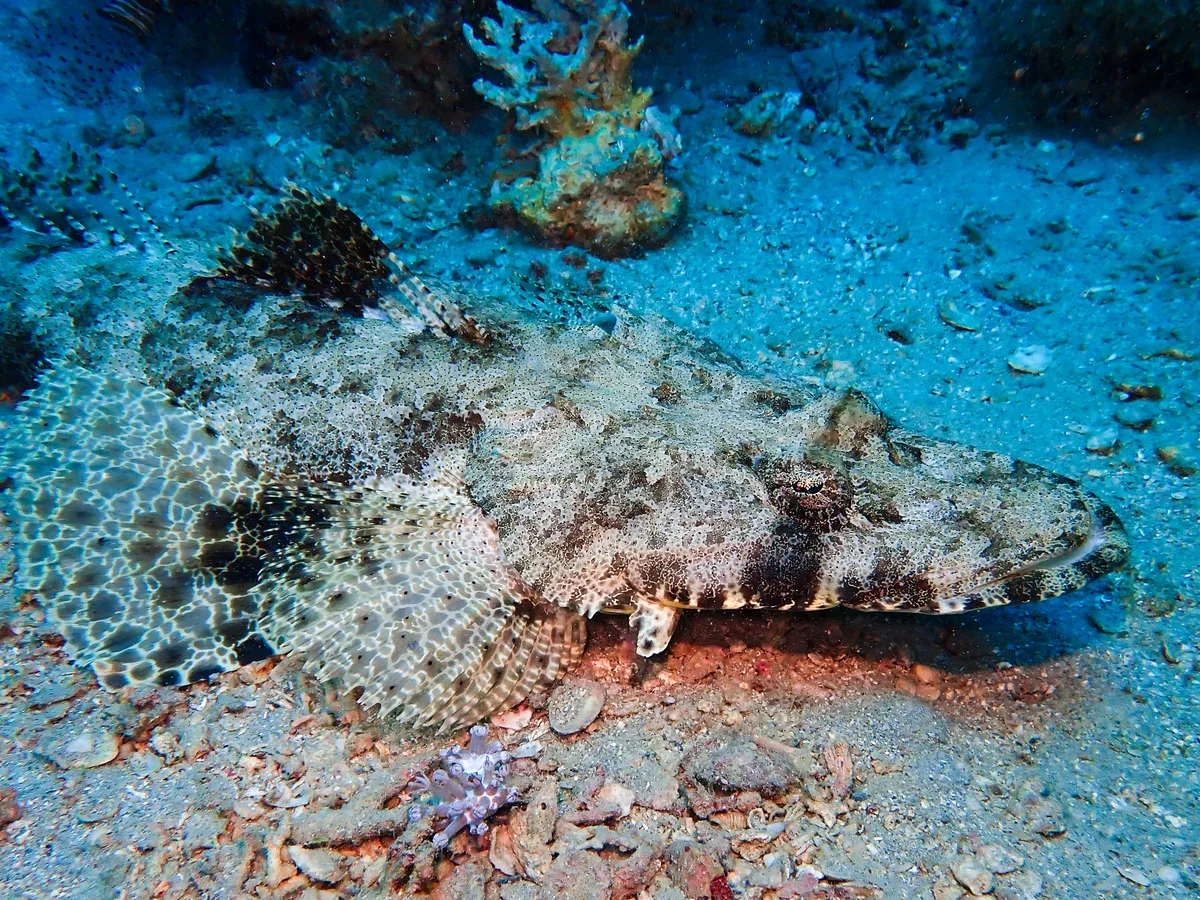
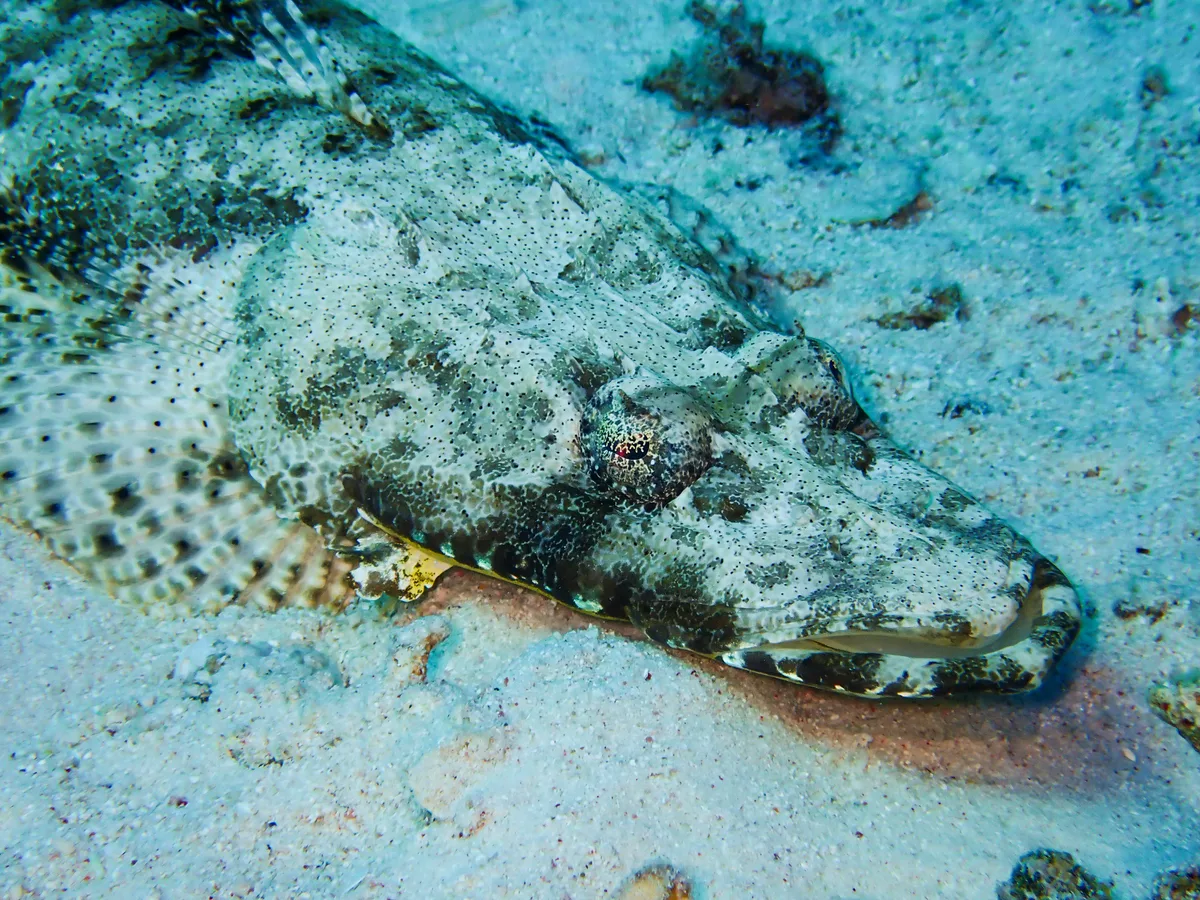
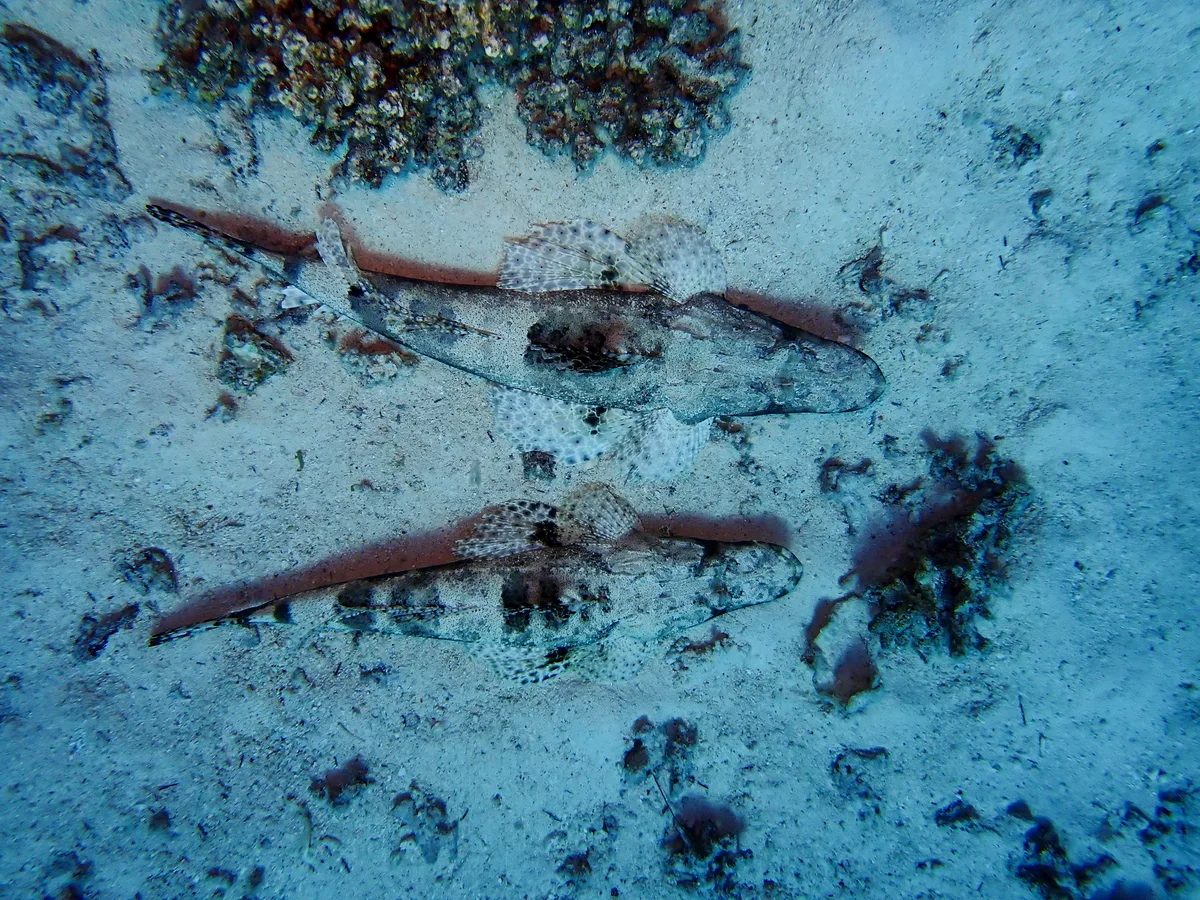
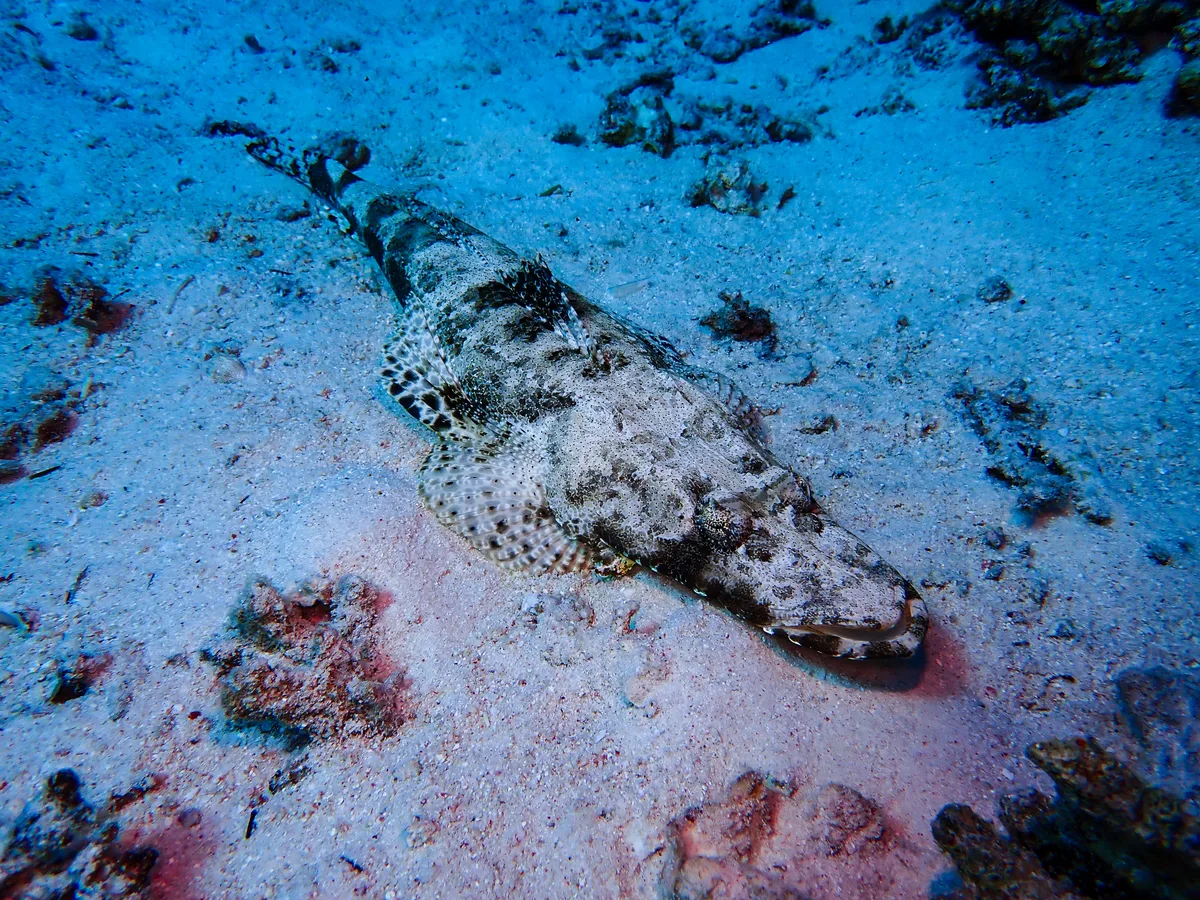
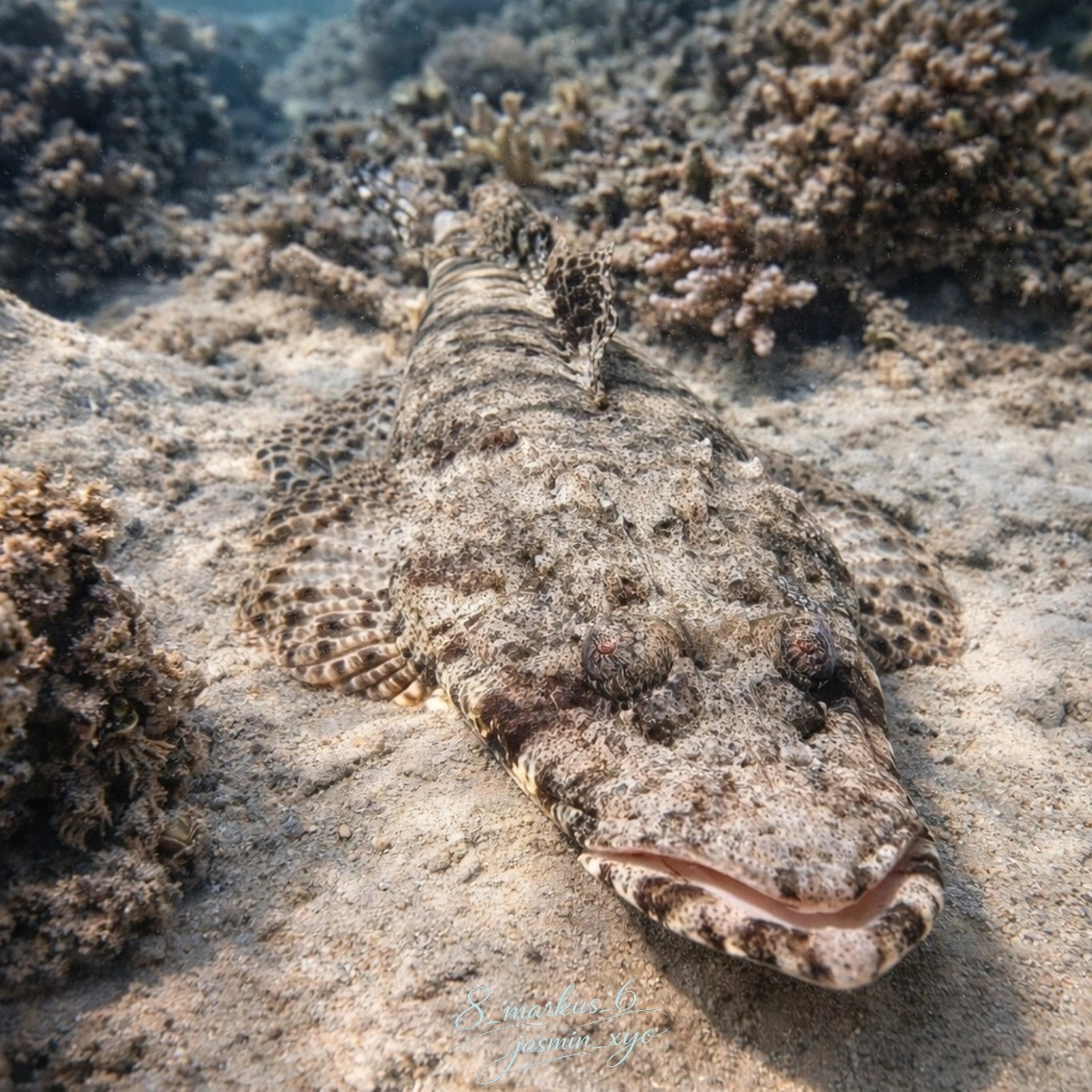
Seventy centimeters (28 in) of flattened fish lying in plain sight on sand or rubble, head broad and depressed with the eyes on top, body mottled to match the bottom exactly. Divers swim over one every dive and see one every tenth.
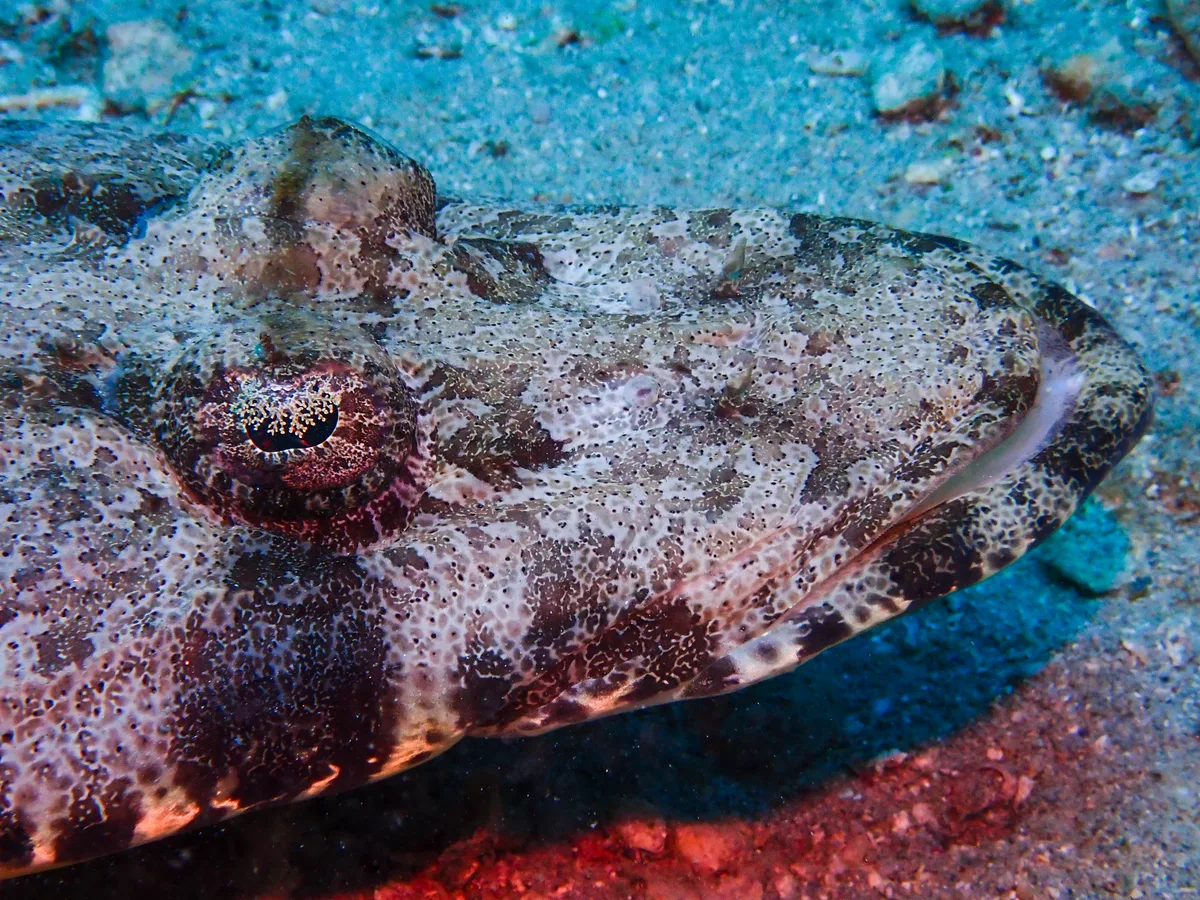
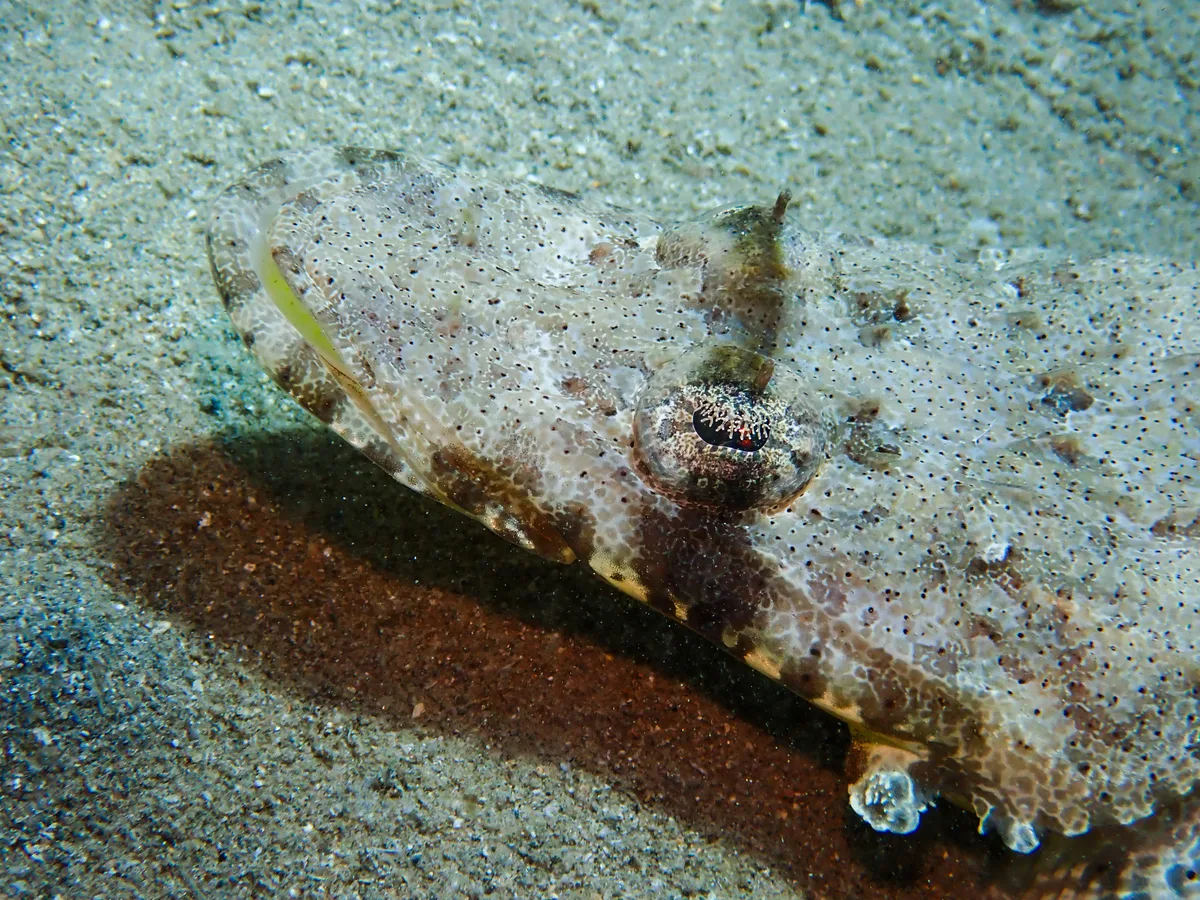
The eyes are the thing to photograph. Each pupil is covered by a branched, lacy flap of tissue that hangs down over it like a curtain, breaking up the one part of a camouflaged animal that cannot be disguised - a dark, wet, perfectly round pupil. It cuts glare and it hides the eye, and no other fish here has anything like it.
Hunting is done by not moving. The fish settles, waits, and takes small fish and crustaceans with a fast upward gulp when they pass over the head; the wide flat skull is a suction chamber that opens in one motion.
It has venomous spines on the gill covers - not a serious hazard but a reason not to handle it - and it will let a diver approach within centimeters, which is why the species is one of the most photographed fish in this sea and why the flash of hundreds of cameras is a real cost to an animal that hunts by lying still.
The genus. Papilloculiceps Fowler & Steinitz 1956 - papilla (nipple) + ceps (head). ETYFish
The species. Papilloculiceps longiceps (Cuvier 1829) - longus (long) + ceps (head). ETYFish
- long flattened head with the eyes on top, body tapering to a normal tail
- elaborate branched lappet hanging over each pupil, like a lace curtain
- mottled sand, brown and white, matching whatever it lies on
- length up to 70 cm
Why it's threatened
There are no major threats currently known to impact this species.
Threat classification from the IUCN Red List.