Semelparity
Breeding once and dying - everything spent on a single reproductive event, as octopuses and squid do.
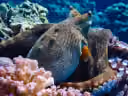
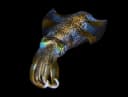
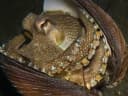
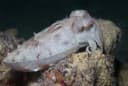
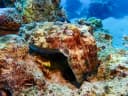
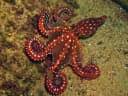
A semelparous animal reproduces once in its life and dies shortly afterwards, having put everything it has into that one event. The famous cases are salmon and the annual plants, but the best examples on a reef are the cephalopods: an octopus broods her eggs, stops feeding, and is dead by the time they hatch. Most squid and cuttlefish do the same.
It is not a failure or an accident - it is an accounting decision. Where the odds of surviving to breed a second time are poor, an animal does better to convert its entire body into one maximum clutch than to hold something back for a future that probably will not arrive. Everything follows from that: fast growth, a short life, and no maintenance of the body past the one event that matters.
The contrasting strategy is iteroparity, breeding repeatedly across a long life, which is what most reef fish do.
Found in9