Fishes · Bony fishes · Seahorses

Spotted Seahorse

Hippocampus kuda Bleeker, 1852
syn. Hippocamphus kuda, Hippocampus aterrimus, Hippocampus borboniensis, Hippocampus brachyrhynchus, Hippocampus chinensis, Hippocampus fuscus +14 more
up to 30 cm0-68 mCITES IIVulnerable
1620

This is the seahorse people photograph in this sea, and for most of a century it was filed under a different name.

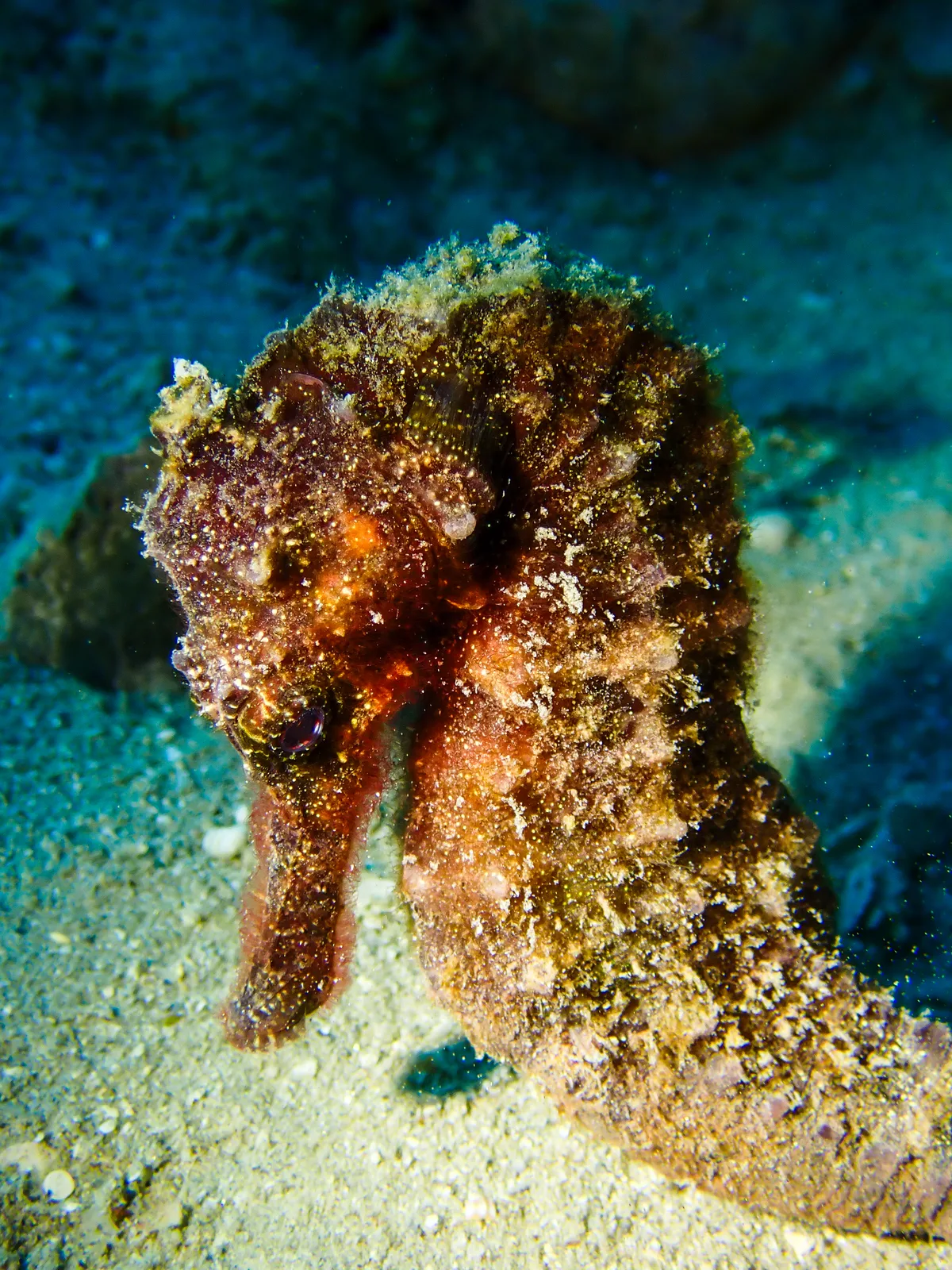
The 🌊 Red Sea animals were called Hippocampus fuscus, the drab seahorse, until molecular work sank that name into this one. So the local fish belong here, on a card whose species reaches thirty centimeters somewhere else: here they are small, around fifteen, and the ones photographed on the Egyptian coast sit at about the size of a hand.

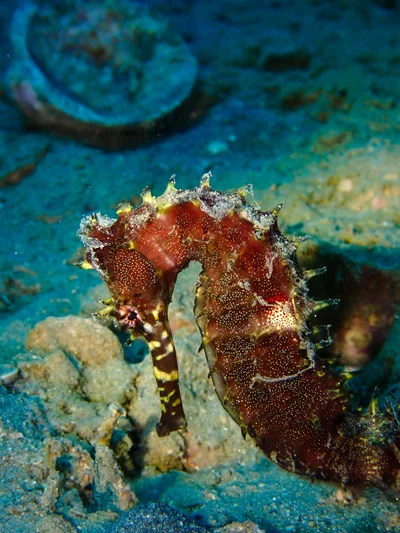
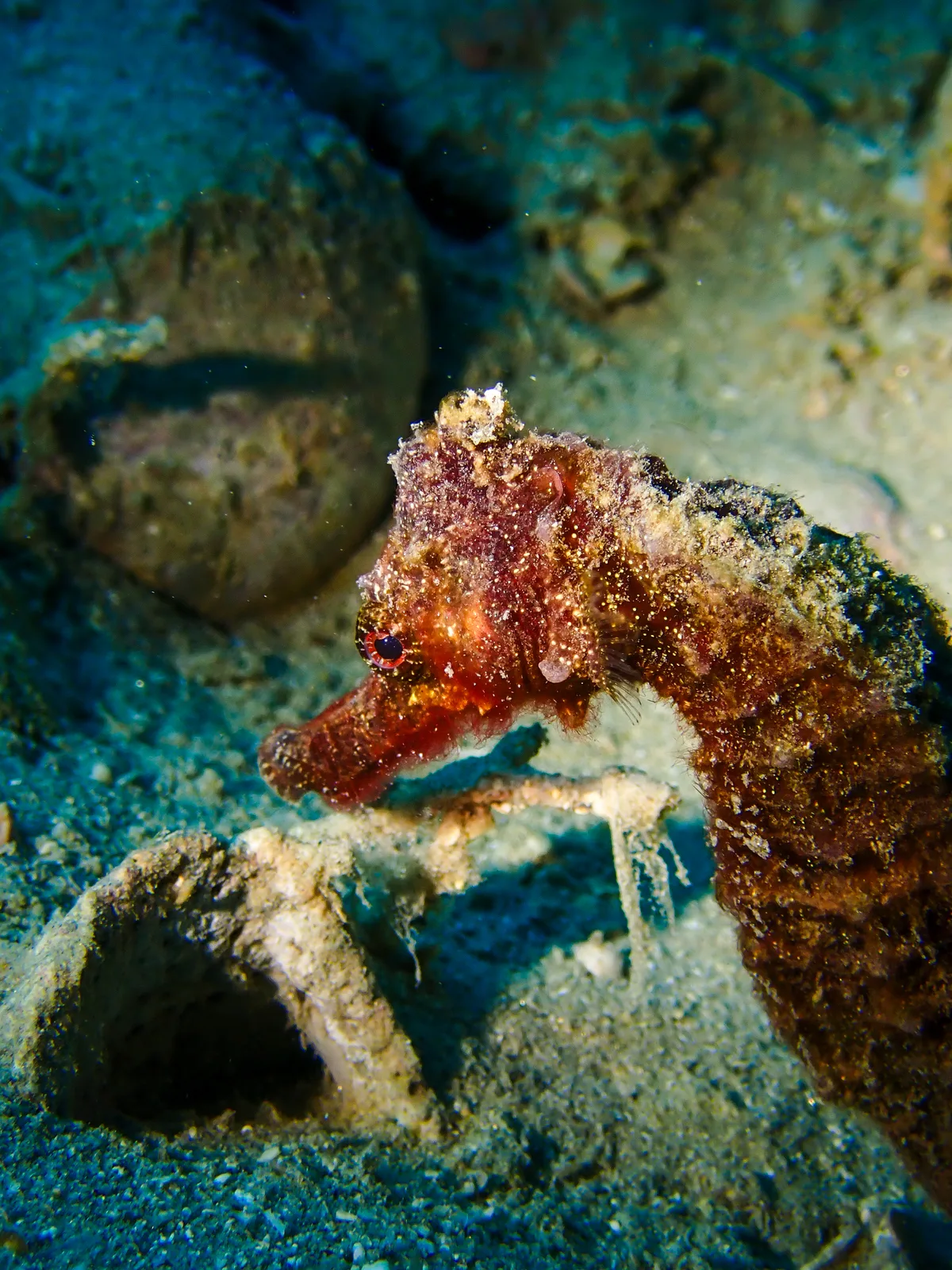
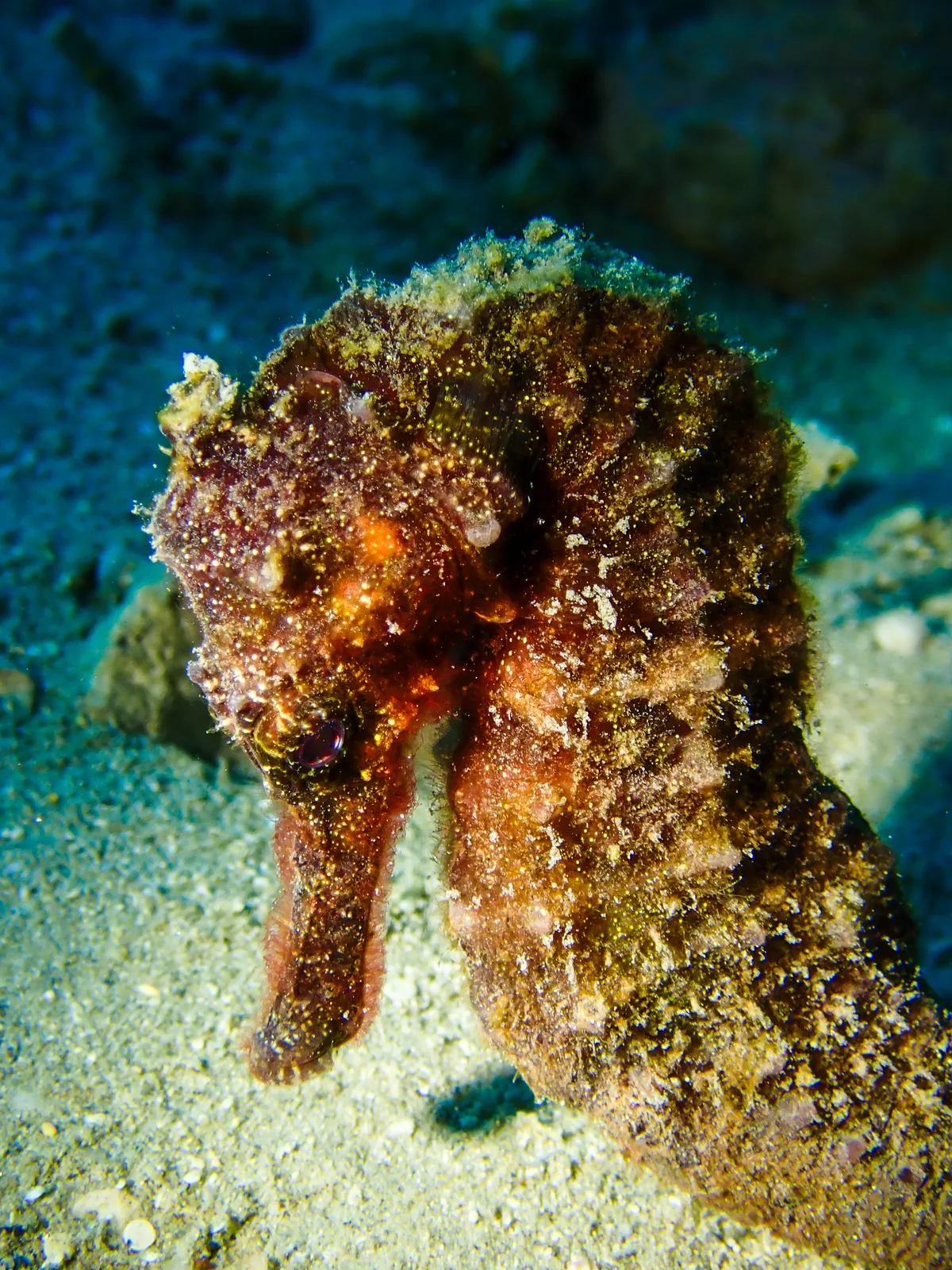
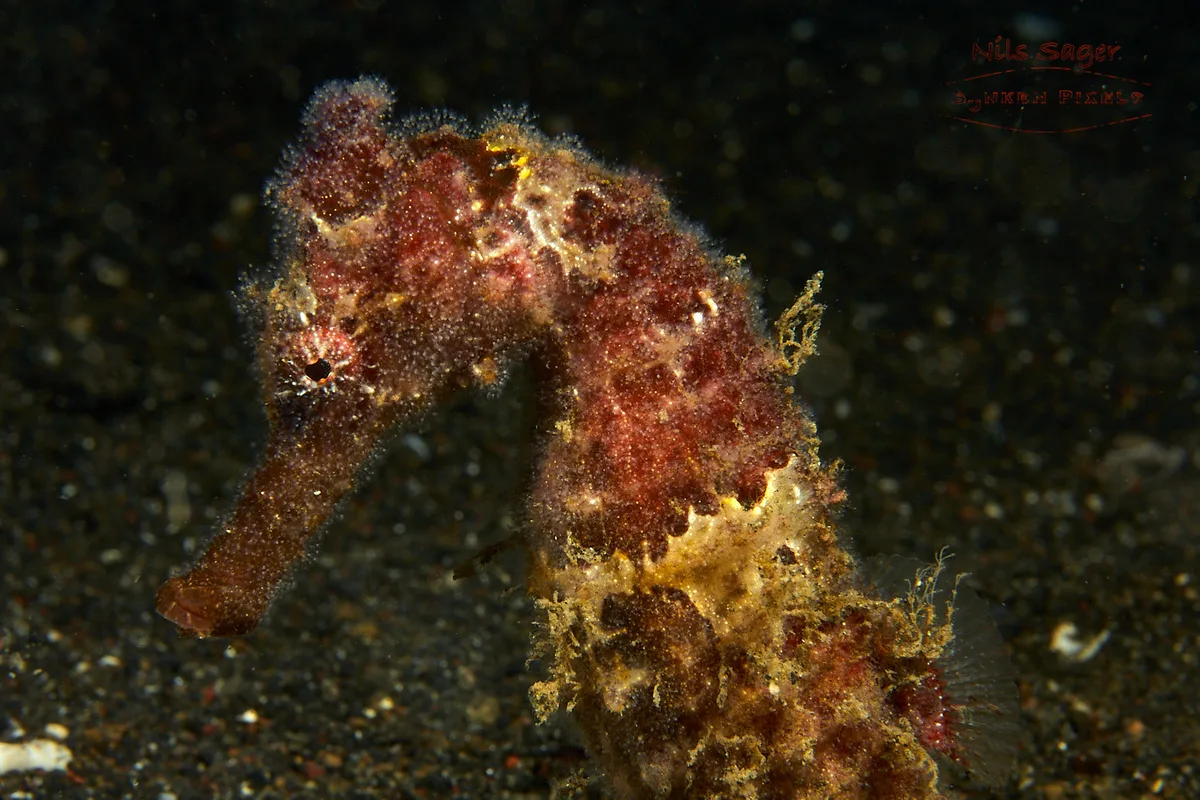
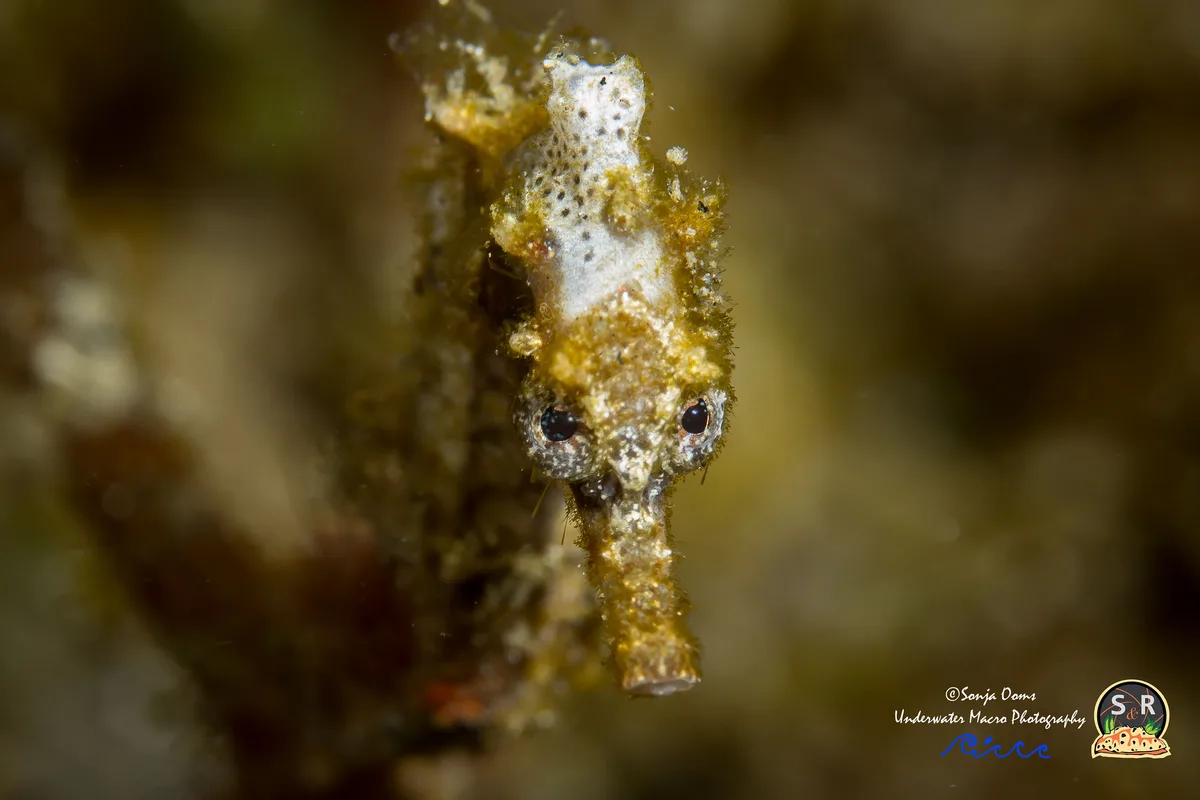
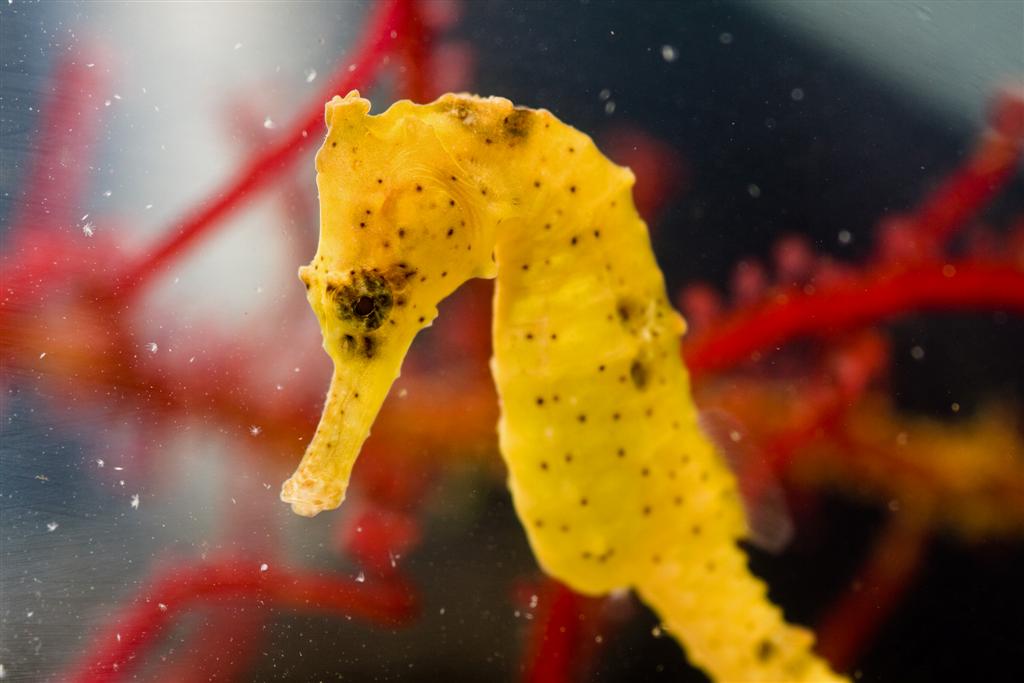
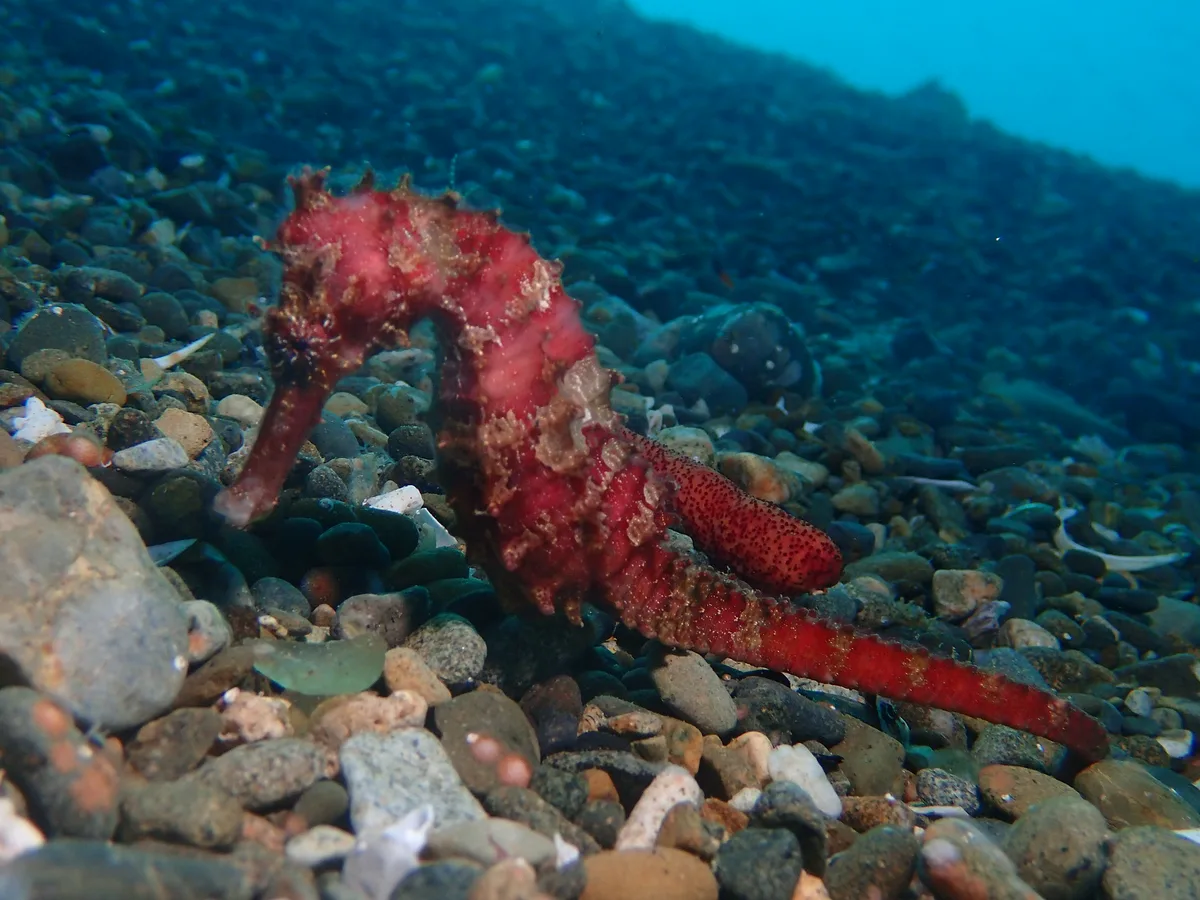
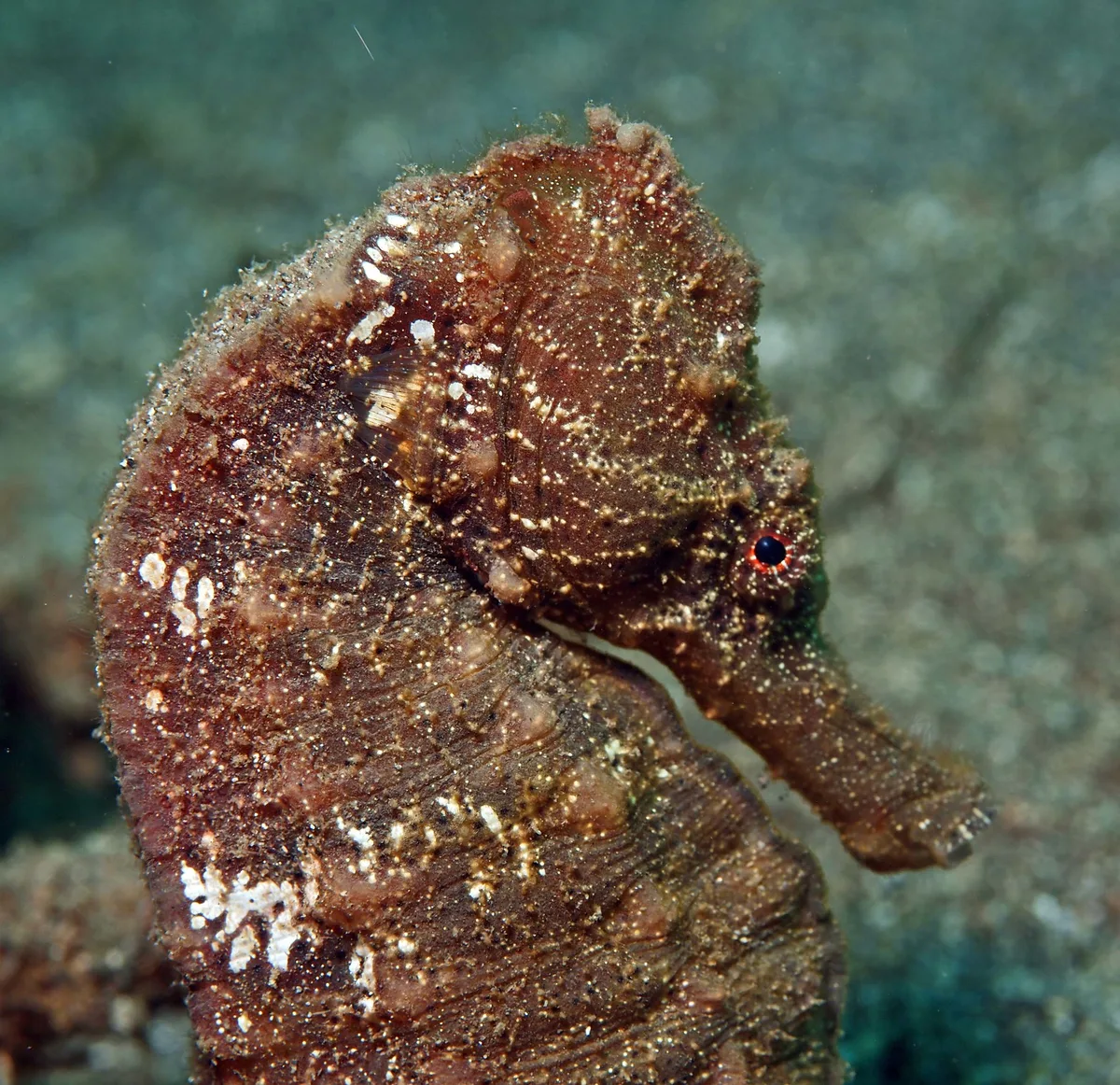
The way to know you are looking at this one and not at Jayakar's seahorse, which shares the same patches of sand and seagrass at the same size, is the outline. Run your eye along the ridges of the body. This fish has low rounded knobs and nothing sharp anywhere, and it is usually so overgrown with algae and hydroids that the outline goes soft. Jayakar's carries real spines, sharp and obvious, on every ring and over the eyes. The difference survives a bad photograph, which most of the other characters do not.

The rest is seahorse: a tail with no fin on it, wrapped around a holdfast; a head cocked back on a flexible neck and released to suck prey in, which is the fastest feeding movement any fish makes for its size; and a male that carries the eggs in a sealed pouch, feeds the embryos through its wall, and delivers them in a labor that can last hours.

Look on sheltered sand and rubble with weed on it, shallow, often near seagrass. A pair holds a small patch of bottom and greets each other every morning.

The species. Hippocampus kuda Bleeker 1852 - from Ikan Kuda (Ikan=fish. ETYFish

How to recognise it
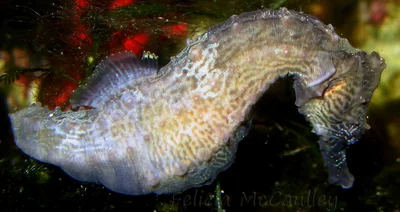
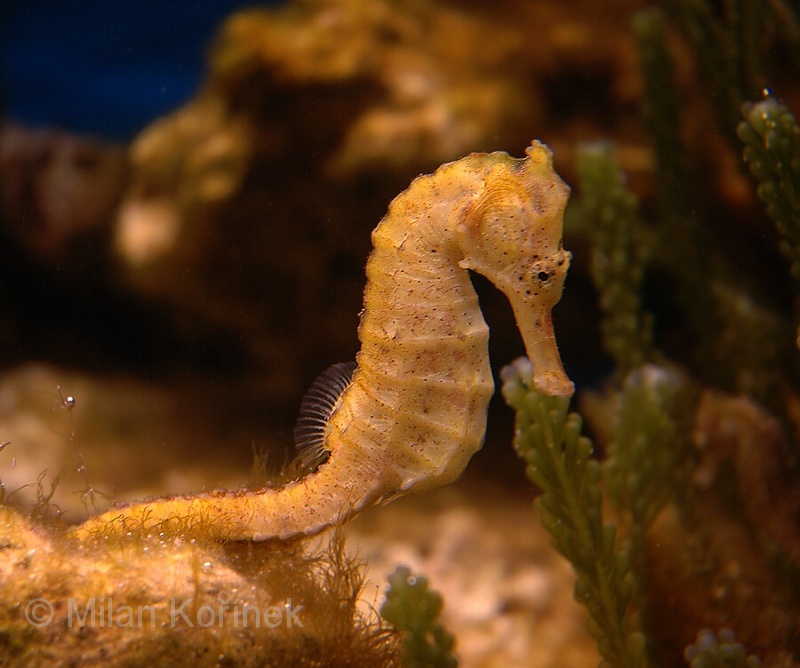
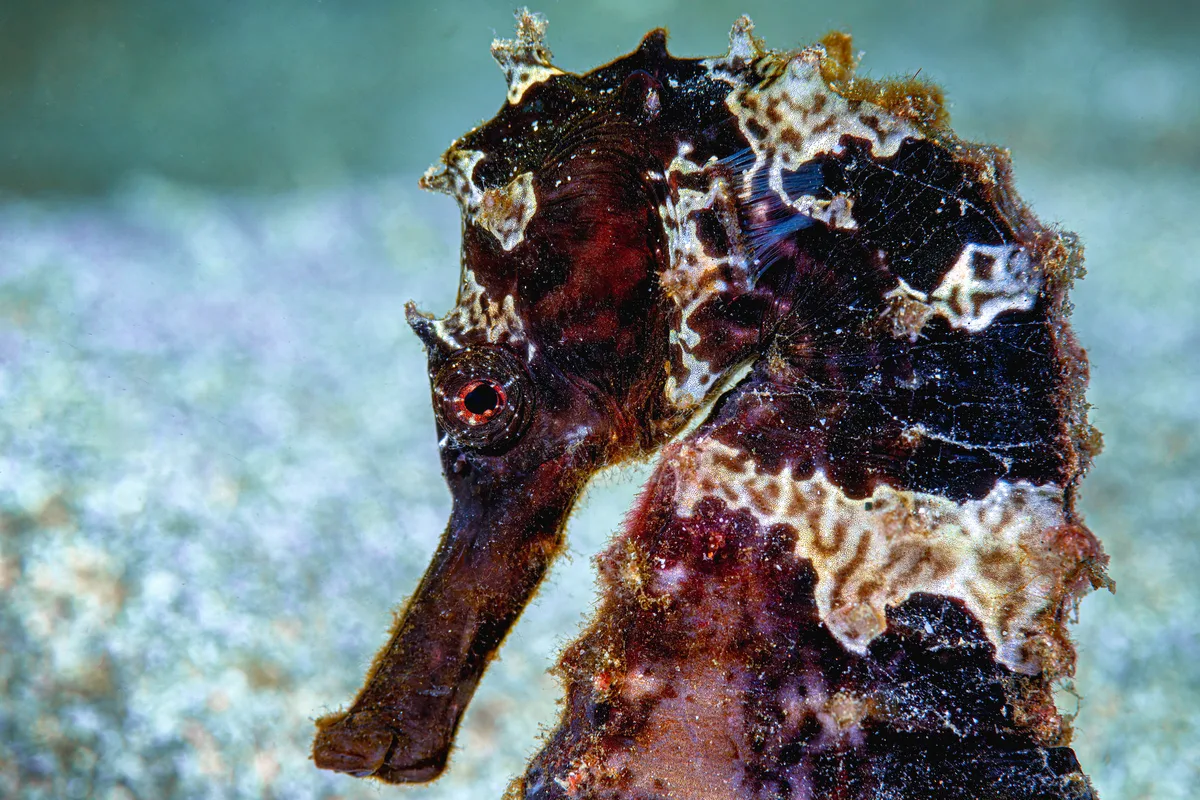
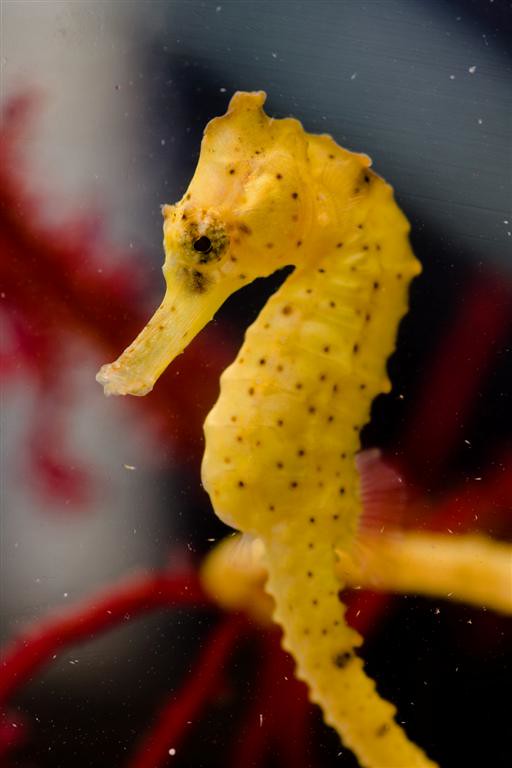
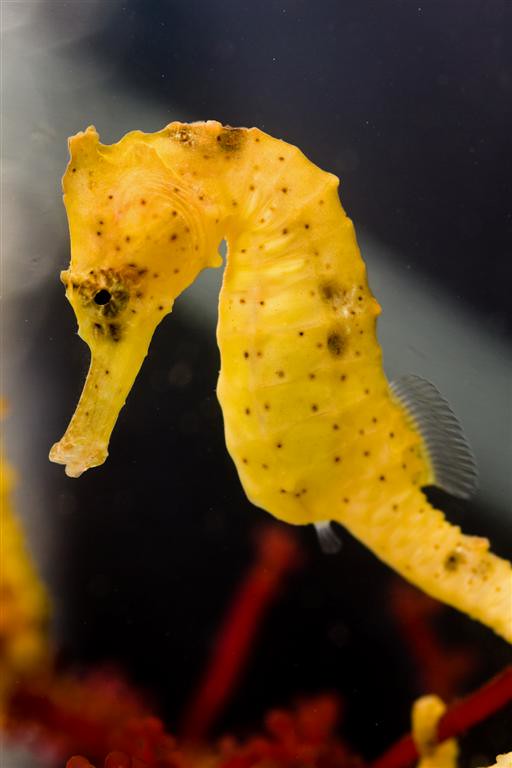
  • smooth body without spines, covered in low rounded bumps
  • short thick snout and a small backward-leaning coronet
  • color from black through yellow and cream, usually with fine dark spots
  • length up to 30 cm

Why it's threatened

Biological resource use
Intentional use: (subsistence/small scale) [harvest] · Unintentional effects: (subsistence/small scale) [harvest] · Unintentional effects: (large scale) [harvest] · Motivation Unknown/Unrecorded

In general, incidental capture in shrimp trawl fisheries and habitat degradation and exploitation are the main threats to this species. H. kuda is susceptible to incidental catch from trawling in many locations throughout its range (Giles et al. 2006, Perry et al. 2010). In China, Cambodia and the Republic of Korea seahorses are caught as bycatch although no information exists on volumes (UNEP-WCMC 2012b). Declines in Thailand of seahorse catches are attributed to overfishing, as well as an increasing number of fishers, trawling, and habitat destruction (Perry et al. 2010).

Hippocampus kuda is caught and traded for traditional medicines, aquaria and curios throughout its range (Perry et al. 2010). Trade in this species is extensive with over 2 million individuals traded per annum (Evanson et al. 2011, UNEP-WCMC 2012a).

Hippocampus kuda is also threatened by damage to its habitats (Vincent et al. 2011) from coastal development and destructive fishing practices. Land-based activities such as coastal construction can diminish seagrass beds and mangroves while leading to increased pollution and siltation in surrounding marine waters. For example, in Malaysia Hippocampus kuda numbers declined due to an extensive port development around the Pulai Estuary that destroyed large tracts of seagrass meadow (Vincent et al. 2011). Fishing methods such as trawling result in substantial damage to seagrass beds globally, and especially in the Indo-Pacific (Short et al. 2011). The decline in and fragmentation of the species’ habitats throughout its range indicates possible declines in populations in addition to those caused by fisheries.

All seahorse species have vital parental care, and many species studied to date have high site fidelity (Perante et al. 2002, Vincent et al. 2005), highly structured social behaviour (Vincent and Sadler 1995), and relatively sparse distributions (Lourie et al. 1999). These life history parameters often make species susceptible to exploitation as has been demonstrated for a number of species, including seahorses (Jennings et al. 1998, Foster and Vincent 2004). Although seahorses also have some traits, such as small body size, fast growth and high fecundity, that may confer resilience to exploitation pressures (Morgan 2007),

Due to the mode of spawning exhibited by Hippocampus kuda (ovoviviparous brood pouch male parental care), fecundityis comparatively low compared to non-brood pouch spawning fishes and therefore its capacity for population growth is more limited than other species (Brown et al. 2008). As a result of the lack of broadcast spawning of pelagic eggs, dispersal of potential recruits is limited. Additionally, given the limited swimming abilities of seahorses, it is highly unlikely that rescue effects would occur from adjacent populations.

Threat classification from the IUCN Red List.
Comments

Please, sign in to leave a comment

Continue with a social account - yours will be created automatically.

No comments yet — be the first.

Last Update: August 24, 2026