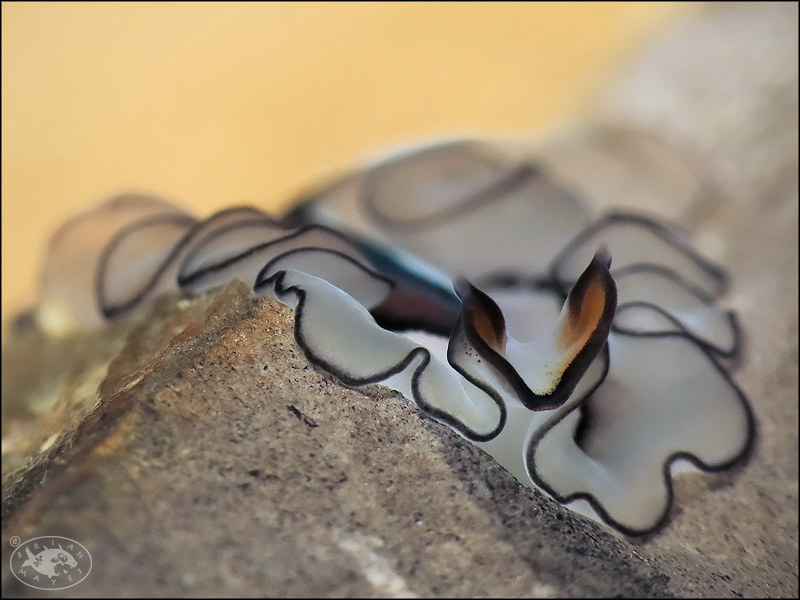
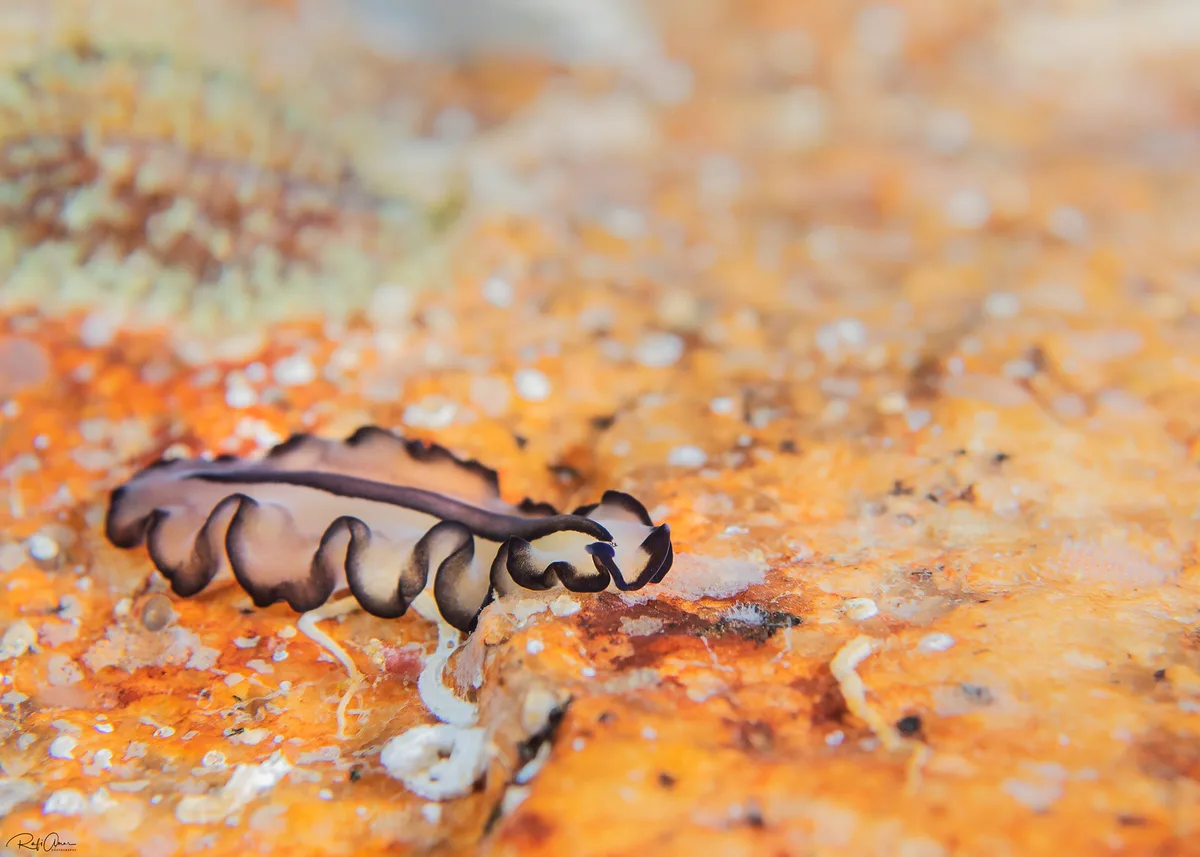
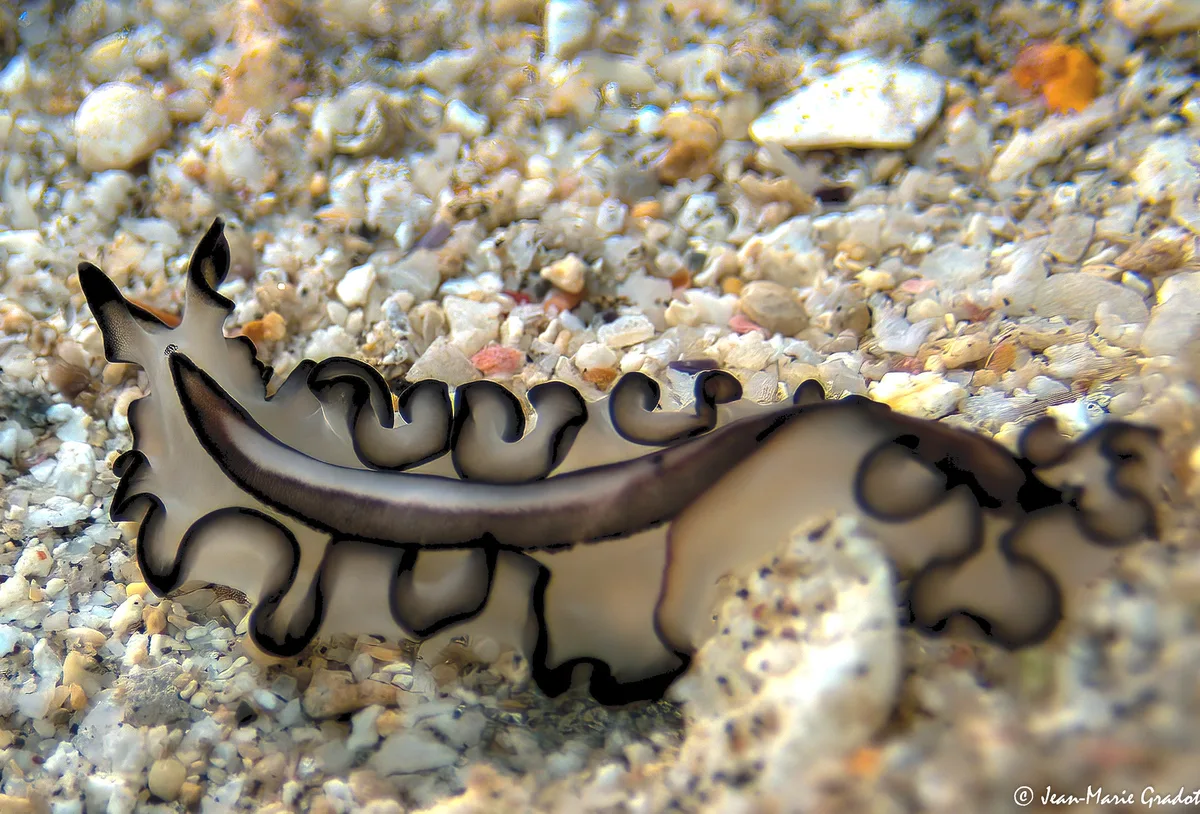
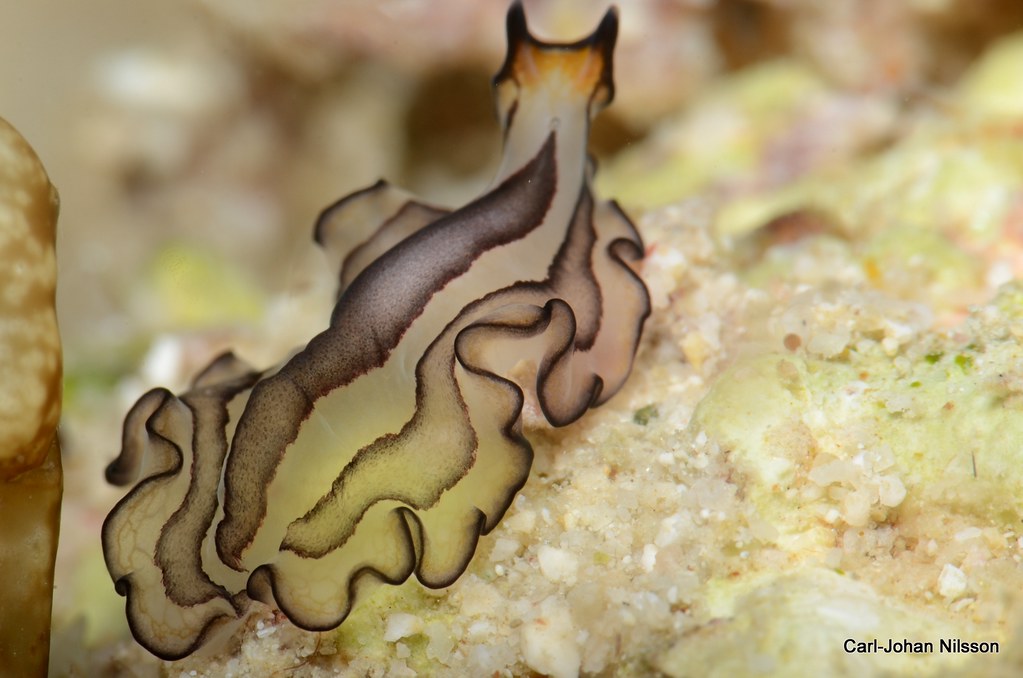
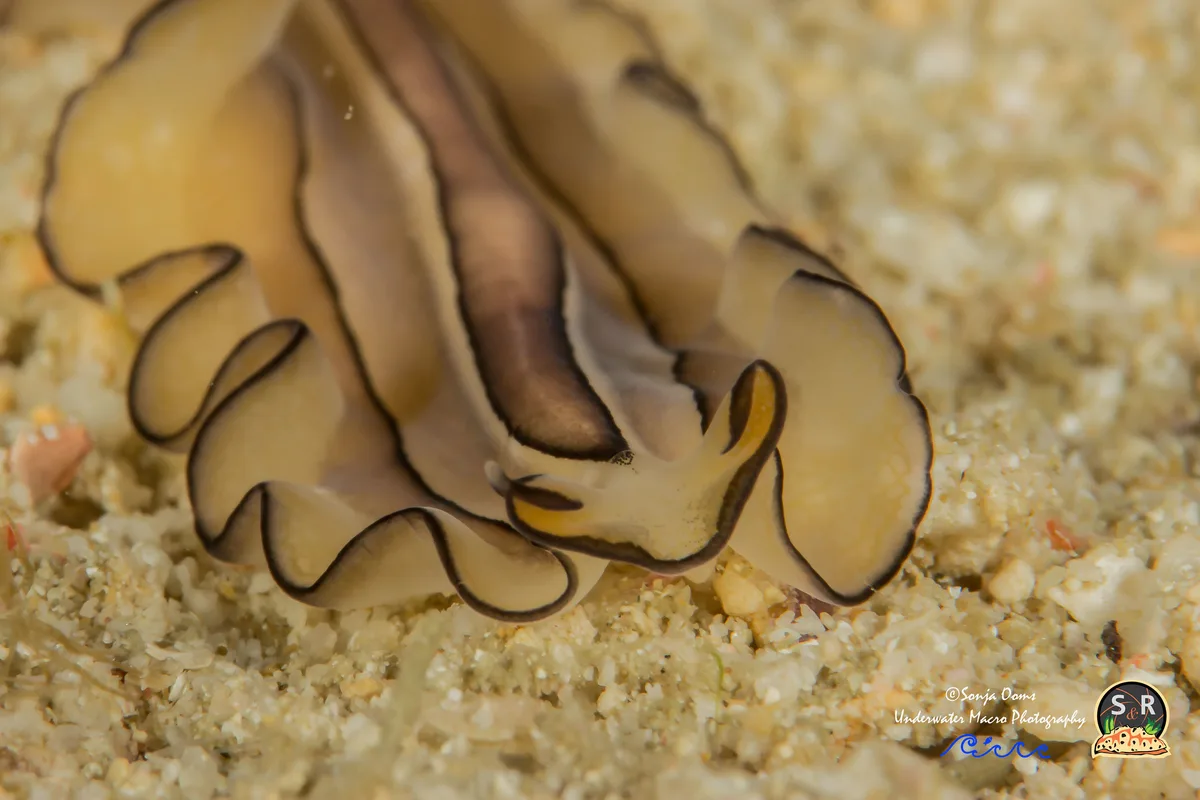
A translucent brownish sheet up to 5 cm (2 in) long, marked with three or four dark stripes running its length and finished with a dark margin. Thin enough that a recent meal shows through as a shadow in the branching gut, which is the closest thing to an internal organ this animal displays.
Days are spent under a stone or in the shade of rubble, nights out in the open. Prey is soft and stationary - sea squirts, bryozoans, small colonial animals - located by chemical trail rather than sight, since the eyes are clusters of simple spots that register light and little else.
A flatworm's most useful trick is regeneration. Cut in half, many polyclads rebuild the missing end, and a fragment with the right tissue can regrow a whole worm. That capacity is why this group has spent a century in laboratories as a model for how bodies rebuild themselves, and why the animal on the reef can survive a bite that would end most others.
- translucent brownish body with three or four dark lengthwise stripes
- dark margin running the full outline
- up to 5 cm, thin enough to show what it has eaten
- usually under a stone by day