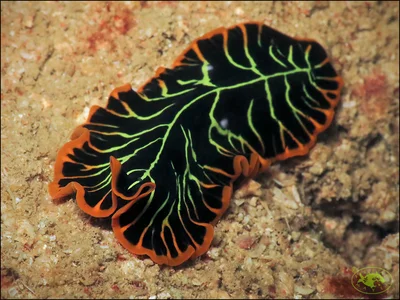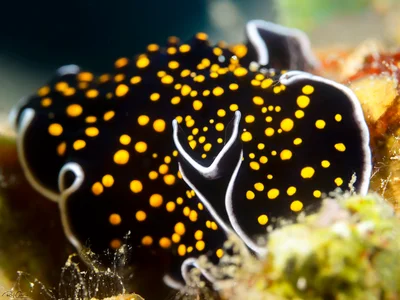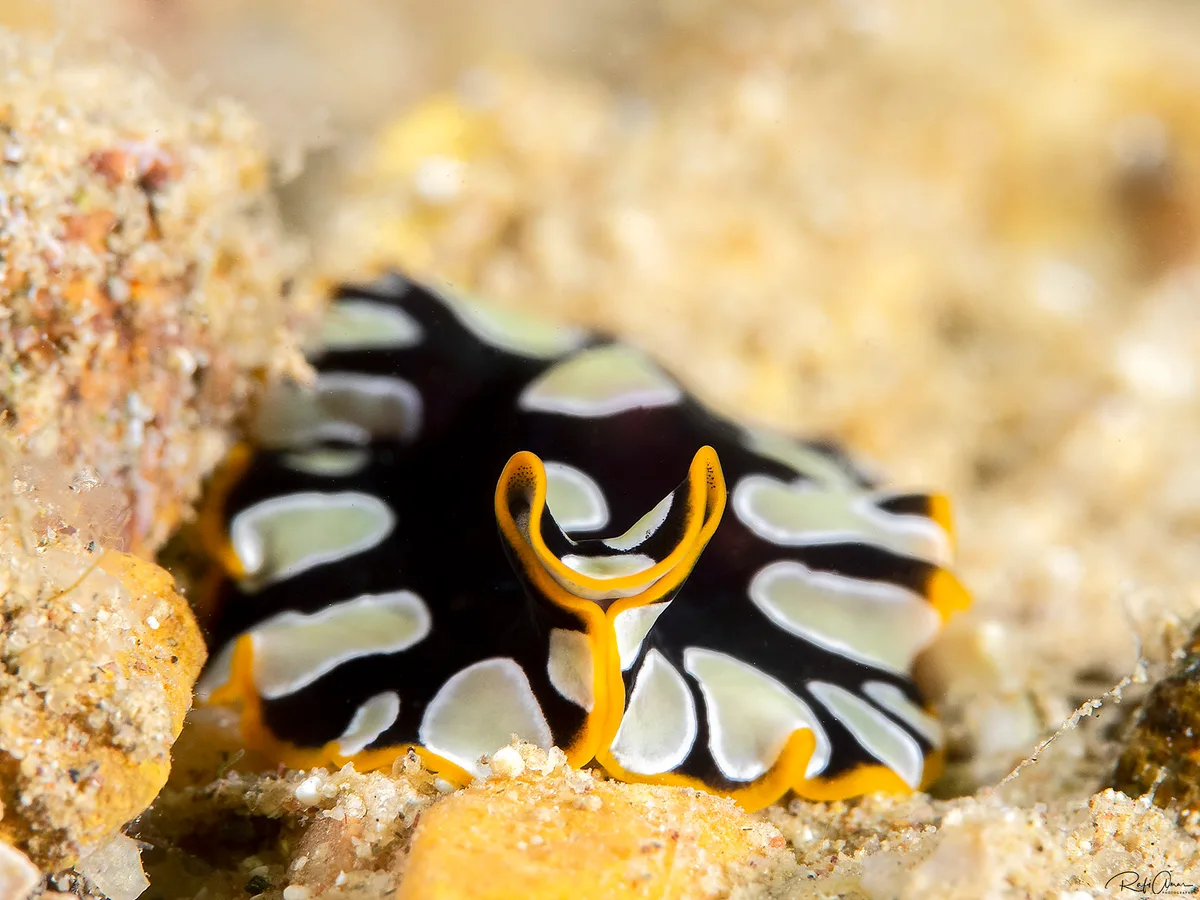
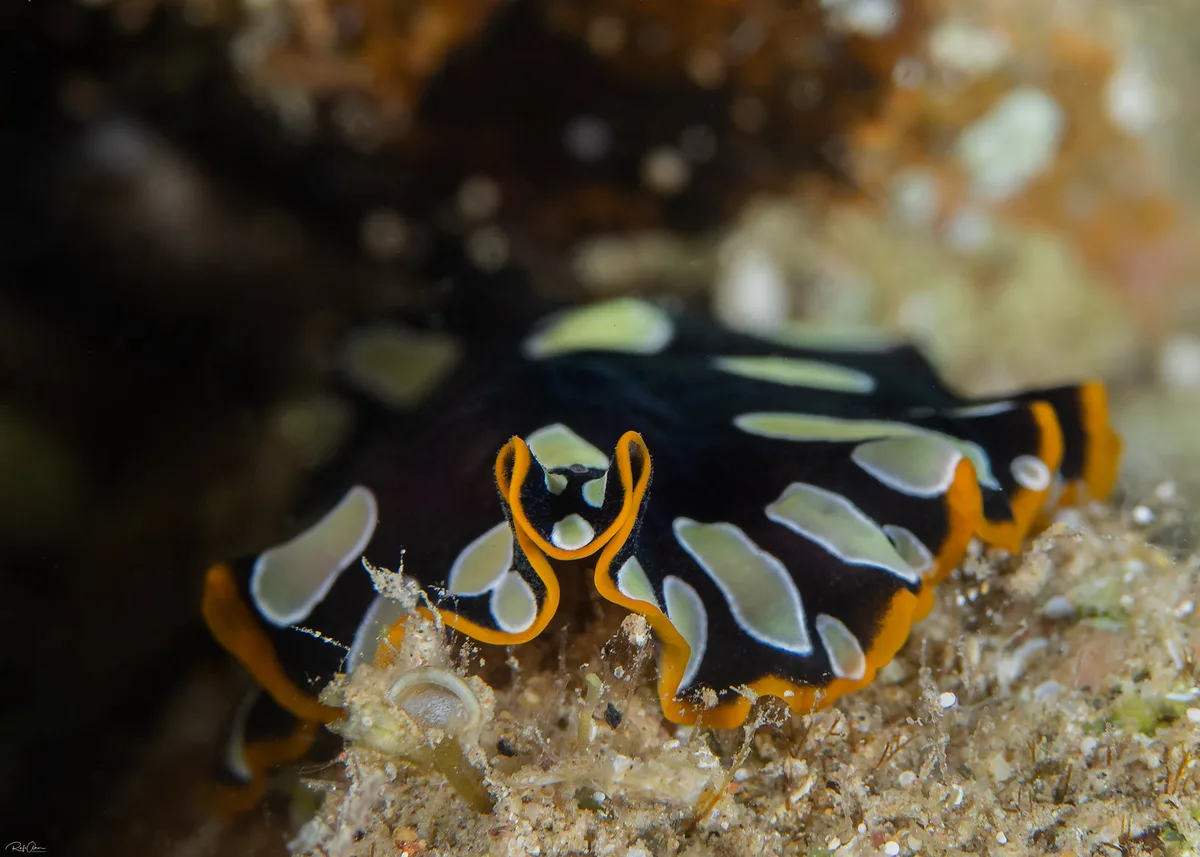
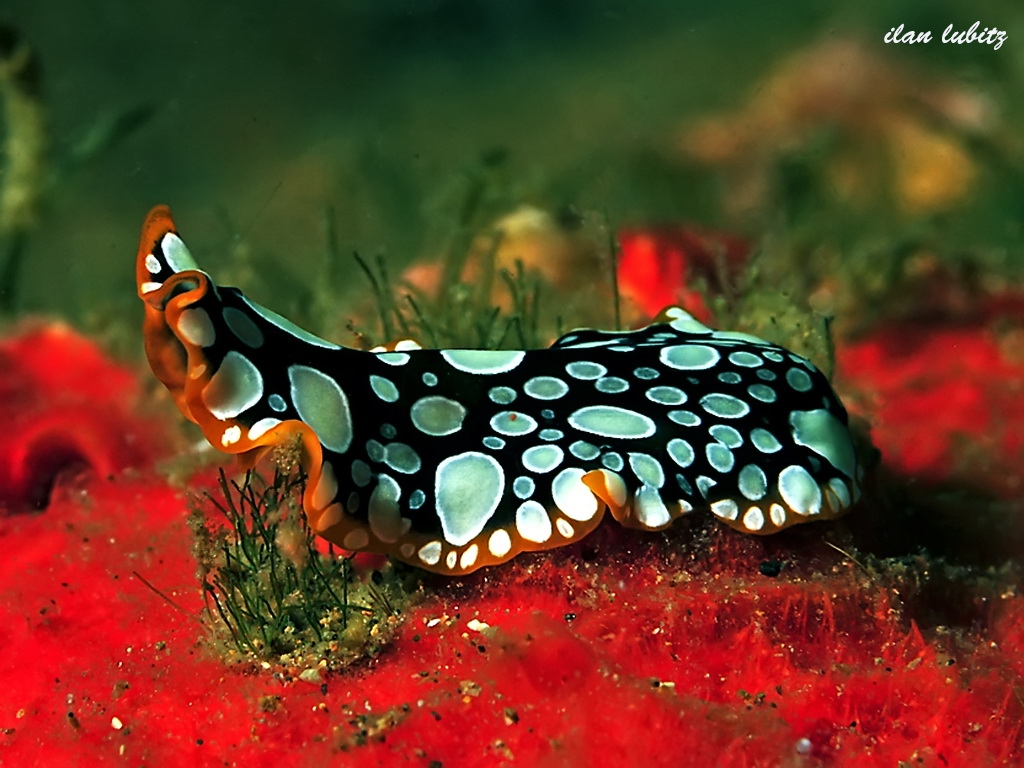
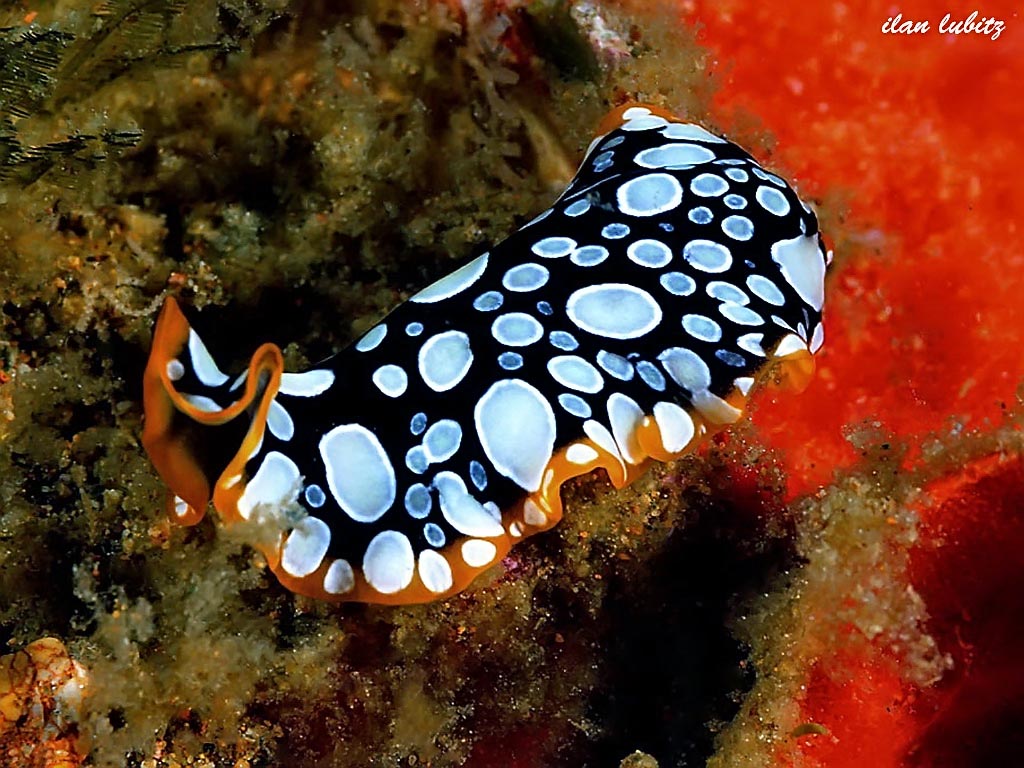
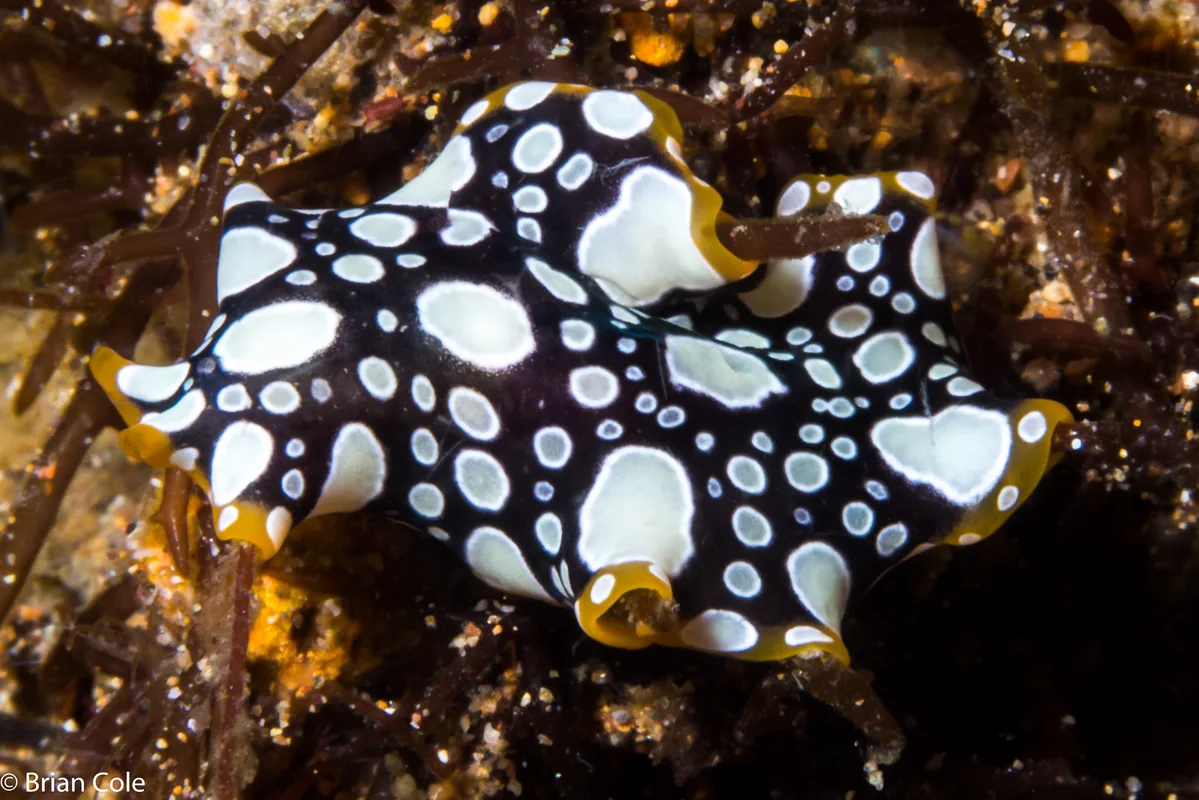
Small and absurdly bright: about 2 cm (0.8 in) of black body covered in yellow-green spots, each ringed by a darker halo, the whole outline finished in orange. At that size it is easy to swim past, and easy to mistake for a nudibranch at a glance, which several photographers have.
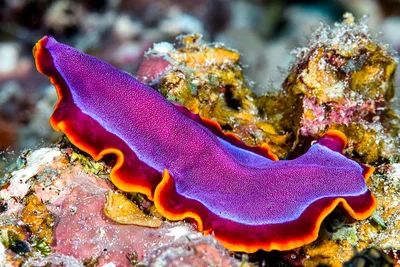
The difference is in the profile. A nudibranch stands up off the rock with gills on its back and a pair of rhinophores in front; this is a sheet, and everything it does happens at the margin. Watch the leading edge and you will see the two small folded pseudotentacles that carry its chemical senses, raised like a cat testing the air.
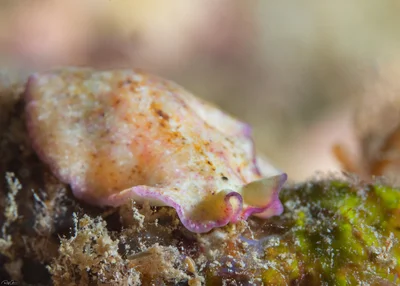
Color this loud on an animal this defenseless is a claim of toxicity, and in polyclads the claim is usually backed. What varies is how much: the pattern of this species is famously variable across its range, and populations that look quite different from each other still read, to a fish, as the same bad idea.
- black body covered in yellow-green spots ringed with darker haloes
- orange margin around the whole outline
- small, only about 2 cm
- moves in daylight over live coral