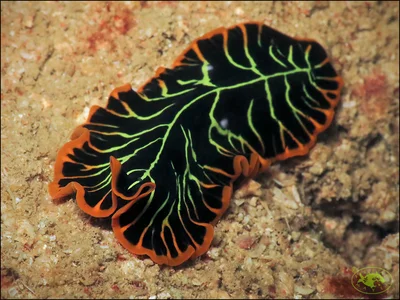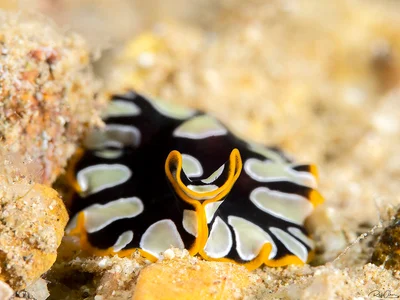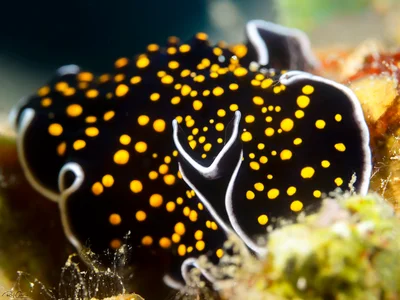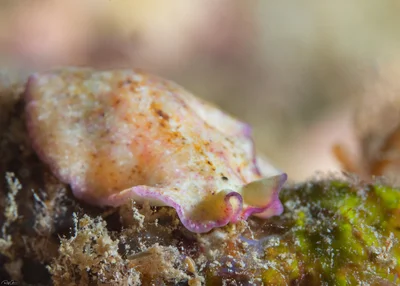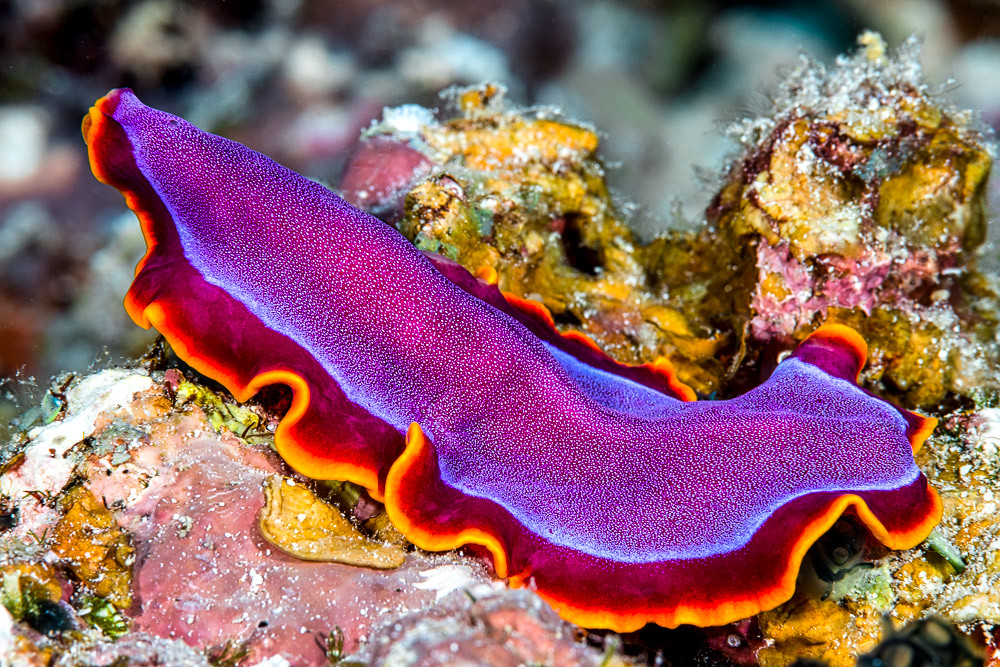
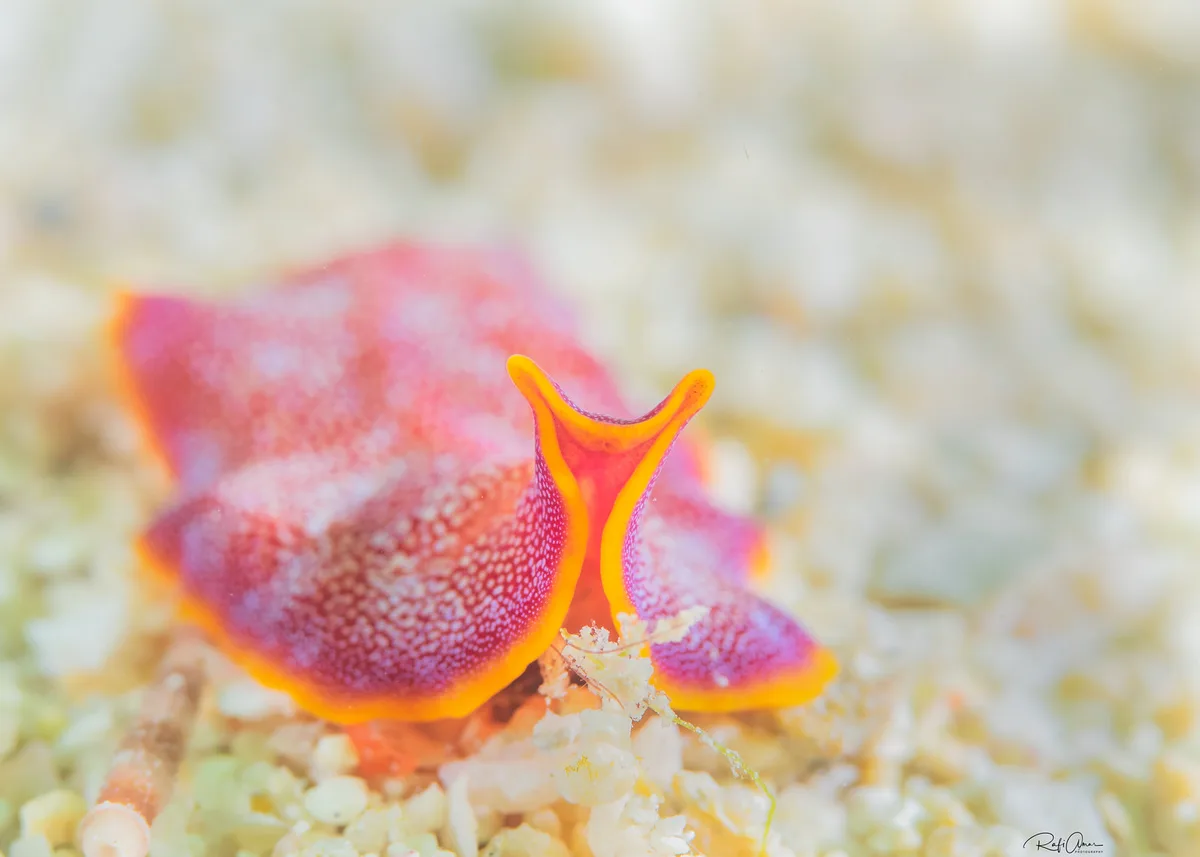
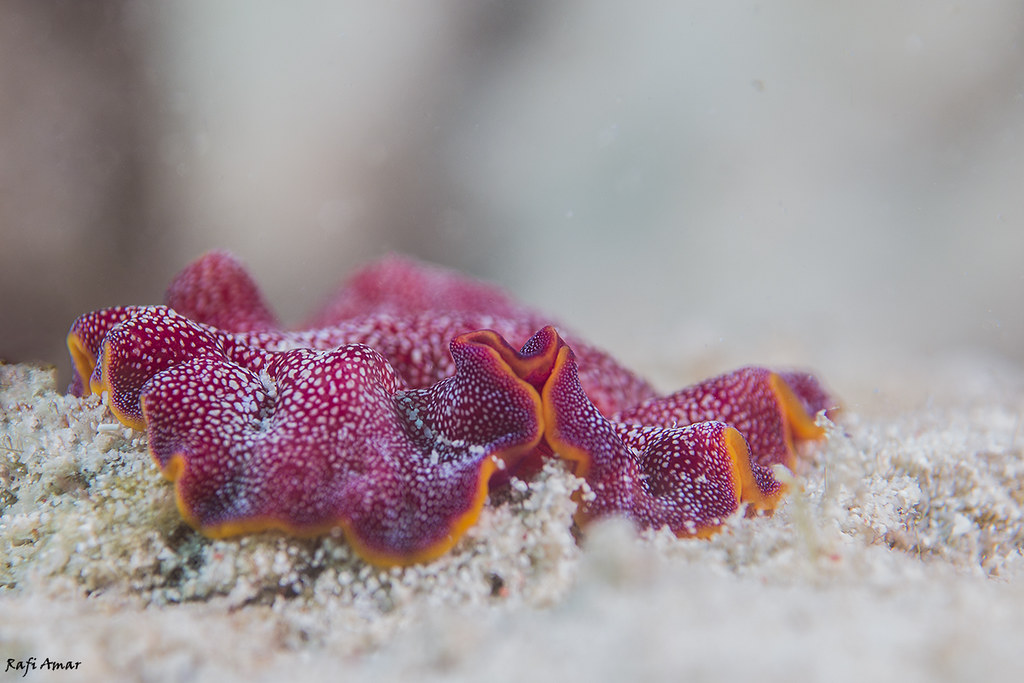
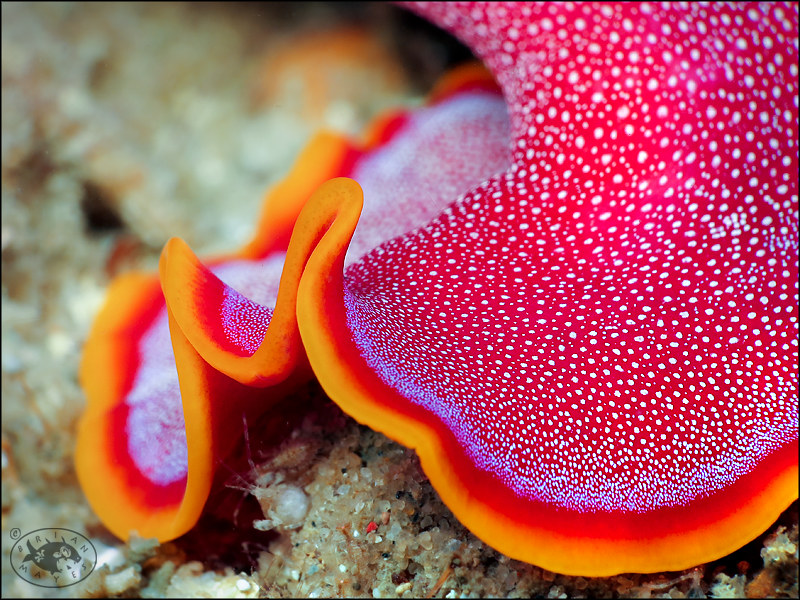
Deep red to maroon, dusted with white spots and finished with a bright orange band at the very edge, up to 6 cm (2.4 in) long. This is the flatworm divers actually photograph, because unlike most of its relatives it crosses open reef in daylight, apparently untroubled by every fish in sight.
That confidence is chemistry. The skin holds toxins strong enough that experienced predators leave it alone, and the color scheme exists to be memorized after one bad experience. The pattern is loud in the wavelengths that survive at depth, and it repeats across unrelated species in the same waters - a shared uniform that costs each of them less than teaching every fish separately would.
Underneath is a branching gut, a mouth halfway along the belly, and nothing that could be called a head. It feeds mostly on sea squirts, pressing the pharynx out over the prey and digesting it where it sits. Nudibranchs are often confused with it, but a flatworm has no gills on its back and no rhinophores on its front - and it is thin, whereas a nudibranch has body to it.
- deep red to maroon body dusted with white spots
- bright orange or yellow band right at the margin
- up to 6 cm, out in the open in daylight
- two folded pseudotentacles raised at the leading edge