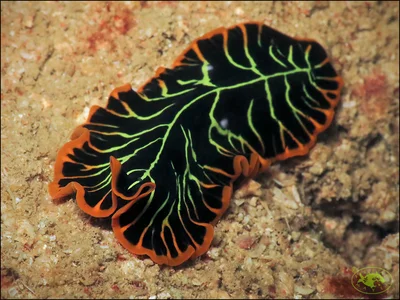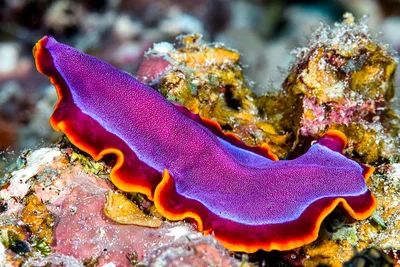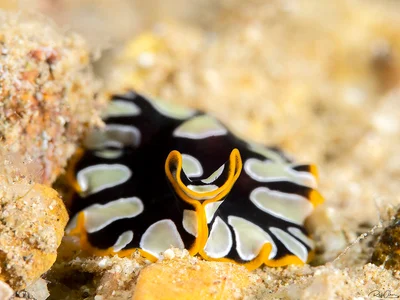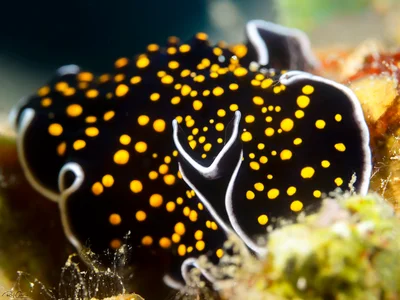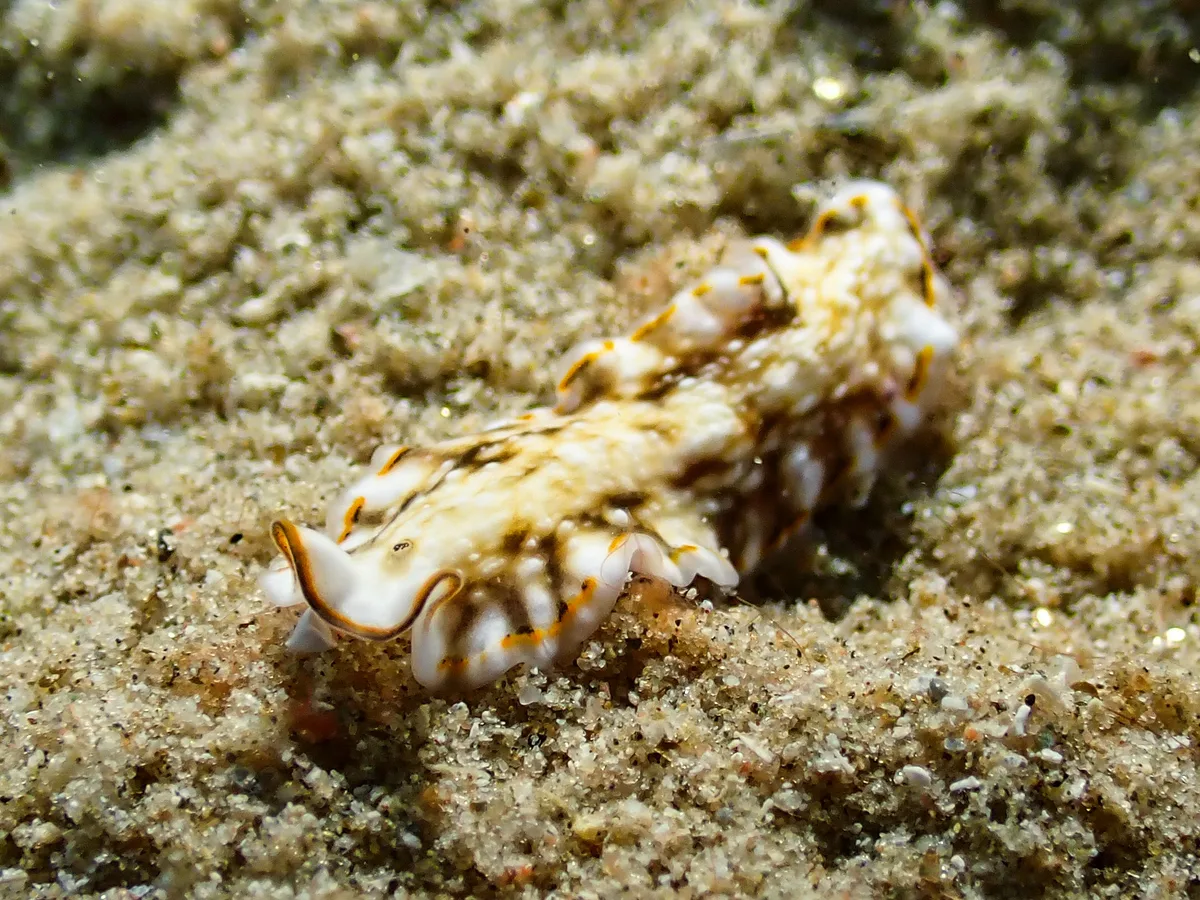
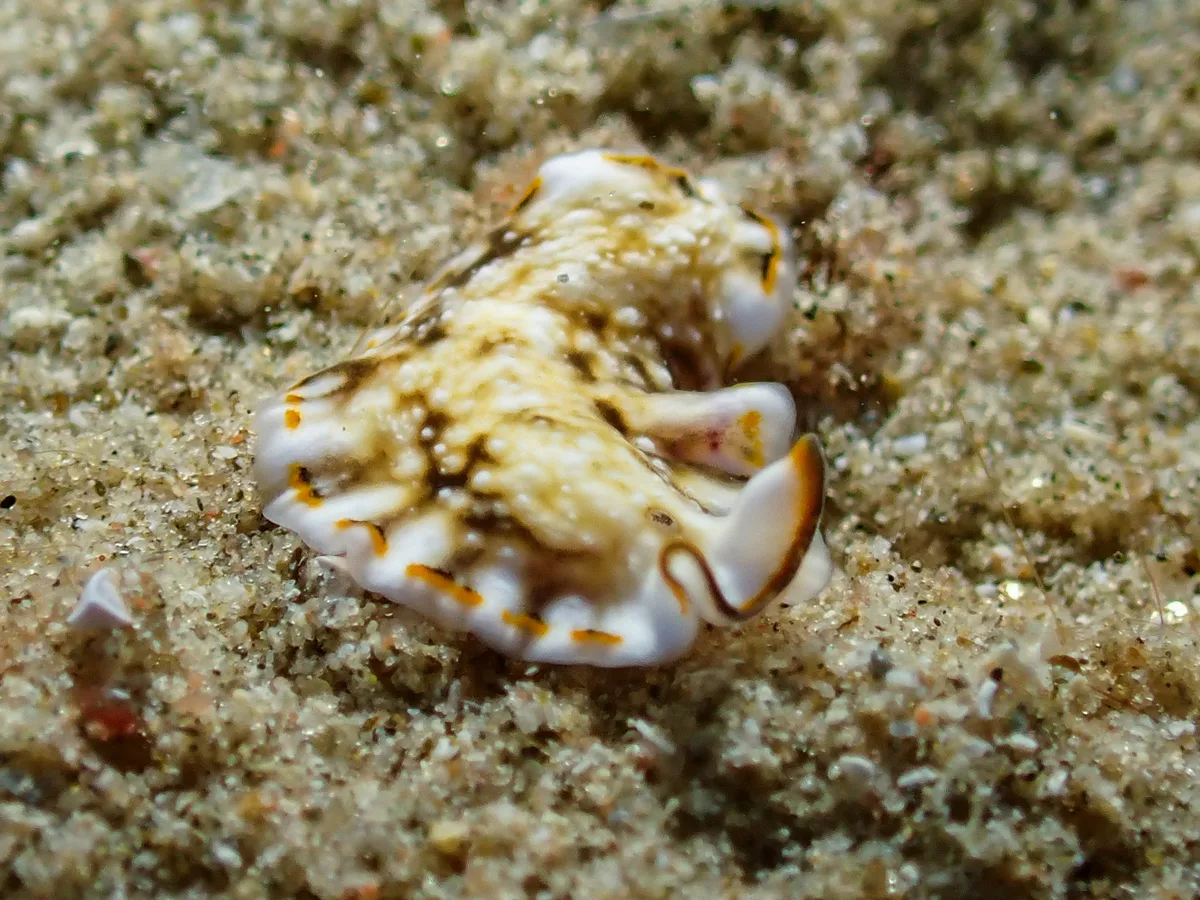
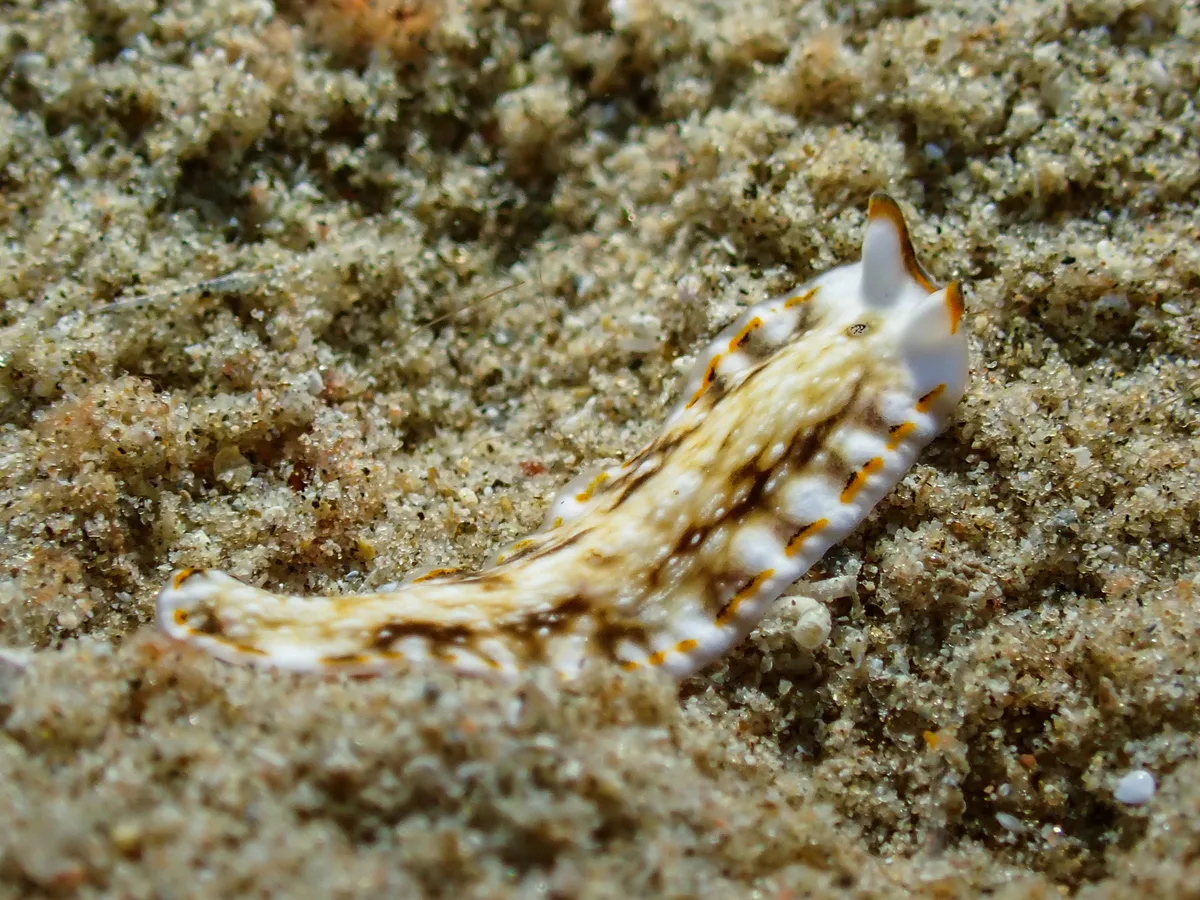
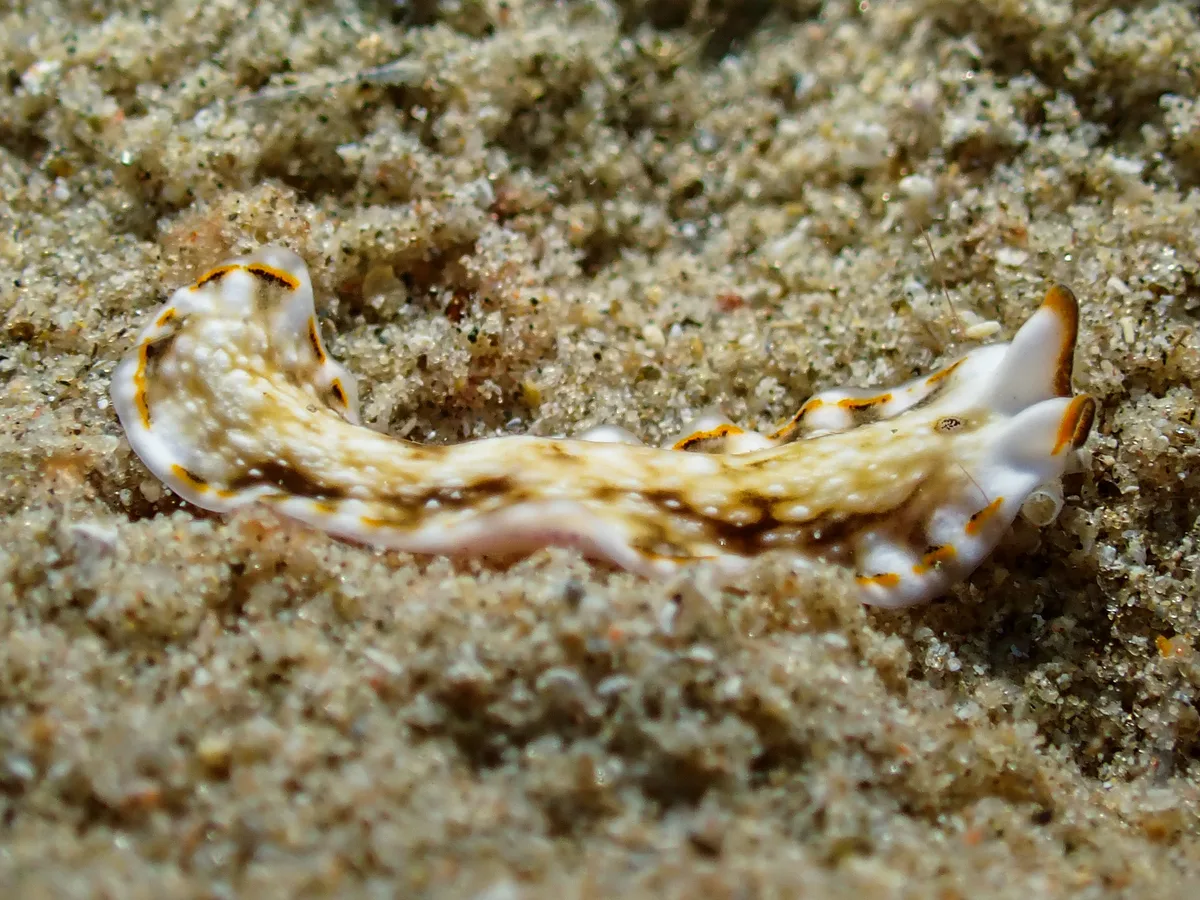
A flatworm has no gills, no lungs, no heart and no blood. Oxygen reaches its cells by diffusing straight through the body wall, which puts a hard ceiling on how thick the animal can be: every cell has to be within a fraction of a millimeter of the outside. That is the whole reason for the shape. Flat is not a style, it is a respiratory requirement, and it also rules out ever getting big.
The breeding is the other thing worth knowing. These worms are simultaneous hermaphrodites, carrying both sets of equipment, and when two meet they do not simply exchange. Being the father is cheap and being the mother is expensive, so each one tries to inject the other and avoid being injected, using a pair of sharp stylets to stab sperm directly through the skin. Two worms will rear up and fence with them, sometimes for many minutes, and the loser carries the eggs.
The pattern on the back is a warning. Polyclads of this genus take up or make toxins and advertise them, and the reef learns to leave the bright drifting leaf alone.
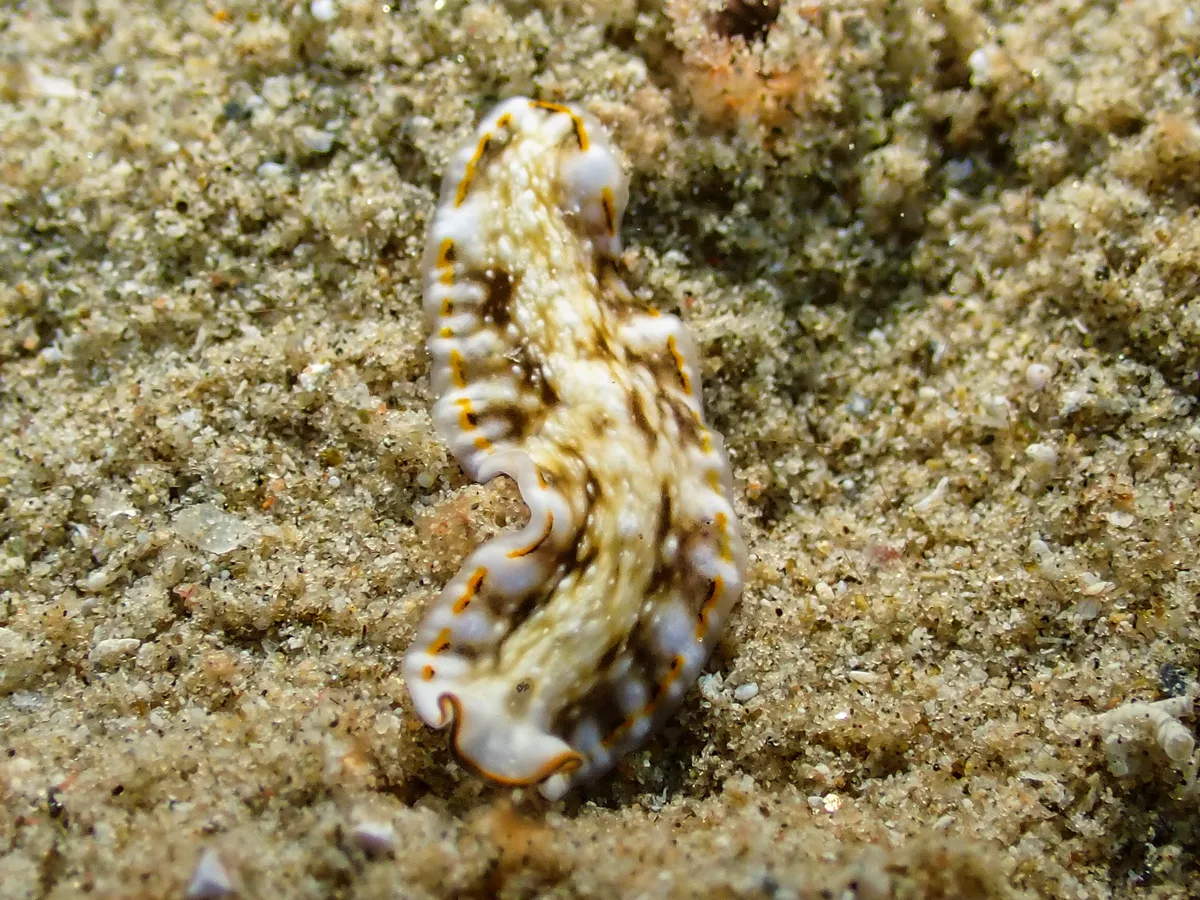
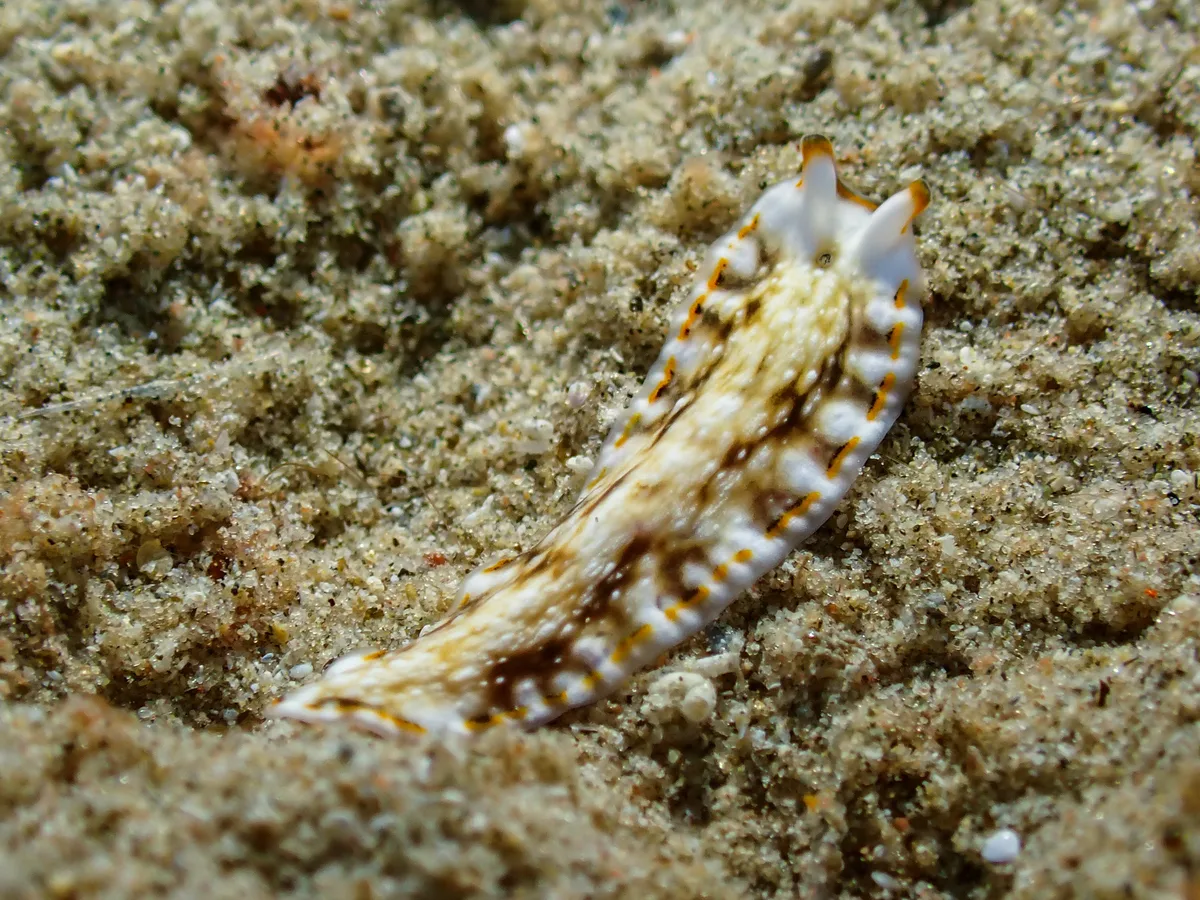
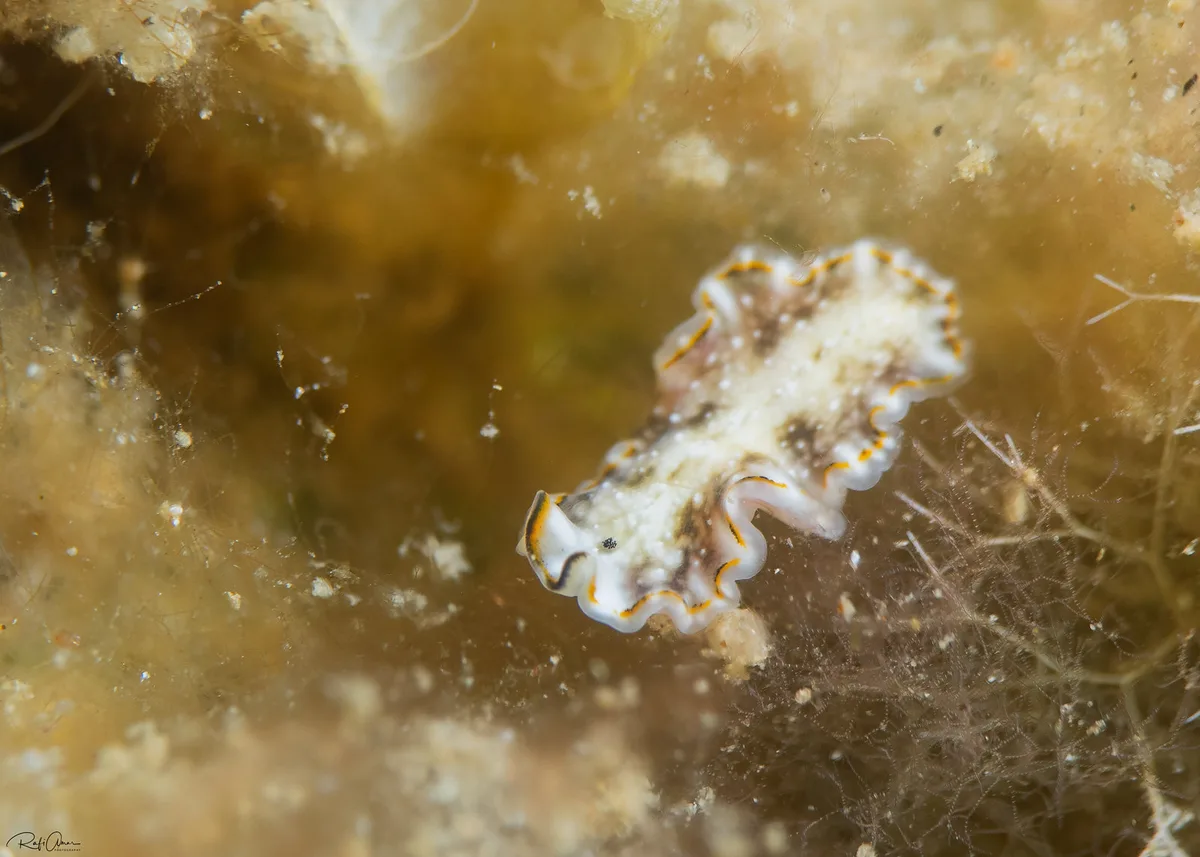
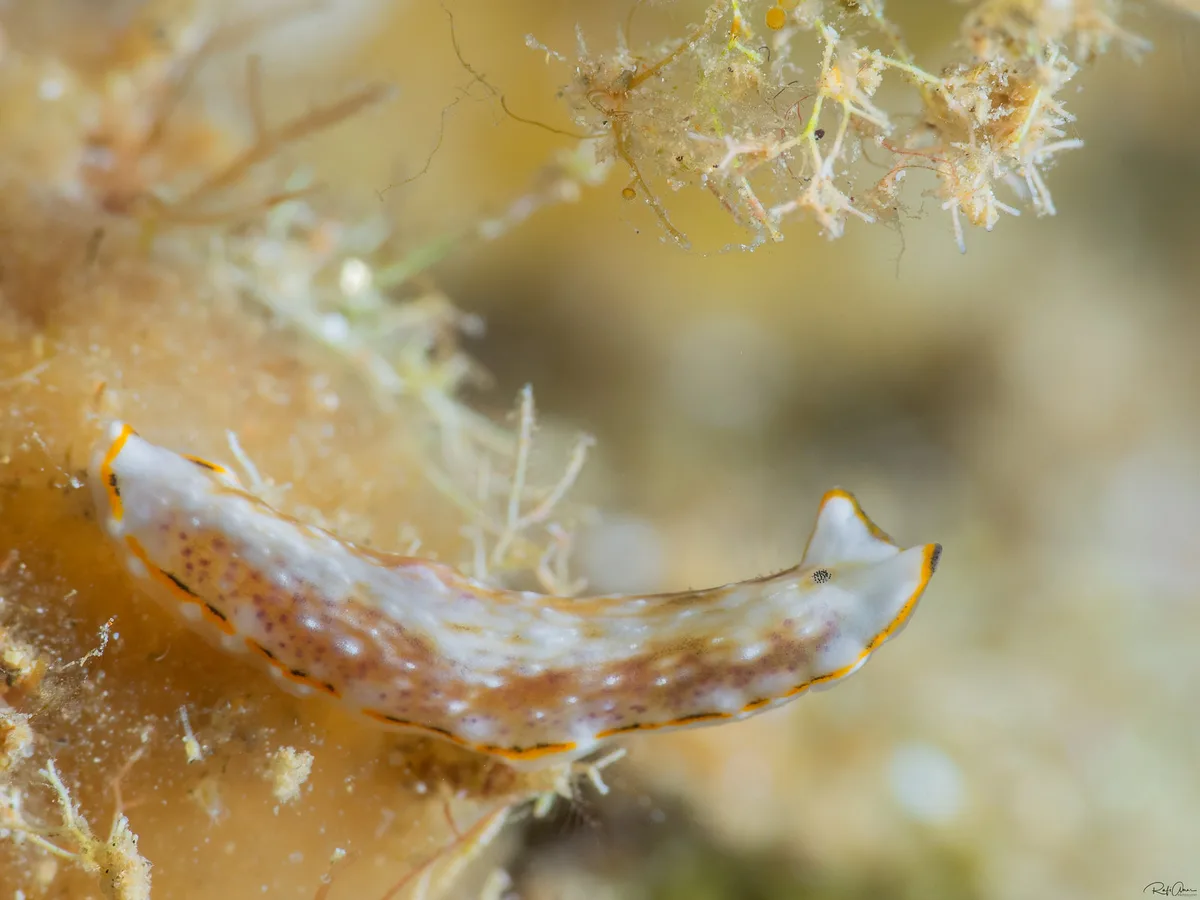
- broad leaf-shaped body that ripples along its edges as it moves
- beige and brown ground color under a network of white and black lines
- no visible head, gills or fins; a pair of small folded pseudotentacles at the front
- glides rather than crawls, and can swim by undulating the whole body
- 2 to 6 cm