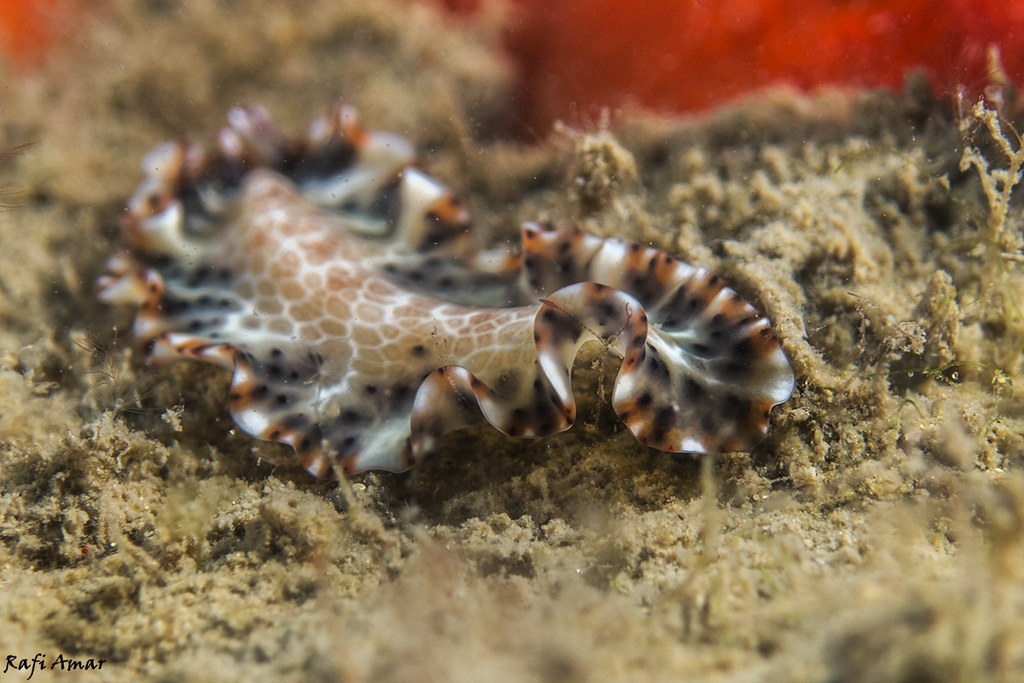
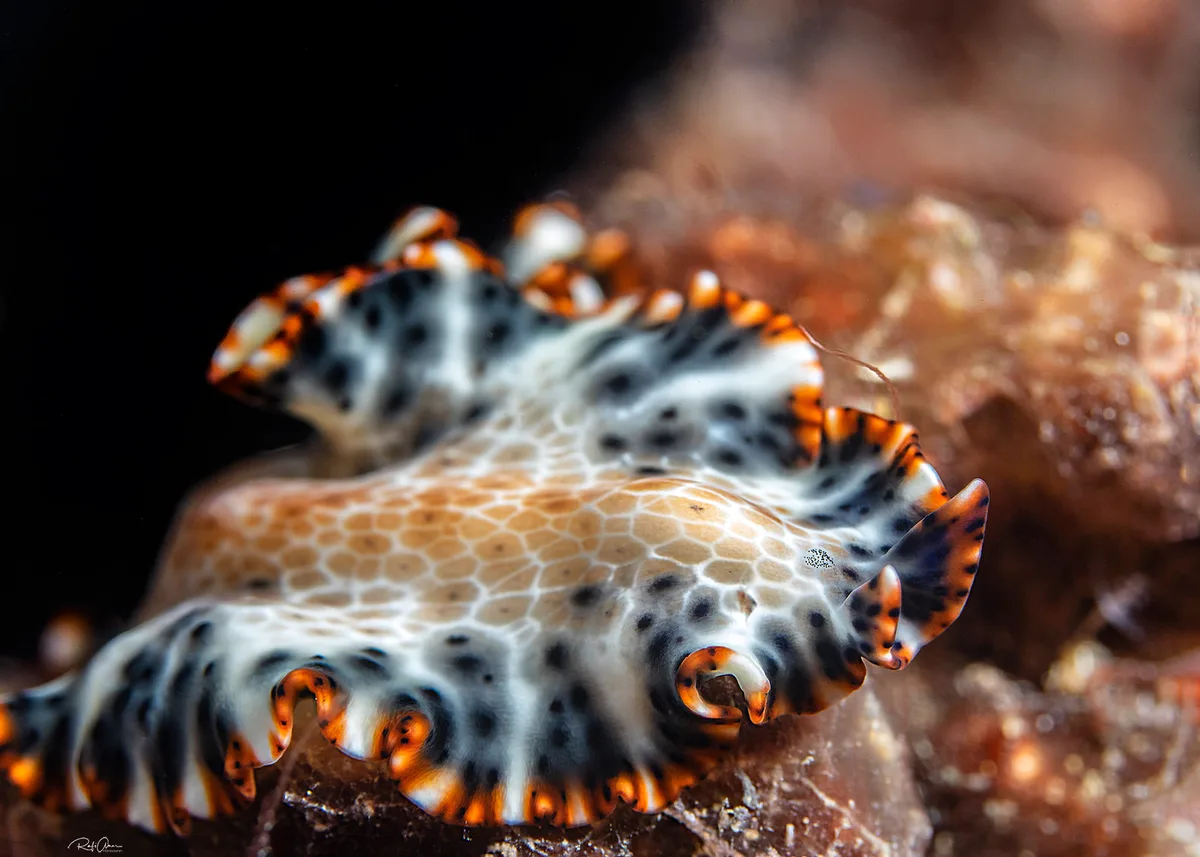
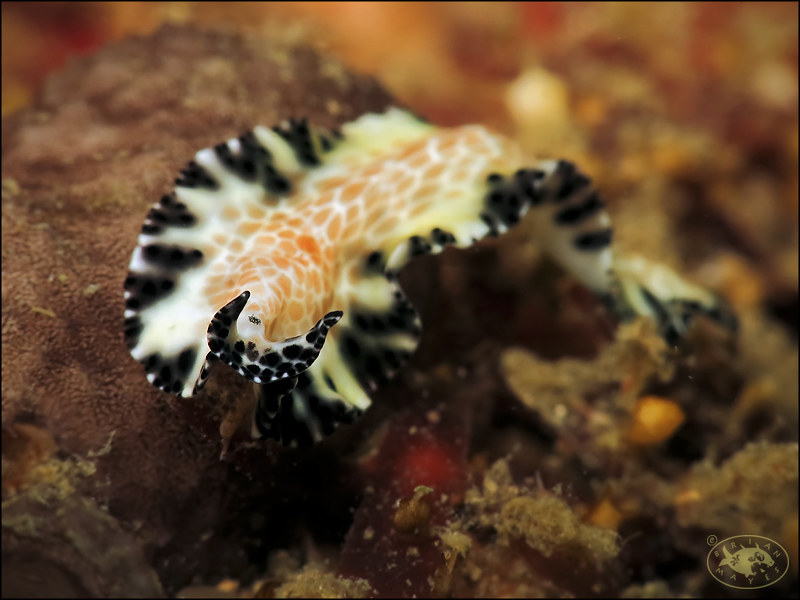
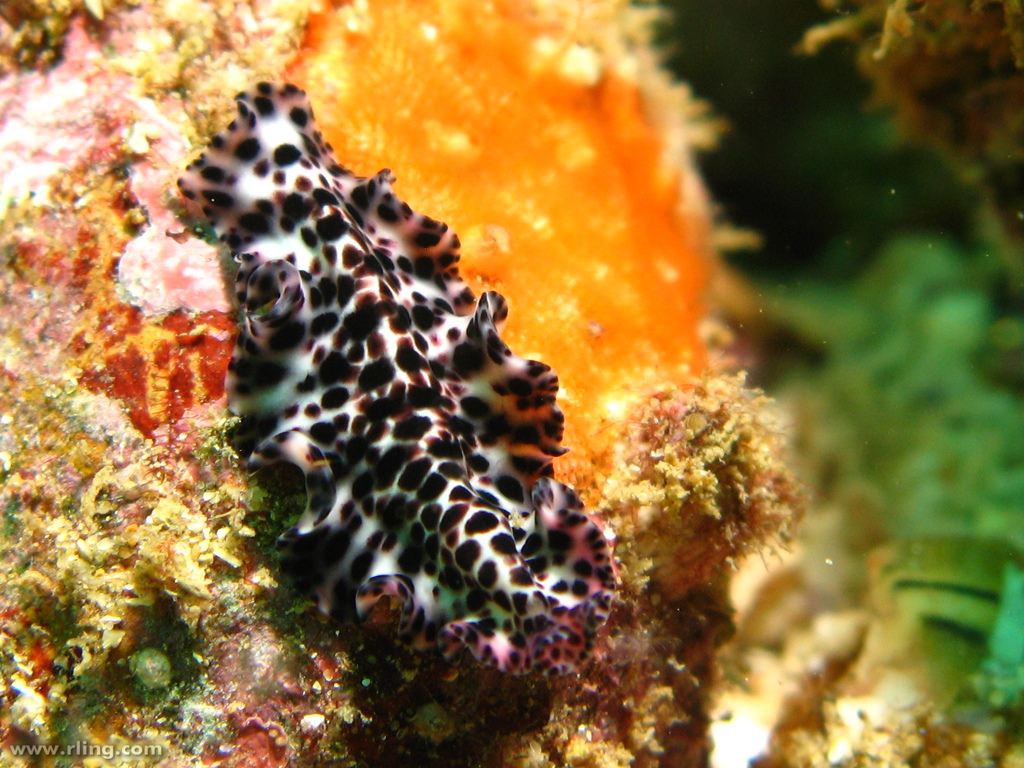
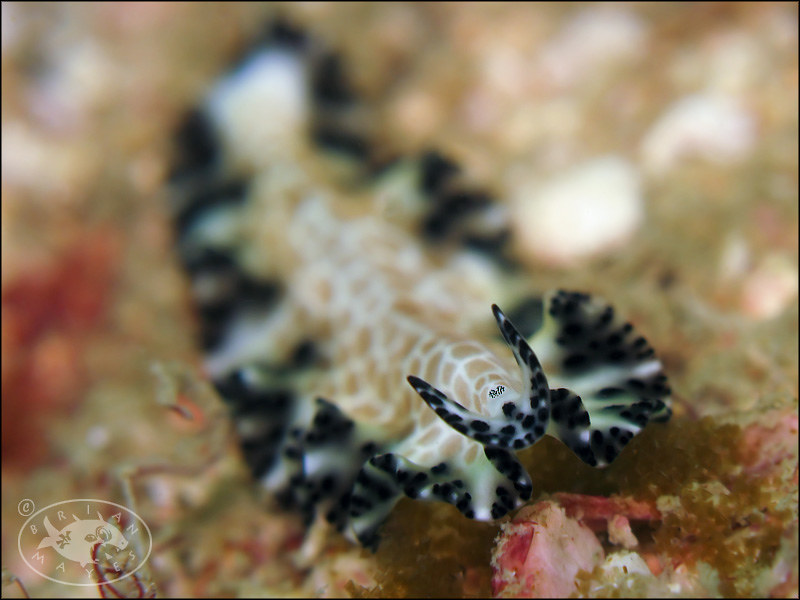
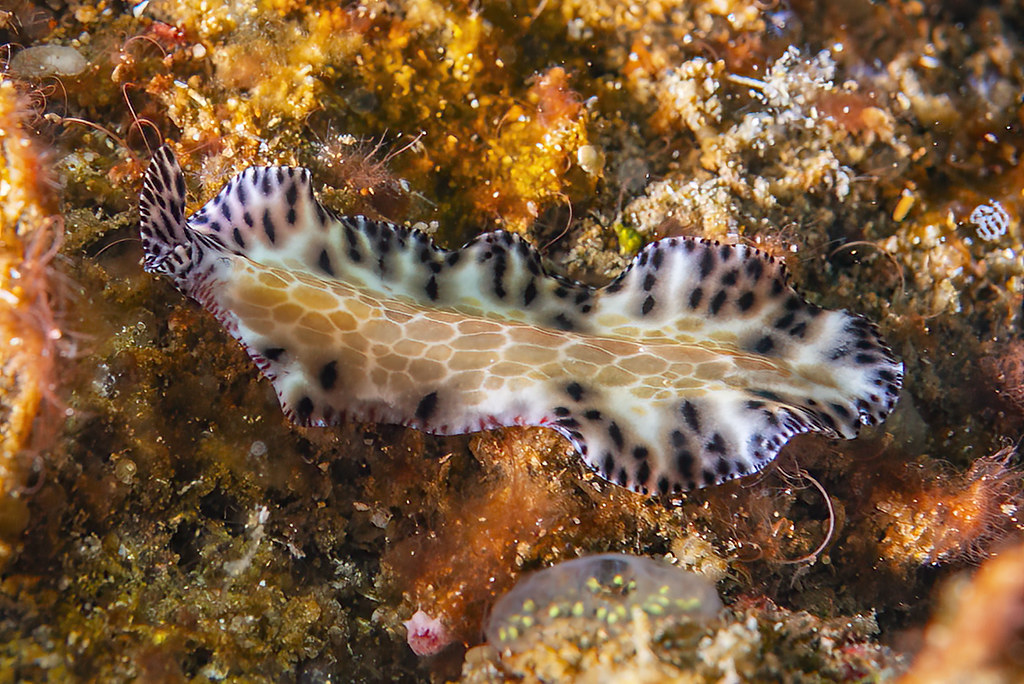
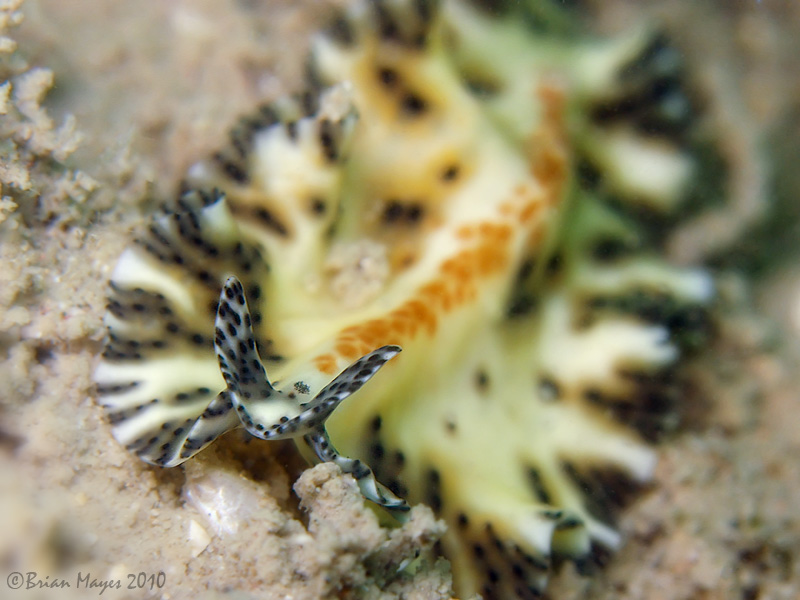
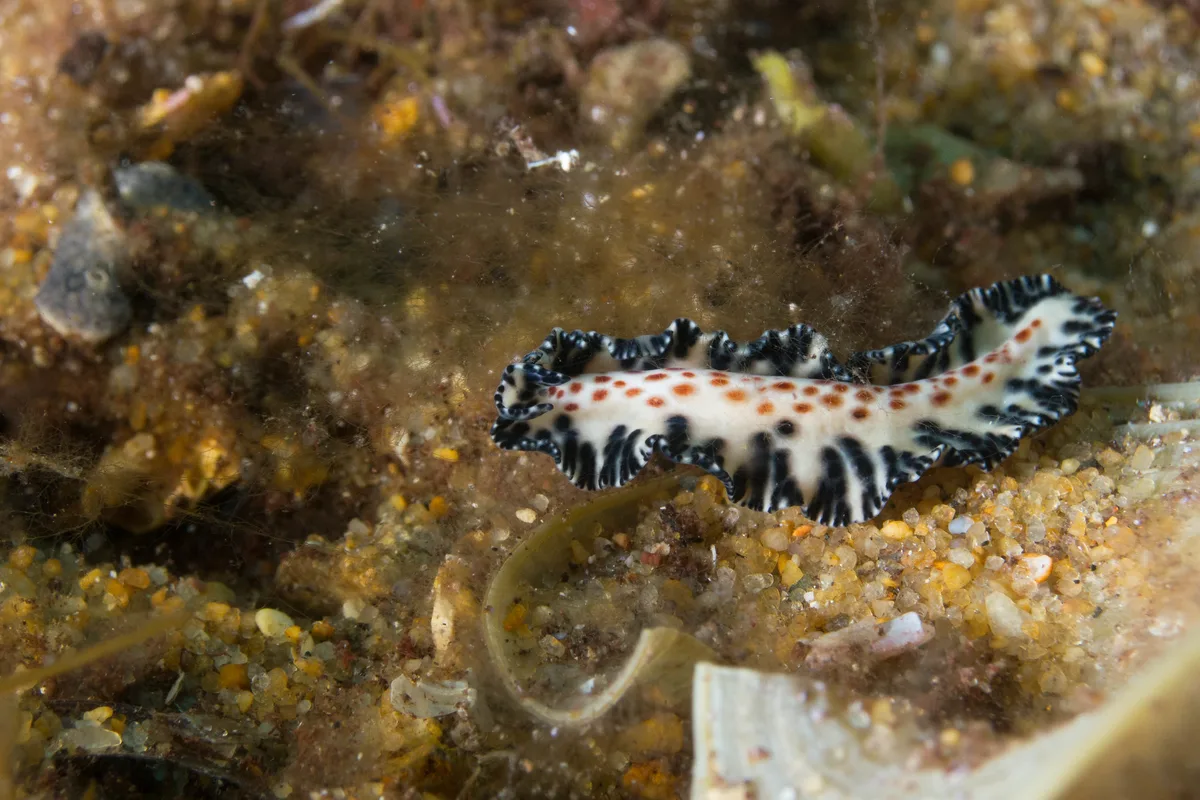
A small pale sheet, up to 2.2 cm (0.9 in), with the middle of the back worked into a honeycomb of dark spots that fades out before the margin. The pattern is fine enough that it reads as texture rather than markings until a photograph is enlarged.
It is a sea squirt specialist. The worm crawls onto a colony, everts its pharynx over the prey and digests it in place, which is why finding one is usually a matter of finding the ascidians first and then looking at them properly. Colonial squirts on the shaded side of rubble are the best bet.
The genus is named for its tiger-striped members, and the family is one where color patterns do most of the identification work - internal anatomy separates the species properly, but nobody is dissecting a flatworm on a night dive. For the field, it is the honeycomb over the middle and the plain margin around it.
- pale body with a honeycomb of dark spots over the middle
- plainer, paler margin without the pattern
- small, up to 2.2 cm
- sea squirts nearby - its usual prey