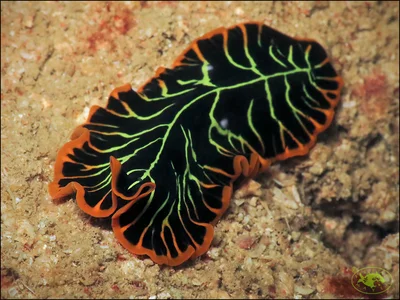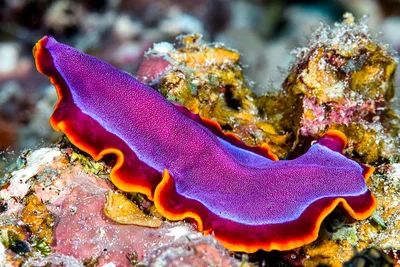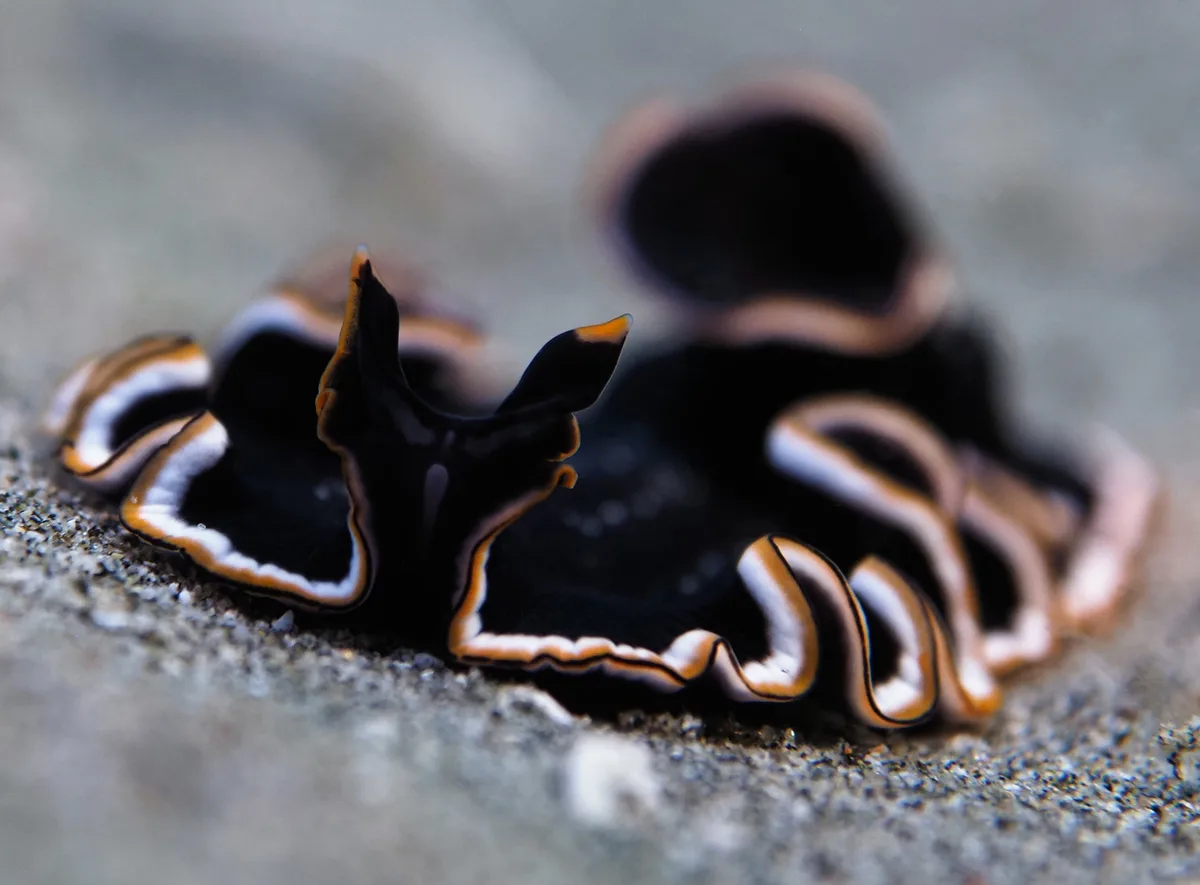
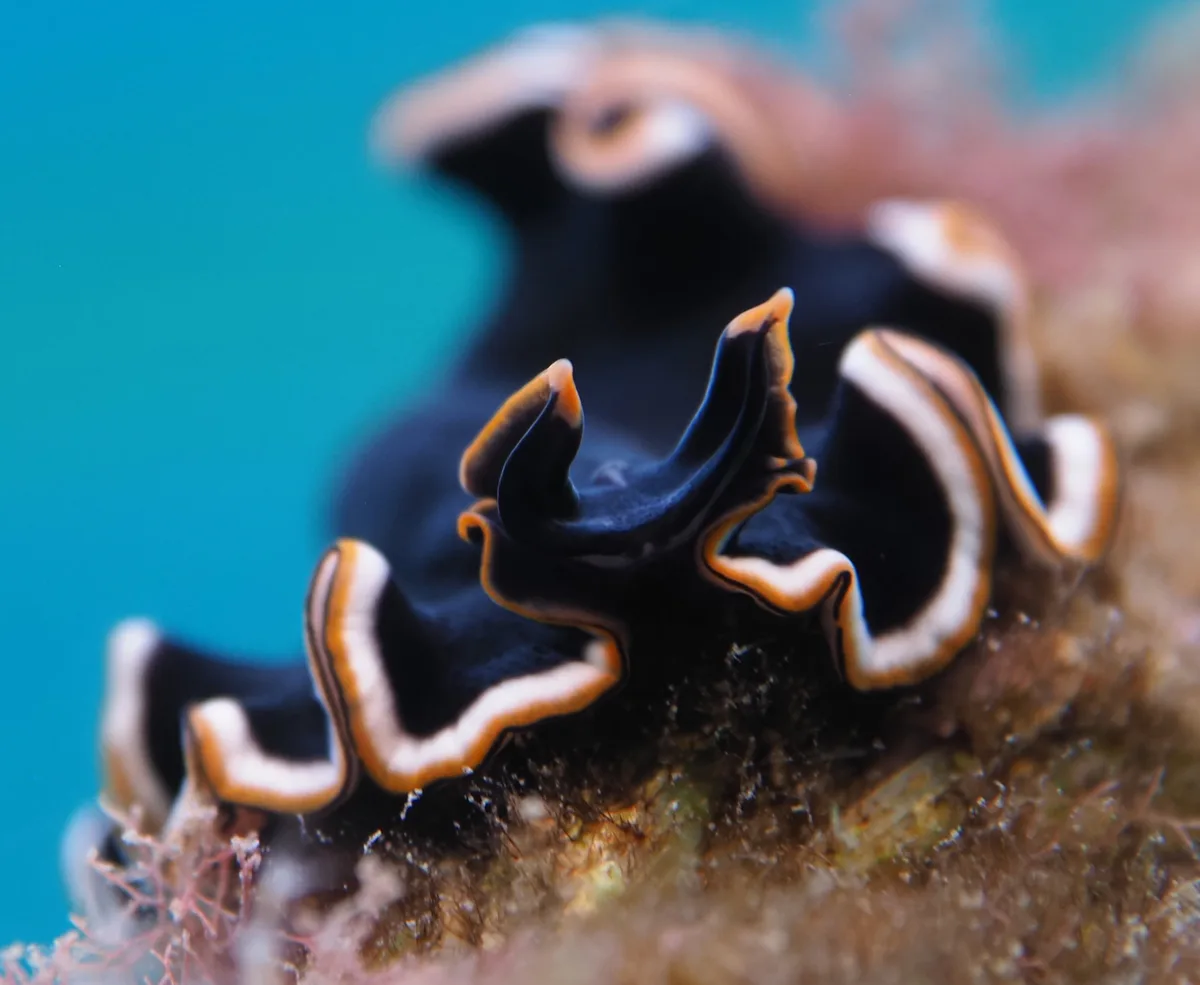
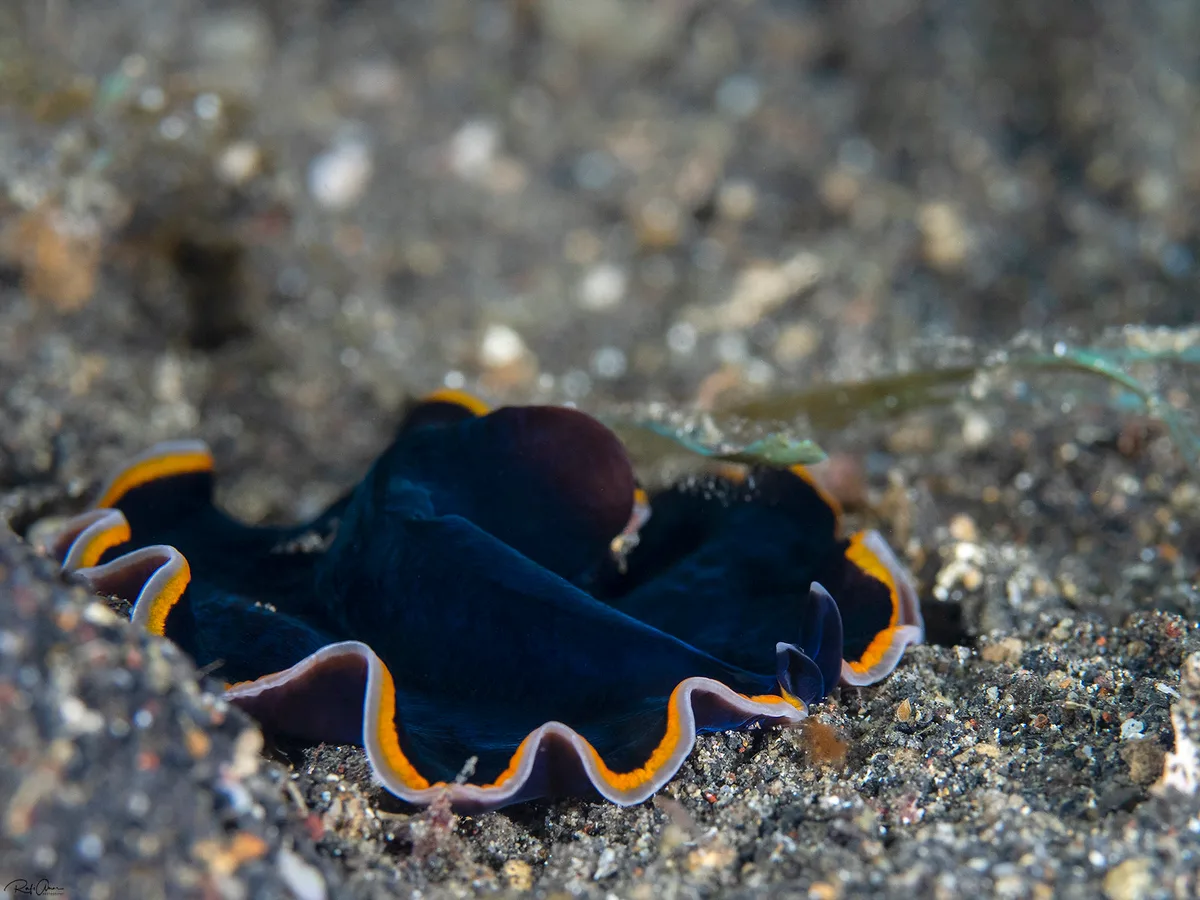
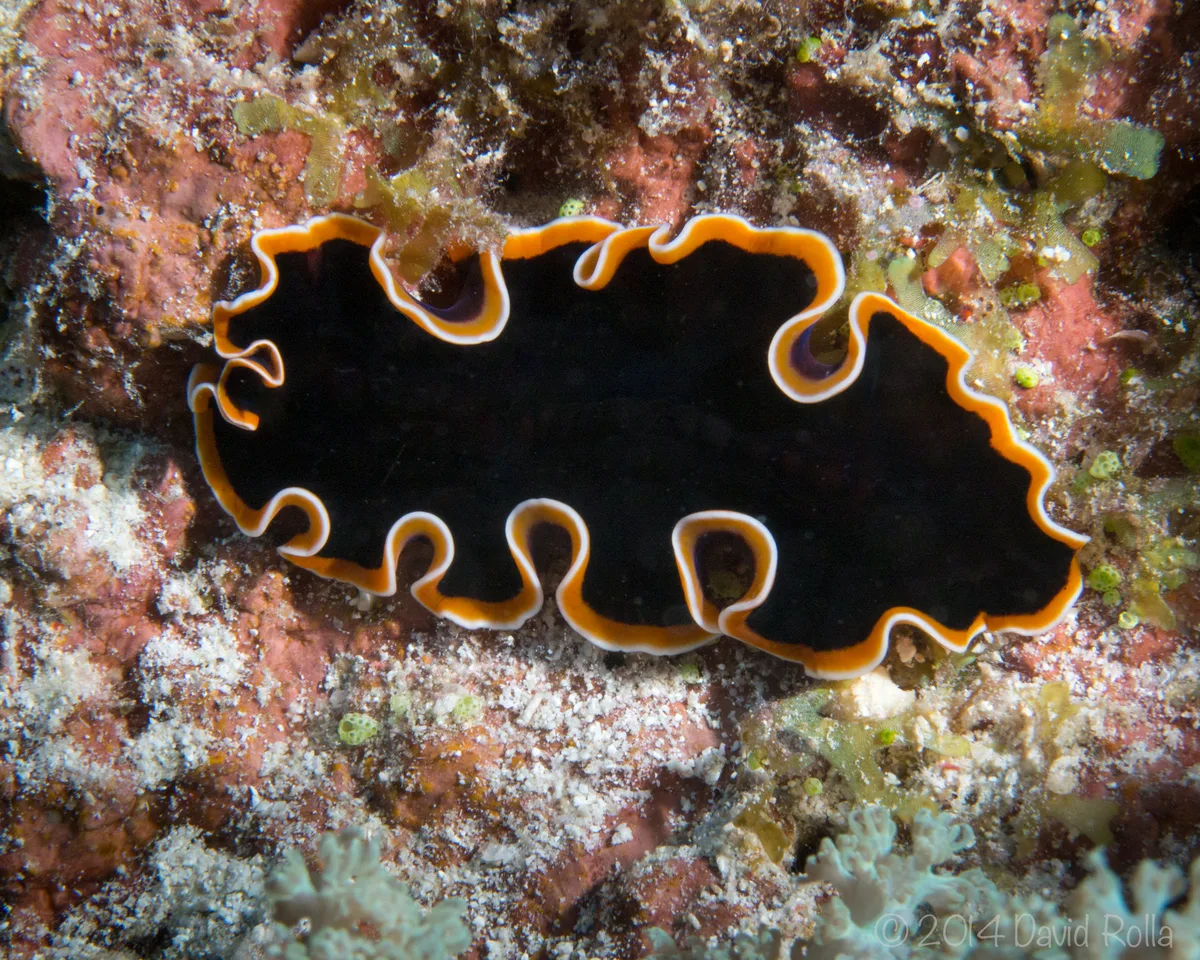
The largest flatworm most divers will meet, up to 14 cm (5.5 in) long and unmistakable once seen: a velvety black sheet with a broad orange band inside a clear outer rim, the edges rippling in slow waves as it glides. There is no head to speak of, no gills and no heart. The body is thin enough that oxygen simply diffuses in, which is why a flatworm is a flatworm and not something thicker.
Movement looks like swimming even when it is not. A gliding worm rides a layer of mucus on beating cilia, and a disturbed one lifts off and undulates through open water like a discarded scarf. The mouth is on the underside, halfway down; food is engulfed rather than bitten, and prey is mostly sea squirts and other soft, slow things.
Every individual is both male and female, and mating in this genus is the notorious business known as penis fencing. Two worms rear up and duel with a pair of stylets, each trying to inject sperm through the other's skin while avoiding being injected itself. The loser bears the eggs, which cost far more than sperm does - so this is a fight about who gets the cheaper half of parenthood, fought with weapons that pierce.
- velvety black body with a broad orange inner margin and a clear outer rim
- the largest flatworm on the reef, to 14 cm
- ruffled edges rippling as it glides
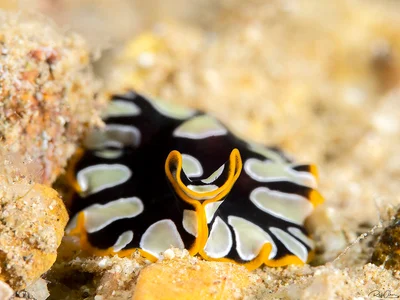
- two small folded pseudotentacles at the front edge