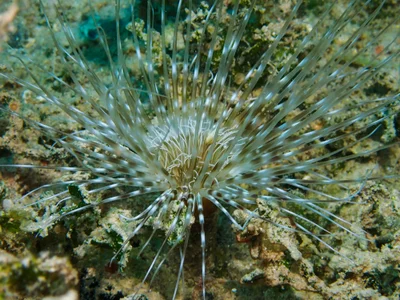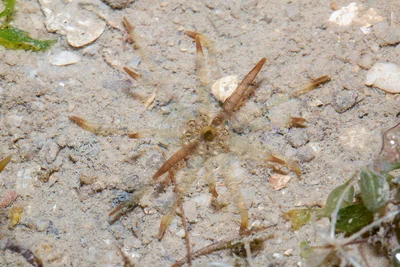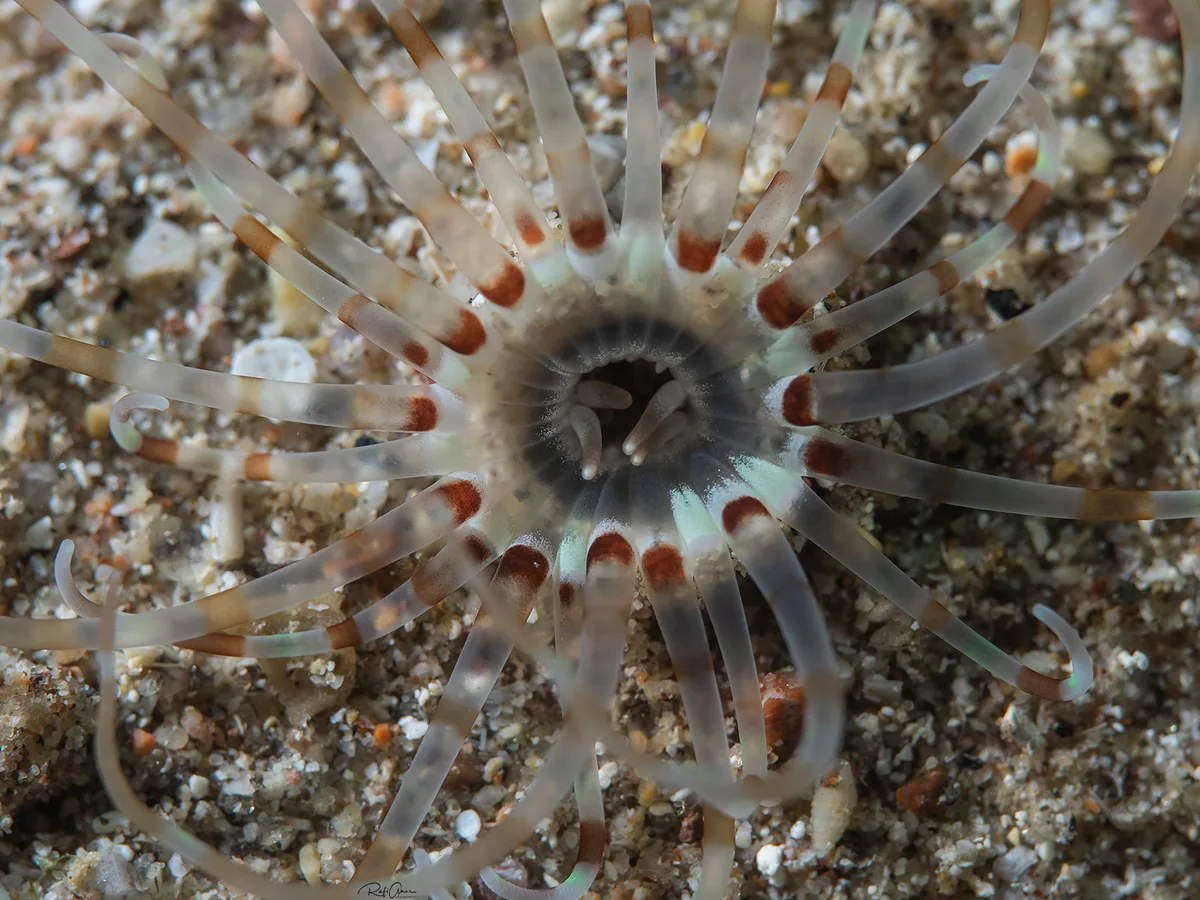
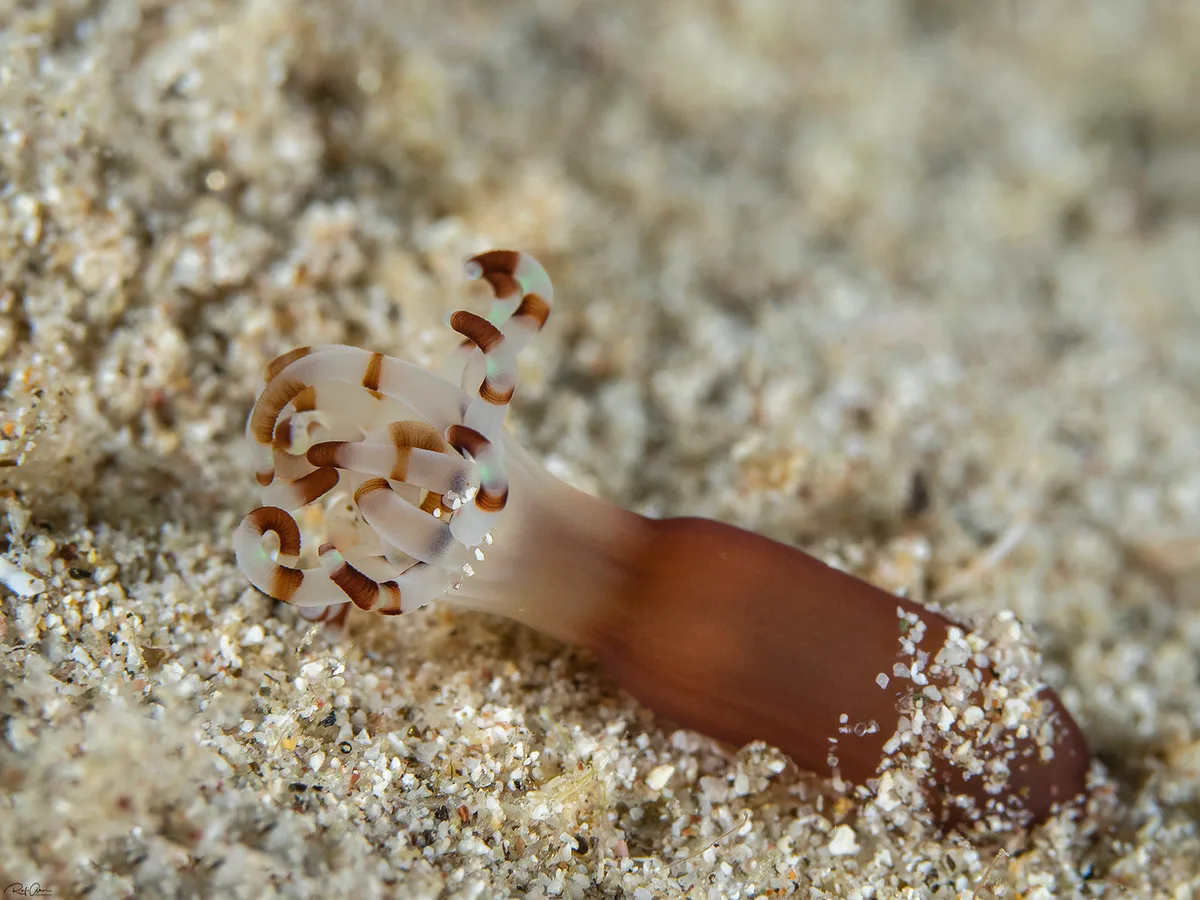
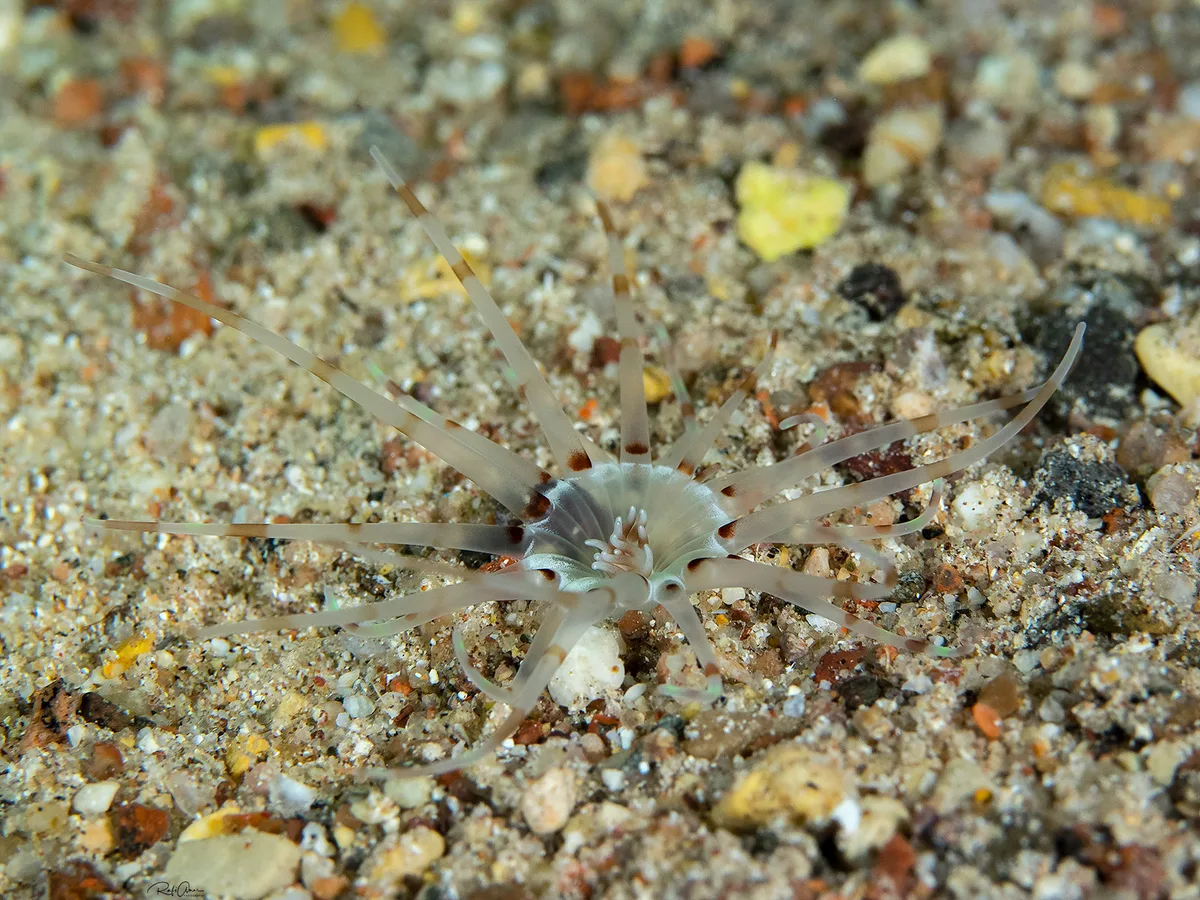
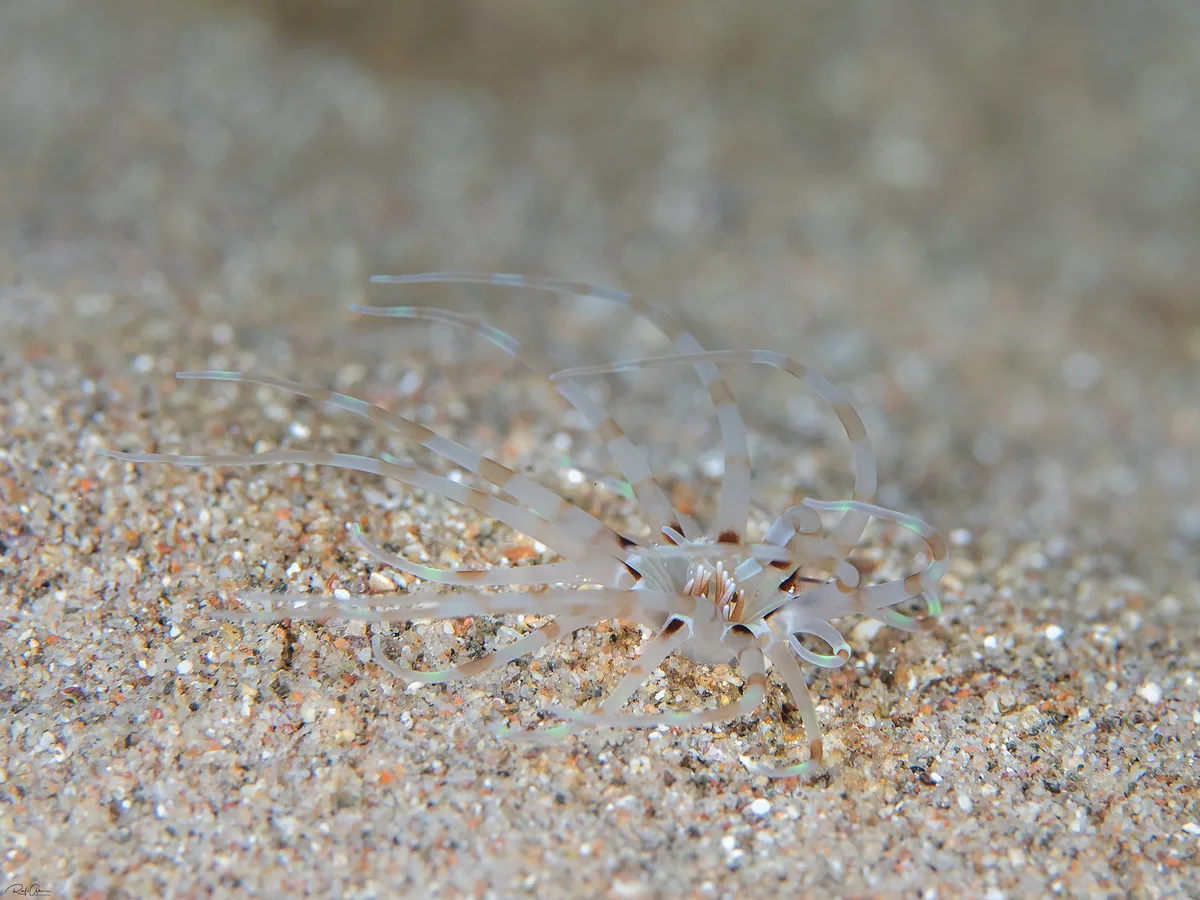
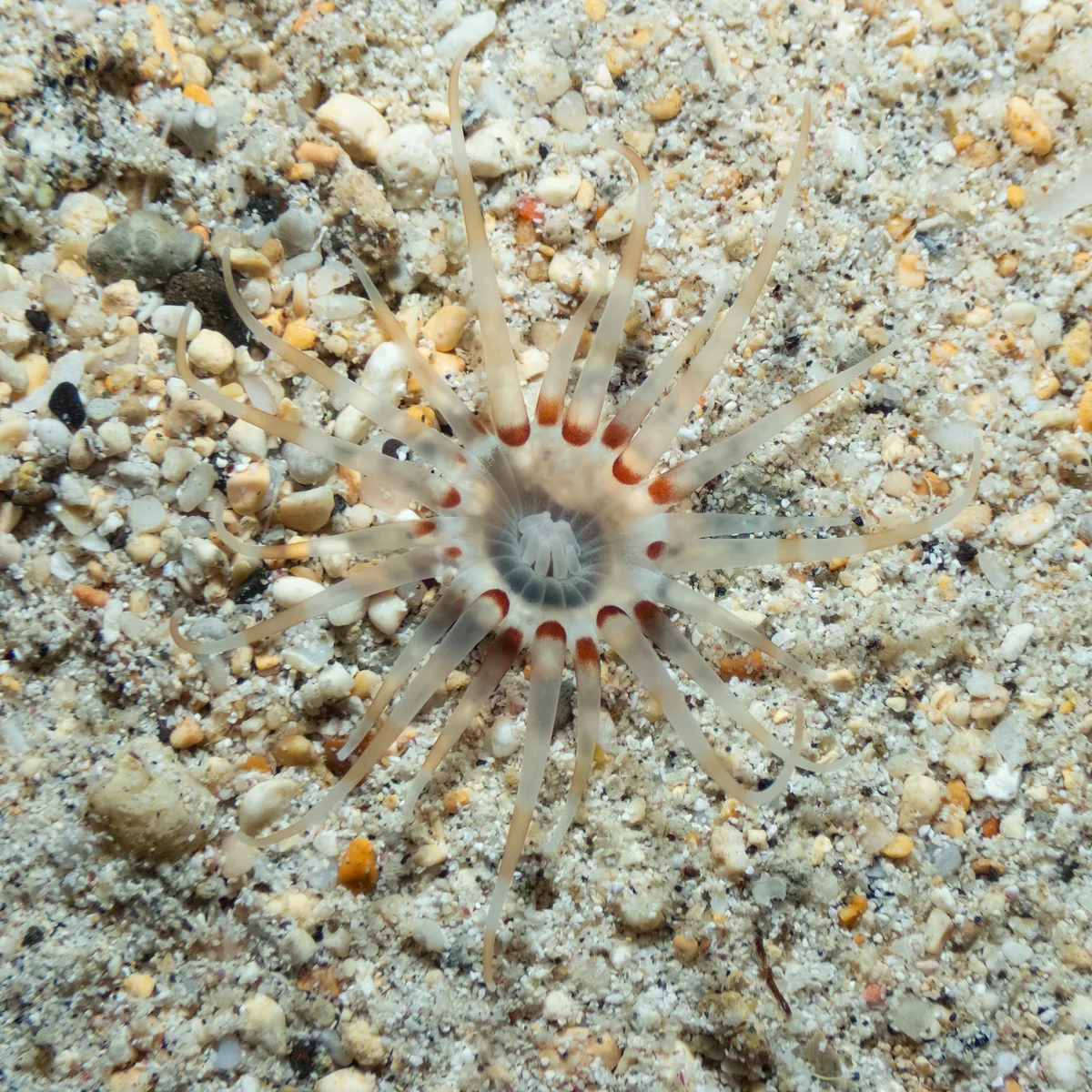
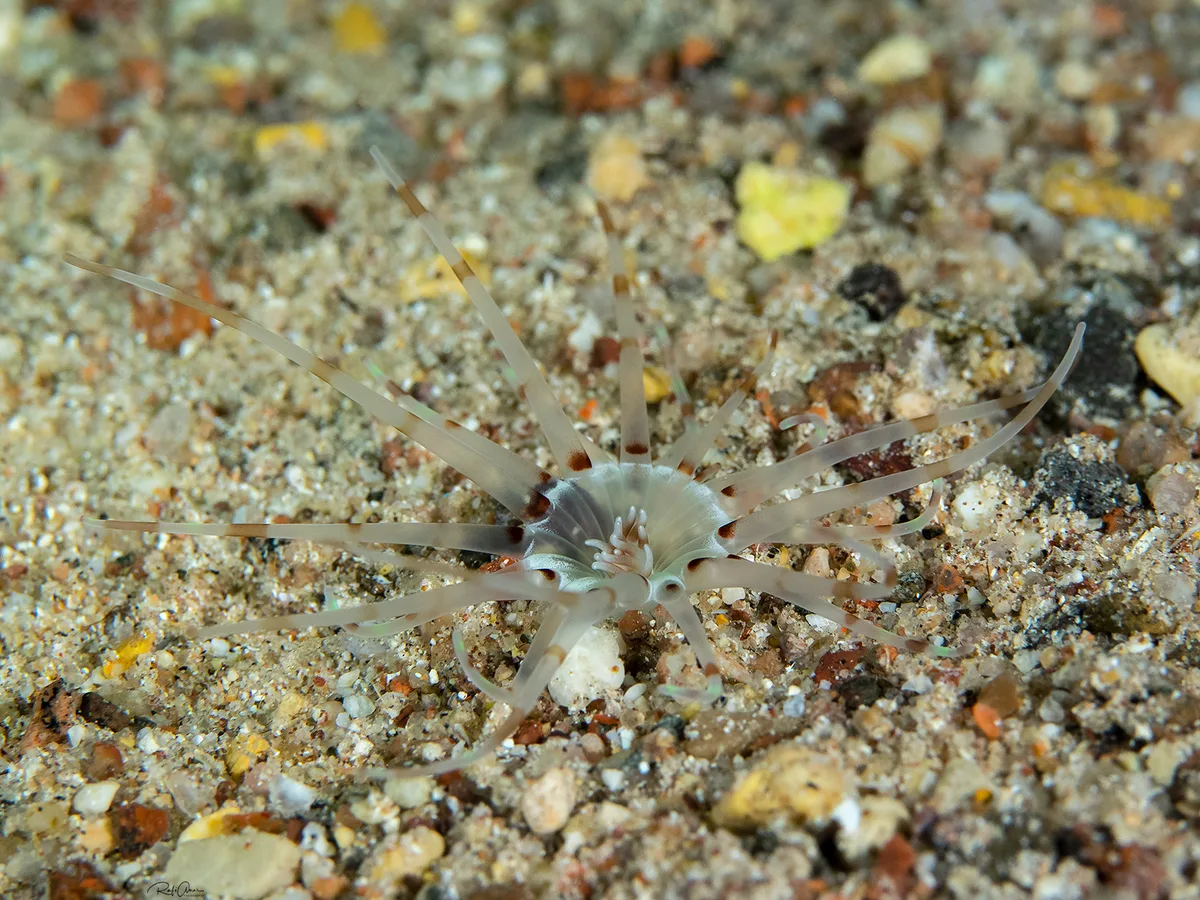
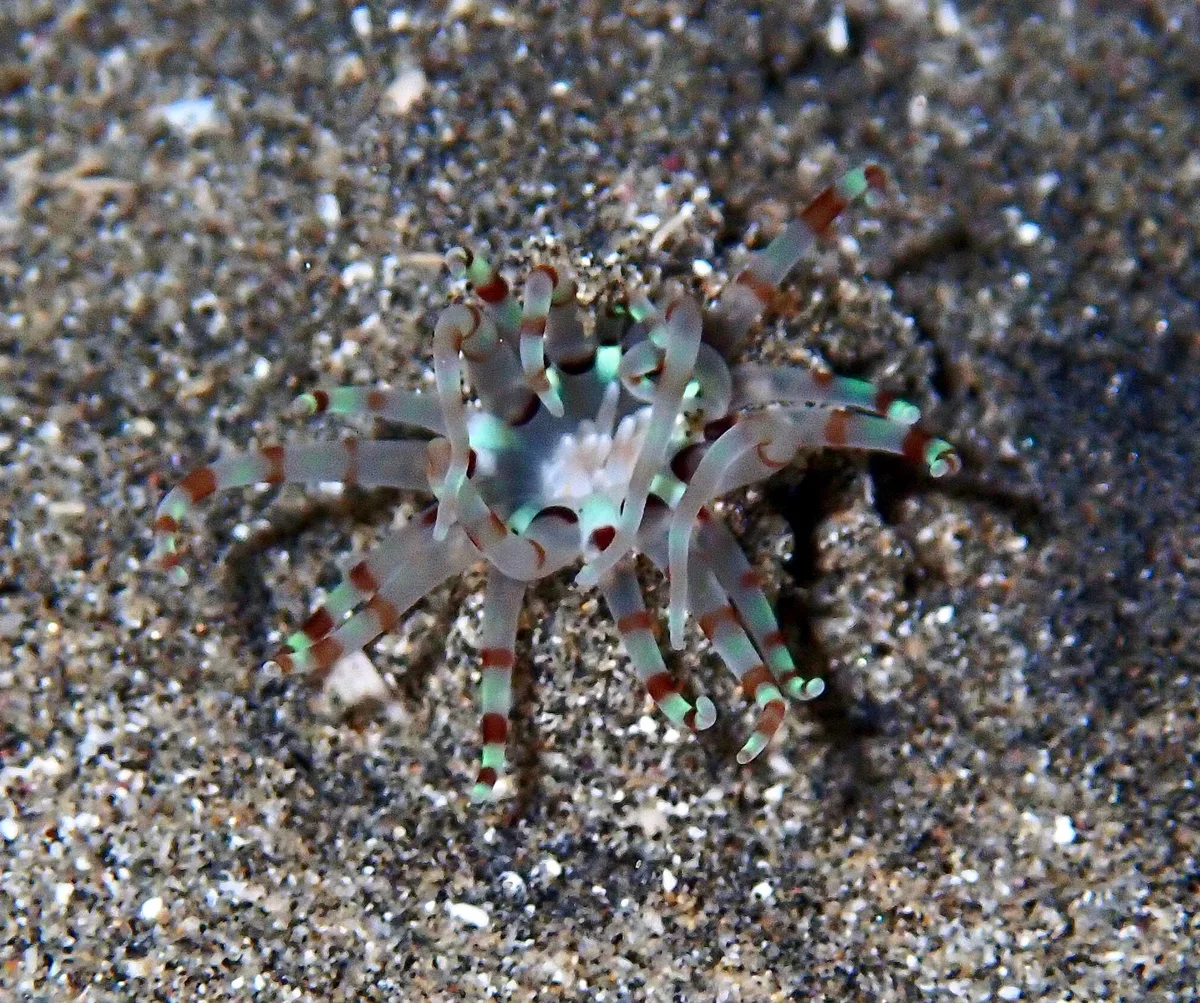
A tube anemone whose crown rises from a soft tube buried in sediment, with two distinct rings of tentacles: long ones on the outside and a short inner circle around the mouth. The crown reaches about 4 cm (1.6 in) and the tentacles are translucent, often faintly banded.
The tube is not made of stinging cells, which is worth being clear about because it is usually described that way. It is built from ptychocysts, a separate kind of capsule that fires a long pleated adhesive thread with no venom and no barb on it, matted together by the million into a fabric sleeve. Being unarmed is the point of them: they are construction material. The stinging cells are in the tentacles, where they belong.
What you actually get is a crown on the sand that is gone before you have finished registering it. The animal drops the length of its own sleeve at the first shadow, and what is left on the surface is a rim of gray felt that looks like nothing. Feeding happens at night, on small animals caught by the outer ring and passed inward to the mouth.
The species was described only recently, from this region, and the name takes a figure from Mesopotamian and later Jewish folklore, in keeping with a genus whose members are named for things that come out after dark.
- two rings of tentacles emerging from a tube in the sediment
- long outer tentacles, short inner ones around the mouth
- translucent, often banded, tentacles
- crown up to 4 cm across