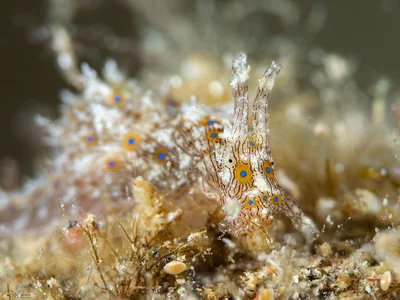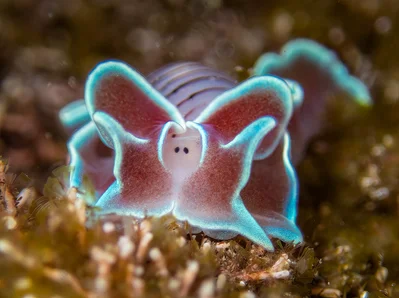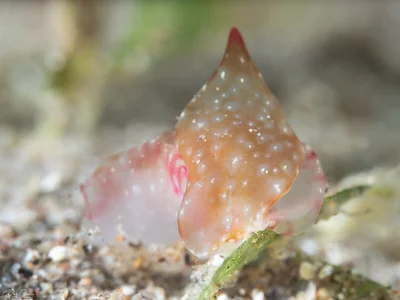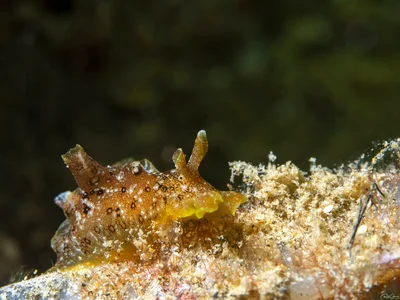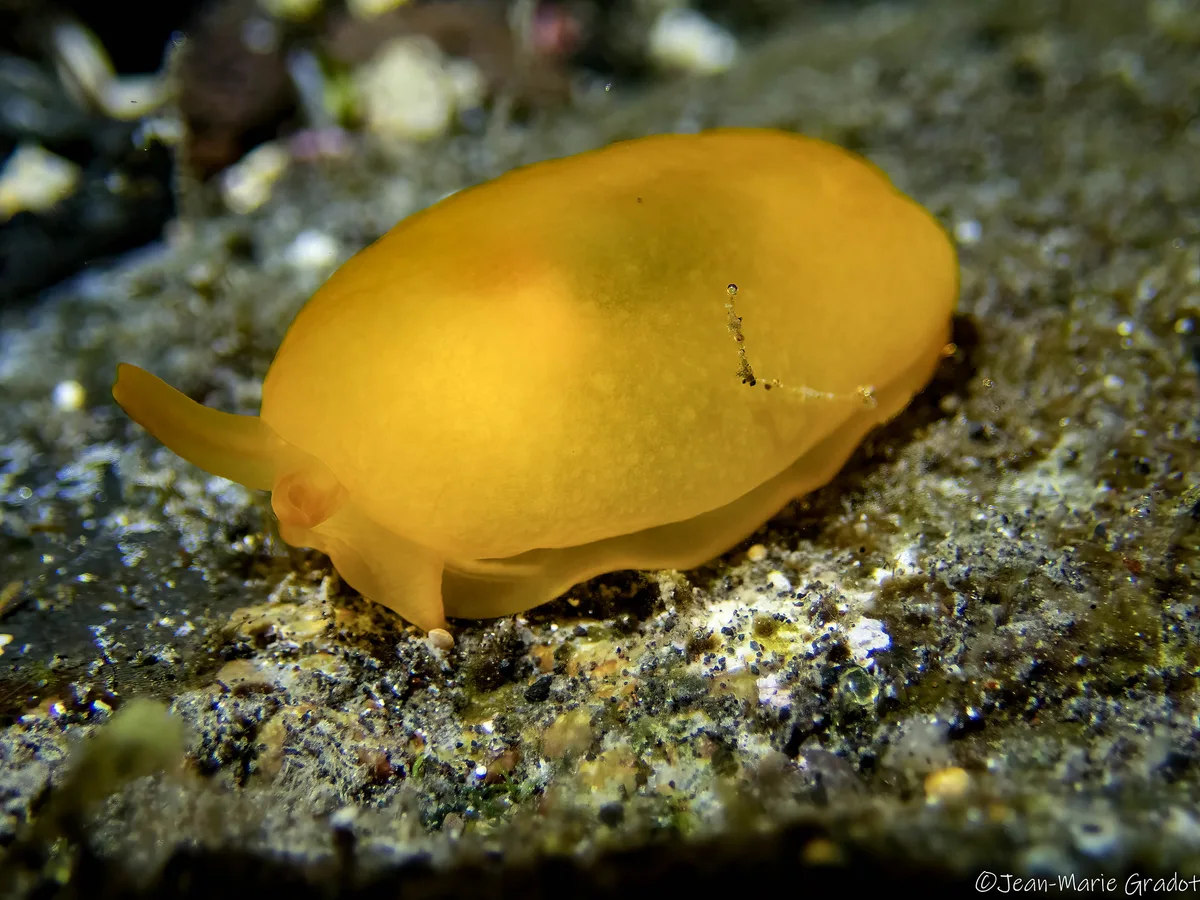
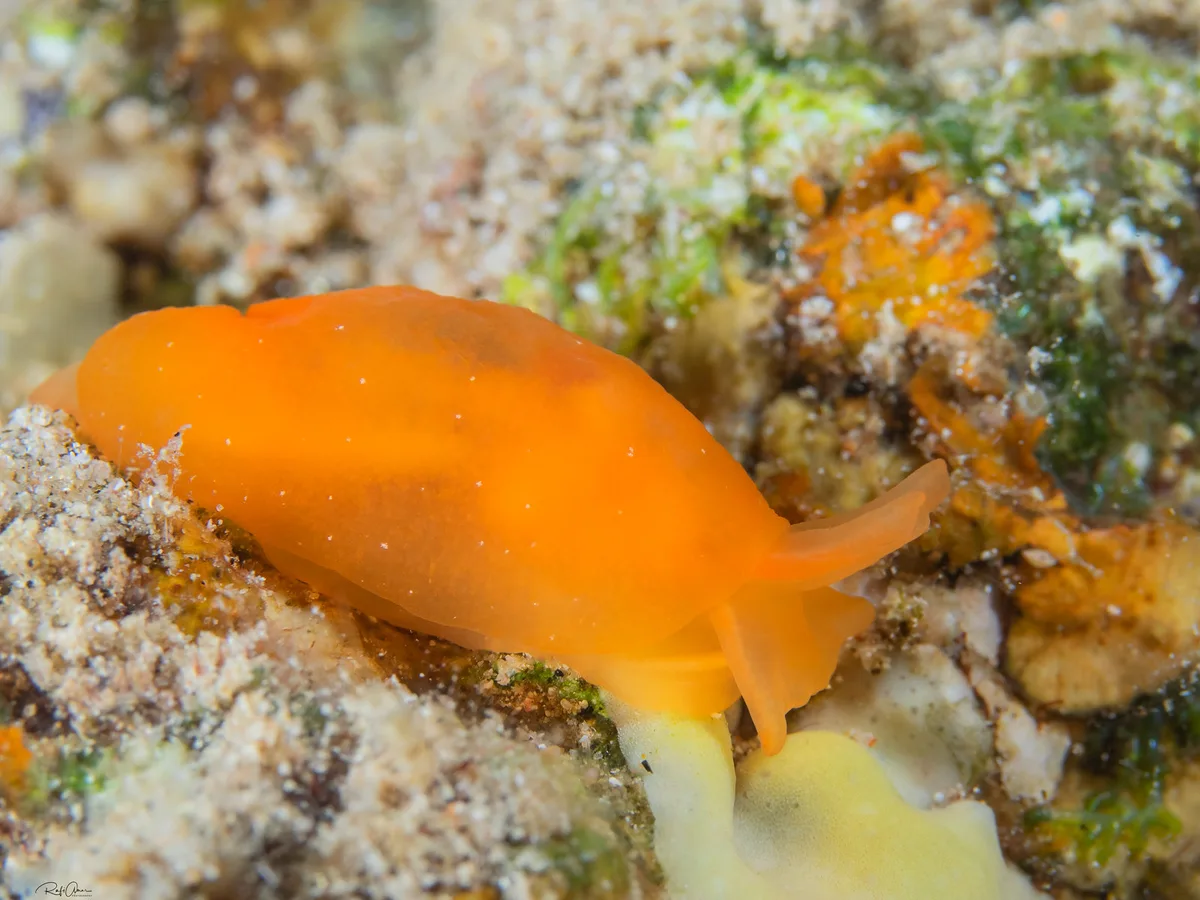
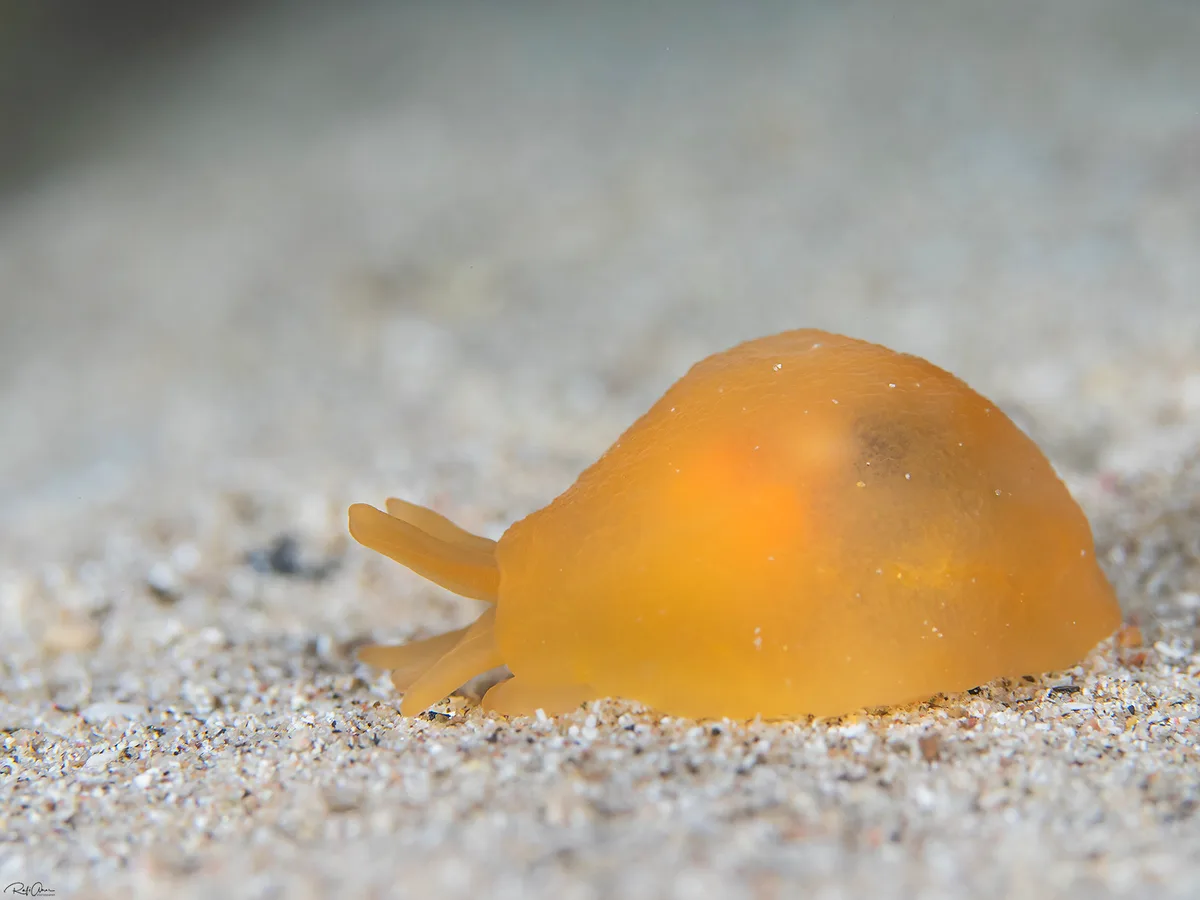
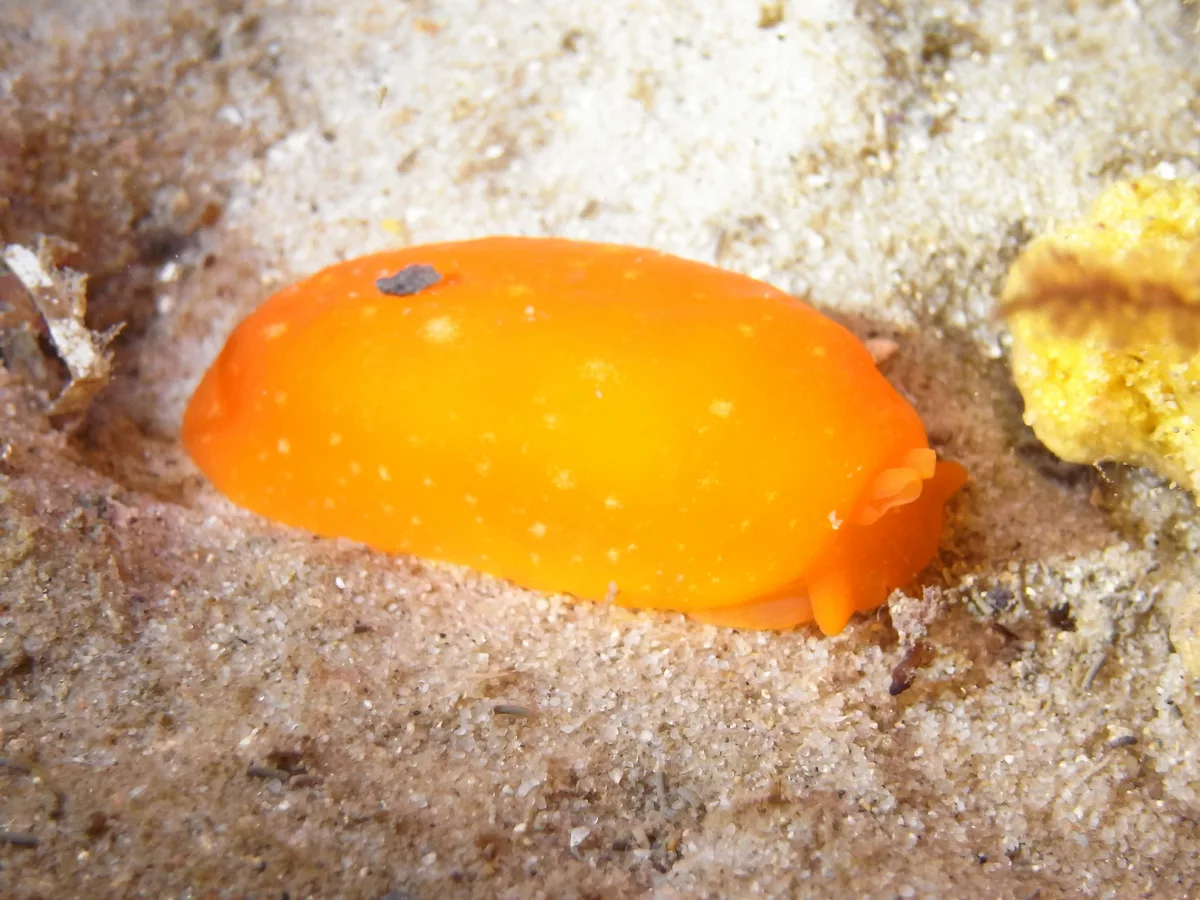
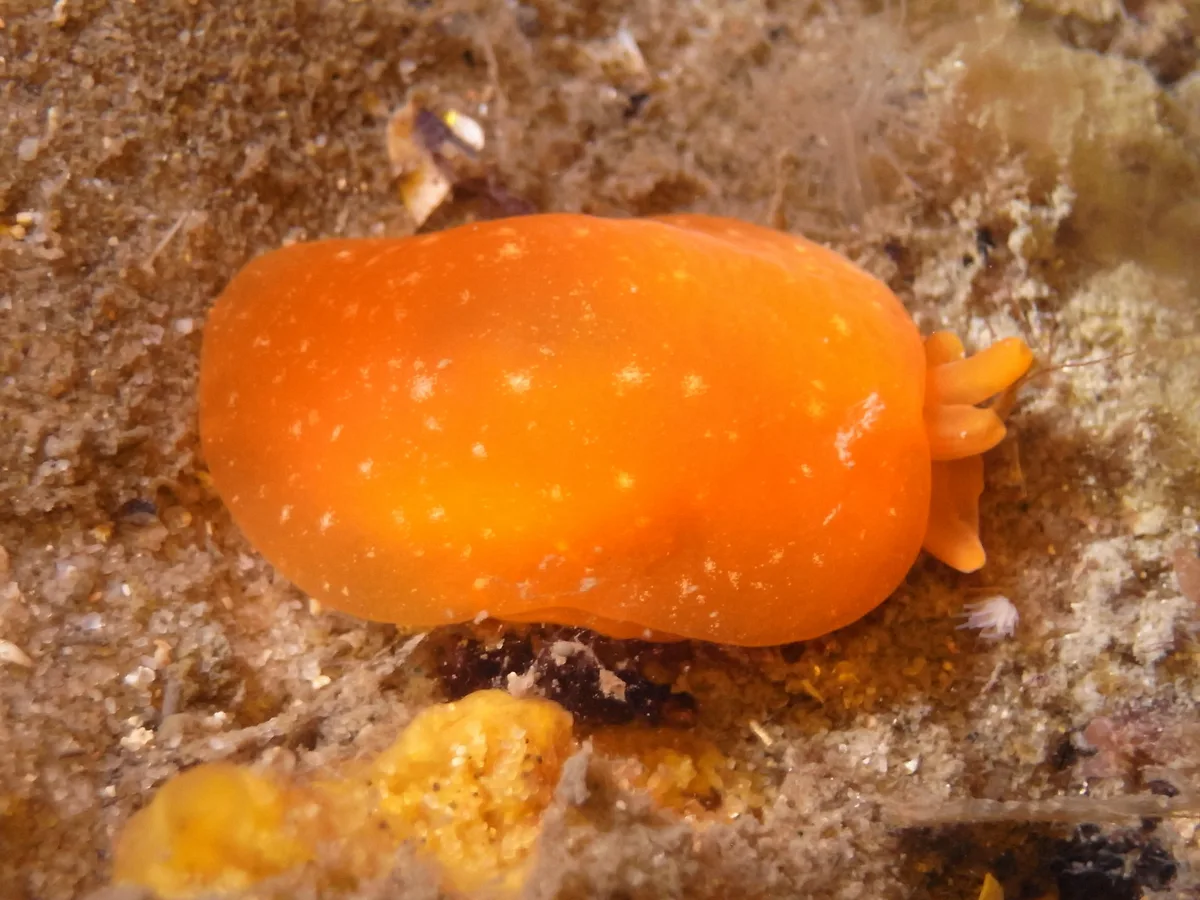
A smooth translucent orange slug up to 3 cm (1.2 in), found under stones and rubble and constantly mistaken for a nudibranch. The difference is where it breathes: nudibranchs carry their gills openly on the back, and this animal keeps a single feathery gill tucked on its right side under the edge of the mantle, which is what the name side-gilled records.
It hunts sponges and other soft encrusting animals, rasping through them with a radula, and it is one of the commonest slugs under any stone a diver bothers to turn over. Described by Rüppell and Leuckart from these waters in 1828, it is one of the many local species named in that early German expedition.
When disturbed it secretes sulfuric acid from glands in the skin, at a strength that will burn a soft mouth and does nothing at all to a diver's finger. It is a defense borrowed from nowhere else: this animal manufactures its own acid rather than taking it from what it eats.
- smooth translucent orange body with no gills on the back
- single feathery gill hidden on the right side, under the mantle edge
- smooth mantle without papillae, unlike a nudibranch
- length up to 3 cm