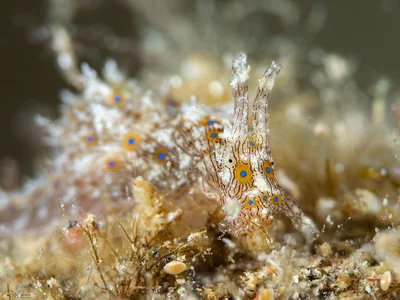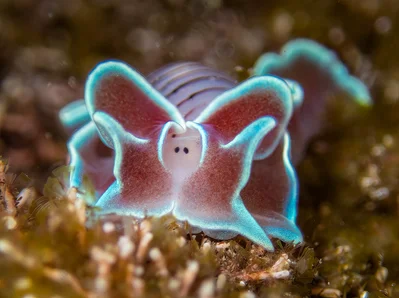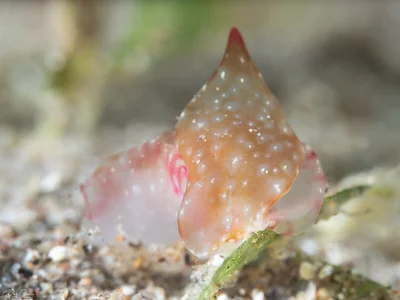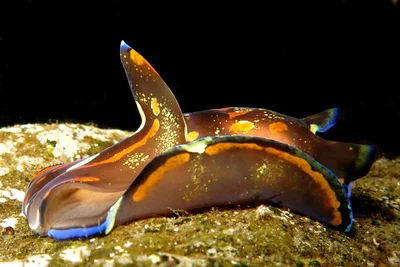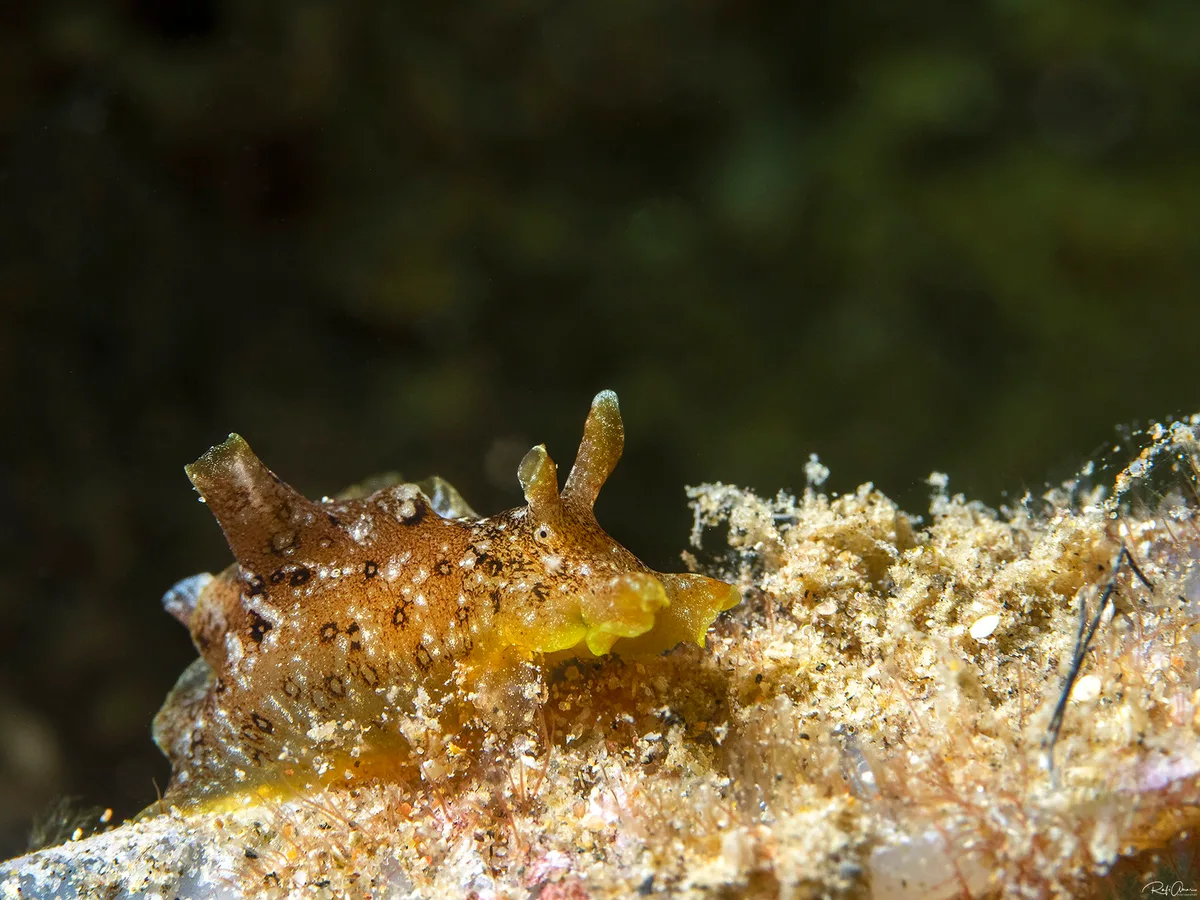
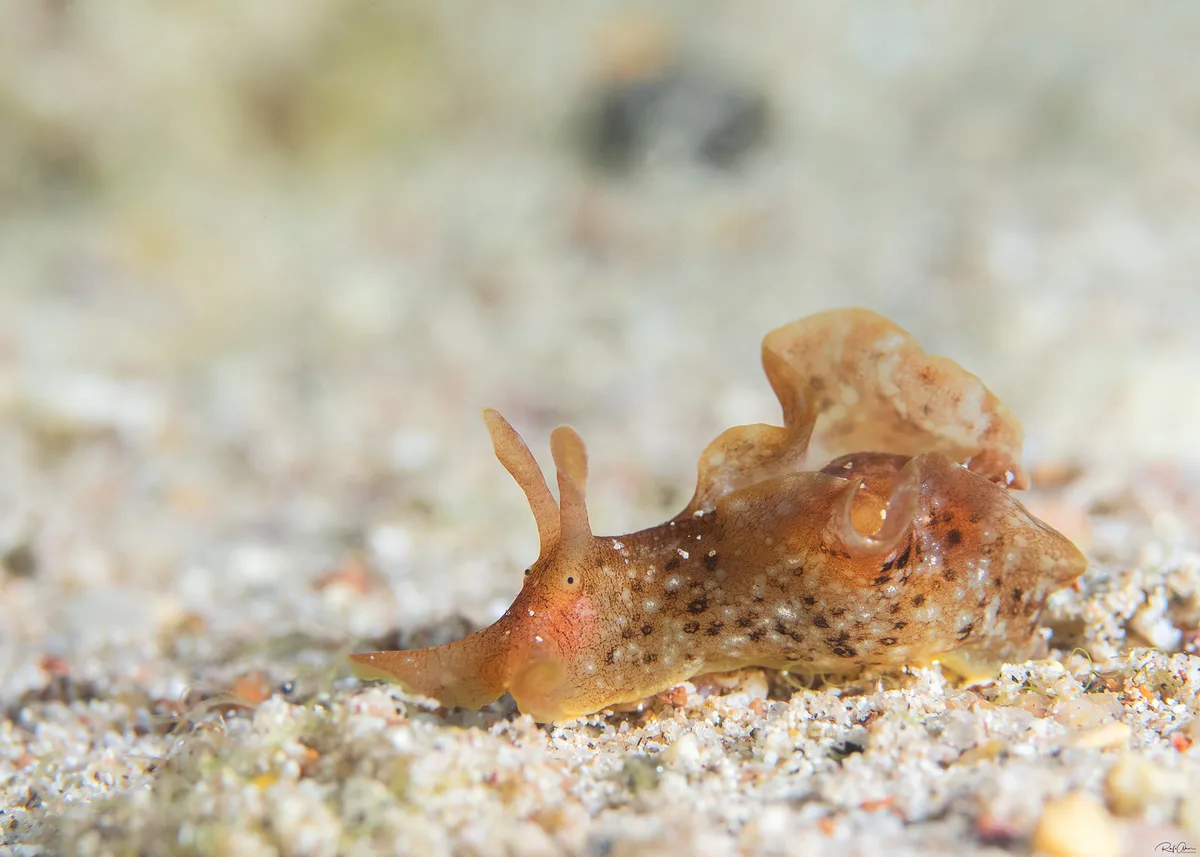
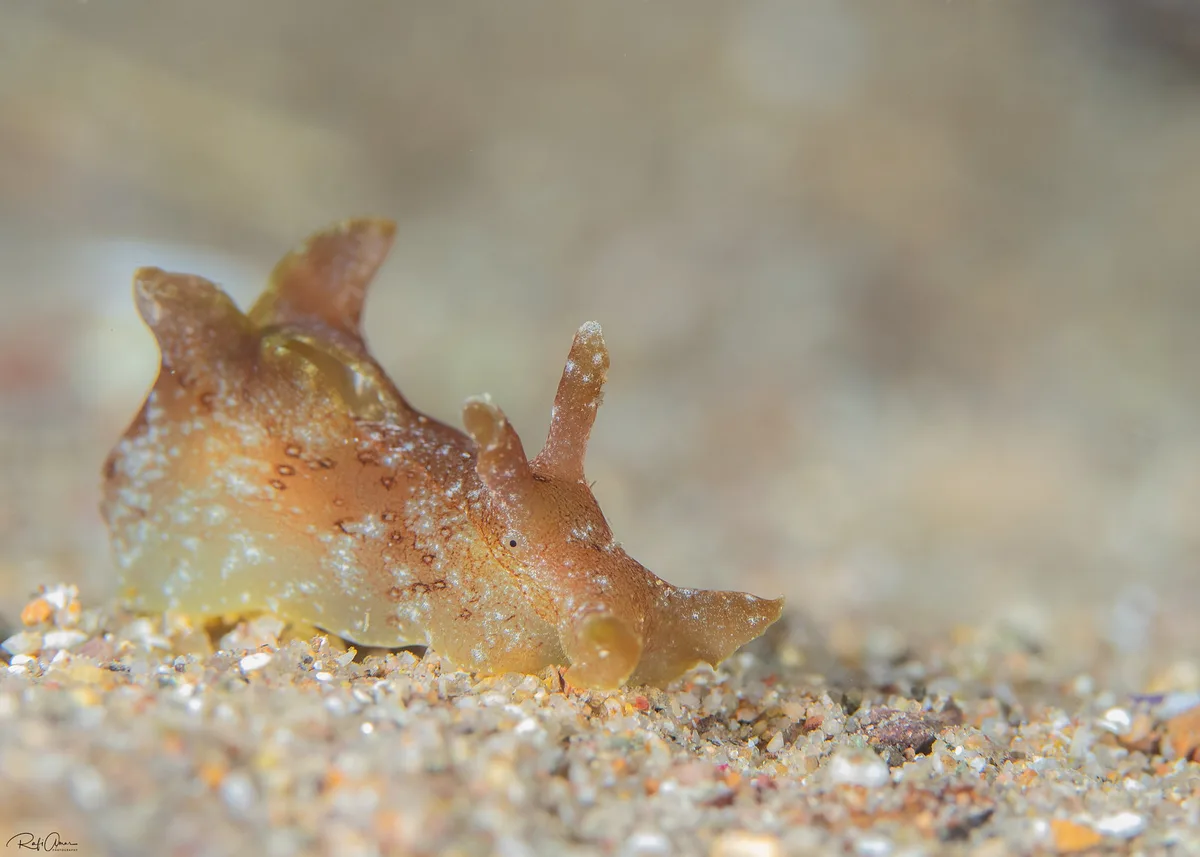
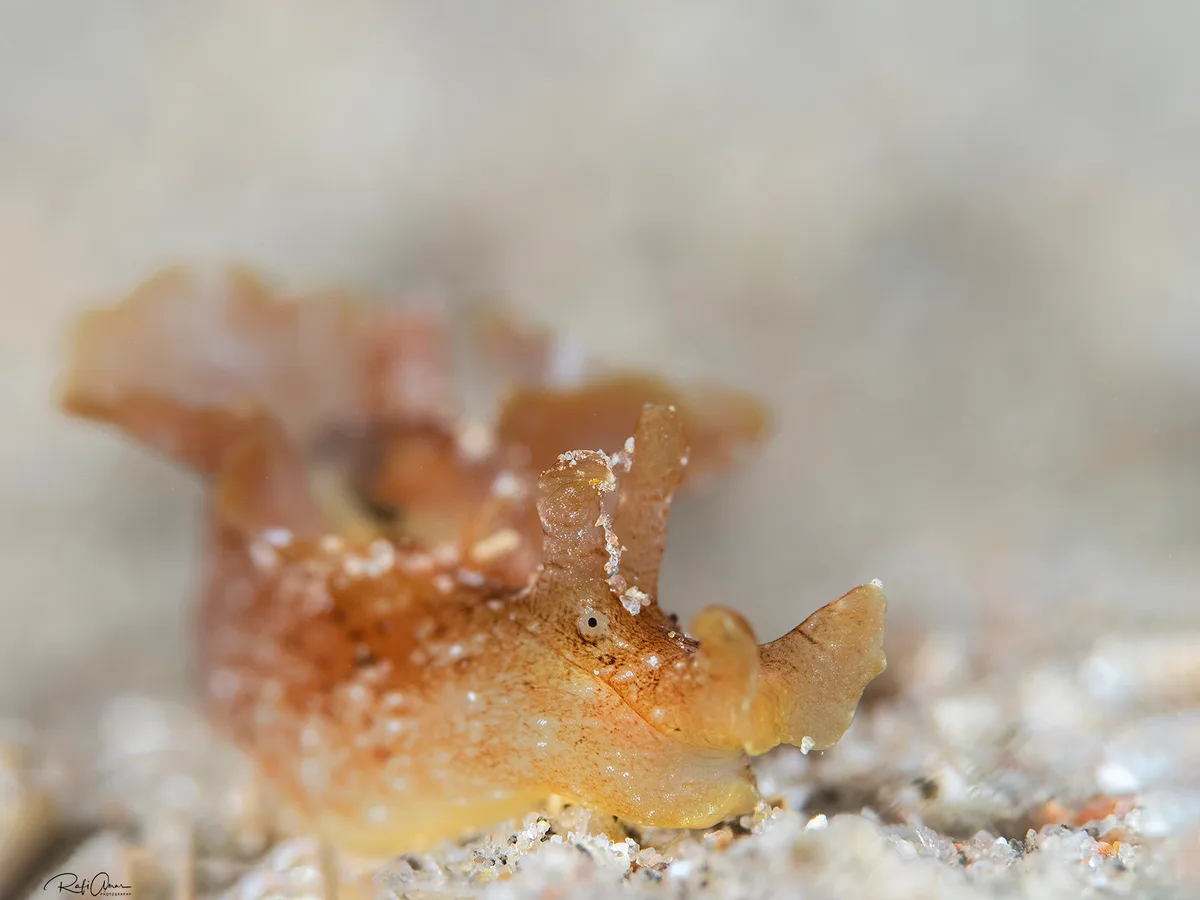
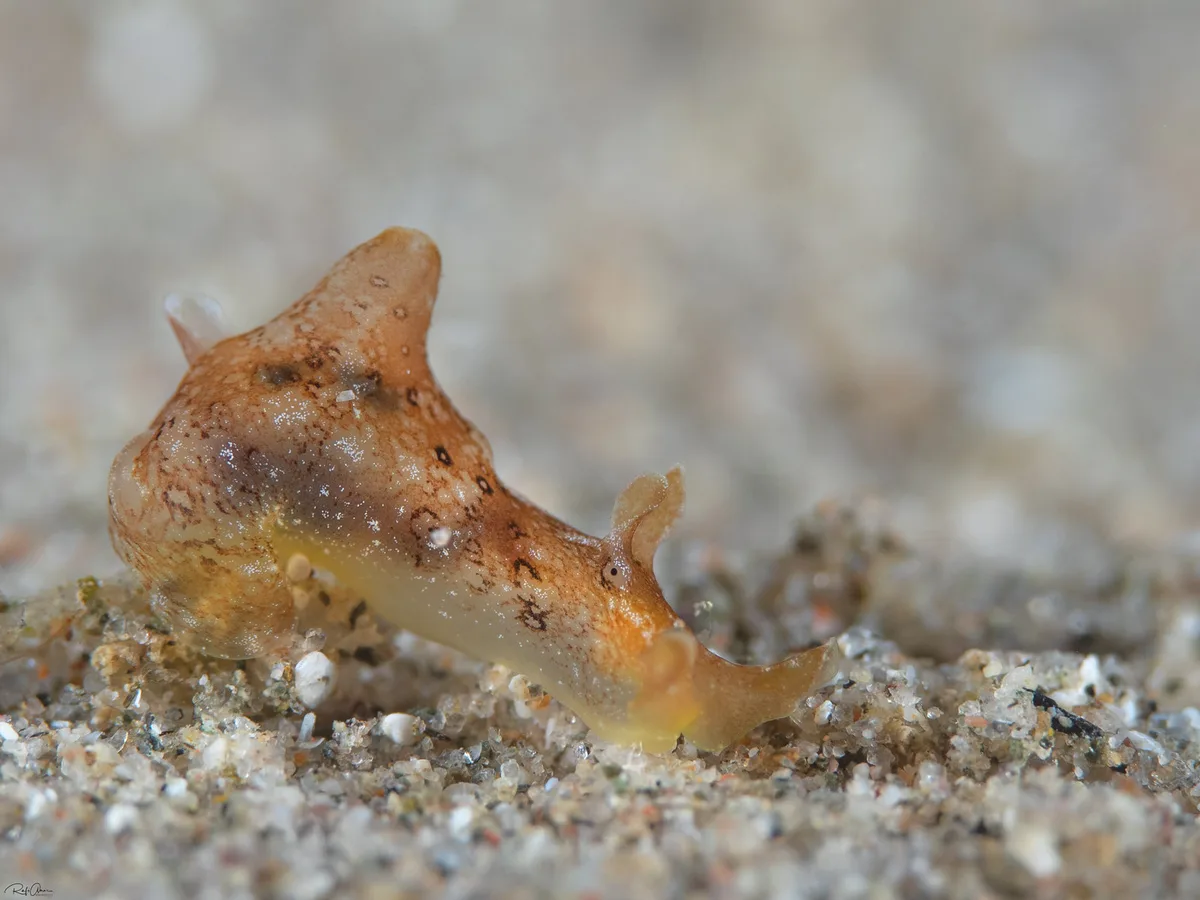
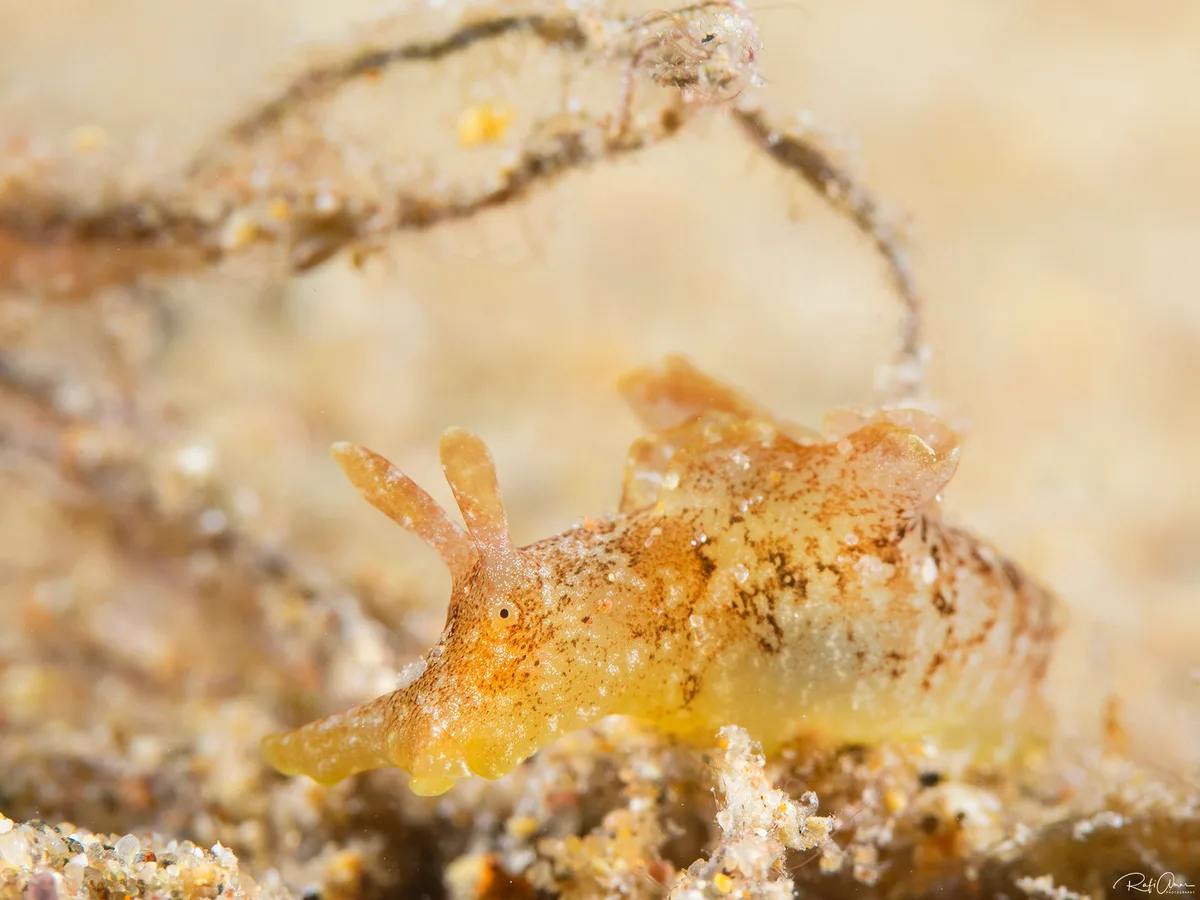
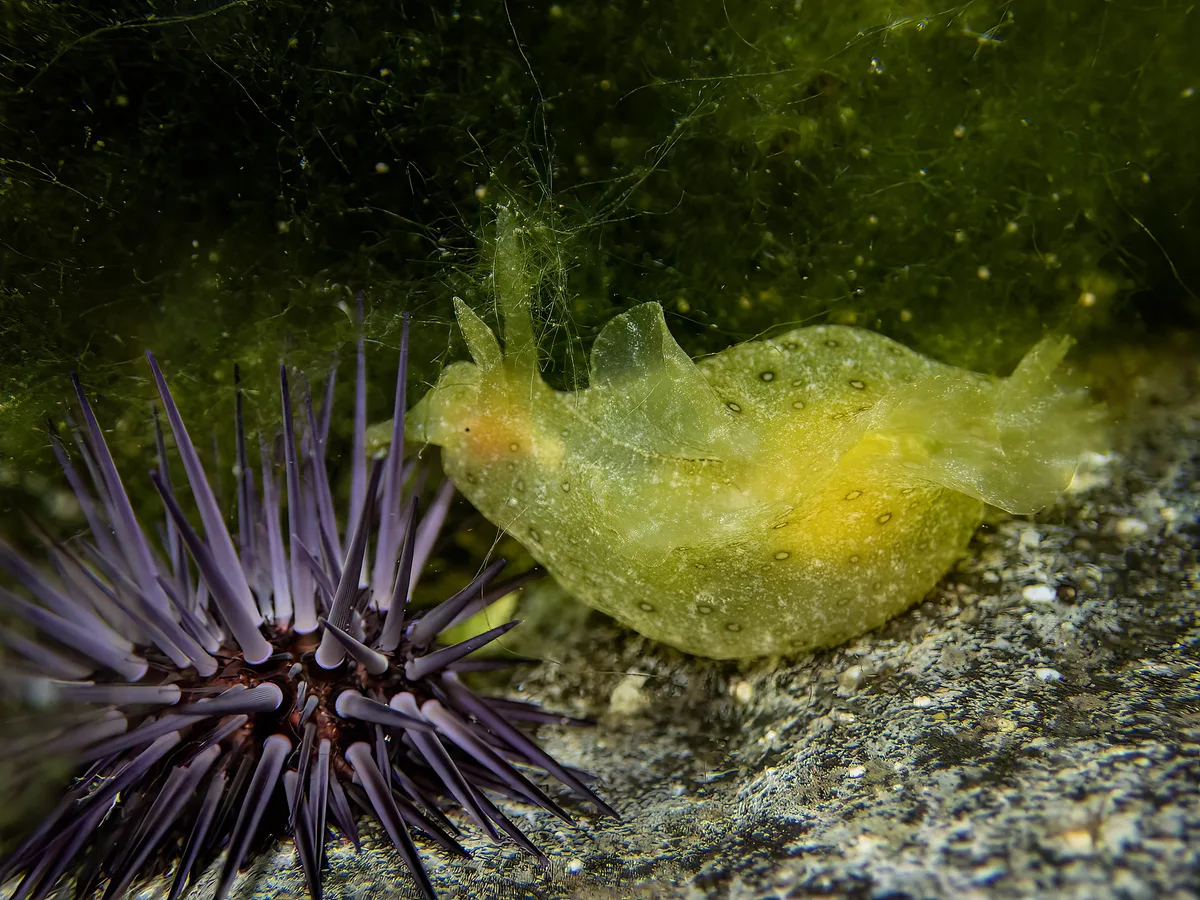
A soft, earless rabbit of a mollusc: a slug up to 8 cm (3.1 in) with a pair of rolled rhinophores standing up like ears, scattered dark rings over the body, and two fleshy flaps along the back that lift and wave when the animal is pushed. The shell is still there, reduced to a thin plate buried in the tissue.
Color comes from lunch. Sea hares take pigment out of the red and green algae they graze and use it in their own skin, so an animal's shade is a record of what it has been eating rather than a fixed species trait. That is also why the same species can look olive on one reef and wine-red on the next.
The defense is chemical and comes in two colors. A disturbed sea hare releases purple ink from one gland and a milky white secretion from another; together they cloud the water, jam a predator's sense of smell and taste foul enough to end the attempt. Handling one is harmless to a diver, but it costs the animal a defense it then has to rebuild.
- soft slug-like body with a pair of rolled rhinophores like rabbit ears
- small dark rings scattered over the body
- two flaps along the back that can lift and flap when disturbed
- length up to 8 cm