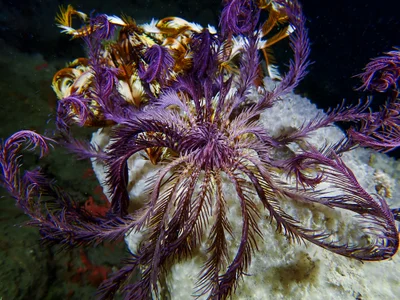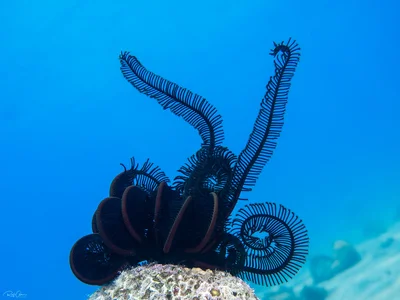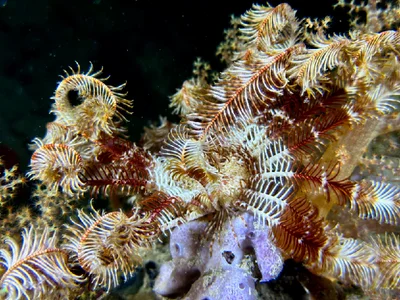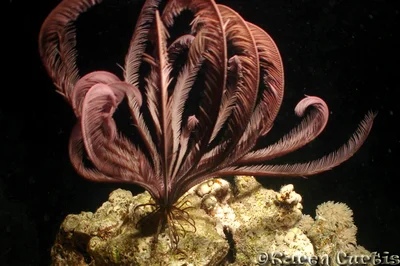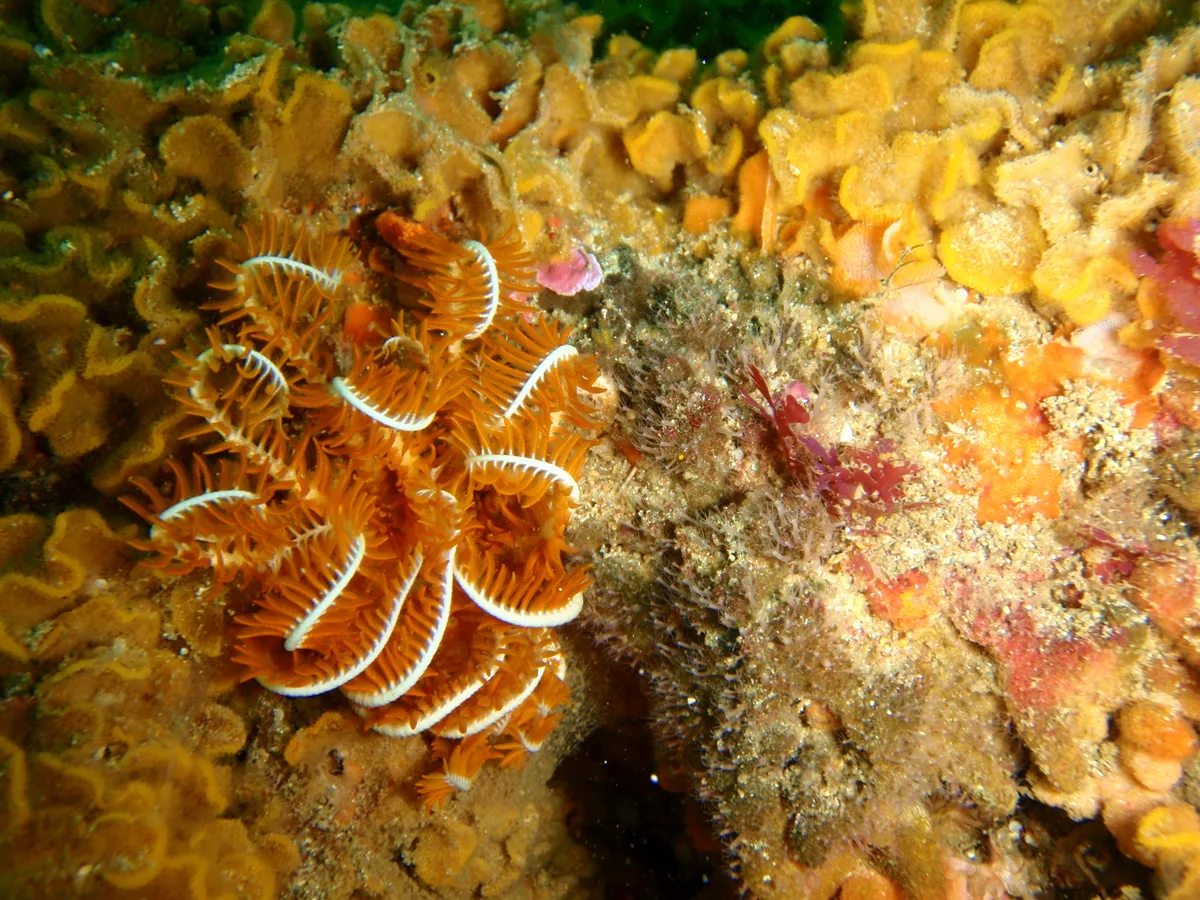
A feather star of about 20 cm (8 in) with twenty to thirty arms, usually yellow-green to olive and sometimes darker-banded. Neither the largest nor the smallest of the group here, and like the rest of them colored too variably for that to settle a name on its own.
Days are spent under coral plates and in crevices on reef slopes; the animal comes out at dusk and opens its arms into the current. Feather stars are the oldest surviving branch of the echinoderms - their stalked ancestors, the sea lilies, filled shallow seas long before fish took their modern shape, and the fossil beds of crinoid stems are thick enough in places to be quarried as rock. What crawls on the reef today is the same animal with the stalk abandoned: a crinoid that traded a fixed stem for cirri and the freedom to move to better current.
- arms typically yellow-green to olive, sometimes with darker bands
- moderate arm count, roughly twenty to thirty
- arm span about 20 cm
- hides under coral plates by day, exposed at night