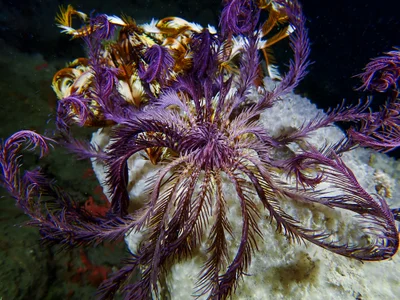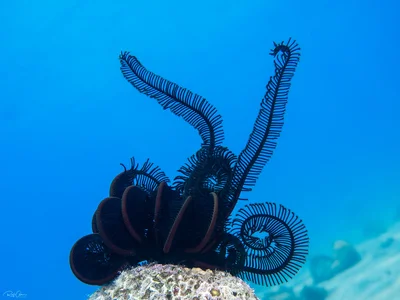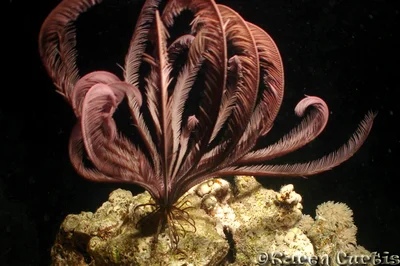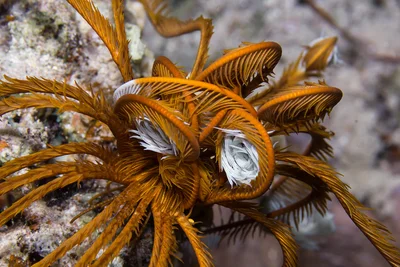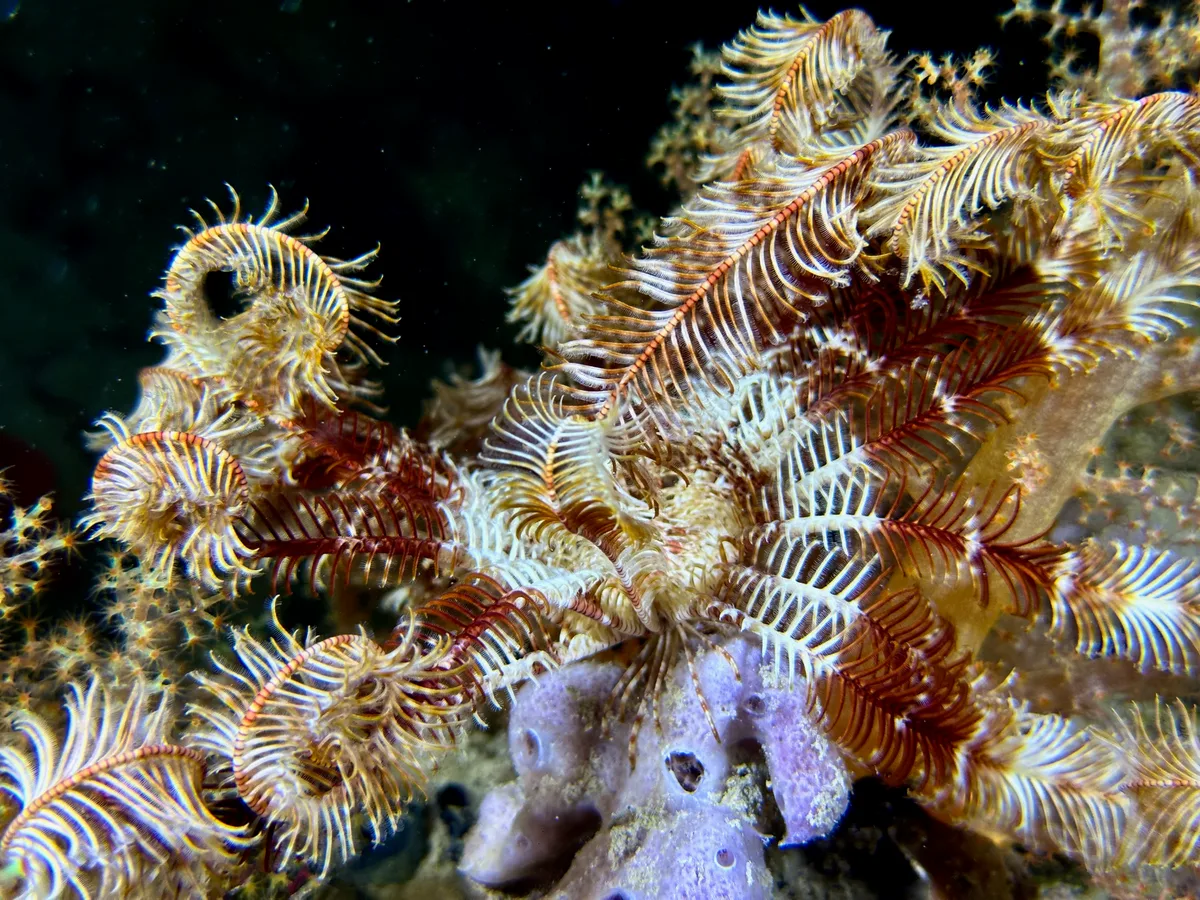
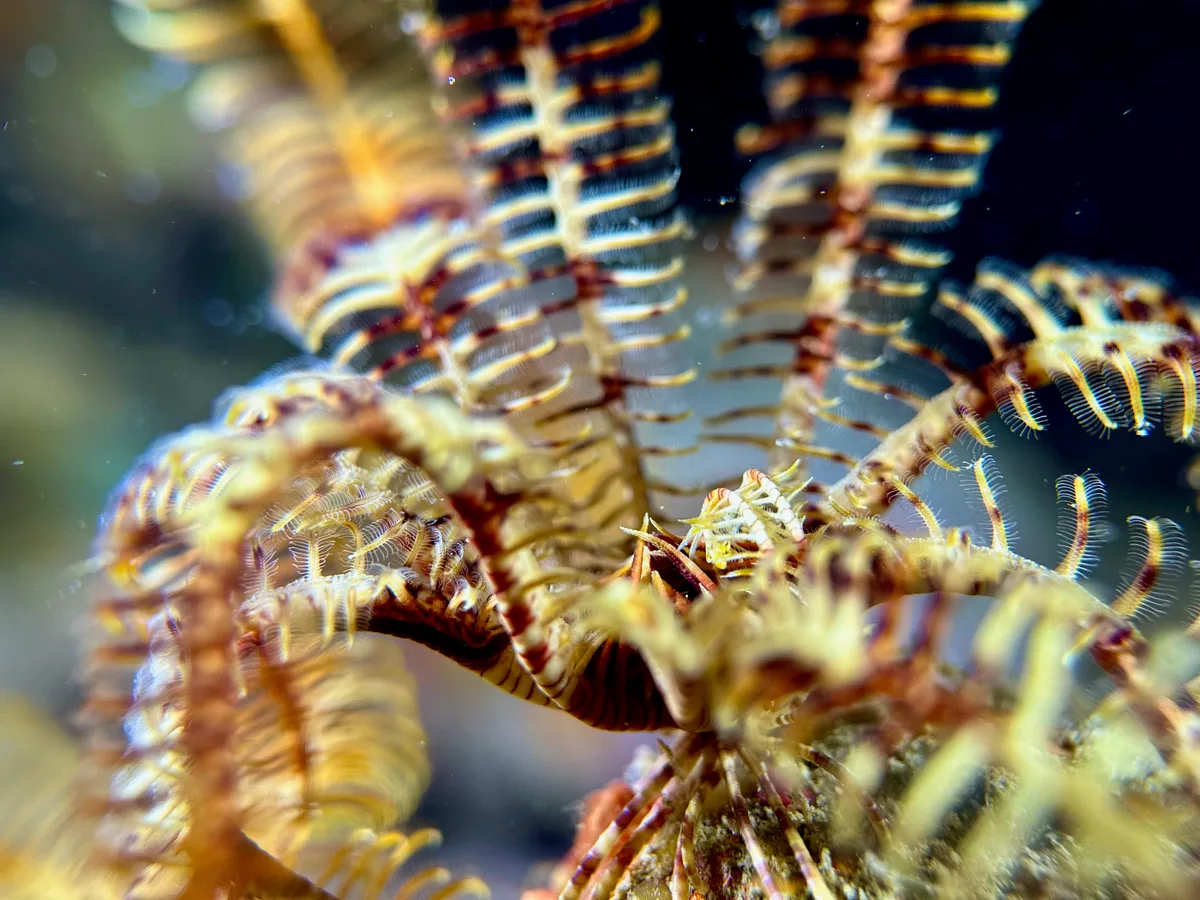
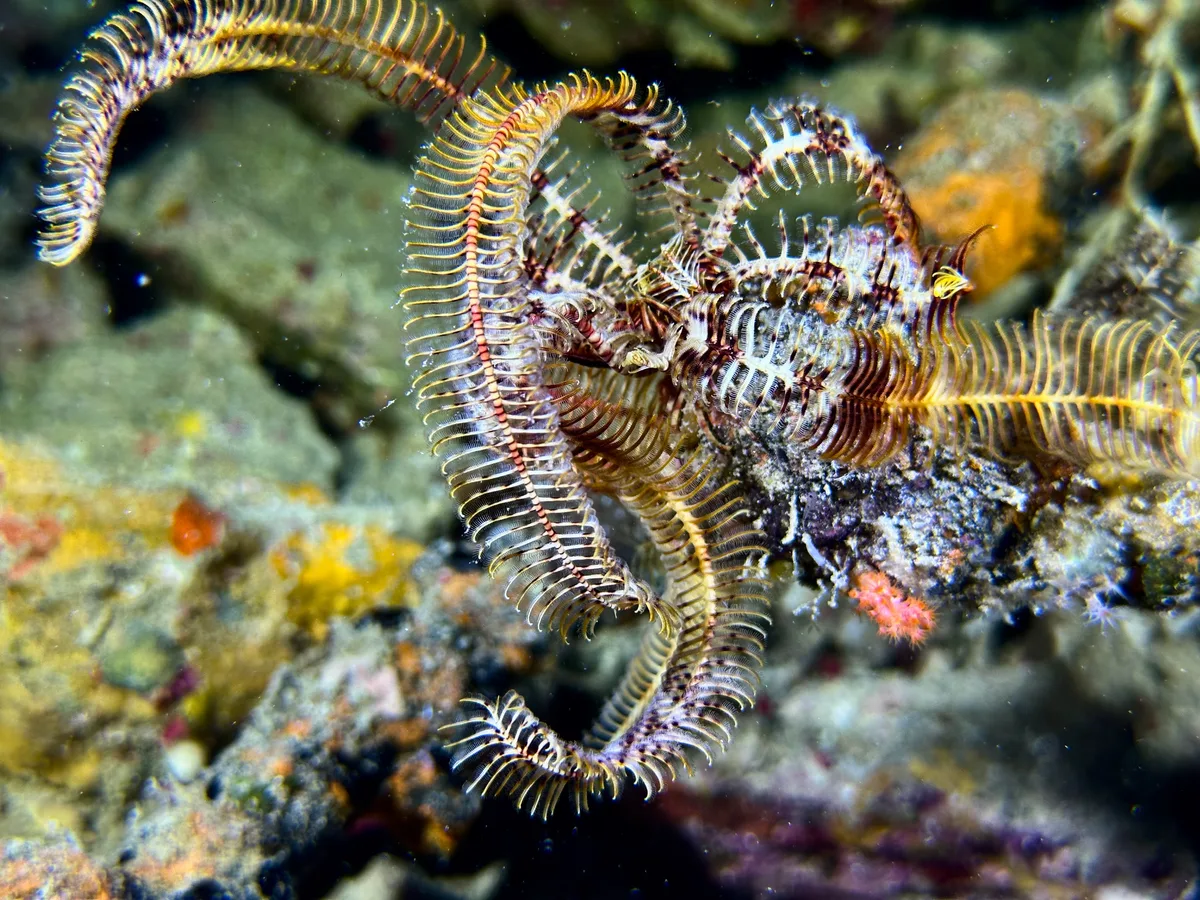
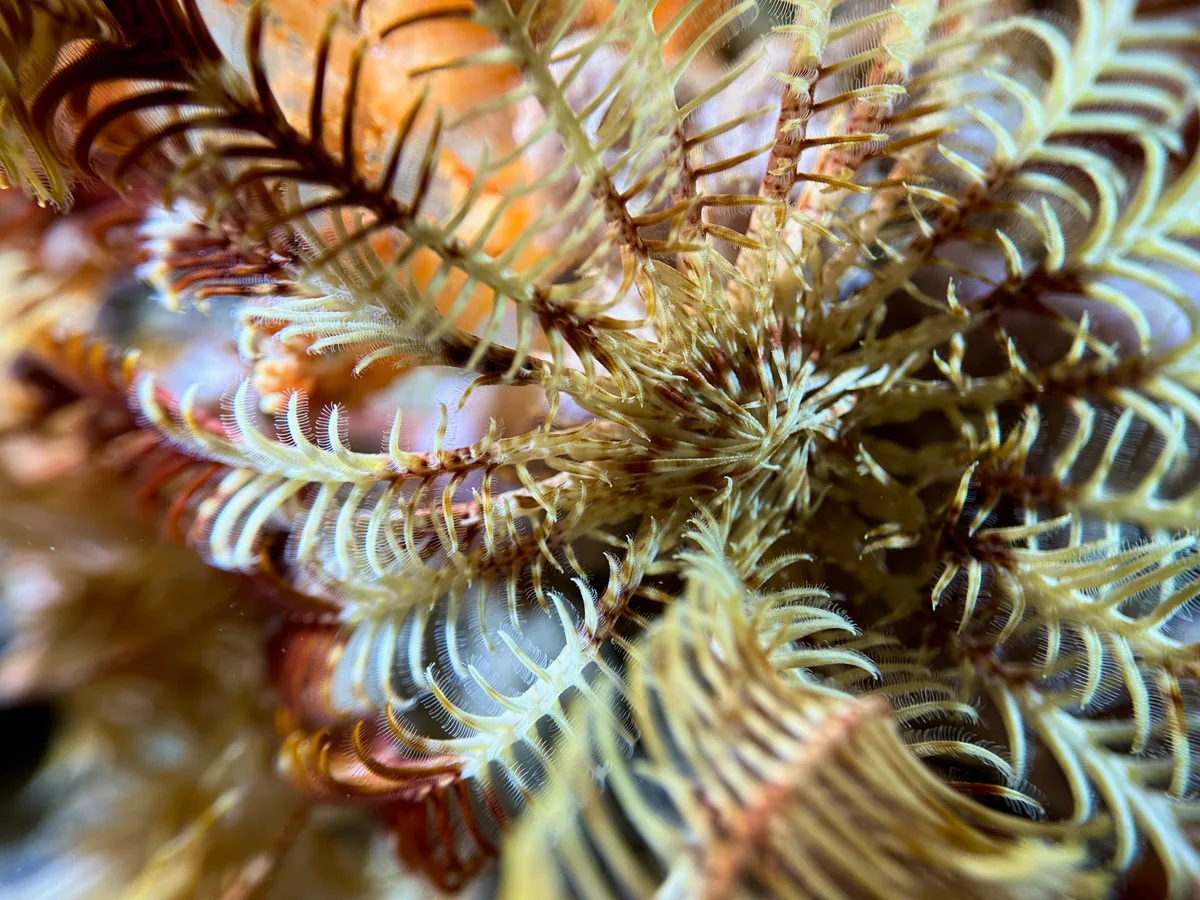
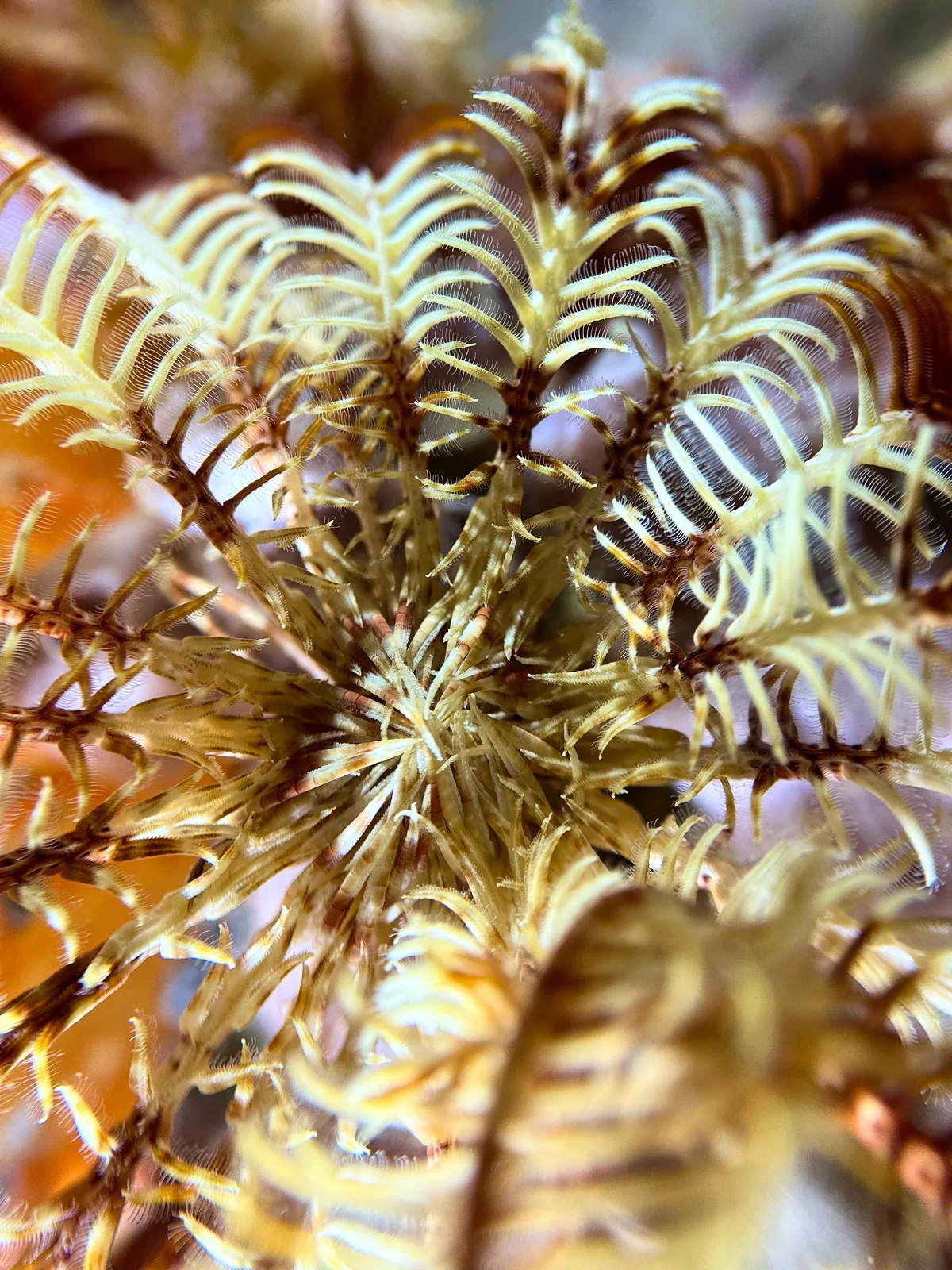
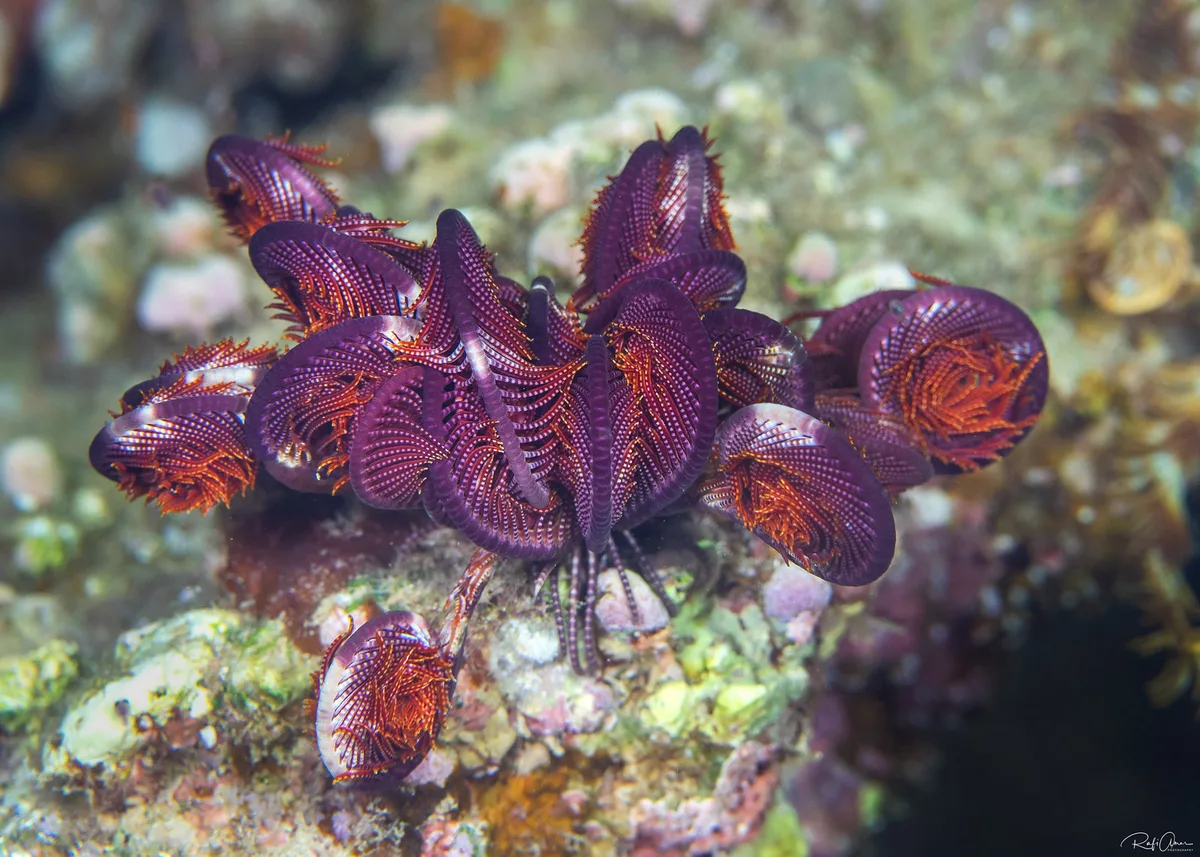
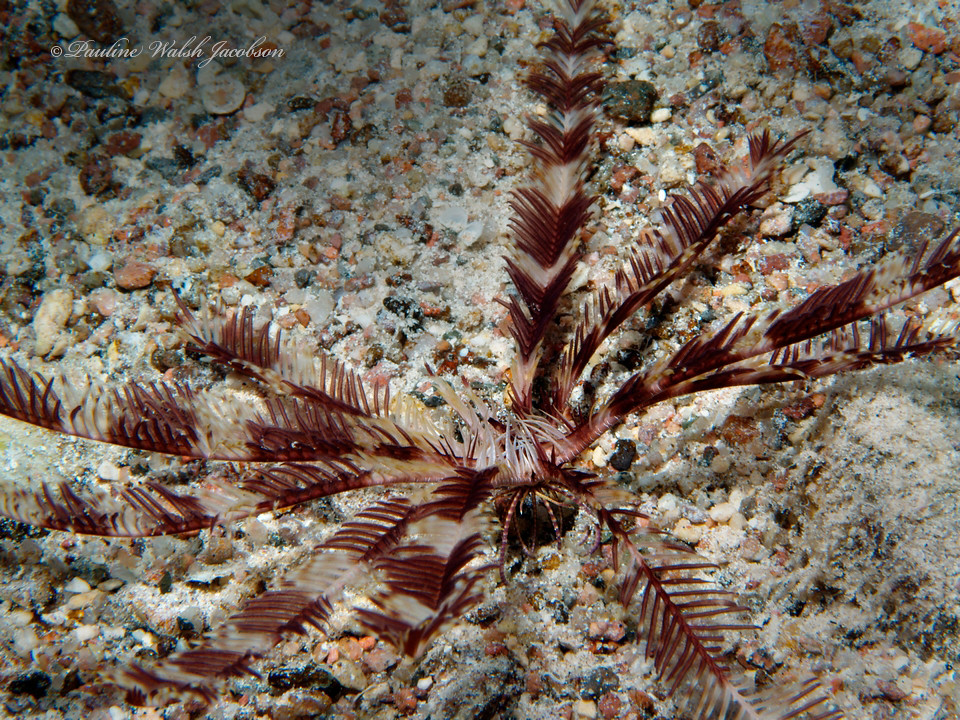
A feather star perched on a coral head with its arms held up into the flow - an echinoderm, related to sea stars and urchins, and the oldest surviving design in the group.
It feeds by filtering. Each arm carries rows of tube feet coated in mucus that catch plankton out of the current and pass it down a groove to the mouth, which faces upward at the center. The animal orients the whole fan across the flow and simply waits.
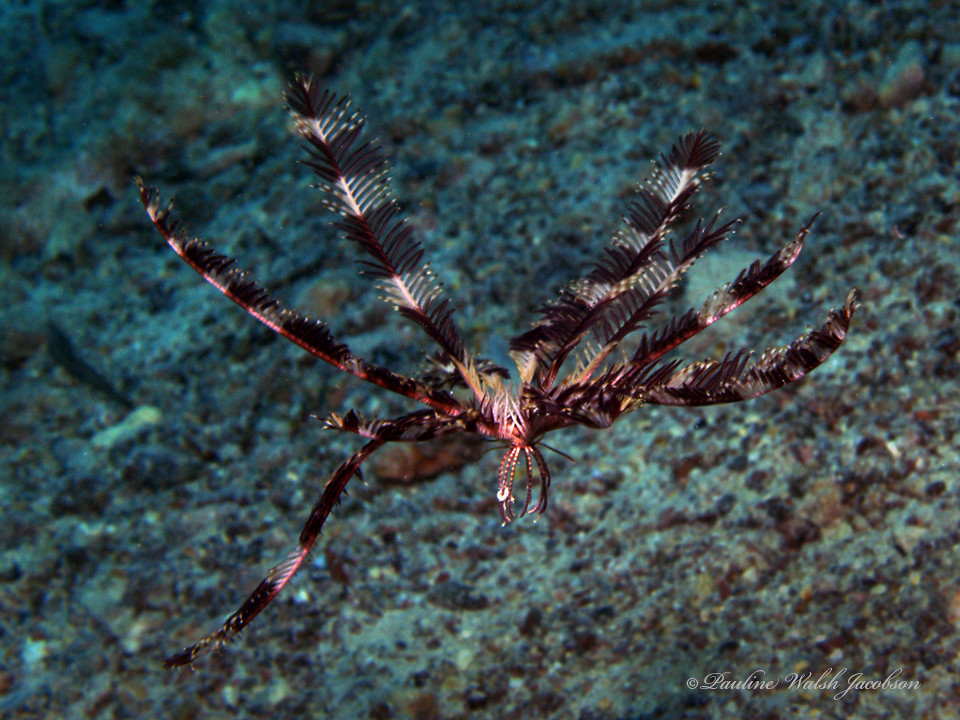
It also swims, which nobody expects. Detached or disturbed, a crinoid lifts off and moves through open water by raising and lowering its arms in alternating sets, a slow deliberate rowing that looks like something out of deeper time - and then settles and grips again with the hooked cirri underneath.
A feather star is also a habitat: shrimps, squat lobsters, clingfish and brittle stars live among its arms, each matched to the color of its own host. Look at the base of the arms before moving on.
- many feathery arms radiating from a small central body
- gripping legs (cirri) underneath, hooked onto coral
- arms held up into the current in a fan or a bowl
- arm span up to 20 cm