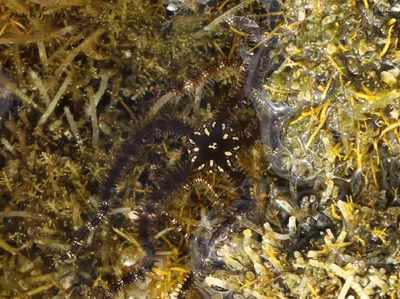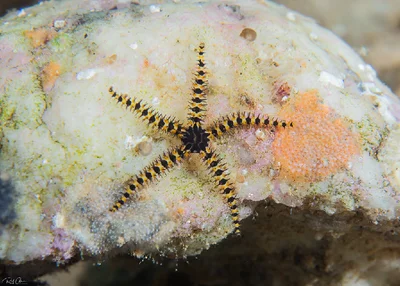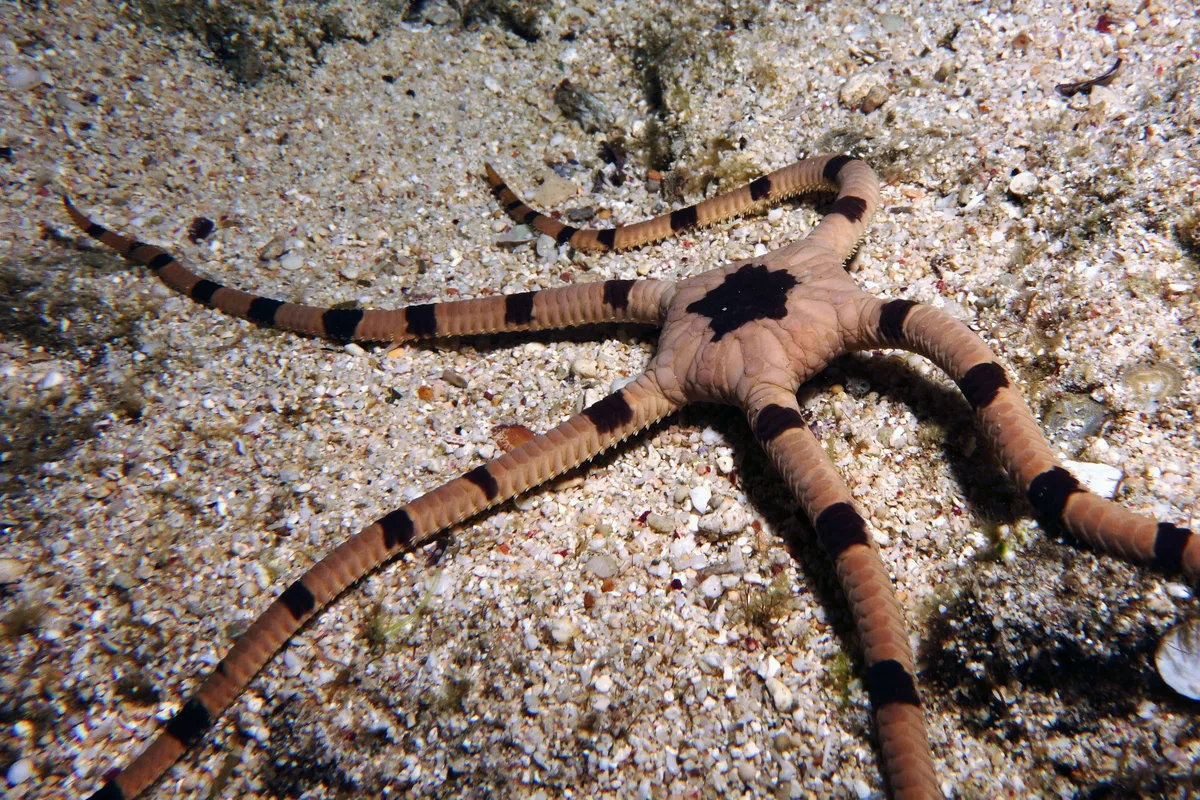
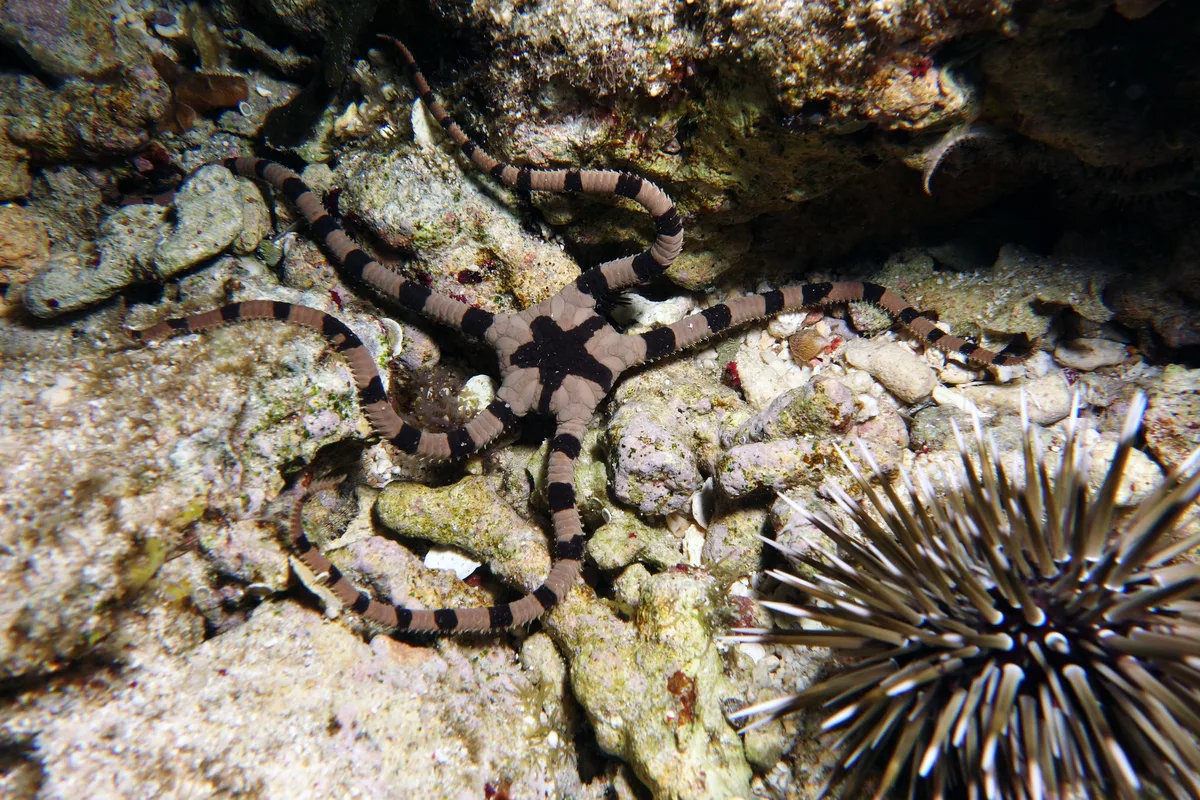
A brittle star named for its markings: the disc carries a clean pale star, its points running out towards the arm bases over a darker ground, and the five arms are boldly banded in alternating dark and light. The surface is smooth - plates lie flat and the arm spines are short and pressed close, so the animal looks polished rather than bristly, unlike the shaggy species it shares cover with. Arm span reaches about 15 cm (6 in).
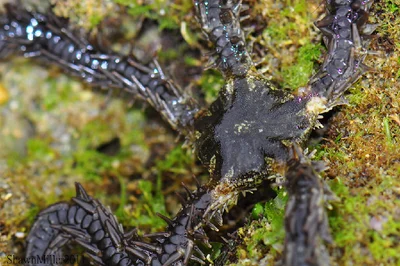
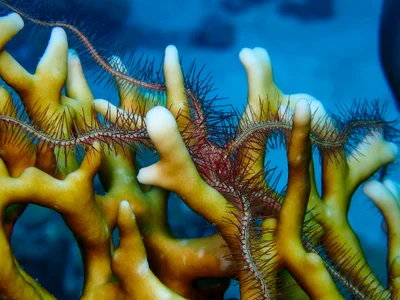
Days are spent under coral slabs, rubble and dead plates on the reef flat and upper slope, down to about 30 m (100 ft). At night it works the surrounding sediment for detritus and organic particles, sweeping them to the mouth on the underside of the disc. Arms detach when seized and grow back, so animals with one short arm are common. In older 🌊 Red Sea literature the species appears as Ophiolepis annulosa or, further back, Ophiura annulosa - both names still turn up on photographs and in shell-collection catalogues. The smooth armour is what to check first: the two common species under the same rubble, the hedgehog and centipede brittle stars, both bristle with spines standing out along the arms.
- disc marked with a distinct pale star pattern
- arms boldly banded in dark and light
- plates smooth and flat - no spines standing out