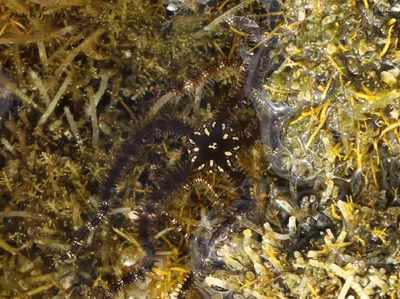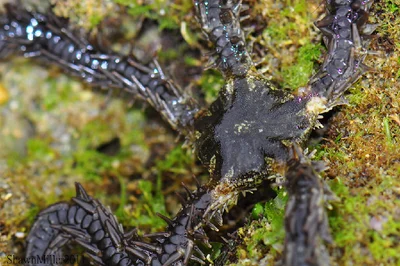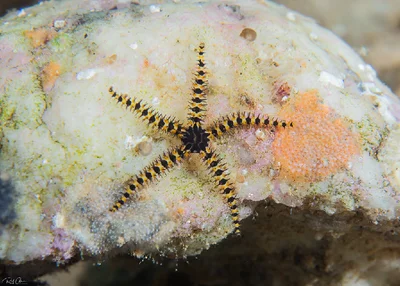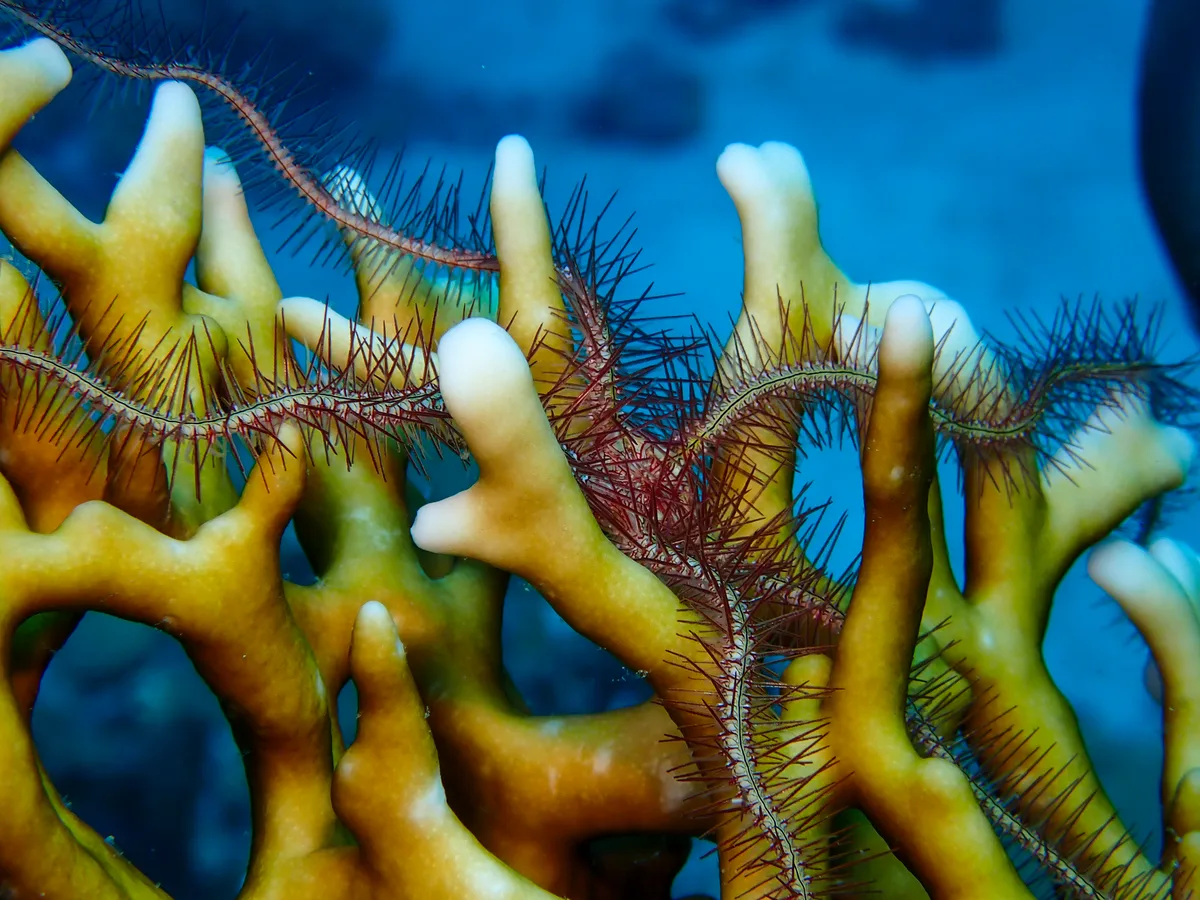
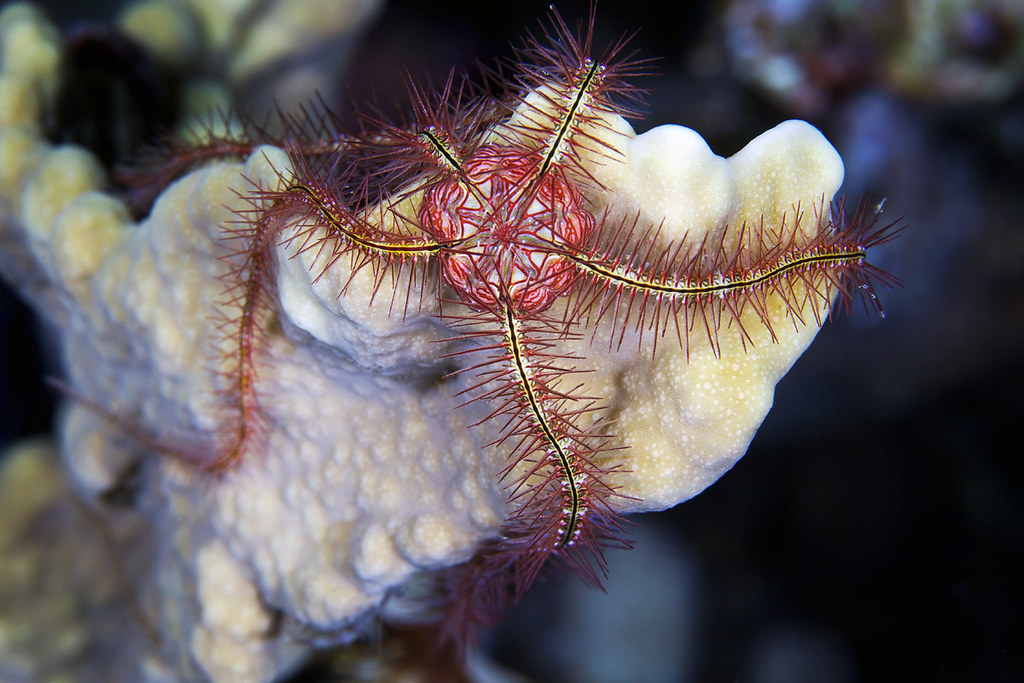
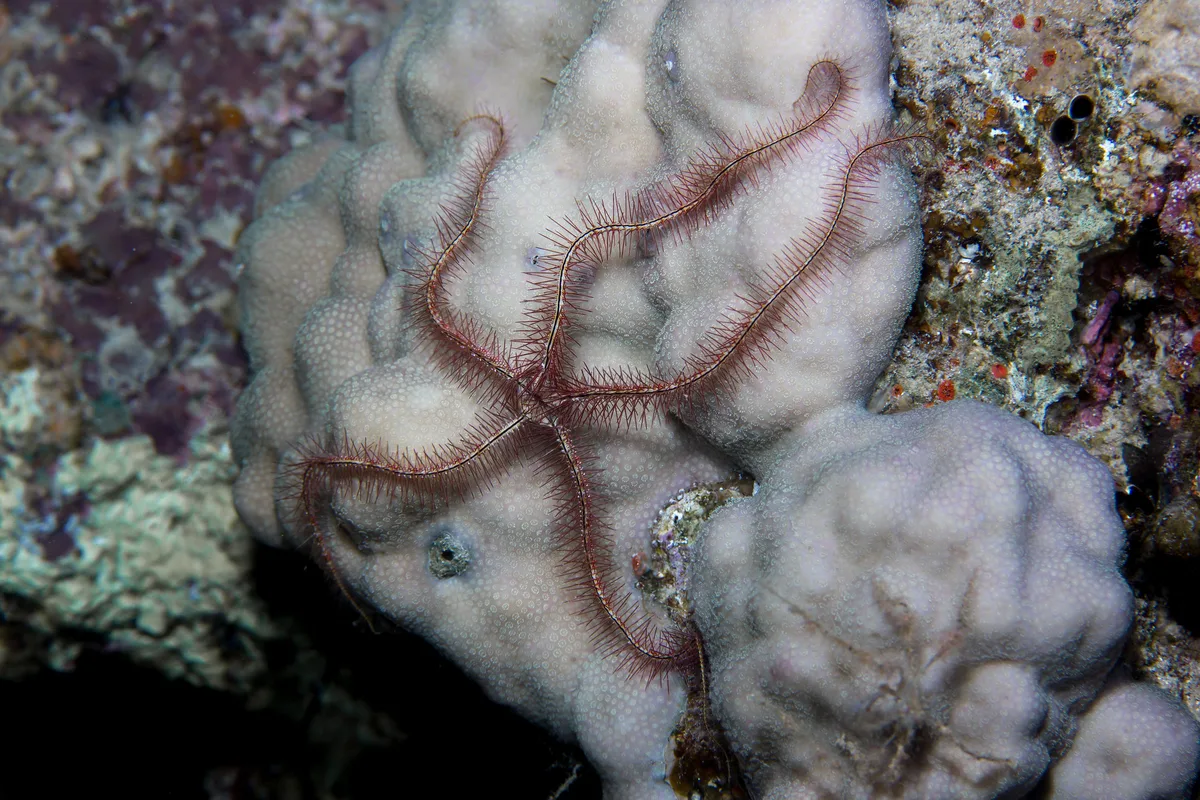
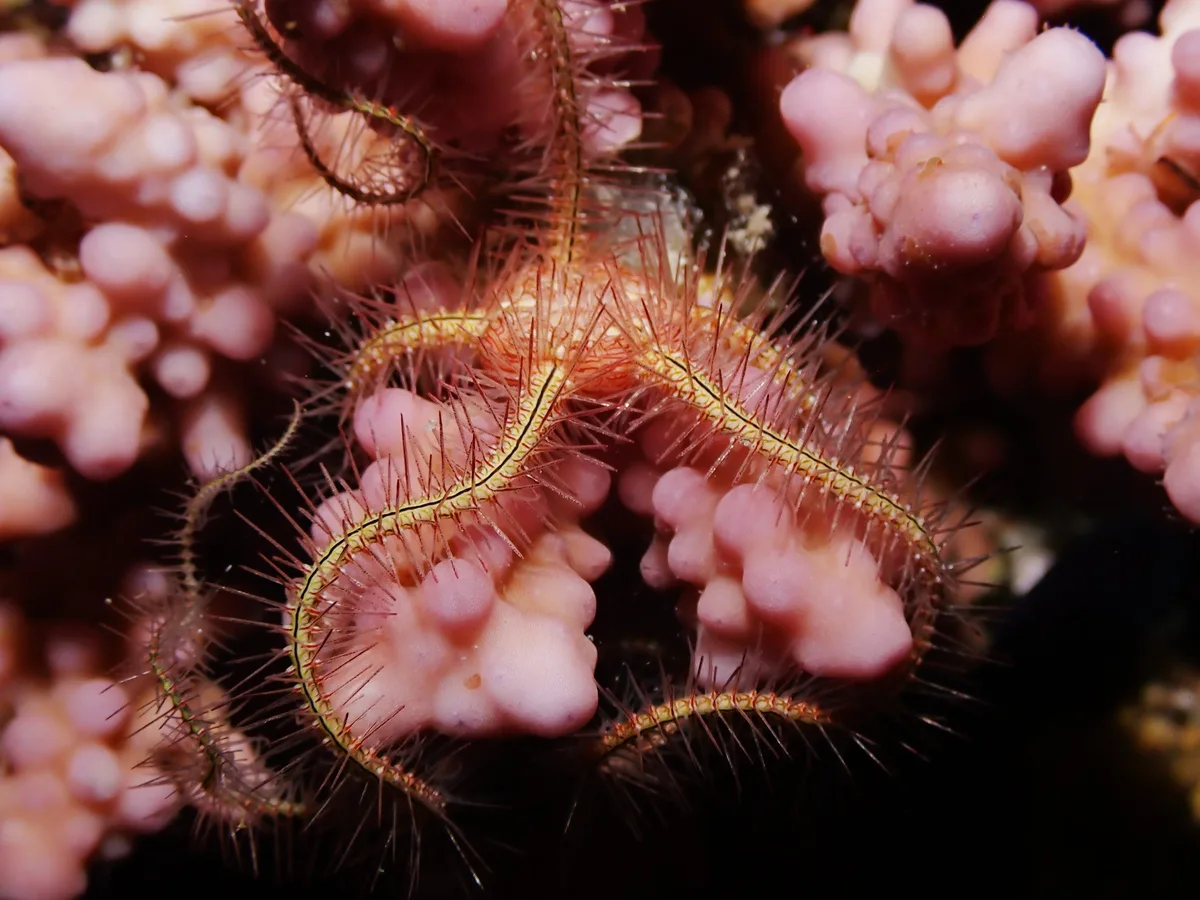
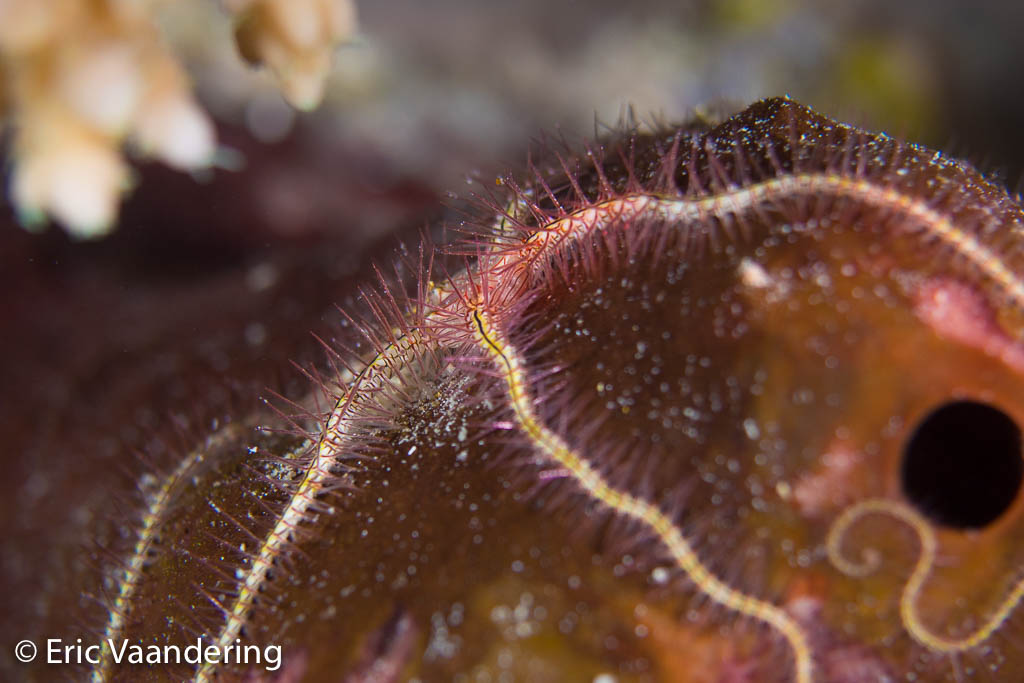
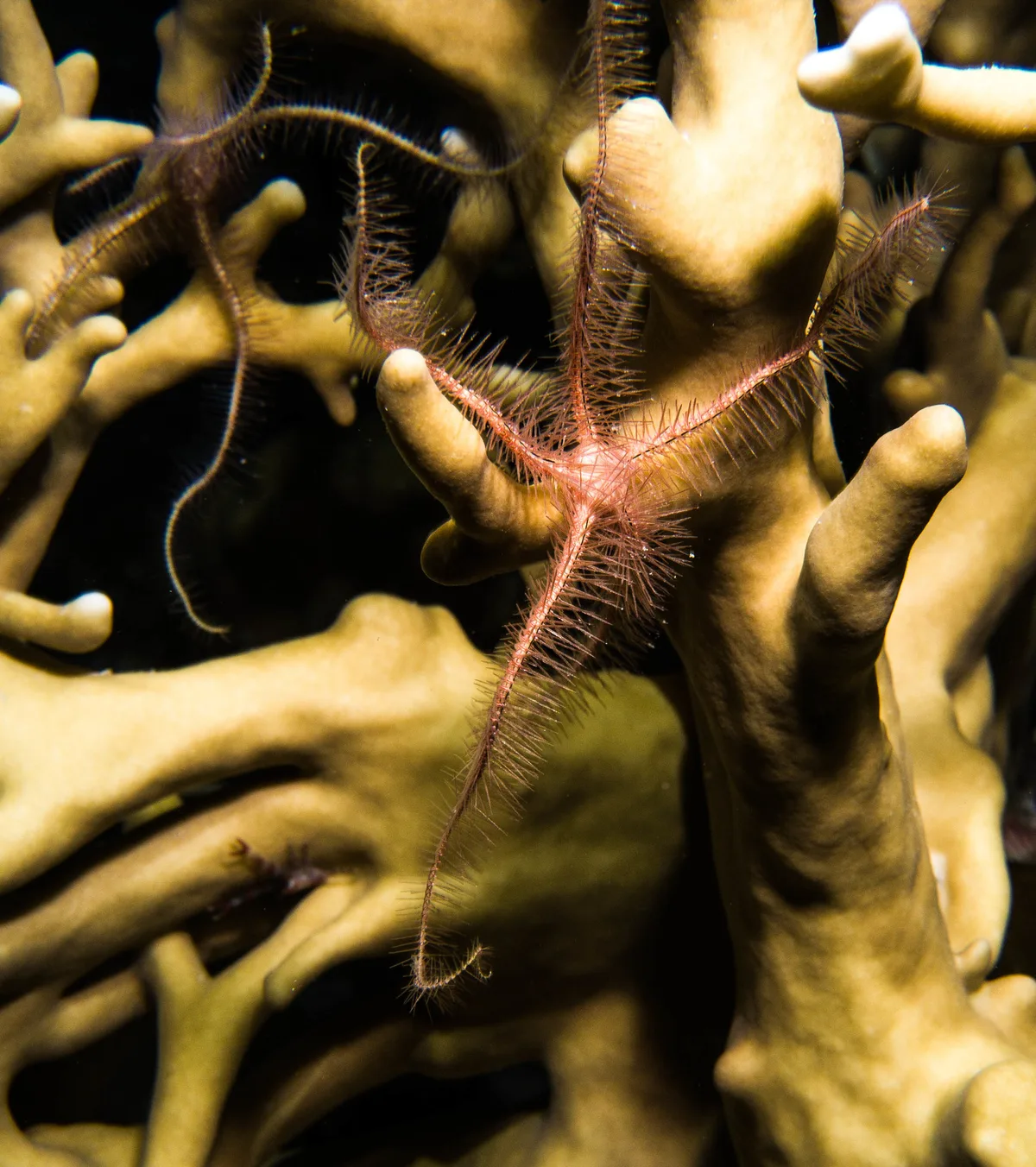
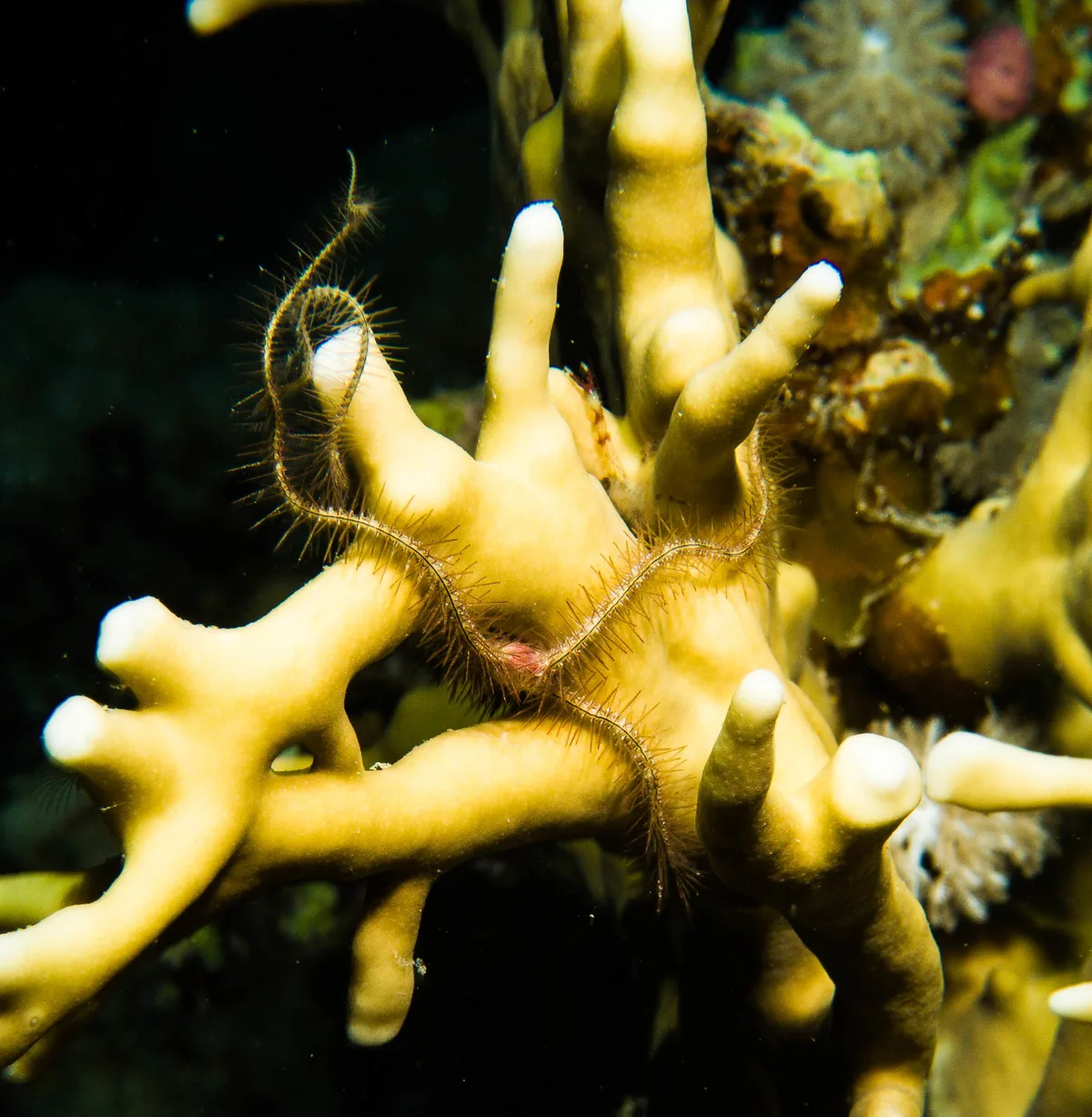
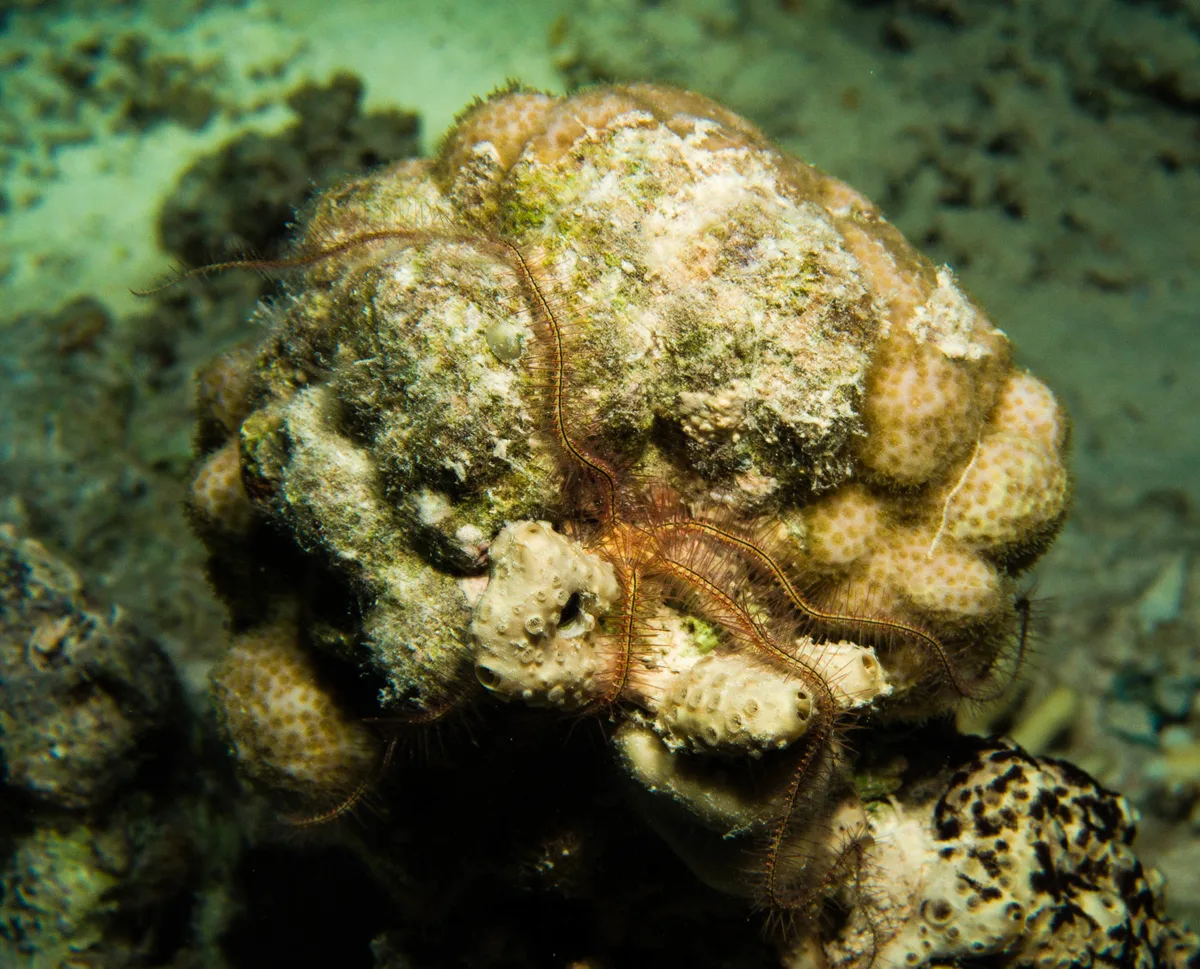
Five thin arms fringed with glassy spines, waving out of a sponge or a crack, with the body itself hidden. Brittle stars are the most abundant echinoderms on most reefs and among the least seen, because almost all of them are inside something.
They move nothing like a sea star. Where a sea star creeps on hydraulic tube feet, a brittle star rows - the arms lash in coordinated strokes and the animal skitters across the bottom surprisingly fast, with the tube feet used for handling food rather than for walking.
The name is literal. Grabbed by an arm, the animal sheds it at a fracture plane built into the segment and leaves - the arm keeps writhing as a decoy while the rest walks away, and regrows over months. Most individuals in a population are missing part of at least one arm at any time.
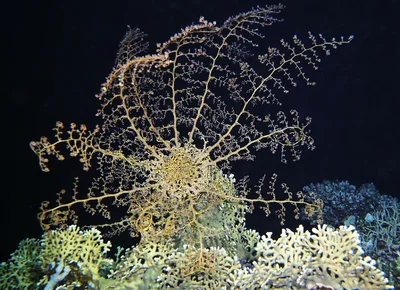
This species feeds by holding its arms up into the current and combing particles out of the water with the spines and mucus, then passing the catch down the arm to the mouth. At night whole sponges bristle with them.
- small central disc with five very long thin arms fringed in glassy spines
- arms often banded, moving in snake-like waves
- usually only the arm tips visible, protruding from a sponge or a crevice
- arm span up to 30 cm