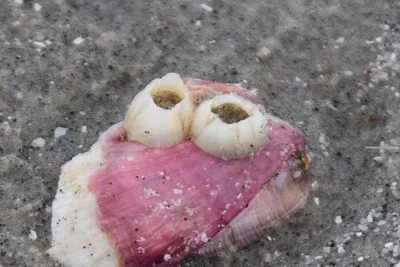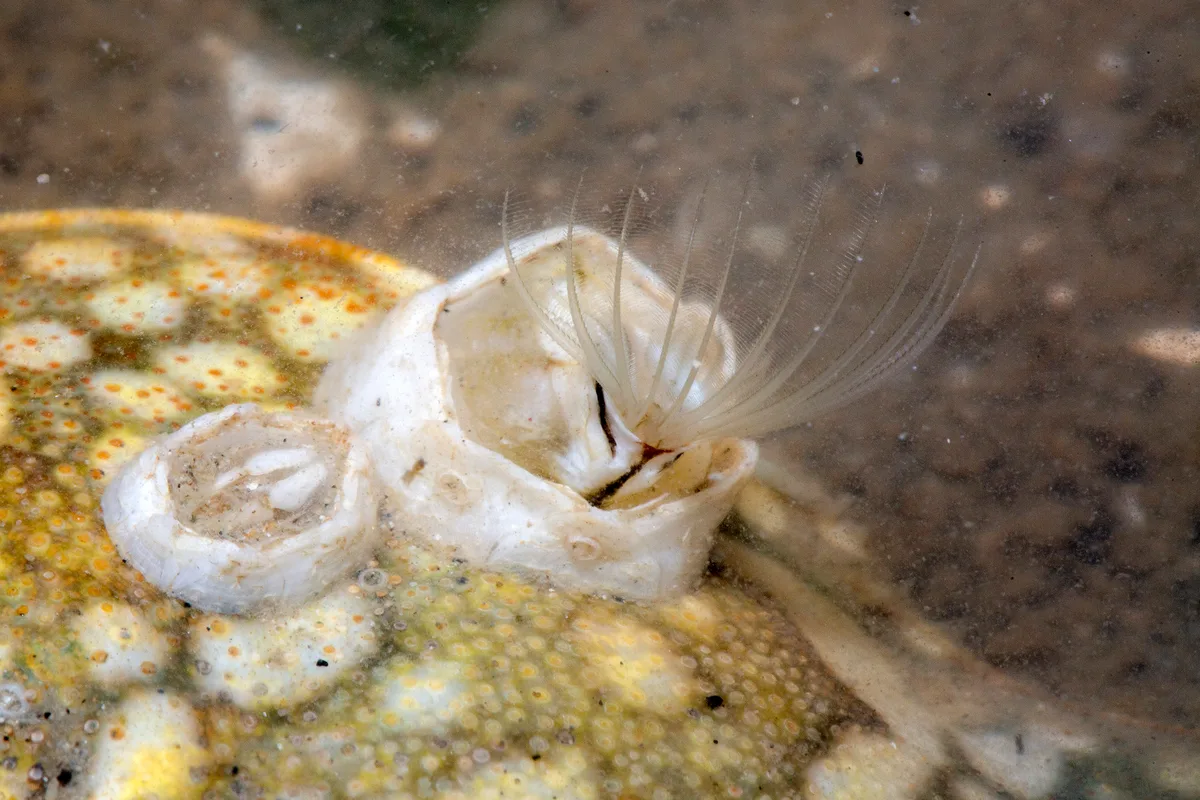
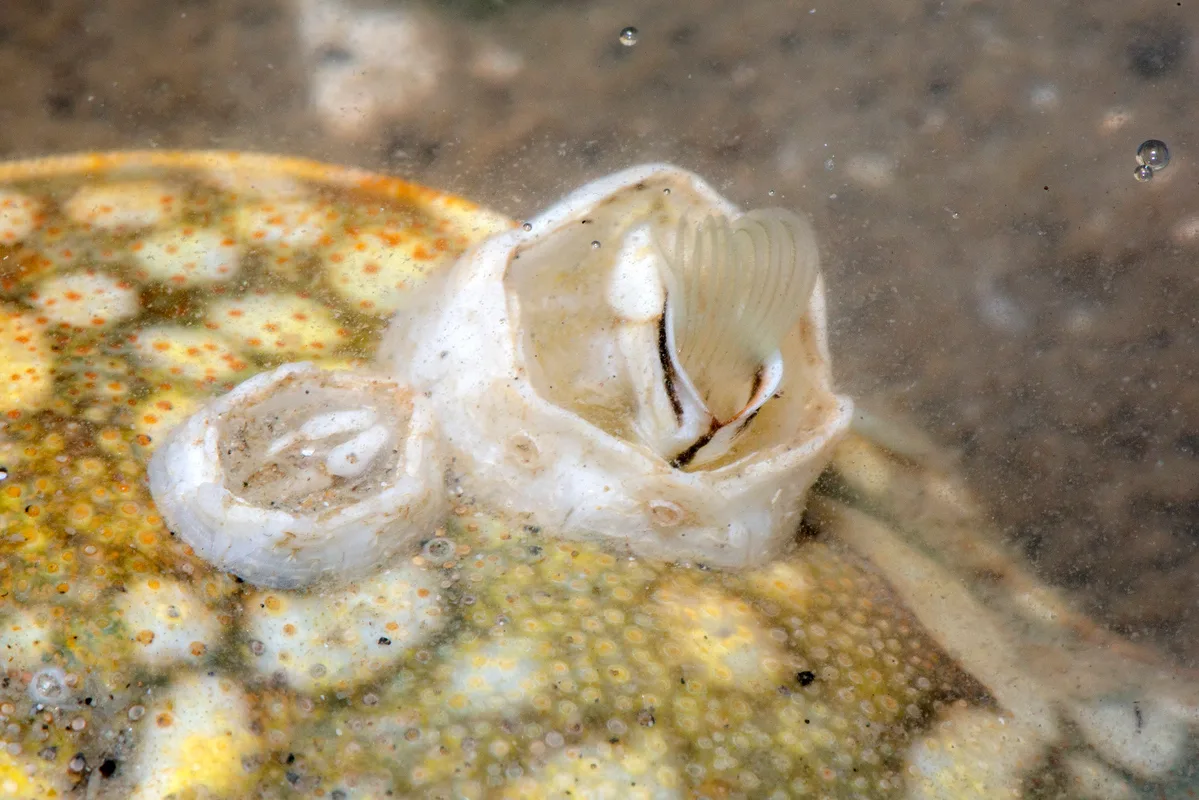
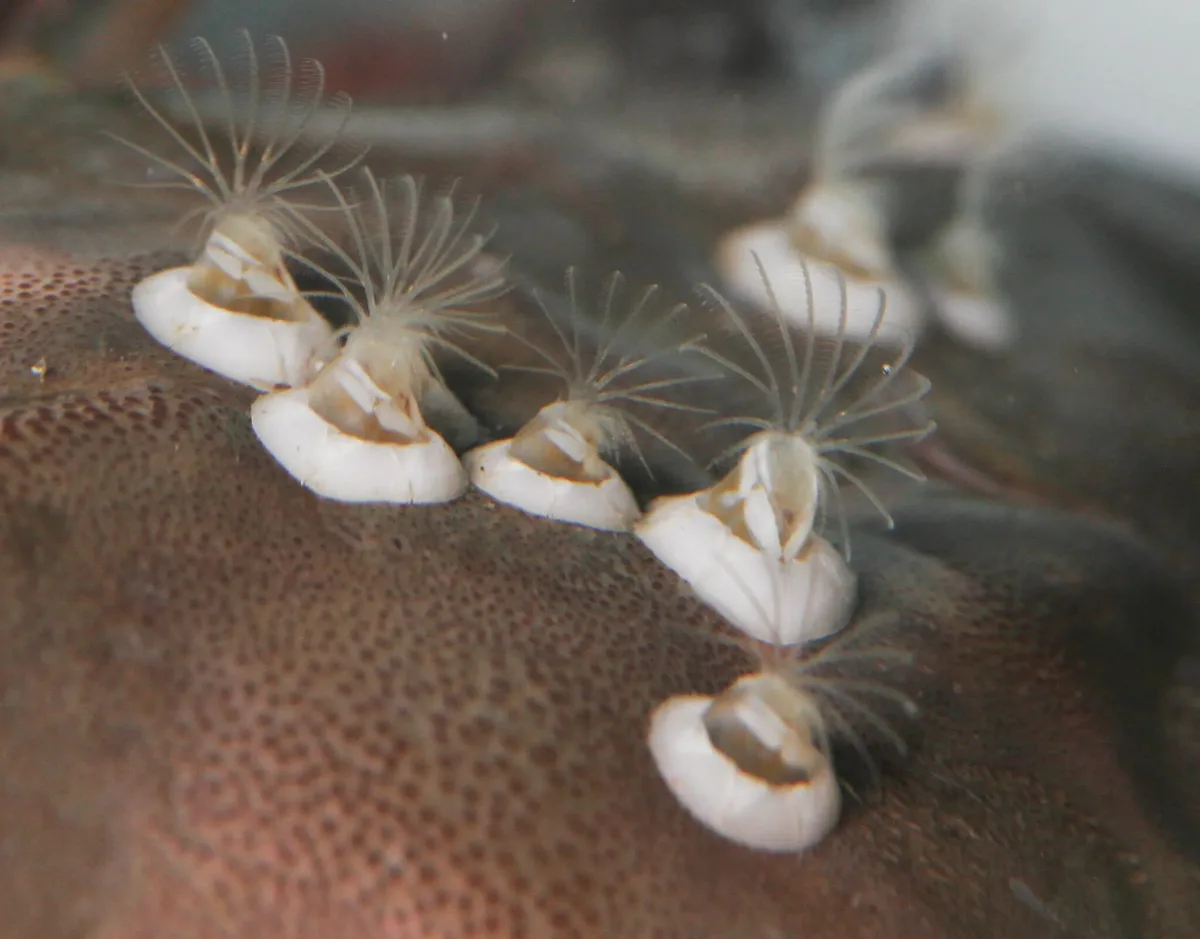
A barnacle that has given up on rock. It settles on the shell and skin of sea turtles, growing as a flat whitish plate up to 5 cm (2 in) across, and travels wherever its host goes. Look at almost any adult green turtle here and there will be a few, usually toward the rear of the carapace where the water flows cleanest.
Riding a turtle is not a bad living. A barnacle is a filter feeder locked in place, and a stationary one eats only what the current brings; a barnacle on a swimming animal has water pushed through it all day. The cost is that its home ages, molts and eventually dies, so this is a lifetime lease rather than a freehold.
What it does not do is harm the turtle. The plates sit on the shell surface and take nothing from the animal underneath, and a heavy load says more about how slowly a turtle has been moving than about how sick it is. Charles Darwin spent eight years on barnacles before publishing on evolution, and this family - the ones that ride other animals - is a large part of why the group repaid the attention.
- flat whitish plates growing directly on a turtle's shell
- up to 5 cm across, often several on one animal
- smooth low profile rather than a raised cone
- found on turtles, never on rock