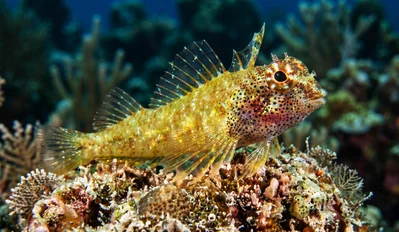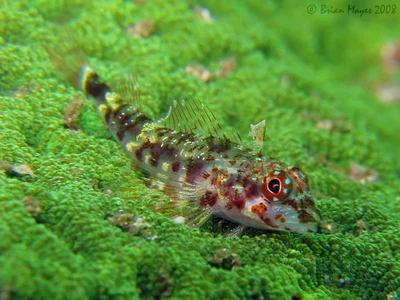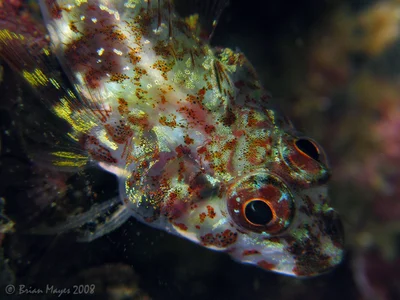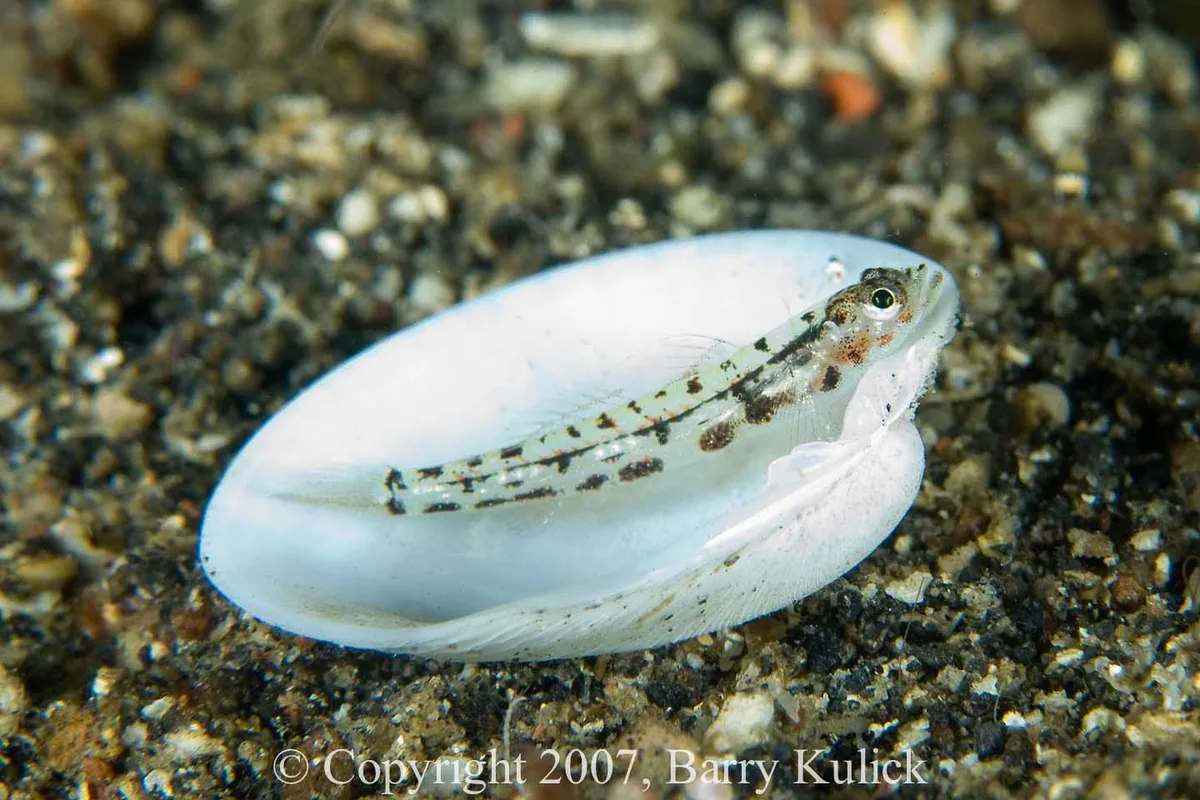
A tiny fish, barely 3 cm (1.2 in) long, identified by the feature the whole family is named for: three separate dorsal fins in a row along the back, where nearly every other small reef fish has one or two. Color is pale cream to sandy with fine darker mottling and faint bars, and males darken markedly when displaying, the head turning sooty against a still-pale body. The eyes sit high and swivel independently.
It perches rather than swims, propped on stiffened pelvic fins on algae-covered rock and rubble in shallow bays, lagoons and reef flats down to about 10 m (33 ft), moving in short darting hops between vantage points. Feeding is on tiny crustaceans picked from the algal turf through the day. The species occurs nowhere outside this sea, and like most triplefins it is overlooked simply for being small and still - a patch of algal rock watched for a minute usually turns out to hold several. Males hold small territories and court passing females with a headstand display, then guard the eggs, which are laid in a single layer on the rock and stuck down by fine filaments.
The genus. Enneapterygius Rüppell 1835 - ennea (nine) + pterygion (fin). ETYFish
The species. Enneapterygius pallidus Clark 1980 - pale. ETYFish
- three separate dorsal fins - the family's giveaway
- tiny, pale, mottled - under 3 cm
- perches on algal rock, propped on its pelvic fins
Why it's threatened
There are no known threats to Enneapterygius pallidus.
Threat classification from the IUCN Red List.