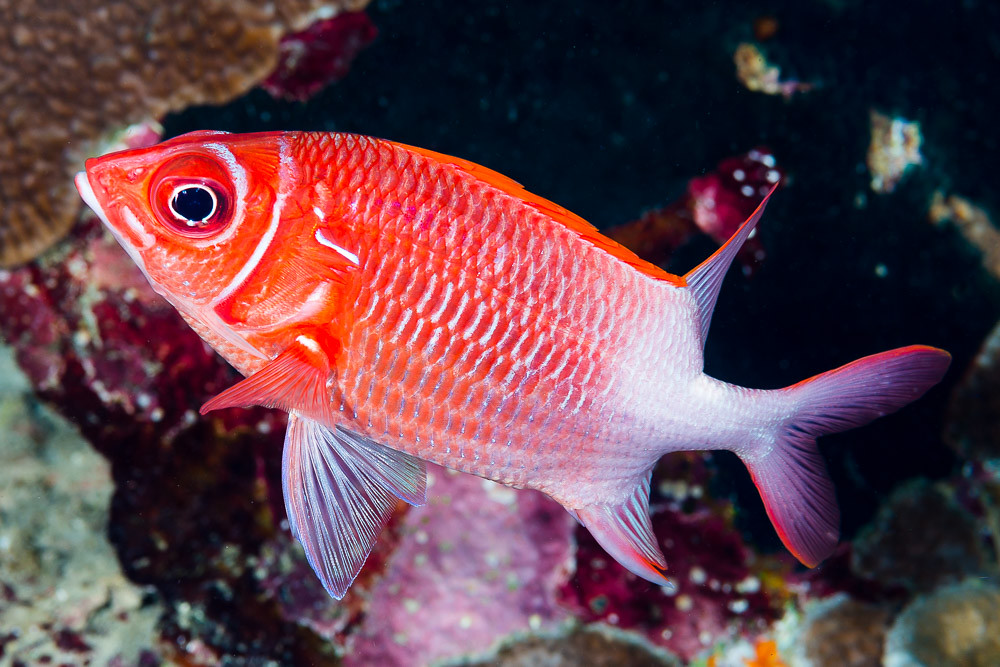
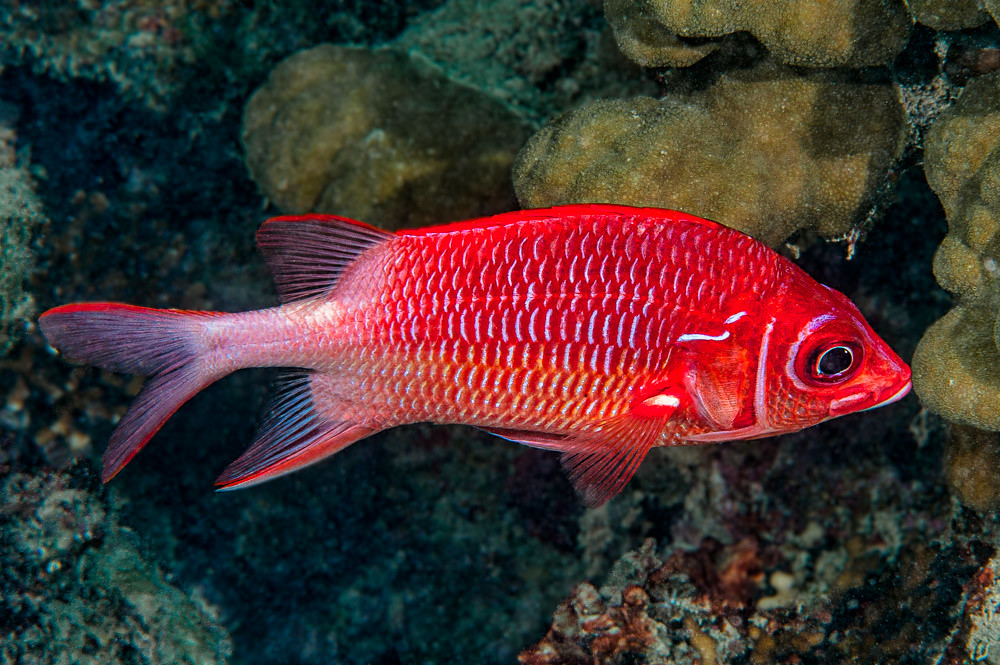
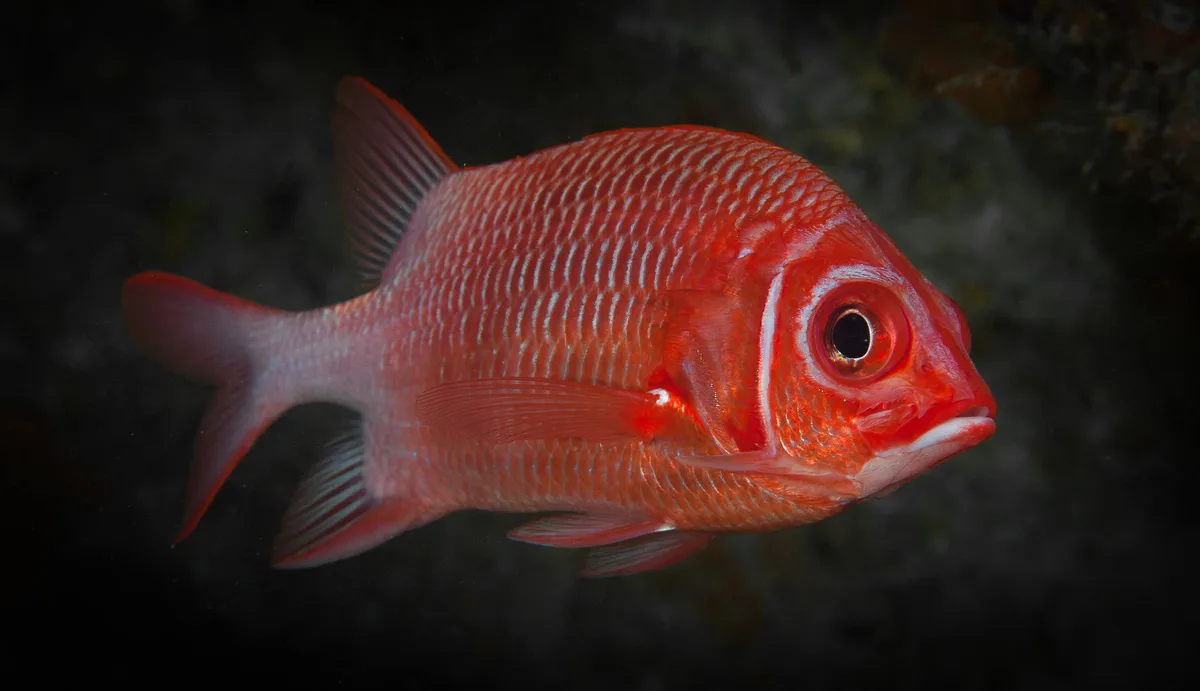
There is a spine on the cheek, at the rear corner of the gill cover, and on this genus it is venomous.
It is easy to miss because the fish carries it flat and only flares it when handled, and it is the reason squirrelfish are the one small red reef fish worth not grabbing. The wound is a puncture with venom pushed into it: disproportionate pain, swelling, and several hours of it, in an animal twenty centimeters long that looks entirely harmless. Fishers on this coast know it and handle them by the tail; divers, who have no reason to touch one, mostly never find out.
The venom is not for hunting. It works only when something has the fish in its mouth or in its hand, which is a defense that pays exactly once per attacker and is meant to be remembered. Everything about the family is defensive in that way: hide in the rock all day, come out in the dark, and carry a spine for whatever finds you anyway.
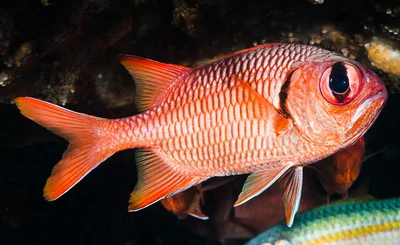
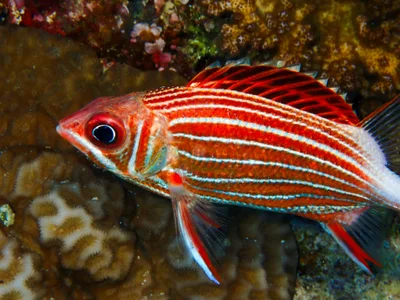
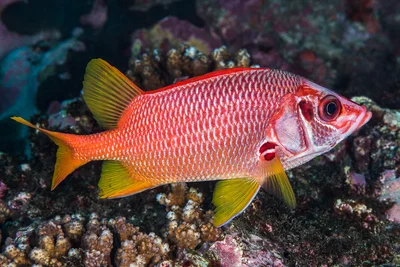
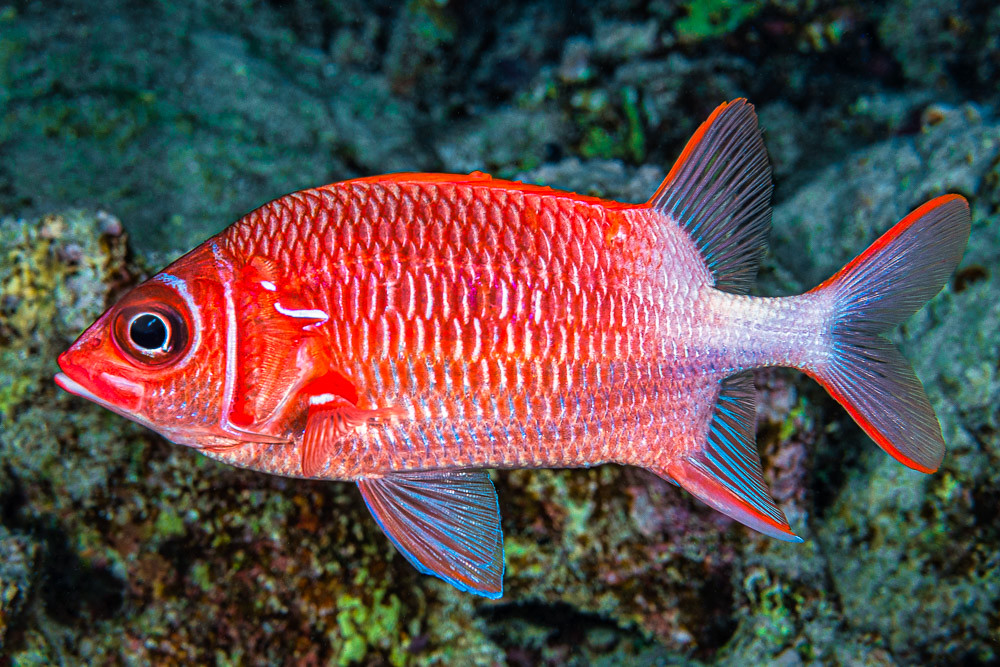
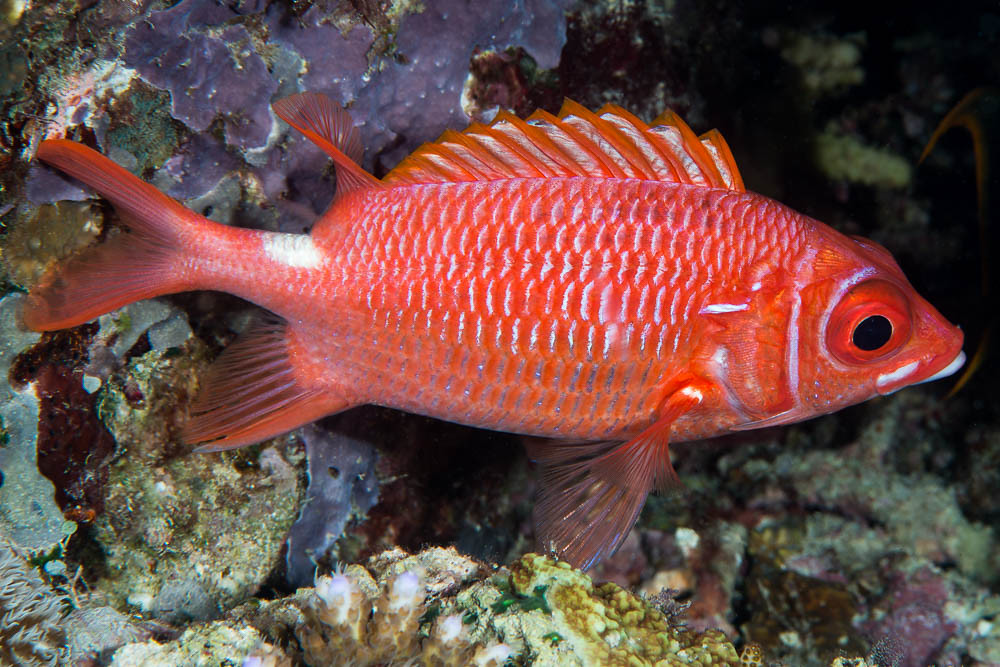
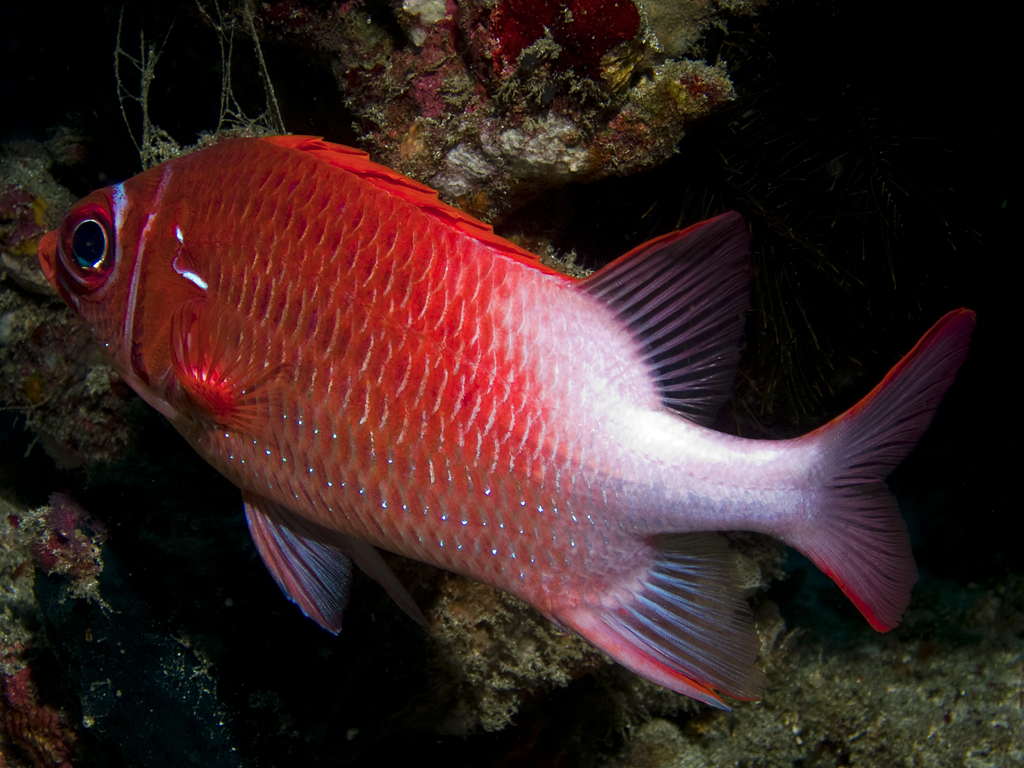
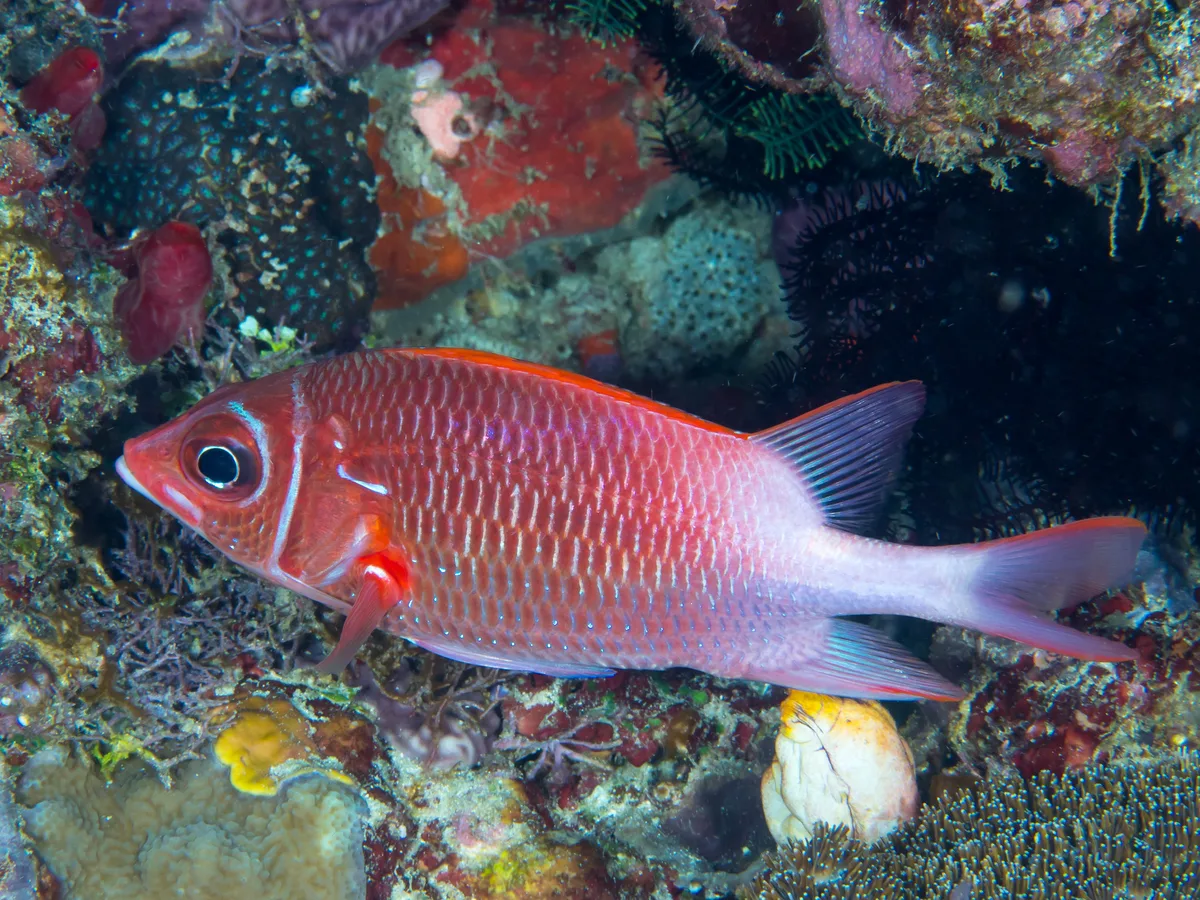
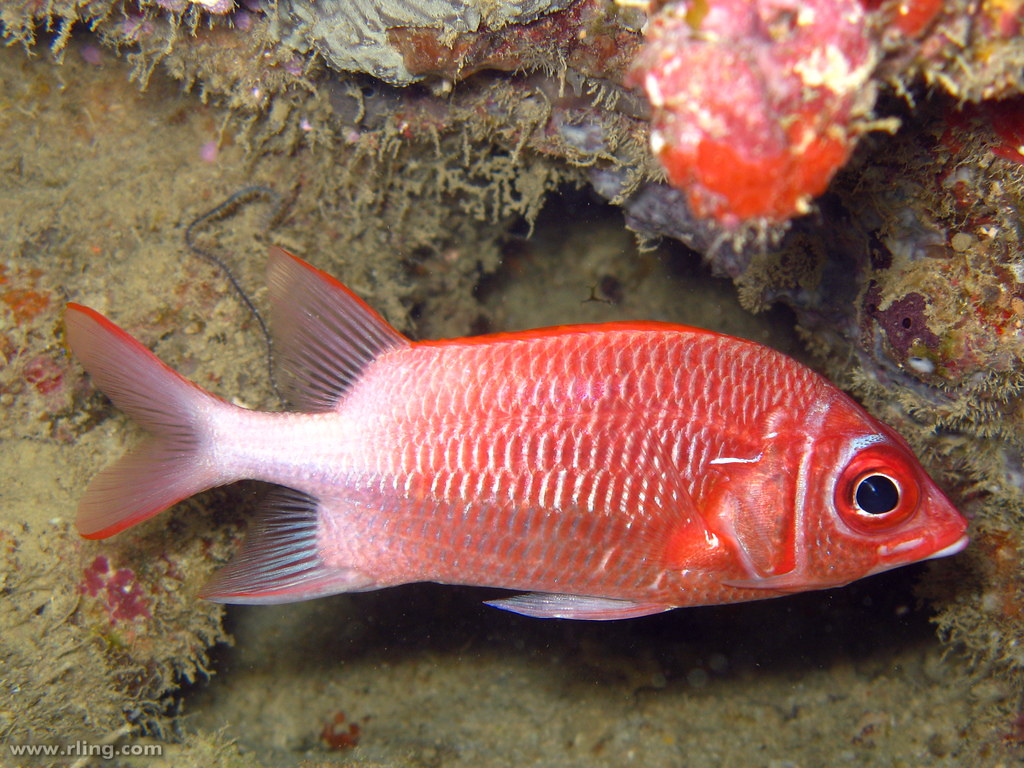
This one is the version with a clean white patch at the base of the tail and a pale streak above the gill cover, red everywhere else, in caves and under ledges by day.
The genus. Sargocentron Fowler 1904 - sargós (Greek) + centron (any sharp point). ETYFish
The species. Sargocentron caudimaculatum (Rüppell 1838) - cauda (tail) + maculatum (spotted). ETYFish
- white patch at the base of the tail on a red body
- pale streak above the gill cover
- sharp spine on the rear corner of the cheek
- up to 25 cm