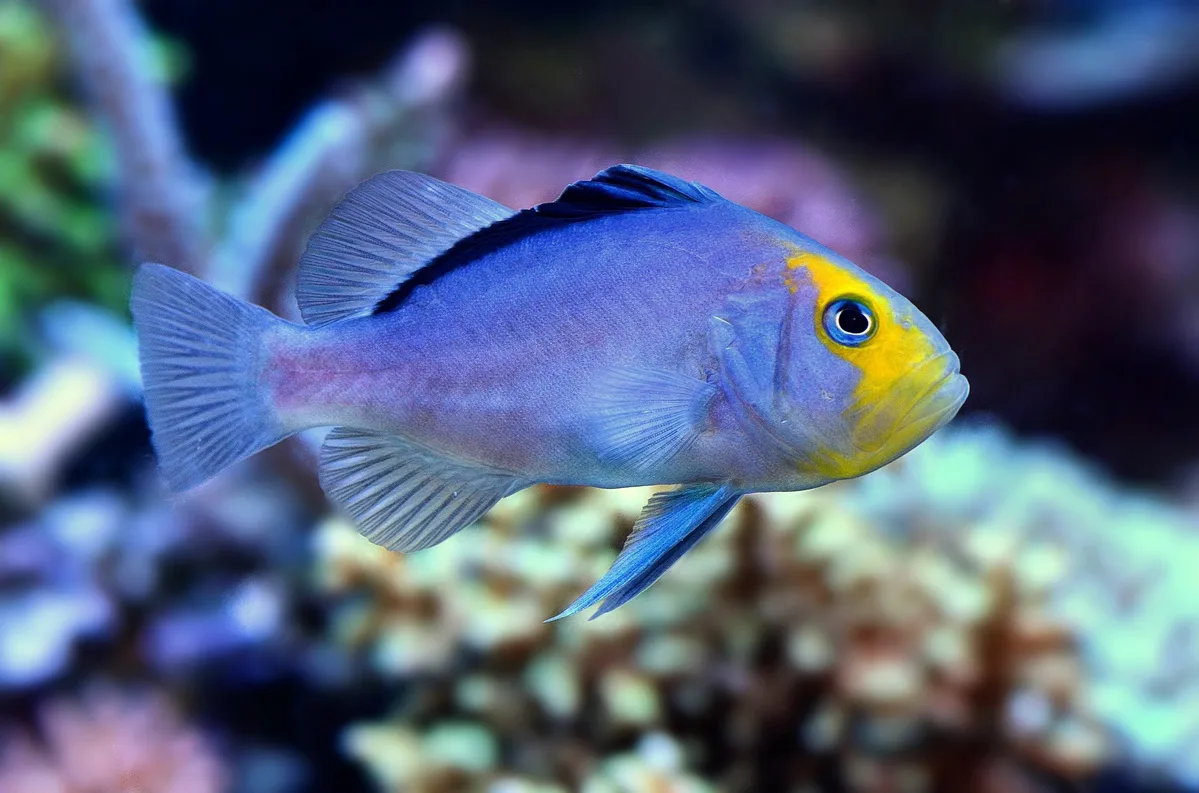
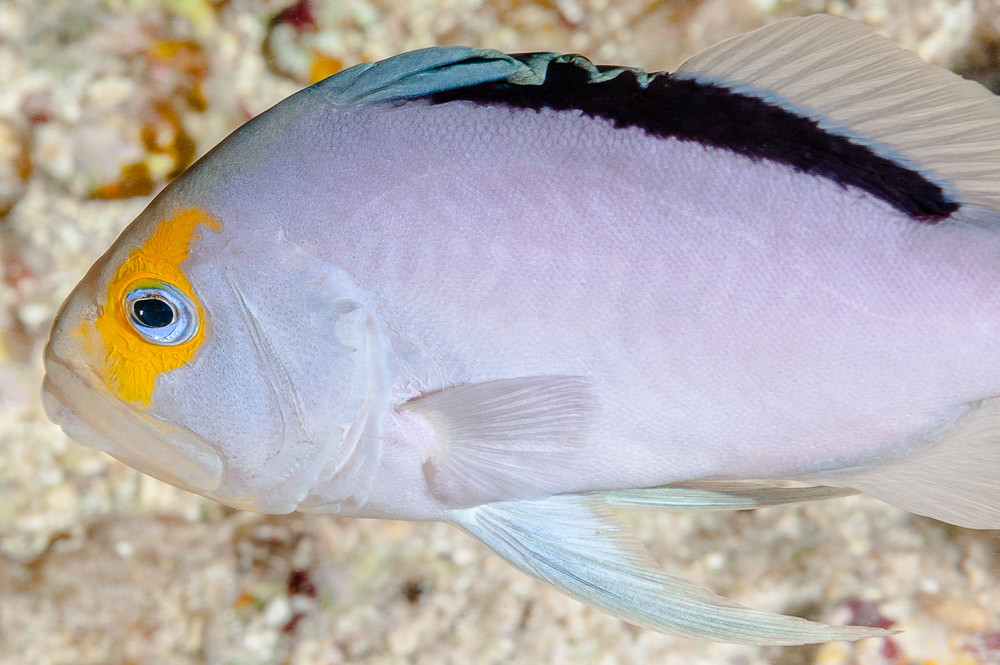
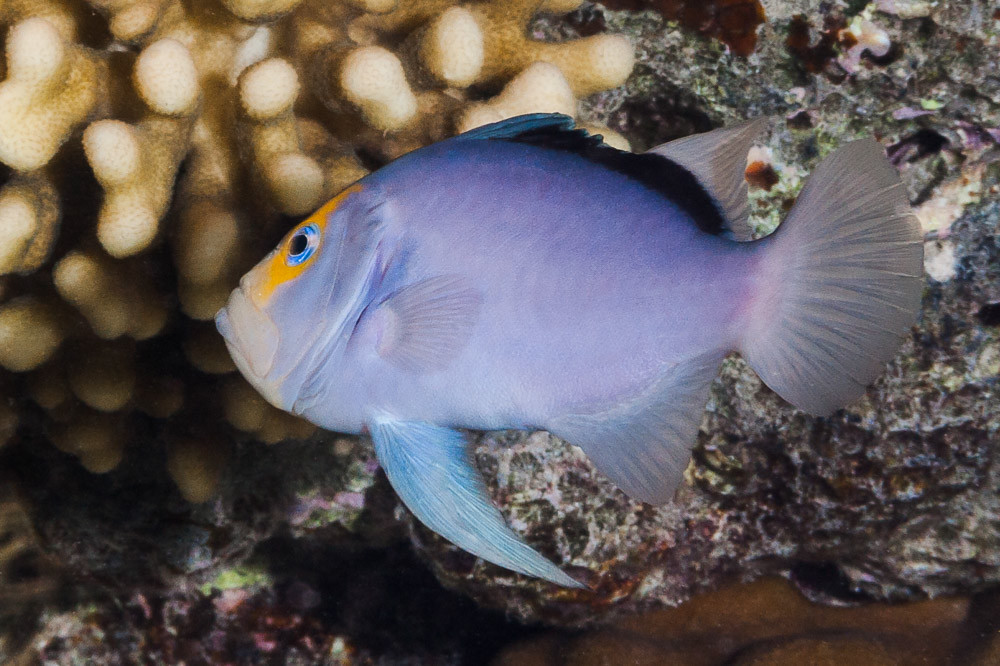
A pale yellow fish to 14 cm (5.5 in) crossed by two dark bars, one running through the eye, with a notched dorsal fin that gives it a two-part outline. It lives in caves and under ledges by day and is a 🌊 Red Sea animal, replaced elsewhere in the Indo-Pacific by its relatives.
It hunts from behind a screen. The soapfish swims alongside a larger herbivore - a parrotfish, a surgeonfish, anything the reef ignores - matching its speed and staying against its flank, and uses the escort as cover to get within striking distance of small fish that would flee from a predator in the open. The technique is called shadow stalking, and it is one of the clearest cases of a fish using another animal as a hunting tool.
The family name is literal. The skin secretes grammistin, a bitter toxin that foams like soap when the fish is handled or stressed, and it is potent enough that a dying soapfish can kill everything else in a closed tank. On the reef it means almost nothing eats an adult.
By day it hangs upside down under ledges, which is where most photographs of it come from.
The genus. Diploprion Cuvier 1828 - diplo- (double or two-fold) + prion (saw). ETYFish
The species. Diploprion drachi Roux-Estève 1955 - patronym not identified. ETYFish
- deep pale yellow body crossed by two broad dark bars, one through the eye
- long-based dorsal fin with a notch, giving a two-part outline
- often seen shadowing a larger harmless fish at close range
- length up to 14 cm
Why it's threatened
Due to the general paucity of knowledge on this species population, it is not known if this species is impacted by severe threats.
Threat classification from the IUCN Red List.