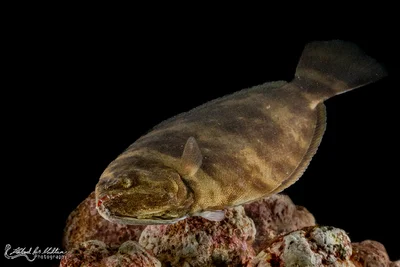

A flatfish begins life as an ordinary fish, and then one of its eyes travels across its skull.
The larva is symmetrical, upright, and swims in open water like anything else. Then it begins to lean, and over a few days to a few weeks one eye migrates over the top of the head to join the other on what will become the upper side. The skull twists, the jaws and nostrils rearrange, the pigment shuts down on the side that will face the bottom, and the fish lies down and never stands up again. Nothing else among the vertebrates rebuilds its own head this way.
What it buys is the perfect flat ambush position with two working eyes on top, rather than one eye pressed uselessly into the sand.
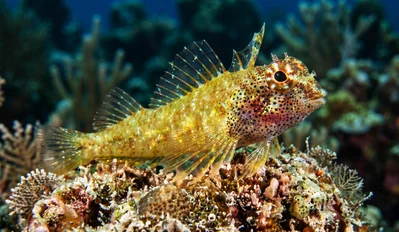
There is a second solution on the same sand. Flatheads and stargazers are flattened from above instead, keeping their symmetry and putting the eyes on top of the head. Two different lineages, the same problem, and two entirely different answers, which you can see side by side on one patch of bottom here.
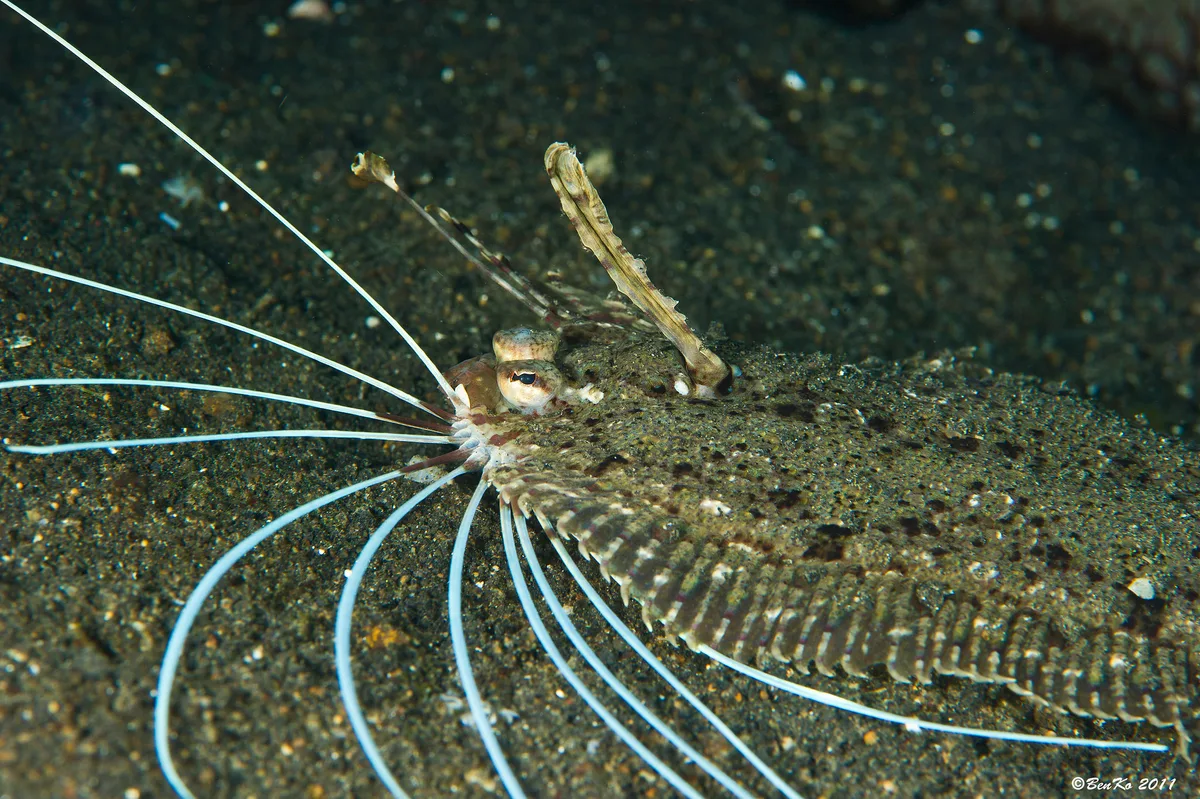
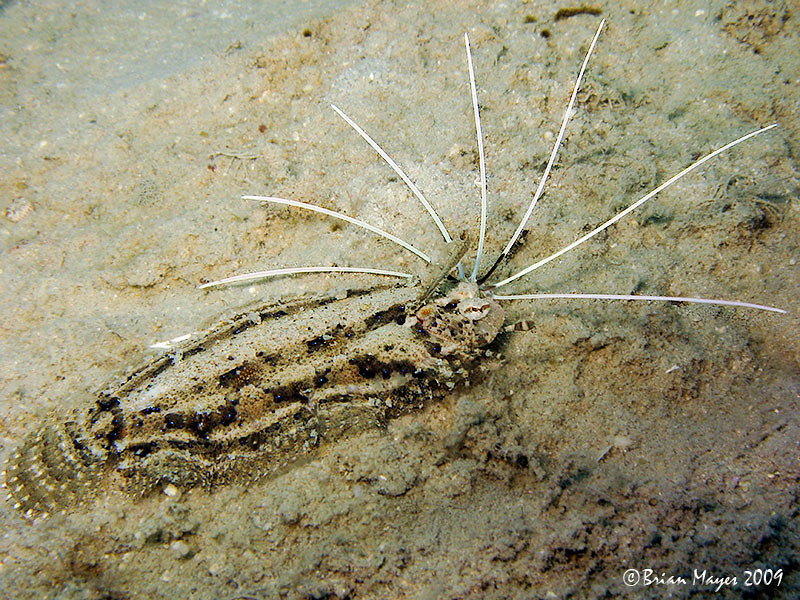
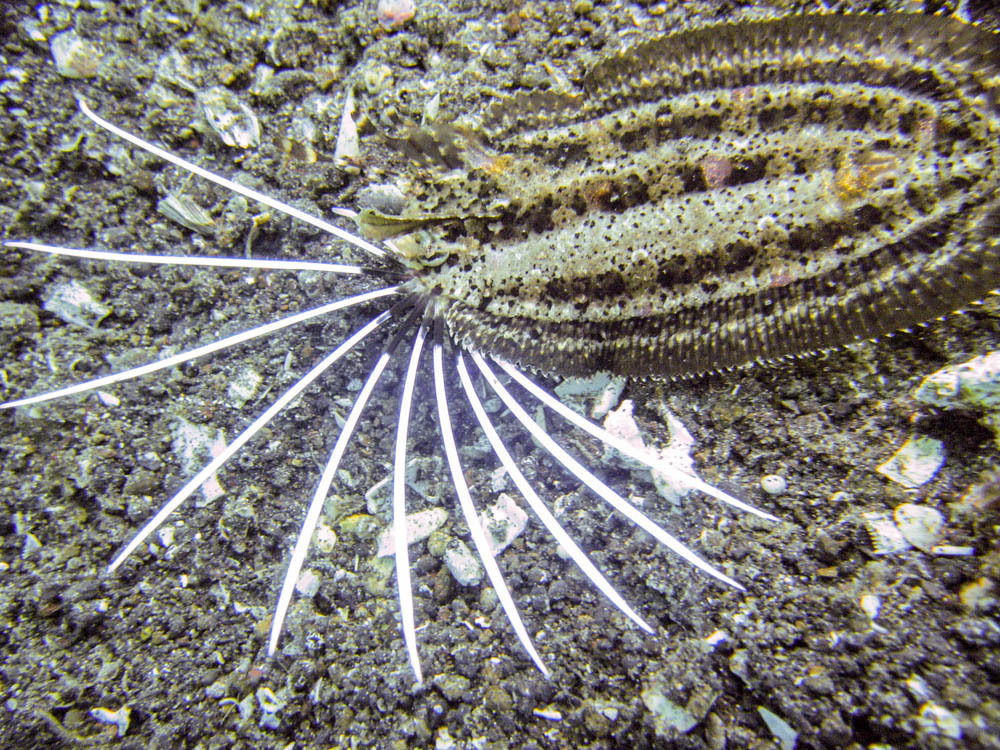
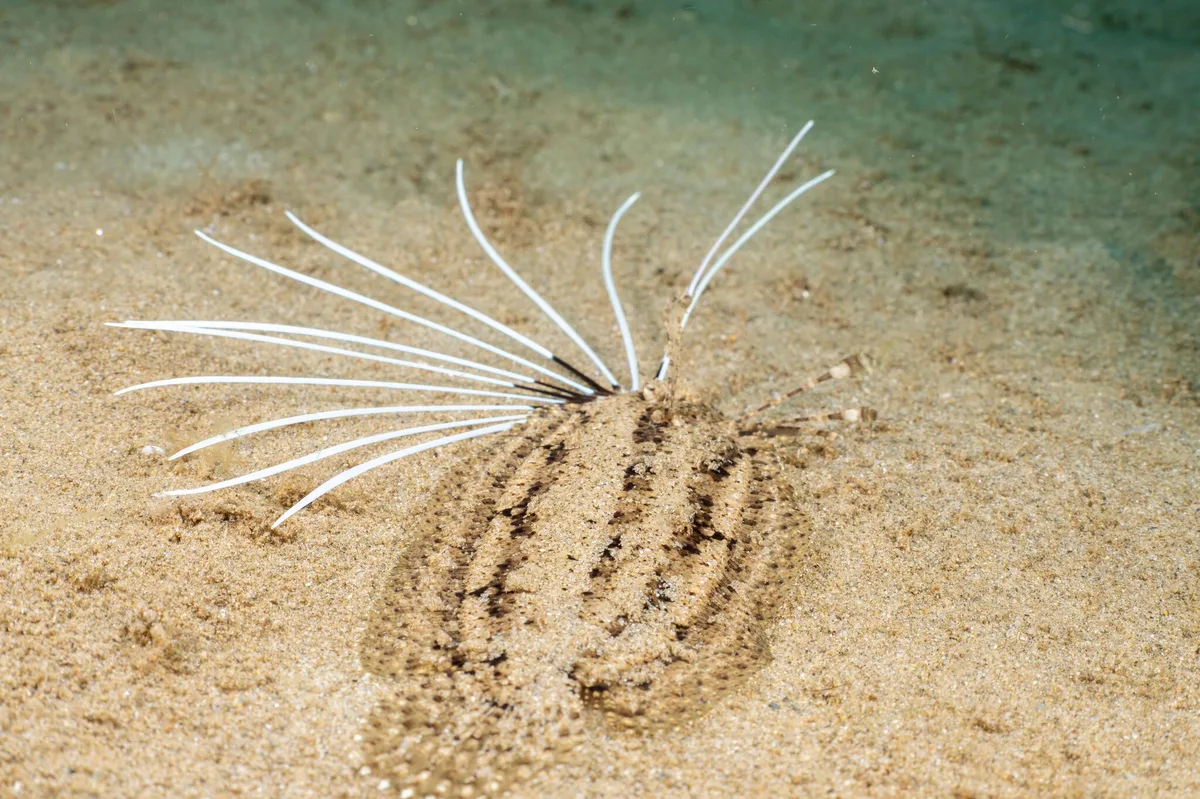
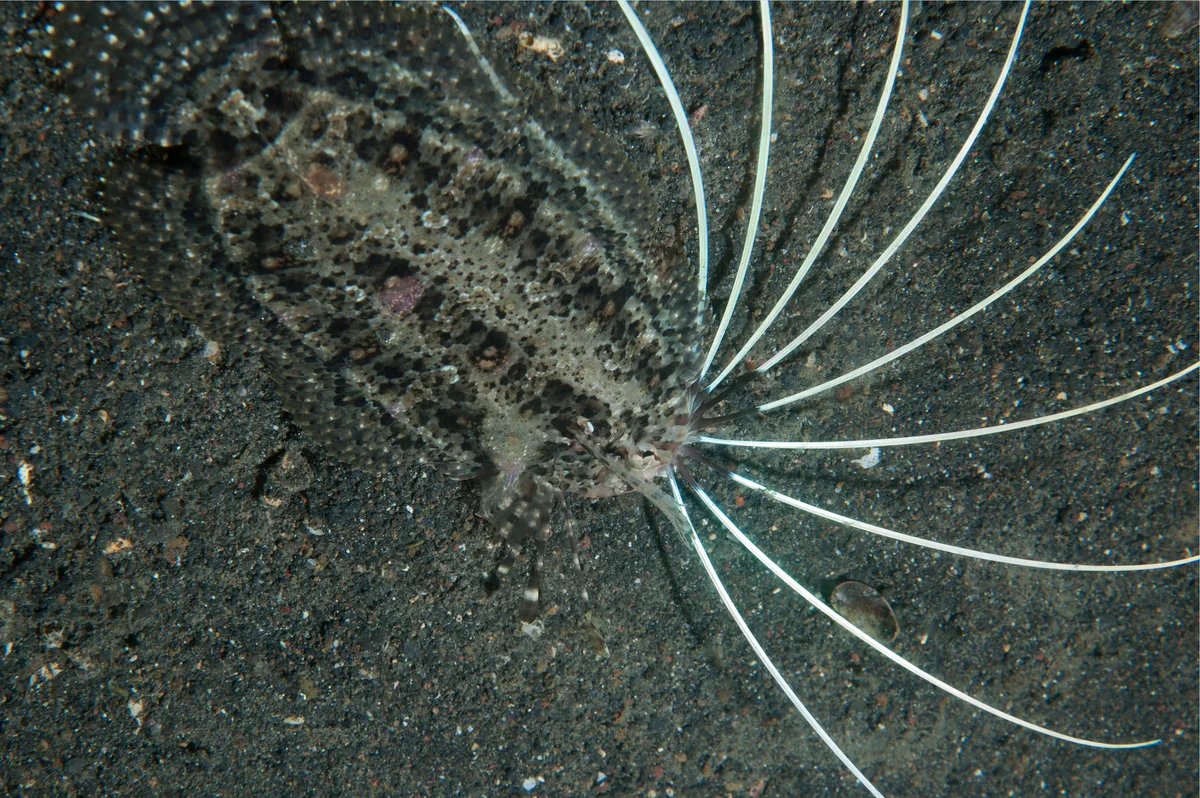
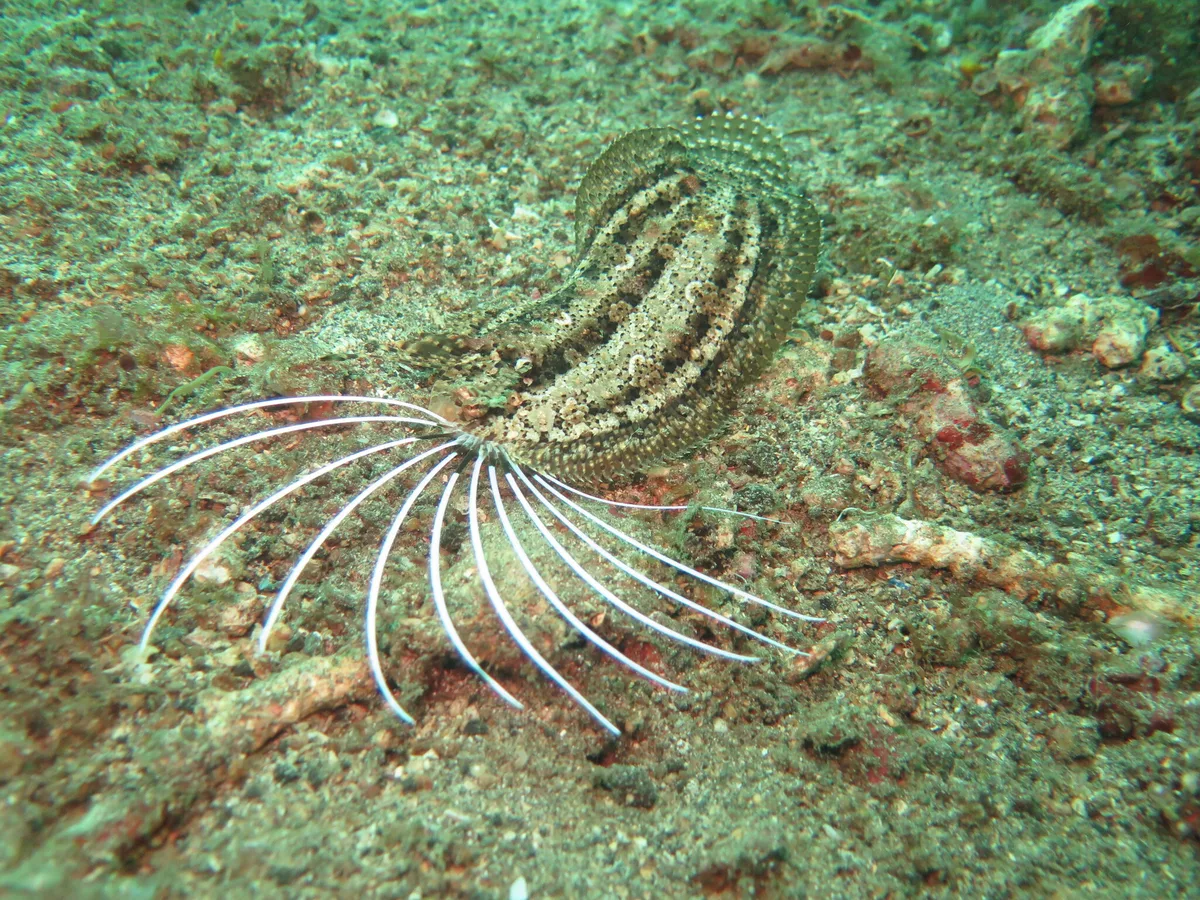
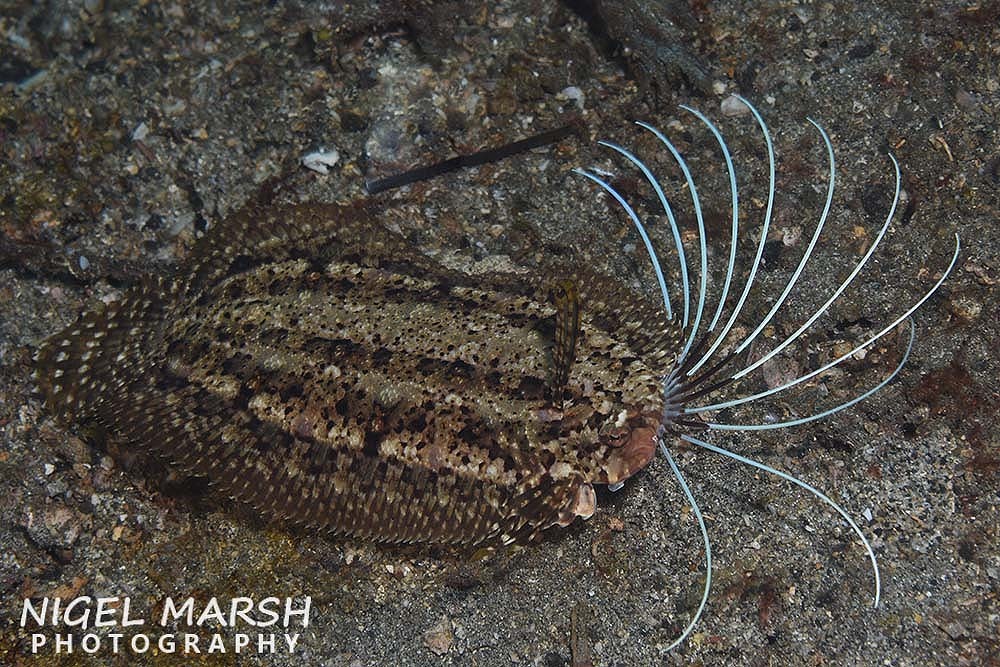
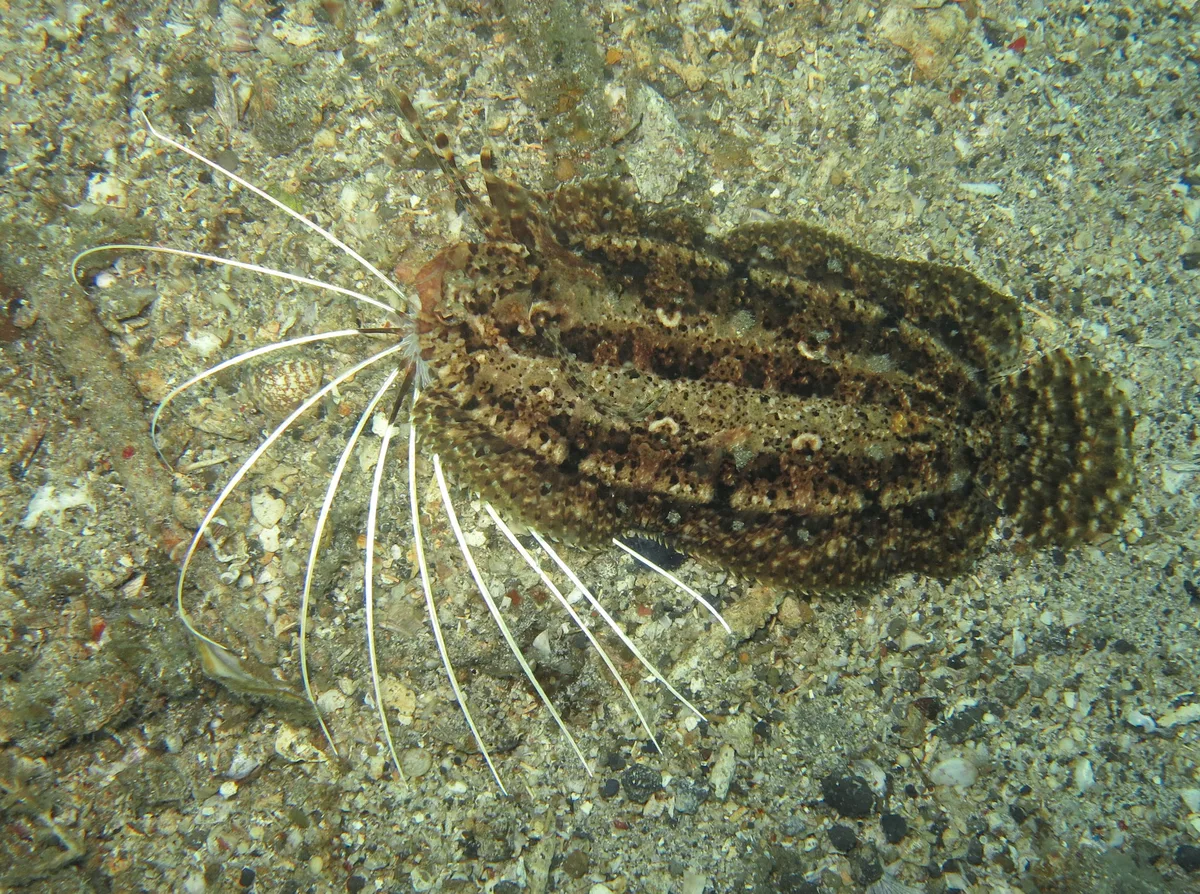
This species is the one with a crest: the first few rays of the dorsal fin are drawn out into long filaments that trail forward over the head. It lies deeper than most, from about twenty meters down.
The species. Samaris cristatus Gray 1831 - crested. ETYFish
- first few dorsal fin rays drawn out into long trailing filaments, which is the cockatoo crest
- both eyes on the right side, lying on the left flank
- deeper than most local flatfish, from about twenty meters down
- up to 22 cm
Why it's threatened
No major threats are known. It is a component of trawl bycatch, but the degree to which it is taken is unknown.
Threat classification from the IUCN Red List.