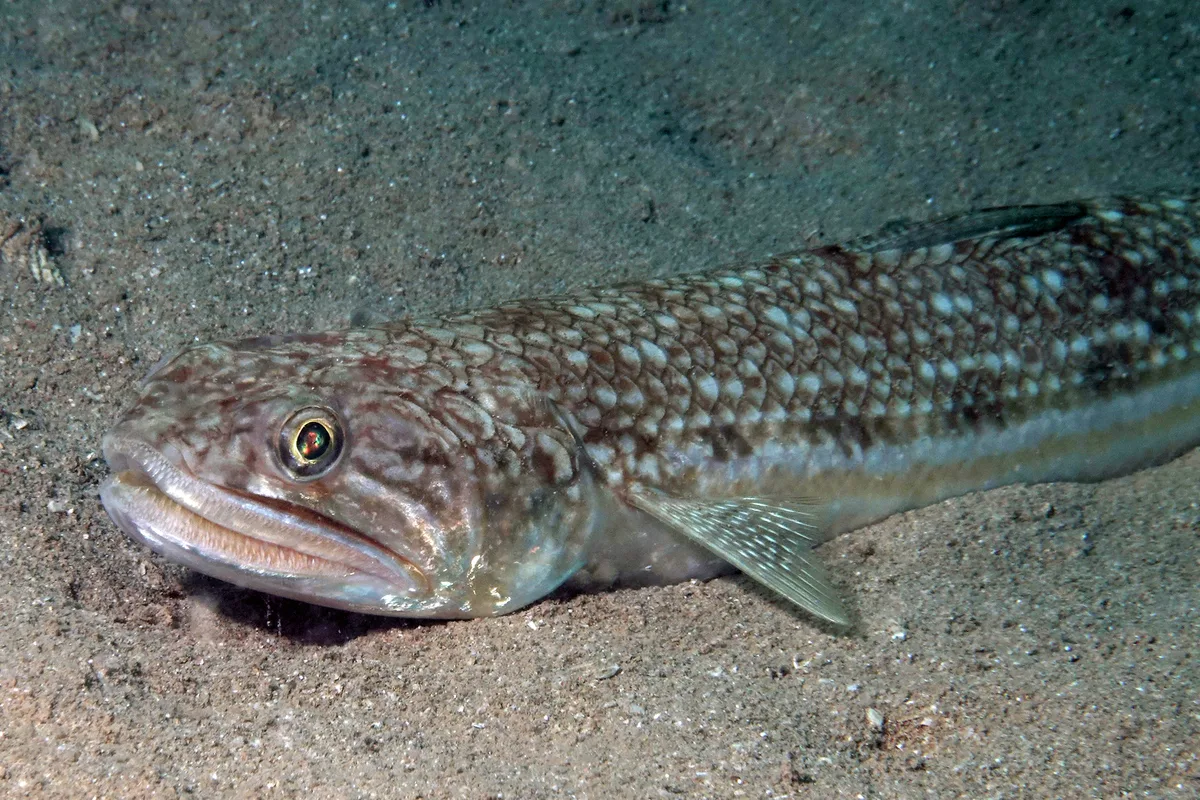
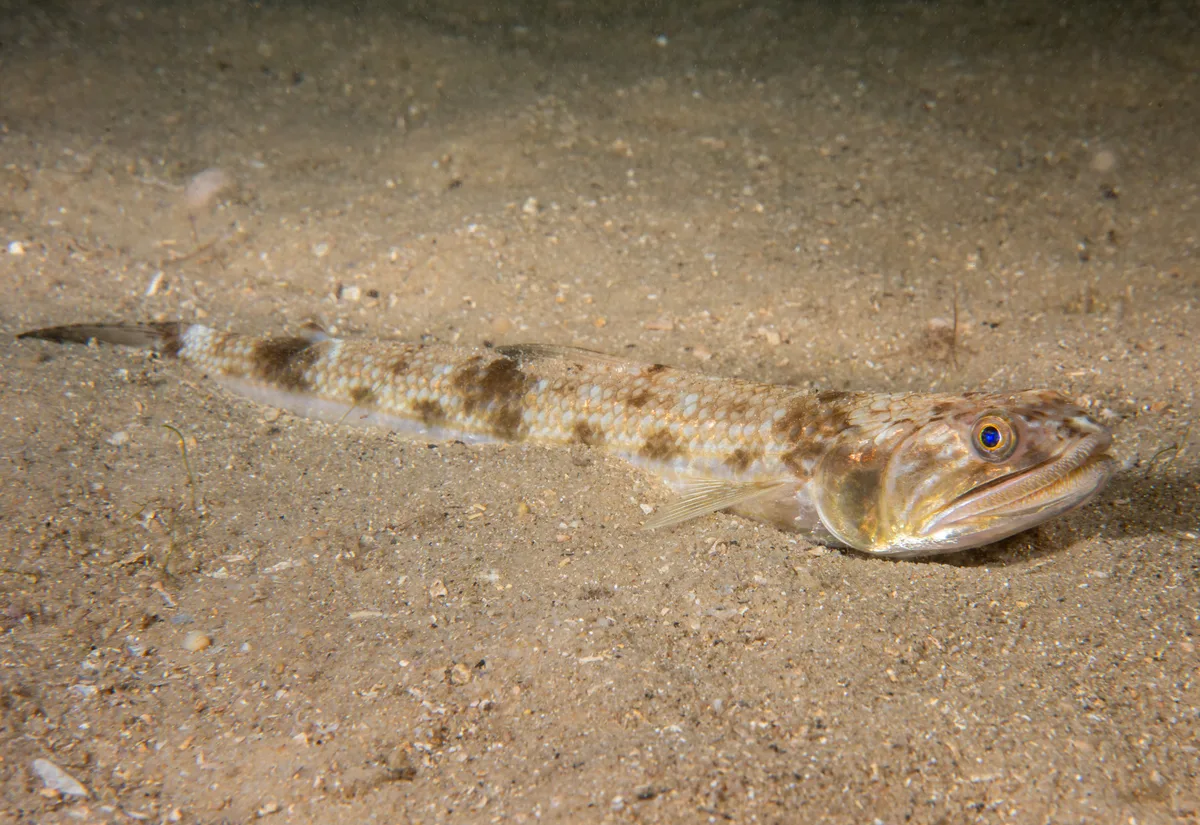
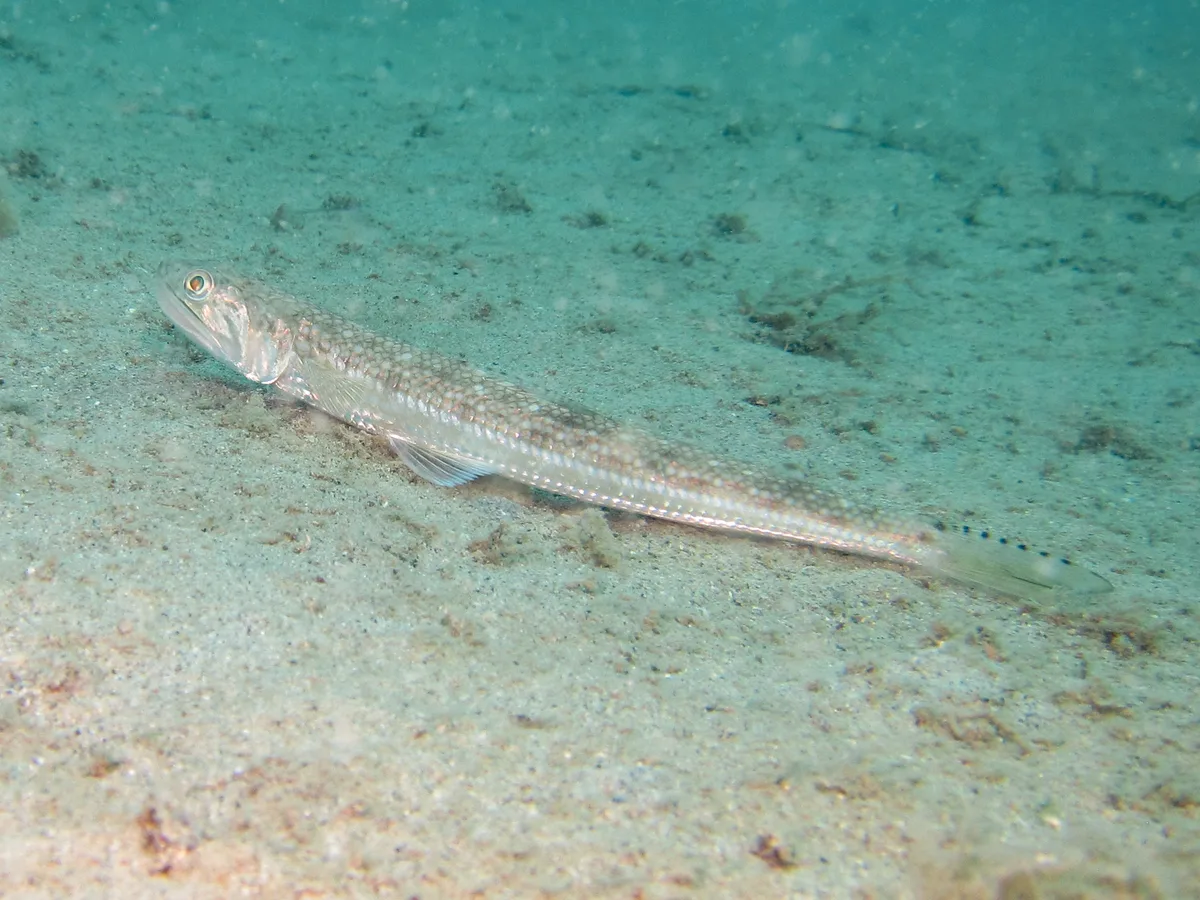
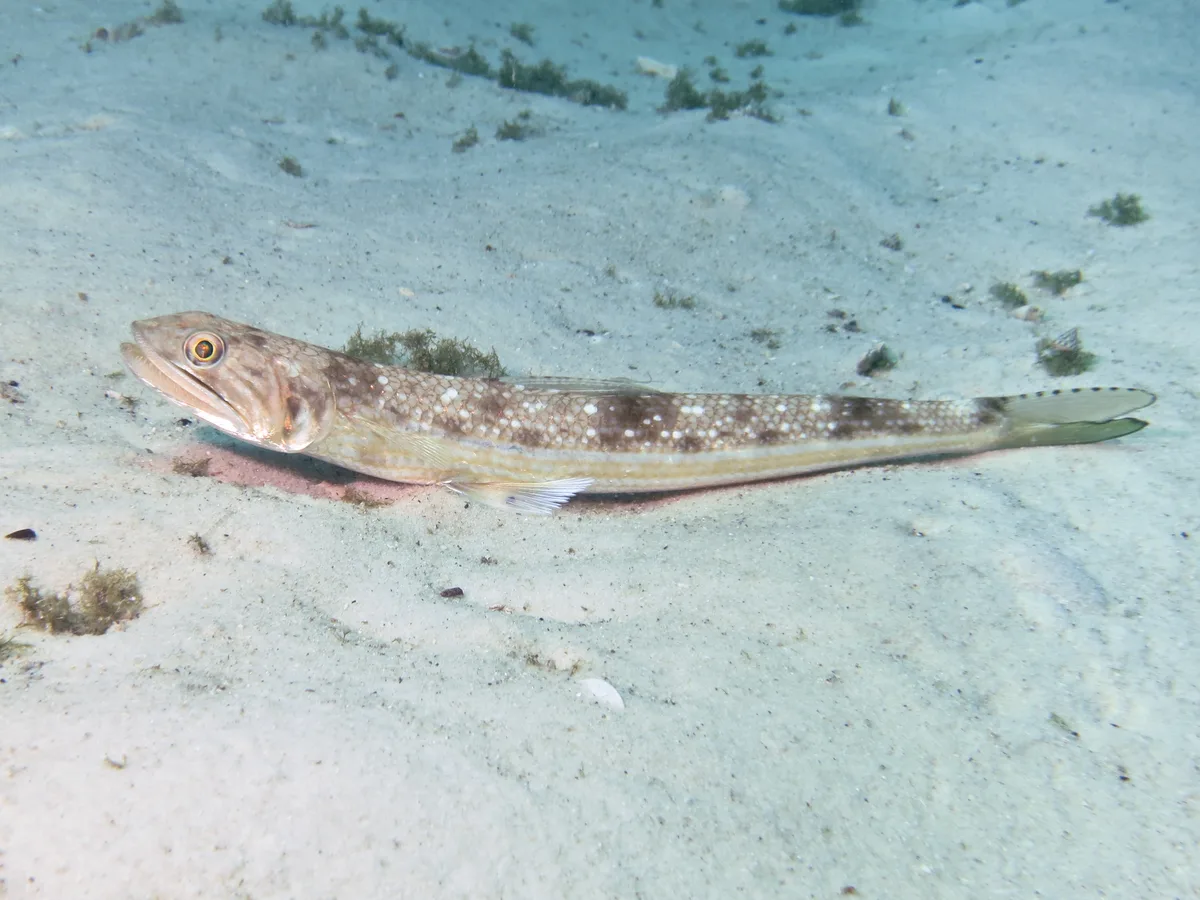
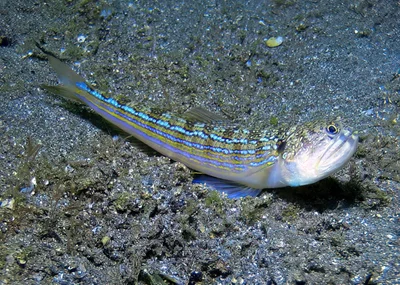
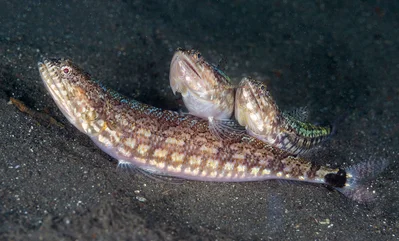
The heavyweight of the family, reaching 50 cm (20 in) where the reef species stop around 20, and living on open sand and mud rather than beside coral. The body is plain sandy with faint saddles, built to disappear against the bottom it lies on.
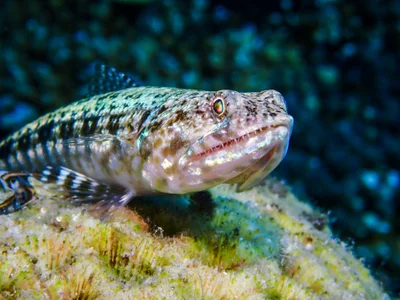
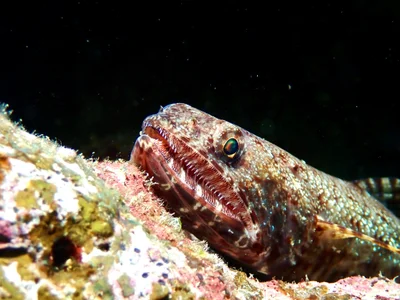
The name comes from the teeth. Instead of the single rows most lizardfishes carry, this genus has bands of fine teeth like the bristles of a brush, arranged so that anything seized is held across a wide surface. The result is the same as with its relatives: prey goes in and does not come out.
This is also a fish with a second life in the fishery records. It moved through the Suez Canal (🇪🇬 Egypt) into the eastern Mediterranean decades ago and became one of the commonest predators there, which makes it a standard example of Lessepsian migration - the one-way traffic of species from this sea into a colder one that had no defense ready for them.
How to recognise it
larger and heavier than the reef lizardfishes, to 50 cm
bands of fine brush-like teeth rather than single rows
plain sandy body with faint darker saddles
lies on open sand or mud, usually deeper than 10 m
Why it's threatened
Biological resource use
Unintentional effects: (large scale) [harvest]
Saurida undosquamis has been a significant part of bycatch from trawling operations off northwestern Australia. The finfish trawl fishery is no longer active, but it continues to be a component of bycatch in the prawn trawl fishery, which is currently active throughout northern Australia (Arregu et al., eds.1996).
Threat classification from the IUCN Red List.
Comments
Please, sign in to leave a comment
Continue with a social account - yours will be created automatically.