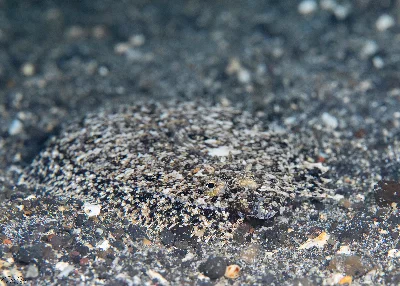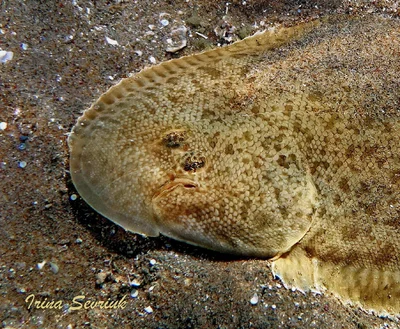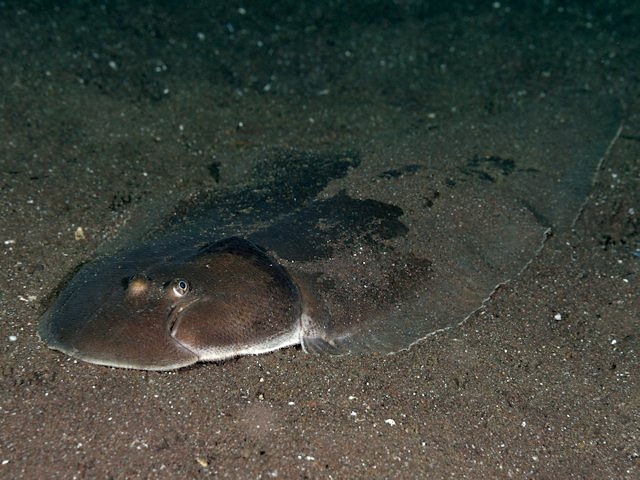
The Fourlined Tonguesole (Cynoglossus bilineatus) is a flatfish reaching up to 46 cm (18 in) in length, with a long, tapering body shaped like a leaf. Its head is rounded, and it lacks a distinct caudal fin, with the dorsal and anal fins merging into a pointed tail. Both eyes are small and set close together on the left side of its head. The eyed side displays a uniform brownish or grayish-brown color, while the blind side is whitish. It possesses two lateral lines on its eyed side and two on its blind side, which gives it its common name; the species epithet bilineatus, however, refers specifically to the two lines on its eyed side. The genus name Cynoglossus translates to "dog tongue" from Greek, referencing its elongated shape.
This species inhabits sandy or muddy bottoms in coastal waters, often near reef systems or in lagoons, typically at depths from 10 to 120 meters (33-394 ft) in the 🌊 Red Sea. During daylight hours, it remains buried in the substrate, with only its eyes occasionally exposed, making it rarely seen by divers. It emerges after dark to forage actively on the seabed, primarily consuming small benthic invertebrates such as crustaceans and worms, supplemented by small fish. Its nocturnal activity means that during day dives, its presence is most often indicated by a shallow depression in the sand where it has rested.
The genus. Cynoglossus Hamilton 1822 - cyno- (dog) + glossus (tongue). ETYFish
- long, tapering leaf-shaped body
- both eyes on the left, small and close together
- no separate tail fin - fins run to a point