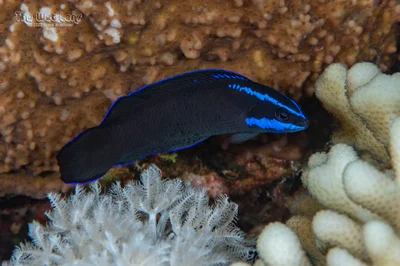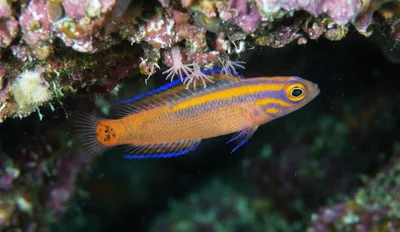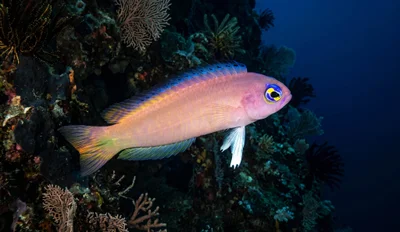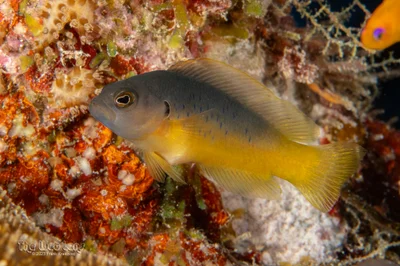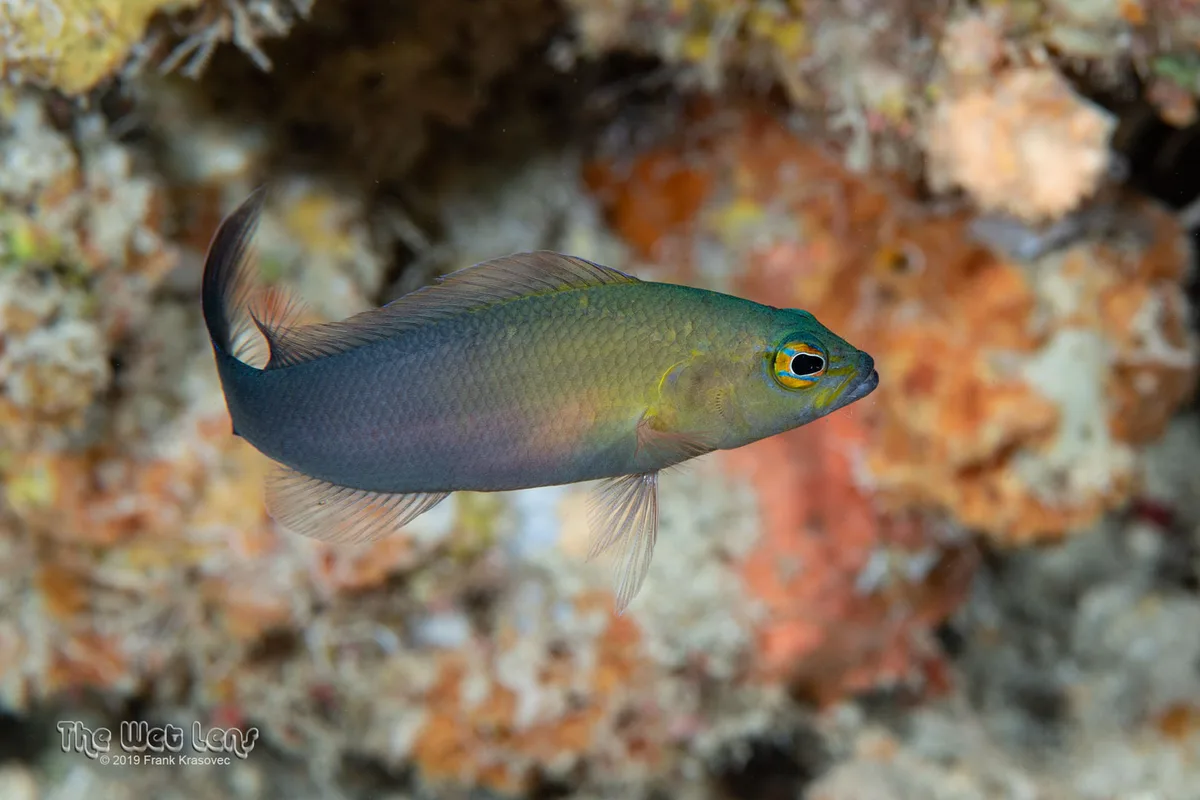
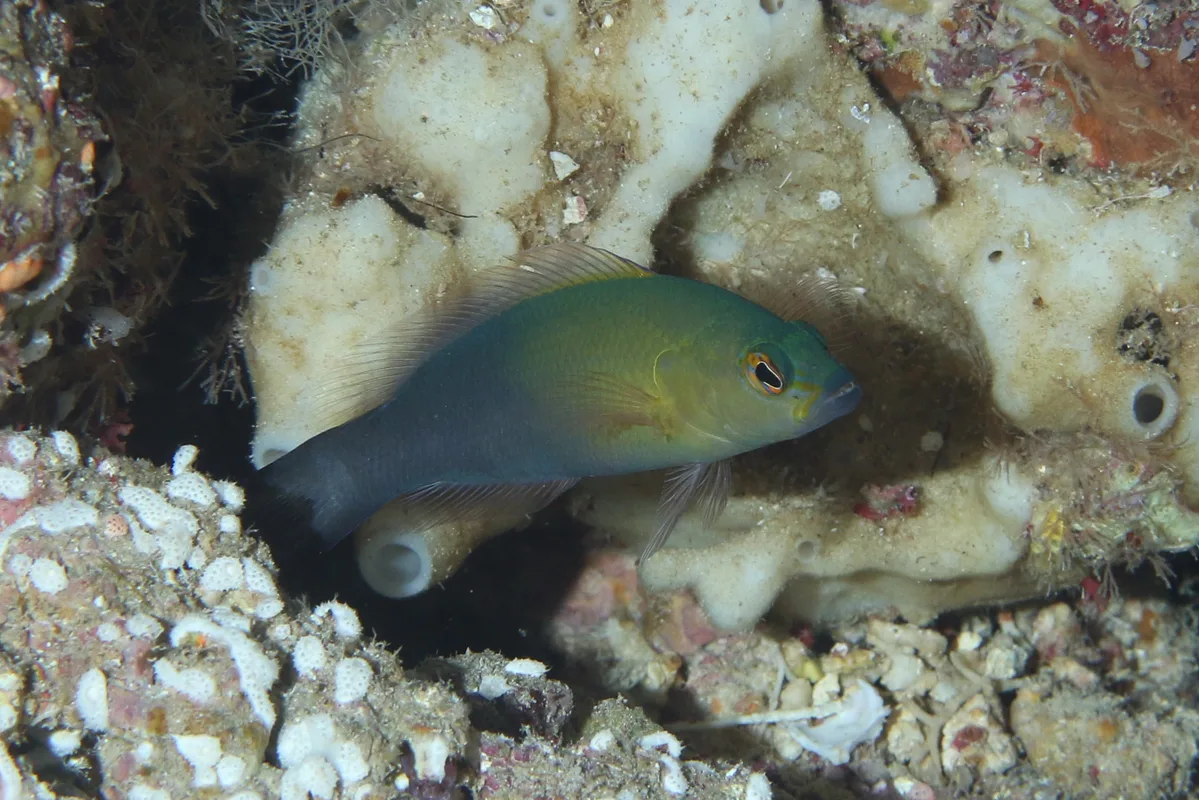
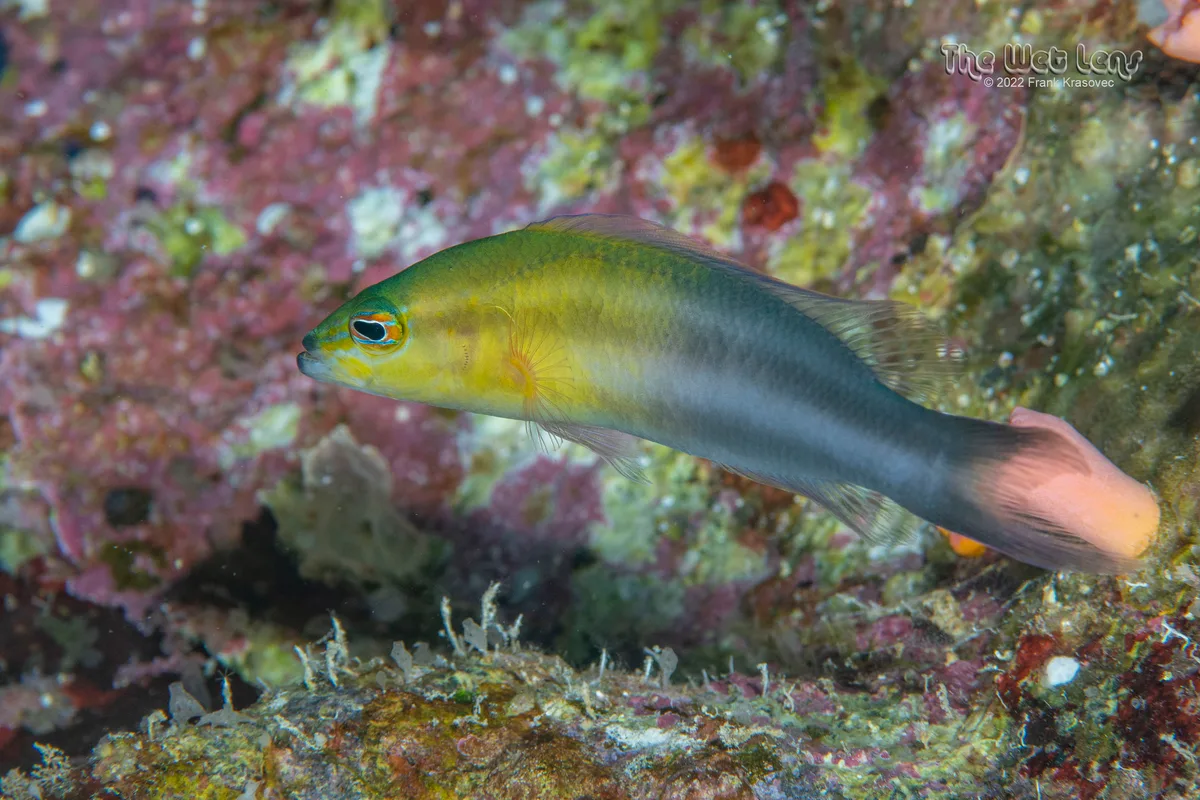
A slim gray-brown fish to 9 cm (3.5 in) whose tail is its signature: deeply forked and drawn out into two long points, yellow in young fish and darkening with age. It lives against rock, in caves and under overhangs, and is one of the fish a diver sees a hundred times without ever getting a clean photograph.
It lives nowhere else. This is a 🌊 Red Sea endemic, and along with a handful of relatives it fills the role that dottybacks of other species fill across the Indo-Pacific - a small, quick, aggressive predator of the crevice zone.
The behavior is all about the hole. It hovers a body length from cover, snaps at zooplankton and small crustaceans passing in the current, and reverses into the crack rather than turning around when anything approaches. Males hold a territory and defend it against fish several times their size.
Eggs are laid as a ball bound with fine threads and guarded in the crevice by the male until they hatch, which is the standard arrangement in the family and the reason those crevices are worth fighting for.
The genus. Pseudochromis Rüppell 1835 - pseudo- (false). ETYFish
The species. Pseudochromis dixurus Lubbock 1975 - dixos (double or forked) + oura (tail). ETYFish
- slim gray-brown fish with a deeply forked tail drawn out into long points
- yellow tail in young fish, darkening with age
- never far from a hole, and reverses into it rather than turning
- length up to 9 cm