Turning Your Next Dive Into Data: How Recreational Divers Are Saving the Oceans

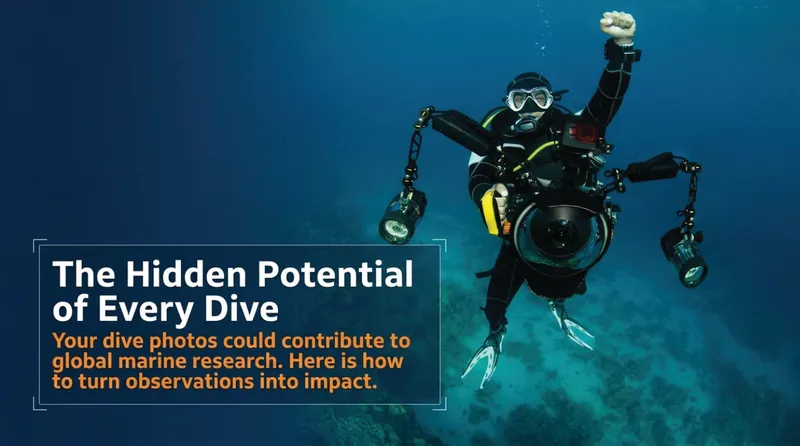
Every dive tells a story. The flash of a spotted moray tucked into a crevice. A school of barracuda spinning in slow hypnotic circles above the reef. You surface with a memory card full of moments - but what if those same images could feed a global intelligence network for ocean conservation?
Your weekend hobby is no longer just an escape. It might be one of the most powerful tools we have for understanding and protecting the sea in real time. Here's how.
You Don't Need a PhD to Be a Scientist
There's a persistent myth that marine research belongs exclusively to people in lab coats with advanced degrees and expensive equipment. The reality is far more democratic - and more exciting.
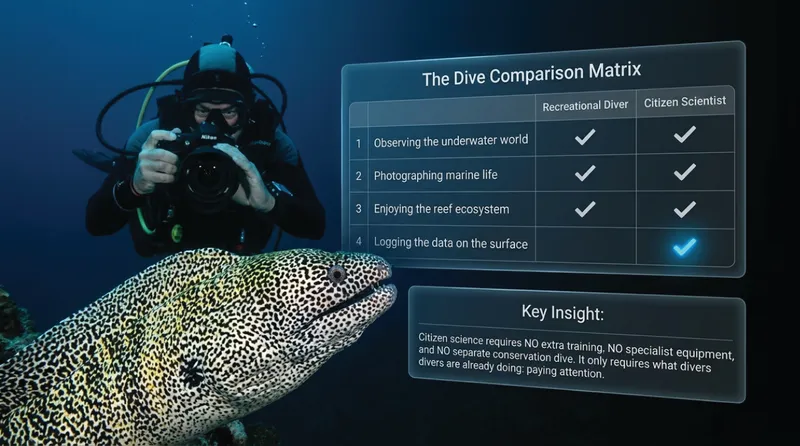
The most valuable asset in ocean science right now isn't a laboratory. It's physical presence. Divers have what researchers often don't: the ability to be on-site, year-round, in every corner of the globe. The skills required to contribute to citizen science are exactly the ones you've already mastered - buoyancy, observation, and documentation.
Citizen science requires no extra training, no specialist equipment, and no separate conservation dive. It only requires what divers are already doing: paying attention.
The difference between a recreational diver and a citizen scientist is a single extra step - logging what you saw when you get back on the boat.
Why We Need You
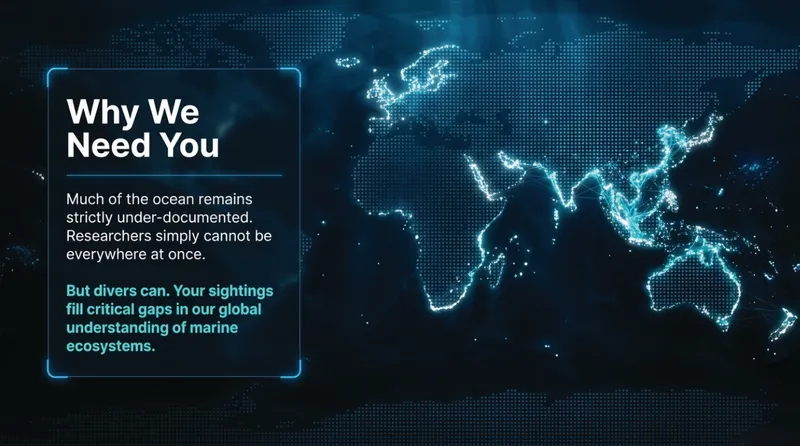
Marine researchers face a fundamental logistical problem: there are vast stretches of the ocean that simply never get studied. Scientists are a finite resource, tied to specific sites, limited budgets, and research windows. This creates dark zones in our data - places where ecosystems may be collapsing or recovering, and nobody is watching.
The global diving community is the only force capable of filling those gaps. Divers visit diverse locations across every season, in places no research vessel will ever reach on a regular basis. You are the eyes under the surface that institutional science cannot afford to maintain.
Researchers can't be everywhere at once. But divers can.
What Your Photos Actually Measure
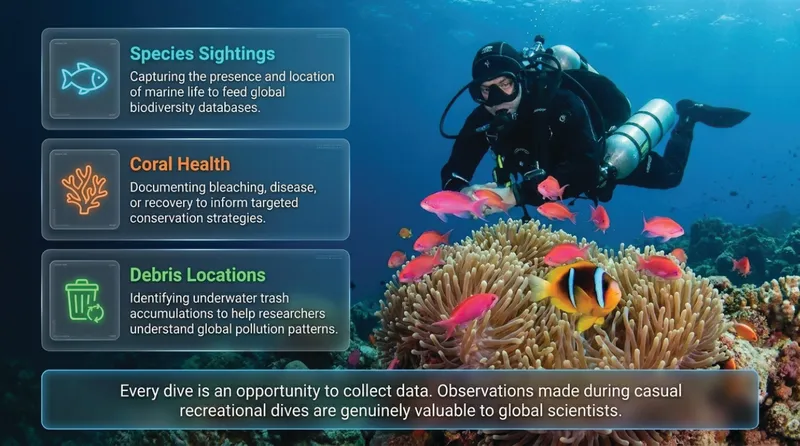
When you upload a sighting to a research database, you're not just sharing a nice shot - you're contributing a data point to a living scientific record. Every image of a reef, a fish, or a piece of debris carries three kinds of value:
- Species Sightings - capturing the presence and location of marine life to feed global biodiversity databases, tracking how populations shift across years and seasons
- Coral Health - documenting bleaching, disease, or recovery in real time, giving conservation teams the evidence they need to respond quickly
- Debris Locations - identifying underwater trash accumulations and helping researchers map global pollution patterns for policy intervention
Every dive is an opportunity to collect data. Observations made during completely casual recreational dives are genuinely valuable to global scientists.
The Long Game: Snap, Sync, Science
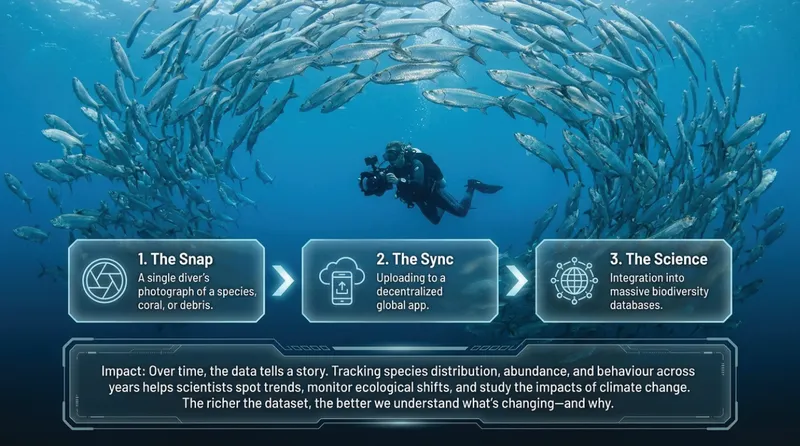
A single observation is a snapshot. A community of contributors over years becomes something far more powerful - a dataset rich enough to reveal trends that would otherwise be invisible.
The workflow couldn't be simpler:
- The Snap - photograph a species, coral formation, or debris during your normal dive
- The Sync - upload it to a decentralized global platform when you're back on the boat
- The Science - your image integrates into massive biodiversity databases used by researchers worldwide
Over time, this data tracks species distribution, abundance, and behavior across years. It helps scientists spot ecological shifts, monitor the impacts of climate change, and understand what's changing - and why. The richer the dataset, the clearer the picture.
Where to Send What You See
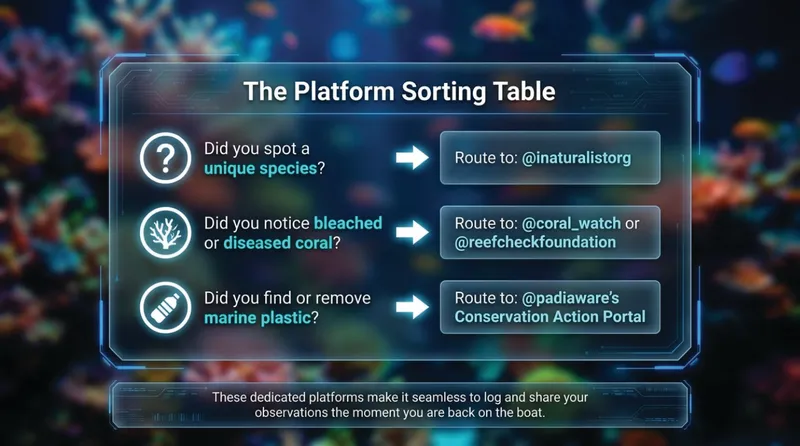
Not all data goes to the same place, and that's actually a feature. Different platforms specialize in different types of observations, making your contribution more useful rather than less:
- Spotted a unique species? → @inaturalistorg - the premier platform for mapping global biodiversity
- Noticed bleached or diseased coral? → @coral_watch or @reefcheckfoundation - dedicated to strategic reef health monitoring
- Found or removed marine plastic? → PADI AWARE's Conservation Action Portal - built for reporting debris and coordinating cleanup
These platforms are designed to be used the moment you're back on the surface. The data enters the global system before you've even taken your wetsuit off.
The Tools Are There. The Data Is Waiting.
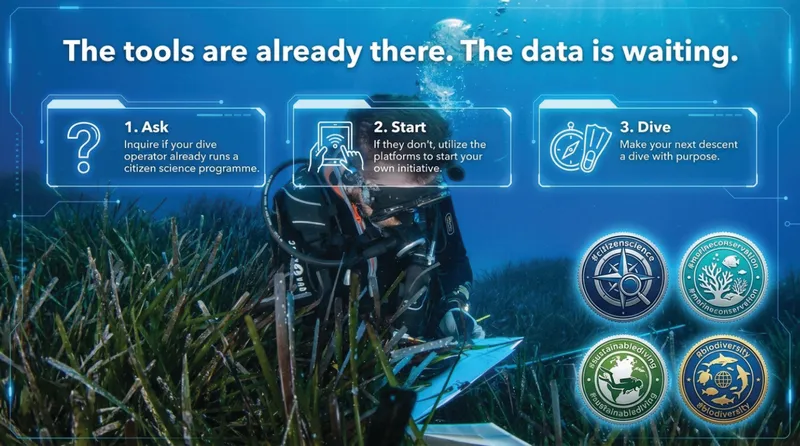
Getting started takes three steps - and none of them require anything you don't already have.
Ask - Check if your dive operator already runs a citizen science program. Many do, and you can simply plug in.
Start - If they don't, the platforms above are open to anyone. You can initiate a local monitoring initiative that feeds directly into global databases. Individual divers and dive businesses alike have the power to make this happen.
Dive - Make your next descent a dive with purpose.
The old motto was take only pictures, leave only bubbles. That was a good start. But for an ocean in crisis, it's no longer enough. The data needed to protect our marine heritage is already drifting past your mask on every dive - it's simply waiting to be collected.
What will your next dive say?
PADI Divemaster and underwater storyteller with over 7 years of hands-on Red Sea diving experience, documenting marine life, mapping dive sites, and promoting responsible ocean conservation.