The "Ghost Shark" Returns: Why a Rare Discovery in Borneo is Shaking Up Marine Science

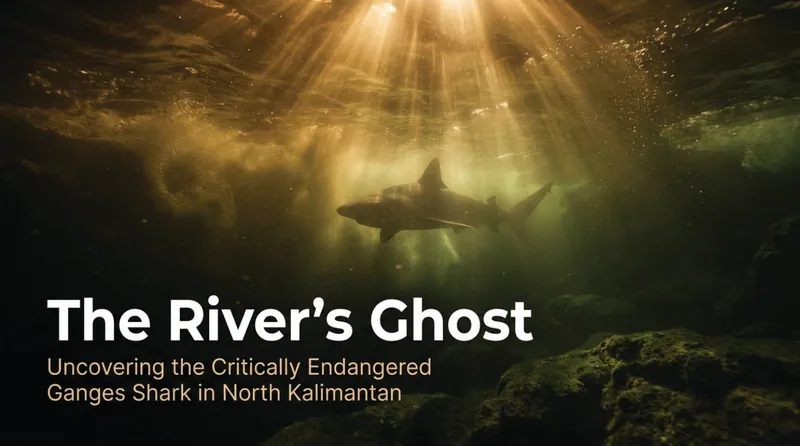
On May 25, 2026, the Antara News Agency confirmed a discovery that has effectively remapped the strongholds of the deep. The Ganges shark (Glyphis gangeticus), a predator so elusive it has earned the moniker "ghost shark," was recently found thriving in the Sesayap River of North Kalimantan. This biological detective story has transformed a species nearly lost to history into a symbol of scientific hope.
Defying the Odds of Extinction
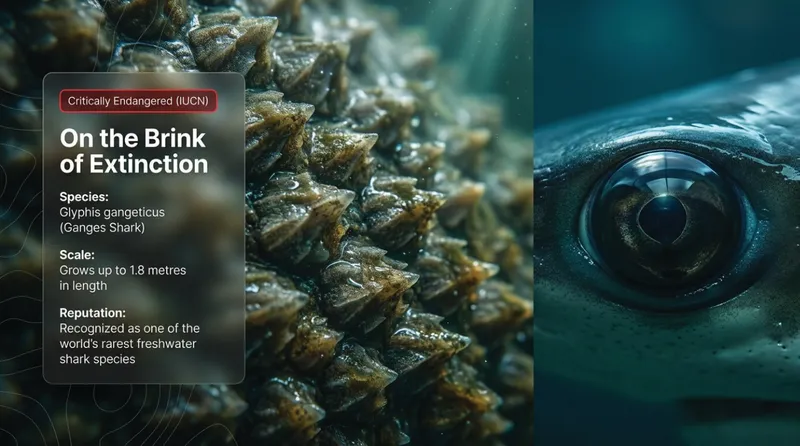
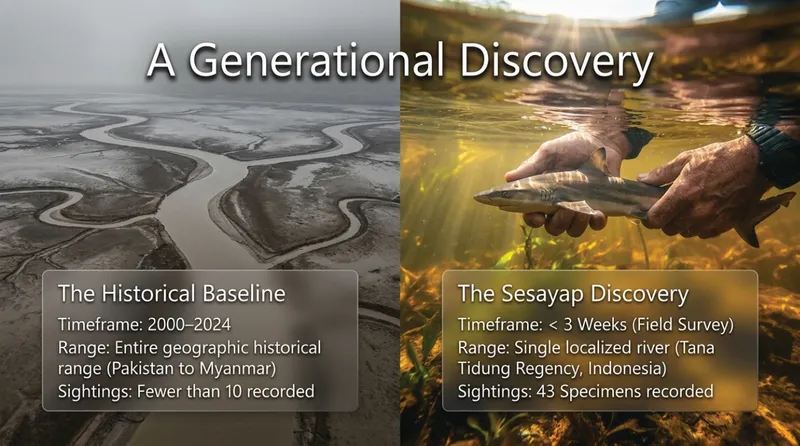
The rarity of the Ganges shark is difficult to overstate, as it is one of the few sharks specifically adapted to murky freshwater environments. Since the year 2000, there have been fewer than 10 recorded sightings across its entire historical range, which stretches from Pakistan to Myanmar. This scarcity led the IUCN to classify the species as Critically Endangered, with many fearing it was on the brink of "cryptic extinction."
The fact that this 1.8-meter predator remained hidden for decades serves as a masterclass in scientific humility. It highlights that our global extinction metrics are often biased toward visible terrestrial species, leaving remote river systems as significant blind spots in conservation. This discovery proves that even in a heavily explored world, the most vulnerable giants can persist in specialized habitats if left undisturbed.
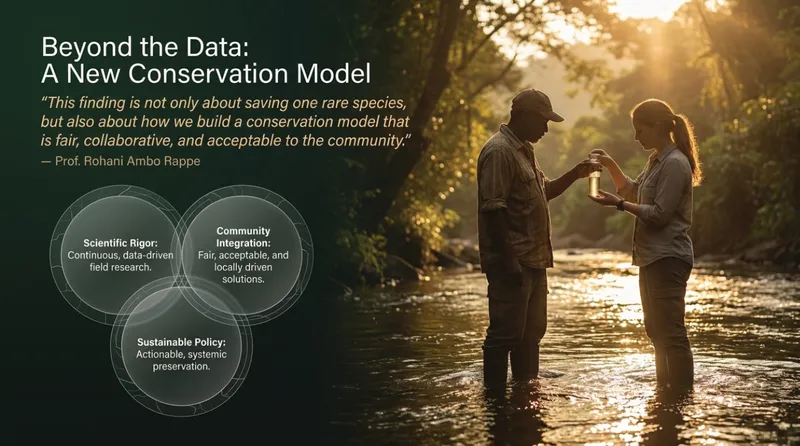
"This finding is not only about saving one rare species, but also about how we build a conservation model that is fair, collaborative, and acceptable to the community," said Prof. Rohani Ambo Rappe of Hasanuddin University.
The "Power in Numbers" Surprise
The most staggering aspect of this announcement is the sheer density of the population found in North Kalimantan. After 26 years of near-total silence from this species globally, a collaborative research team recorded 43 specimens in less than three weeks. This wasn't just a lucky encounter; it was a total recalibration of what we thought the species' global population could be.
This data represents a seismic shift in marine biology, moving the Sesayap River from a point of geographical curiosity to the most significant known habitat for the species on Earth. To find dozens of individuals in such a tight window suggests that Borneo is not just a remnant habitat, but a thriving, primary stronghold. It challenges the "phantom" status of the shark and replaces it with a tangible, measurable population.
A Secret Nursery in the Sesayap River
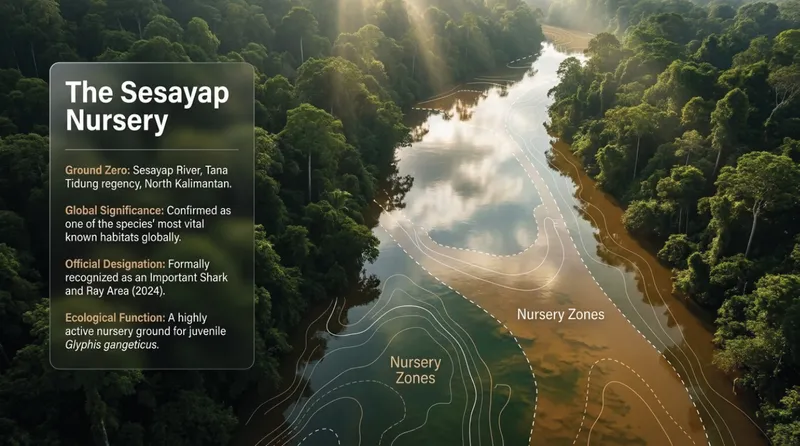
The international community recognized the ecological weight of this region in 2024, when the Sesayap River was designated an Important Shark and Ray Area (ISRA). This designation was a preemptive strike in conservation, identifying the river as a vital nursery ground for young sharks. Protecting these specific environments is widely considered the "highest ROI" (Return on Investment) for conservationists.
By focusing on nursery grounds rather than trying to police vast, adult territories, scientists can protect the species during its most vulnerable life-cycle stage. This strategy ensures the next generation reaches maturity, providing a sustainable path toward population recovery. The 2024 ISRA designation now stands as a prophetic move that has been validated by the 2026 census data.
"The Sesayap River was designated an Important Shark and Ray Area in 2024, underscoring its importance as a nursery ground for the rare river shark species," noted researcher Michael Grant from James Cook University.
A New Blueprint for "Fair" Conservation
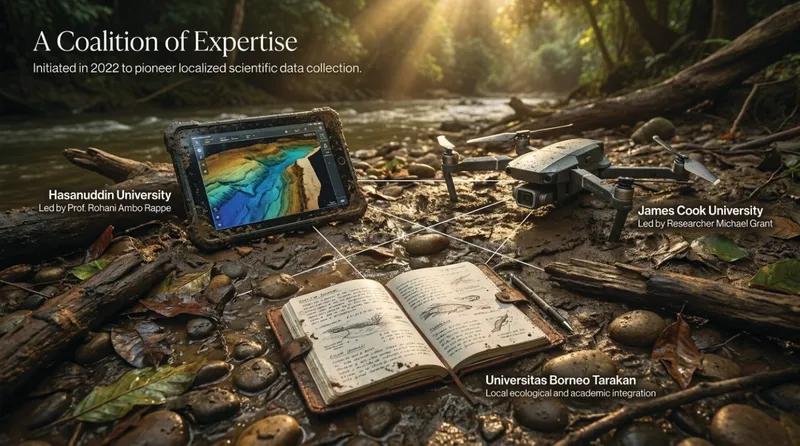
This project, which began in 2022 as a partnership between Hasanuddin University and James Cook University, represents a shift in how science is conducted. Rather than employing "top-down" environmental policing, the researchers integrated the local communities of the Tana Tidung regency into the study. This "fair and collaborative" model ensures that those living alongside the river are part of the solution rather than seen as obstacles.
When local residents are engaged as primary guardians of their waterways, conservation becomes a community-led effort rather than an academic mandate. Involving the Tana Tidung community has proven far more effective than traditional enforcement. It creates a sustainable ecosystem where scientific progress and local livelihoods can coexist.
The Call for a Kalimantan Research Consortium
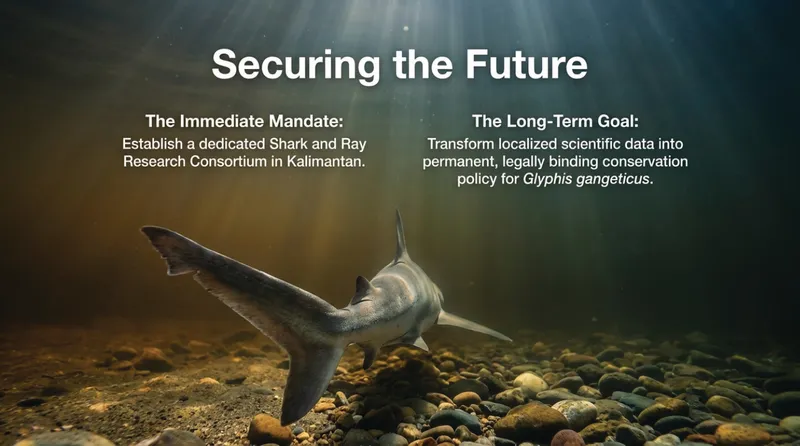
The researchers, supported by Universitas Borneo Tarakan, are now calling for the formal establishment of a shark and ray research consortium in Kalimantan. The objective is to ensure this breakthrough doesn't simply result in a published paper, but instead drives national policy. Data-driven policy is the essential bridge between a "cool discovery" and the long-term survival of a species.
By creating a formalized research consortium, the team hopes to provide the Indonesian government with the scientific evidence needed to safeguard these waterways. This consortium would serve as a permanent watchdog and research hub, ensuring that the Ganges shark never fades back into the "ghost" status it held for so long.
A Provocative Look Ahead
The return of the Ganges shark to the global spotlight is a powerful reminder that our world still holds profound secrets. This discovery has turned North Kalimantan into a beacon of hope, proving that collaborative science can uncover wonders we once thought were lost forever.
It leaves us with a compelling question: if one of the world's rarest predators can thrive undetected in the river systems of Borneo, what other "extinct" wonders are still waiting to be found in the world's unexplored freshwater systems? The success in the Sesayap River shows that the next great discovery is likely hiding just beneath the surface of the next murky, unexplored delta.
PADI Divemaster and underwater storyteller with over 7 years of hands-on Red Sea diving experience, documenting marine life, mapping dive sites, and promoting responsible ocean conservation.