A rorqual to 15 m (49 ft), dark above and pale below, with a tall hooked fin that breaks the surface almost at the same moment as the blow. The identification is on the head: three parallel ridges run from the blowholes forward, where every other rorqual has one.
It is the tropical member of the family and the only one that stays put. The rest migrate between cold feeding grounds and warm breeding grounds; this one lives its whole life in warm water and feeds wherever an upwelling concentrates its food, which means its movements follow productivity rather than the calendar.
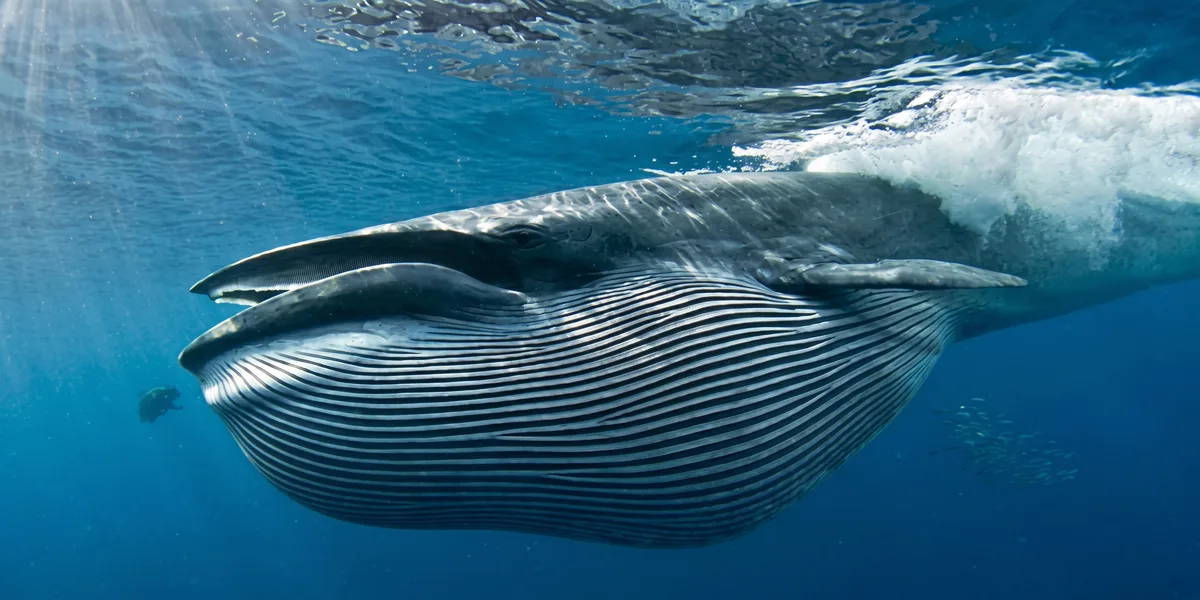
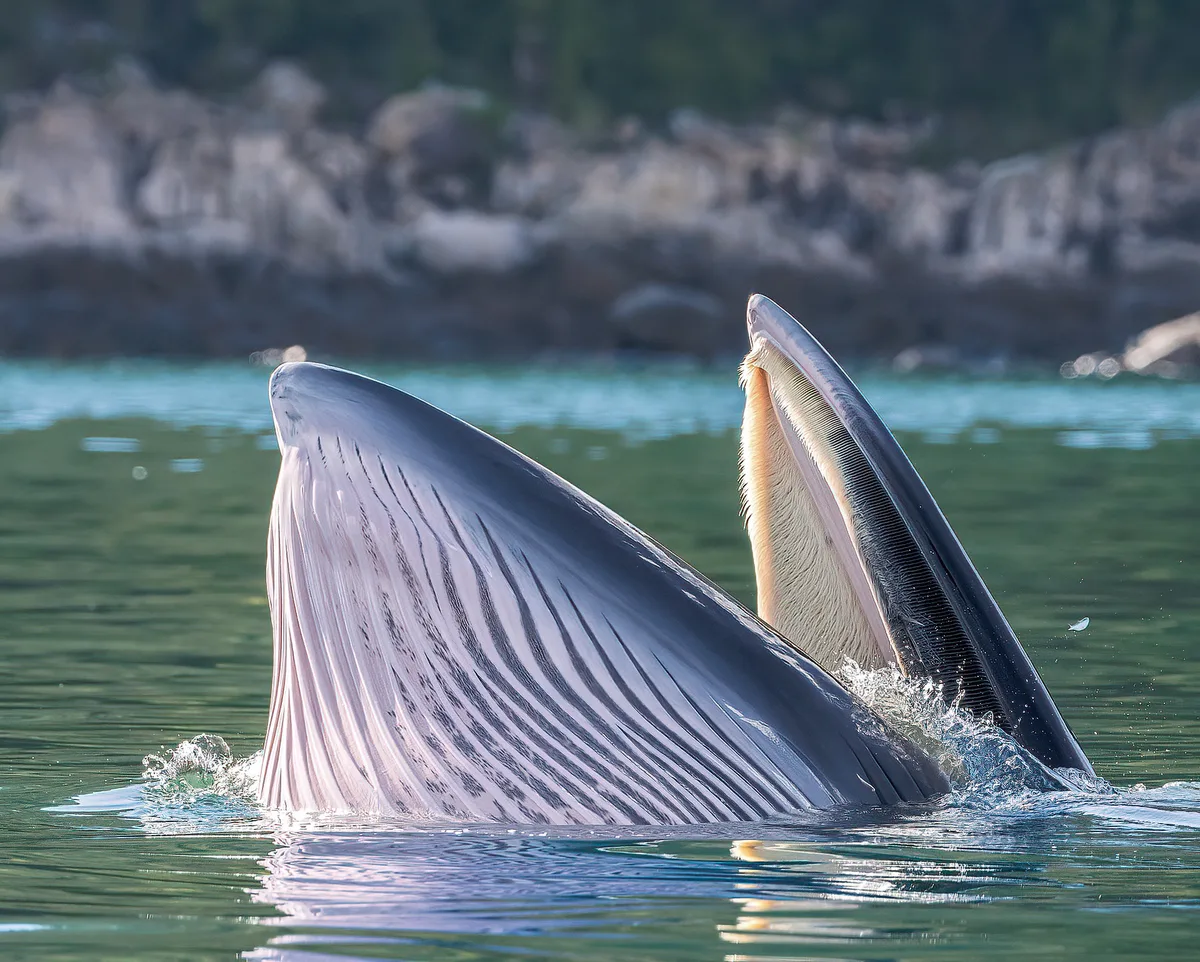
Feeding is the largest single action in the animal world. The whale accelerates into a school, opens a jaw the width of its body and takes in a volume of water heavier than itself, the pleated throat ballooning out to hold it; then the mouth closes and the water is forced back out through the baleen, leaving the fish behind. One lunge costs an enormous amount of energy and has to pay for itself, which is why these whales feed only on dense patches and ignore thin ones.
The taxonomy is unsettled. What is called Bryde's whale is at least two forms, a large offshore one and a smaller coastal one, and they may prove to be separate species.
- three parallel ridges along the top of the head, unique among rorquals
- tall hooked fin appearing at the same moment as the blow
- does not raise its tail when diving
- length up to 15 m
Why it's threatened
Threat classification from the IUCN Red List.