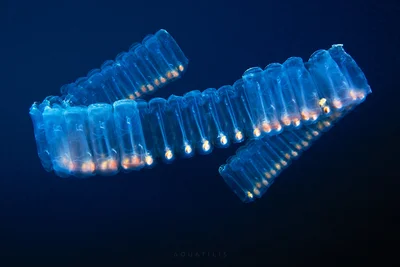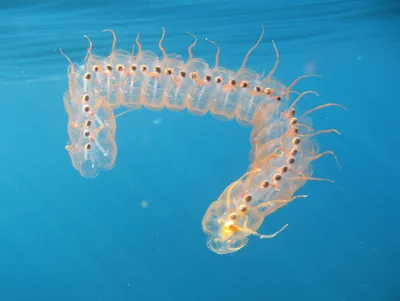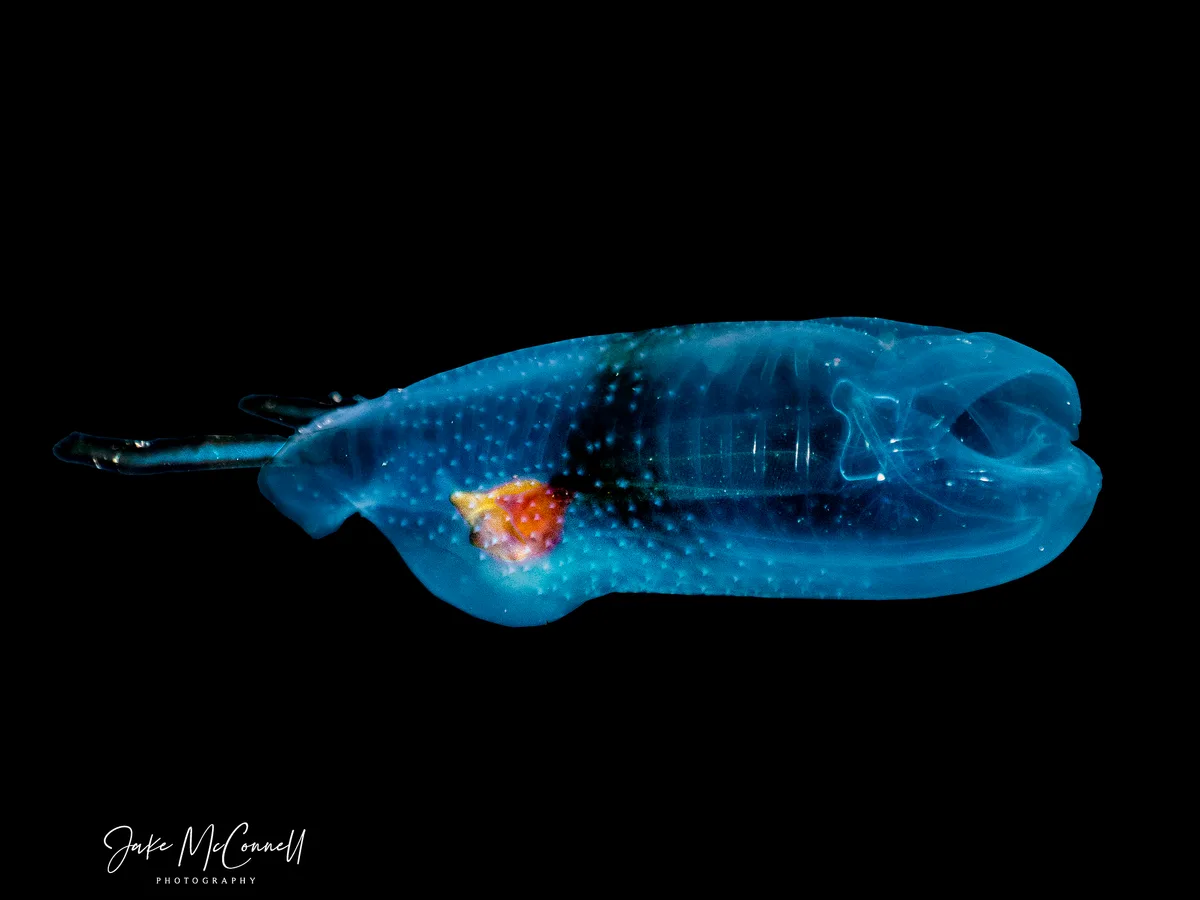
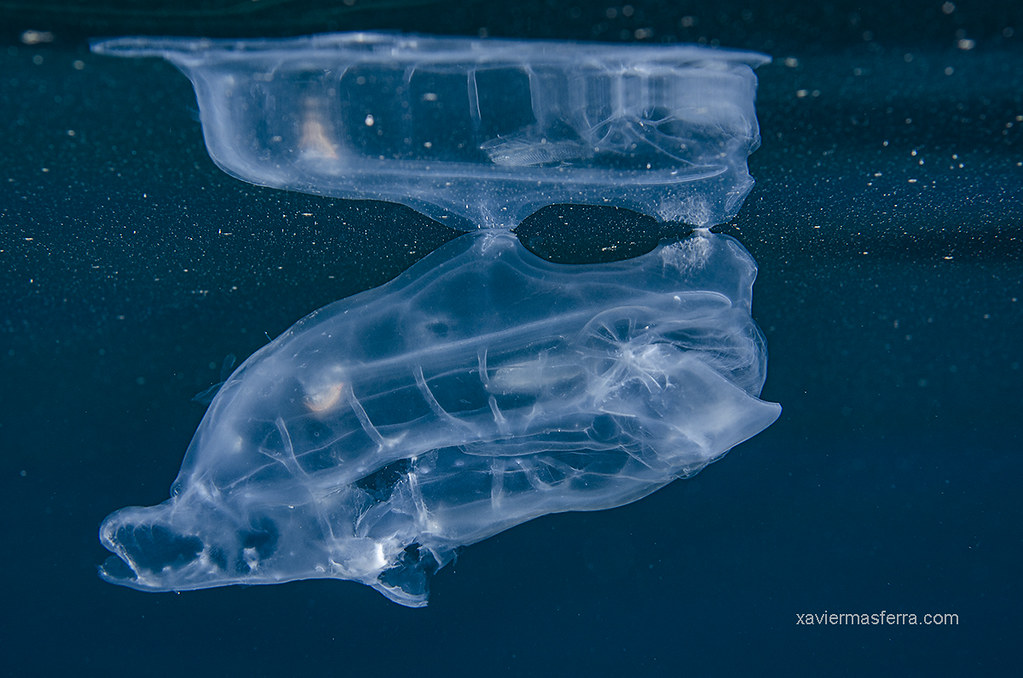
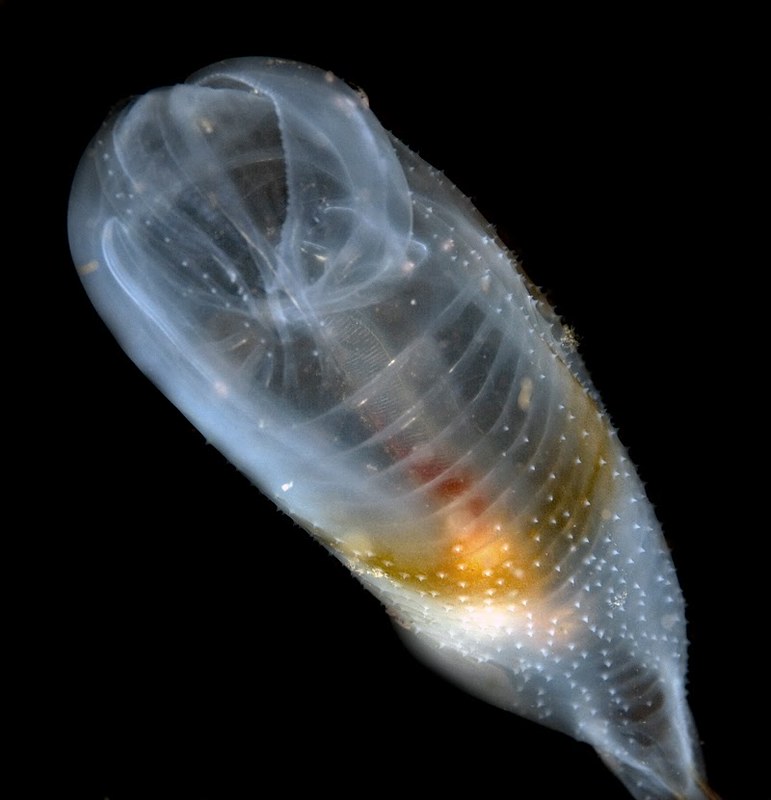
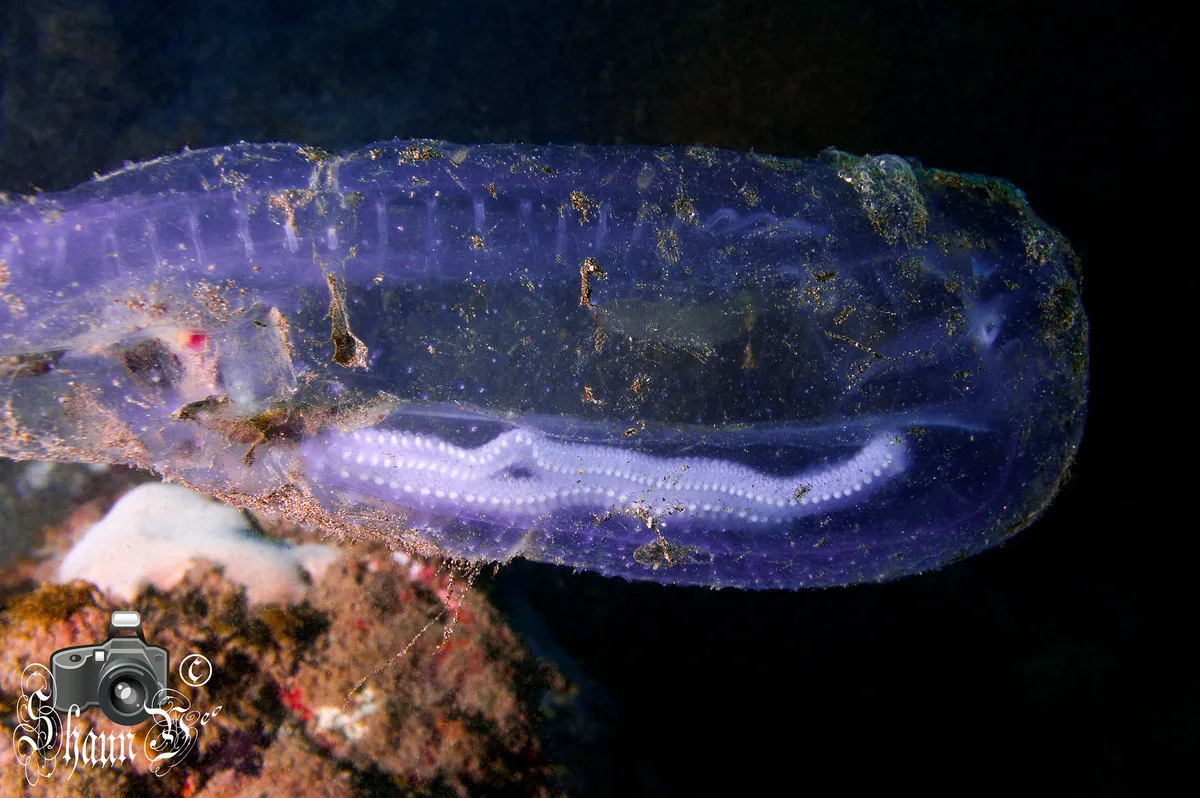
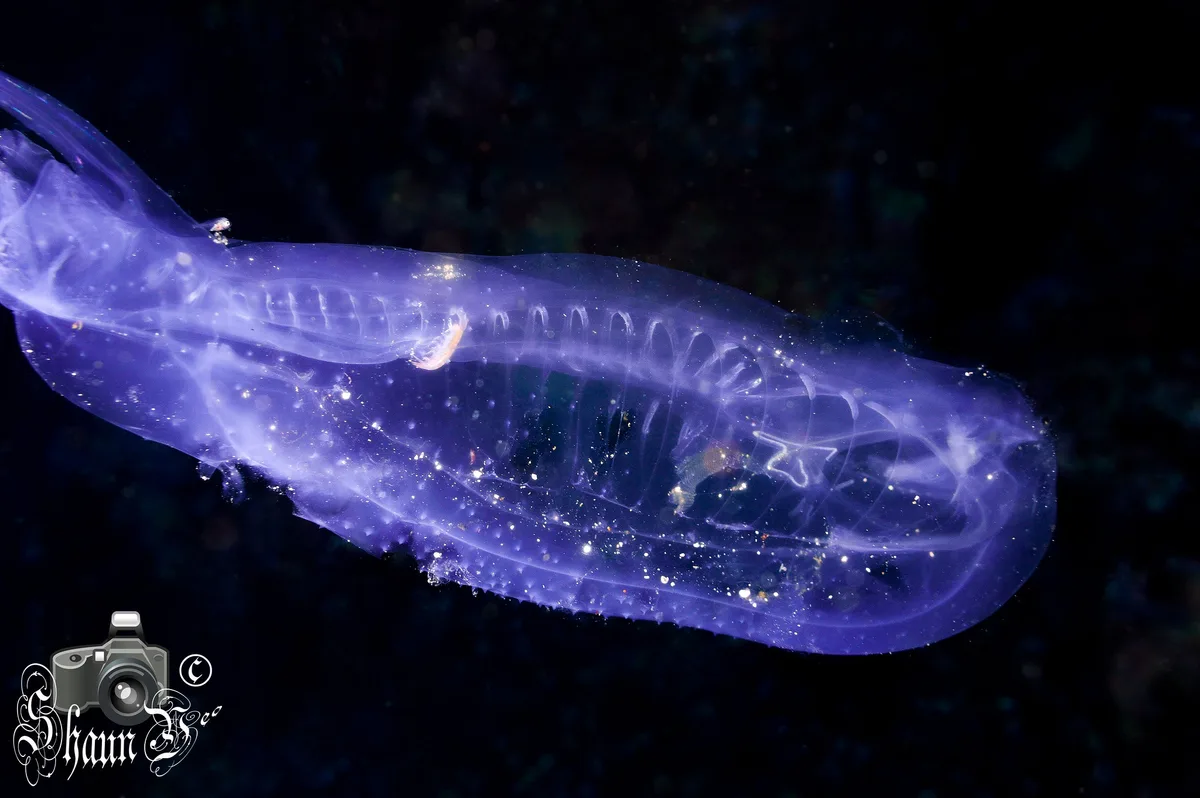
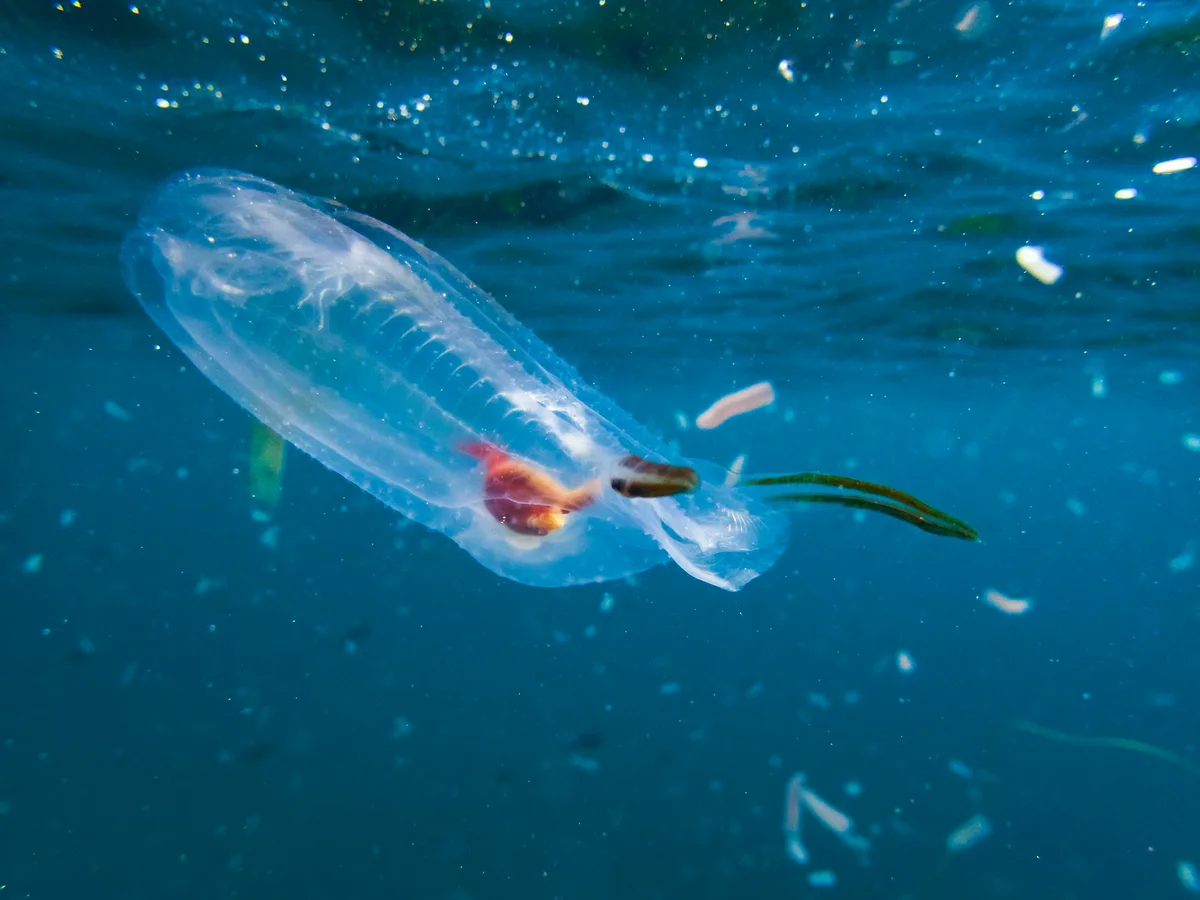
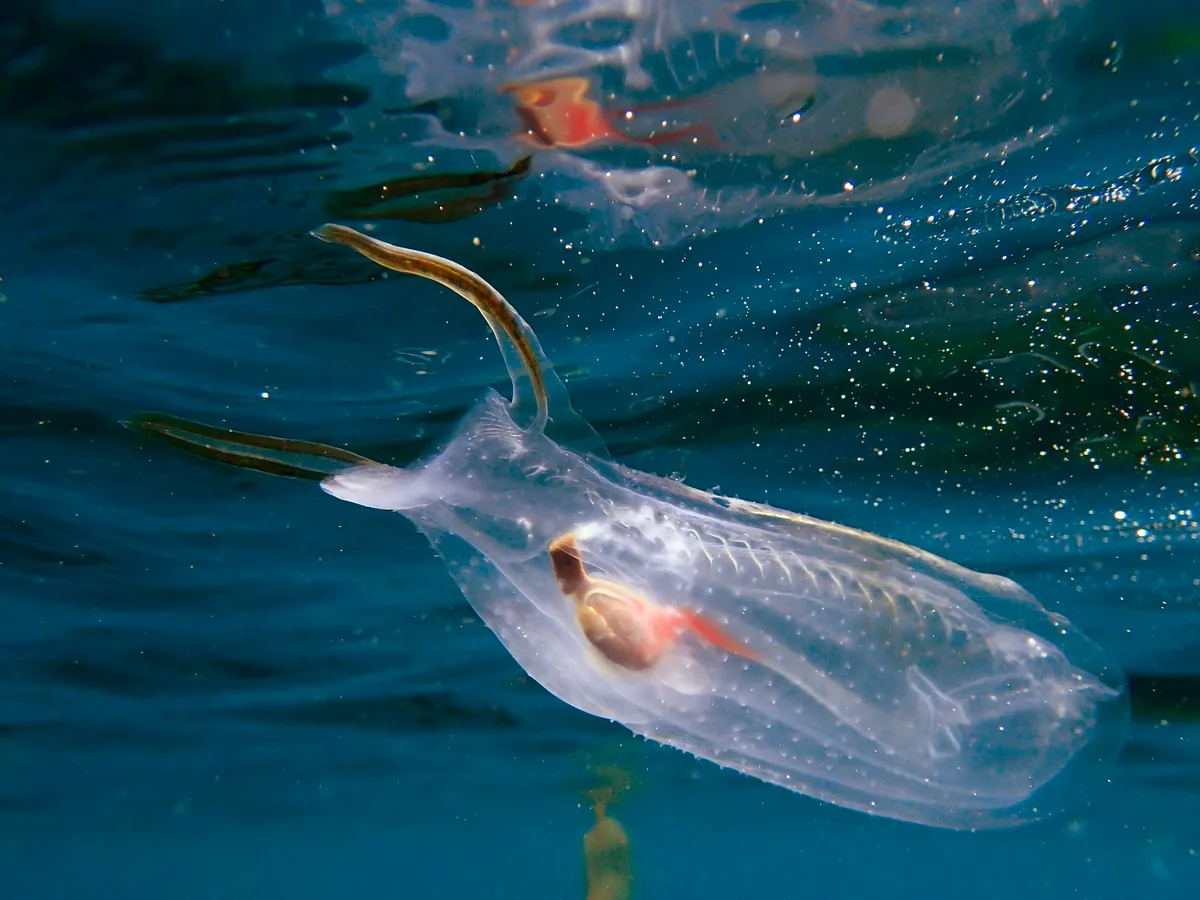
A transparent barrel drifting in open water, up to 30 cm (12 in) long and the largest salp in the world, with two soft projections trailing from the rear and a dark knot of gut visible through the body wall. Divers meet it in the blue rather than over the reef, usually as something that looks like a discarded plastic bag until it pulses.
Movement and feeding are the same act: muscular bands squeeze water through the body and out the back, driving the animal forward while a mucus net strains out everything edible. The life cycle alternates between a solitary animal and a chain - the solitary form buds off a string of clones that stay linked and swim together, sometimes for meters, and those in turn produce solitary young. Salps are tunicates, so despite the jellyfish appearance this is a closer relative of a fish than of anything it drifts among. Blooms of them can strip the plankton from a patch of ocean in days, and their fast-sinking pellets carry carbon to the seabed.
- transparent barrel drifting in open water, gut visible as a dark knot
- two soft projections at the rear end
- often in chains of linked individuals meters long
- length up to 30 cm