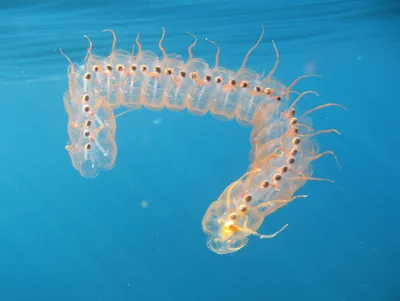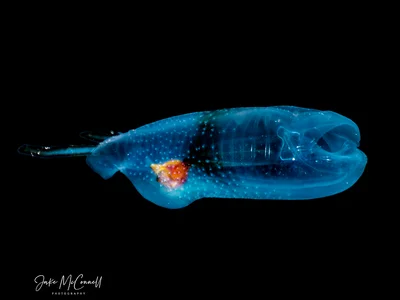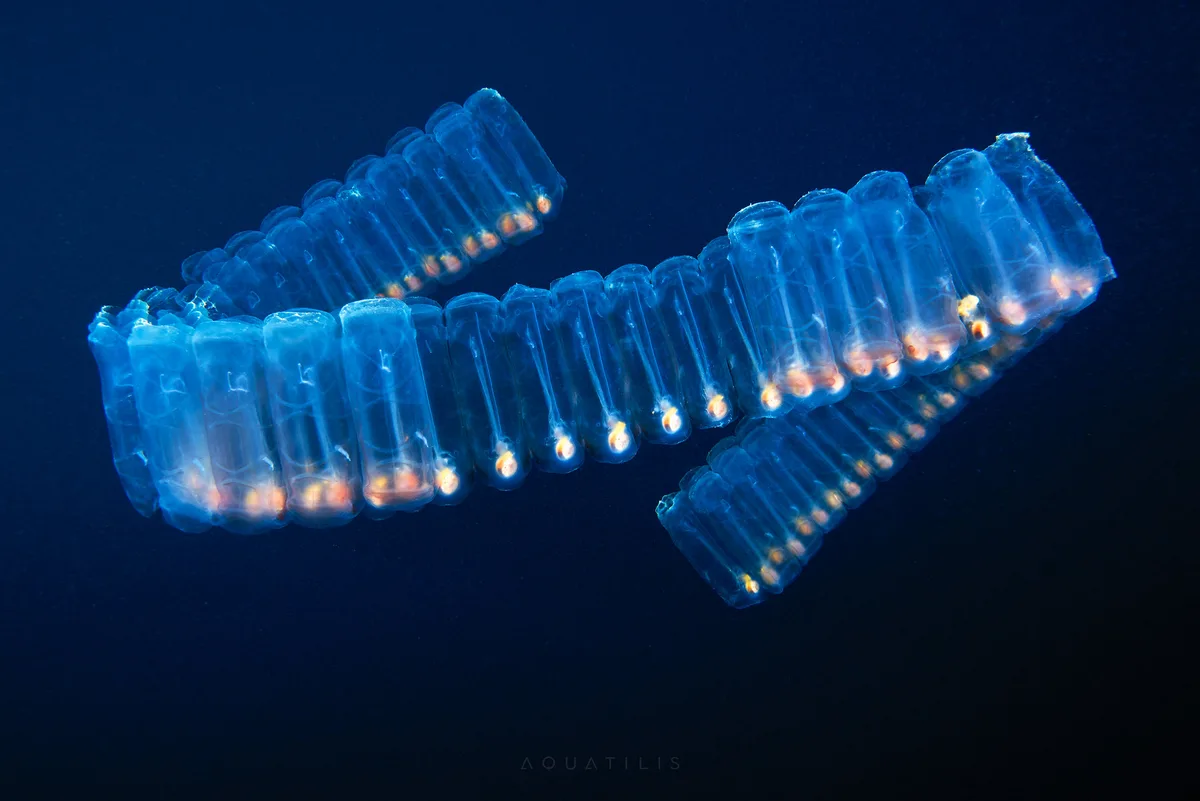
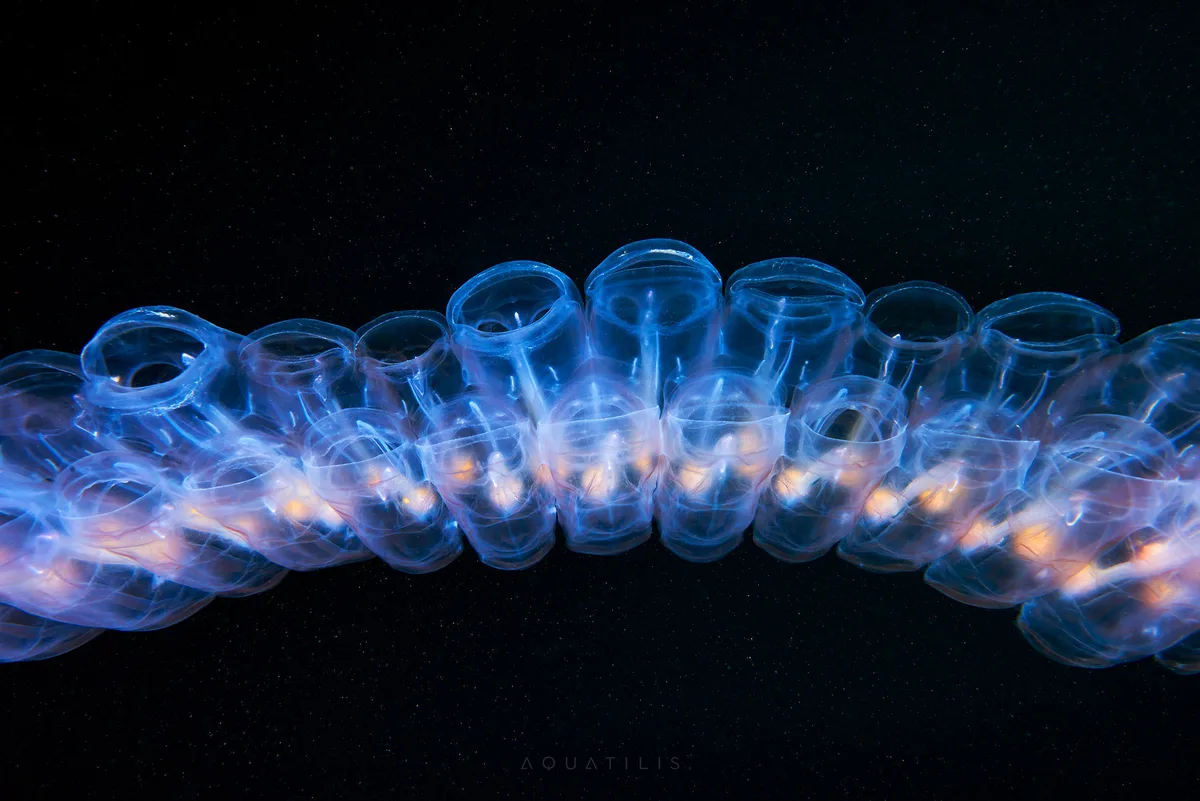
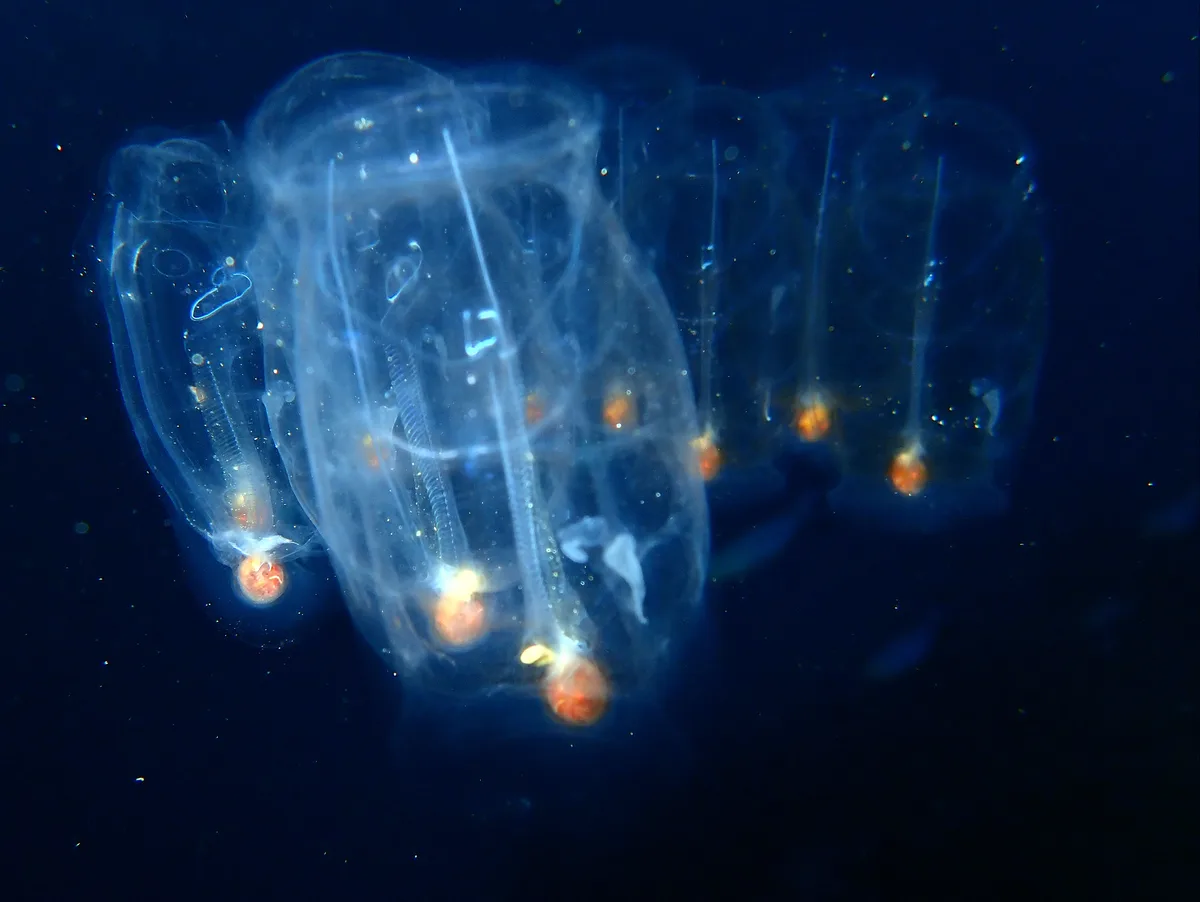
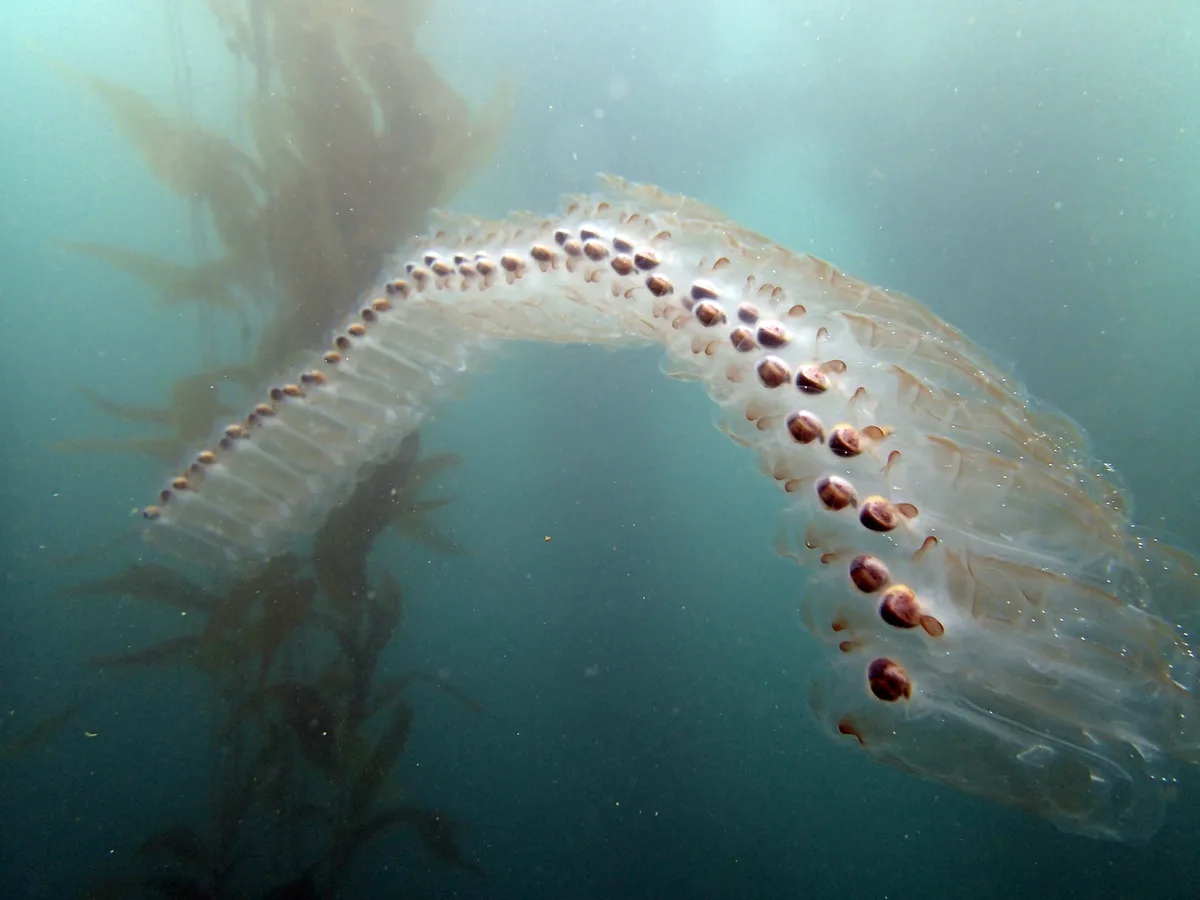
A big soft salp, up to 10 cm (4 in) long, with a body wall so slack and clear that a diver's torch passes straight through it. Chains of linked individuals can run a meter or more, drifting as a loose transparent rope in midwater.
Salps alternate between two forms, and this is where the chains come from. A solitary animal buds off a string of clones that stay joined and travel together; those in turn produce solitary young, and the cycle repeats. It is a way to go from one animal to thousands while the food lasts, without waiting for a mate.
Despite the jellyfish look, salps are tunicates, and their larvae have a notochord - the stiffening rod that defines our own phylum. This drifting bag of water is a closer relative of the diver watching it than of anything it drifts among.
- large soft transparent barrel, up to 10 cm
- body wall thin and slack rather than firm
- chains of linked individuals, sometimes a meter long
- only ever in open water, never on the reef