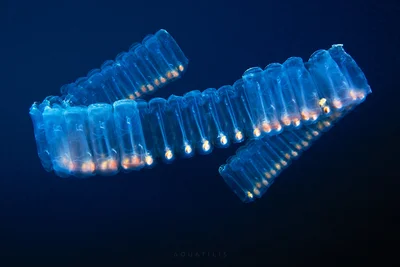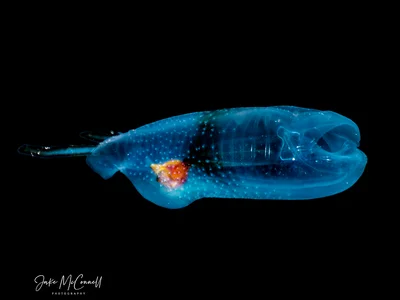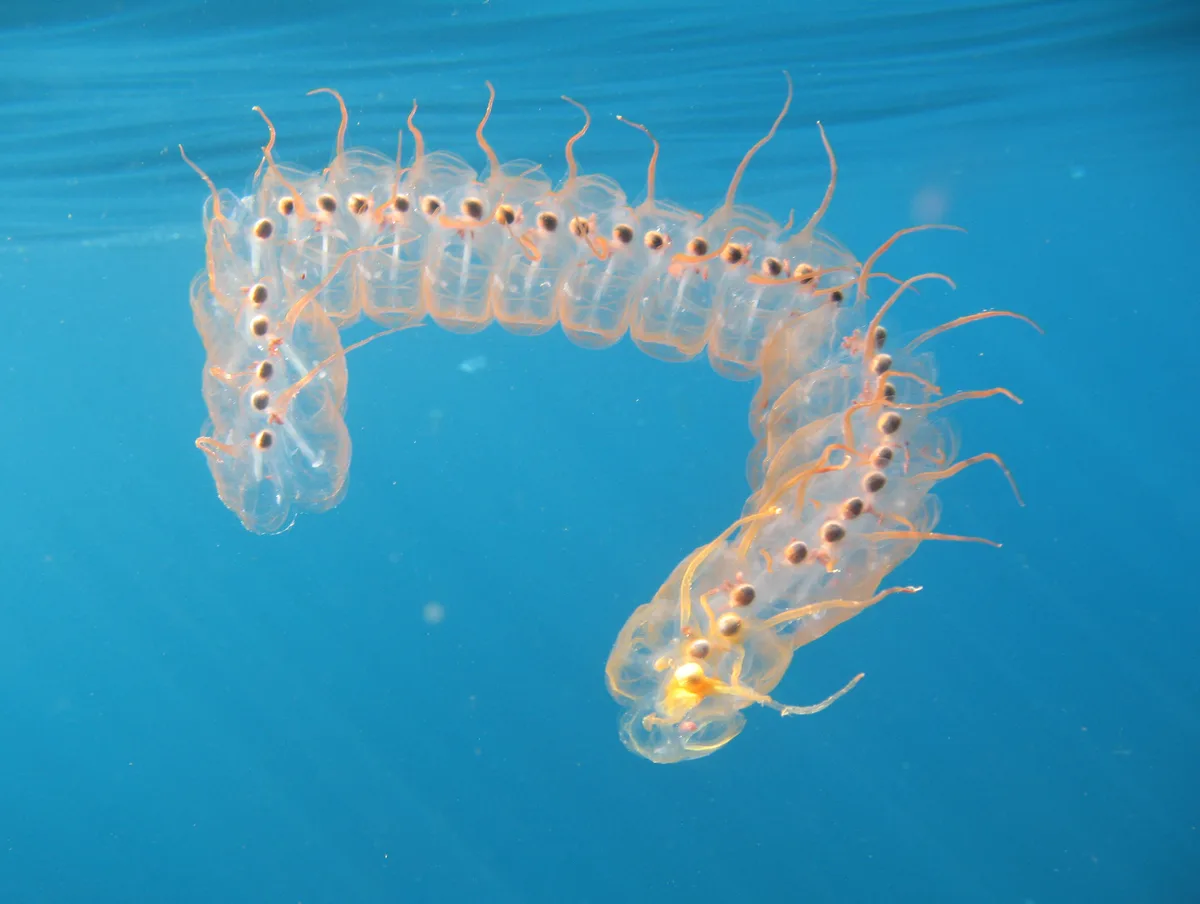
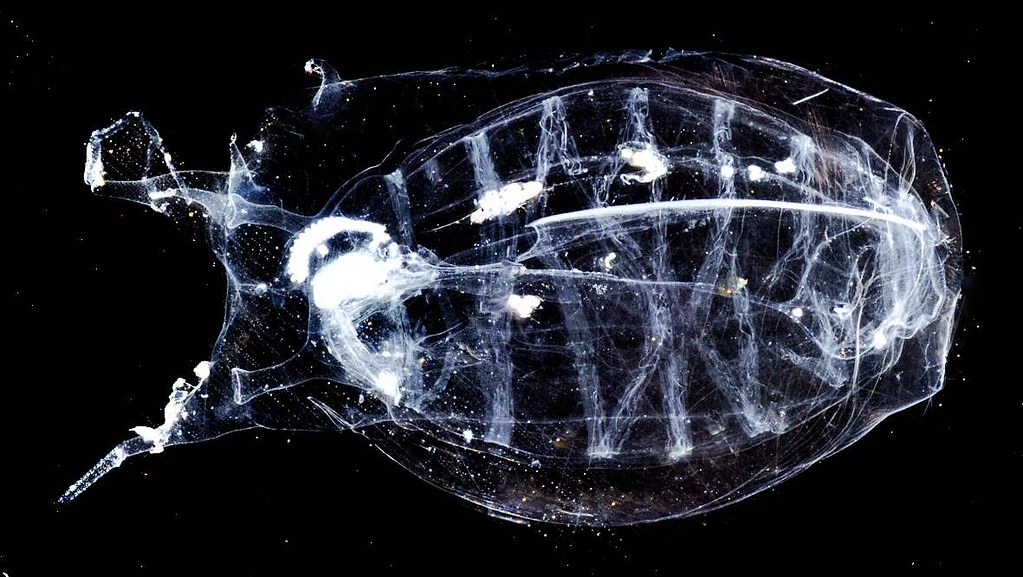
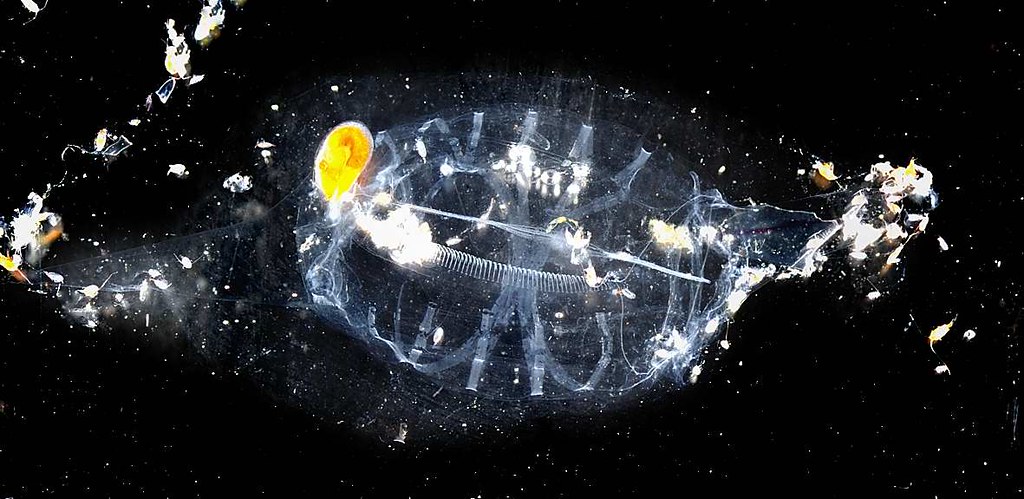
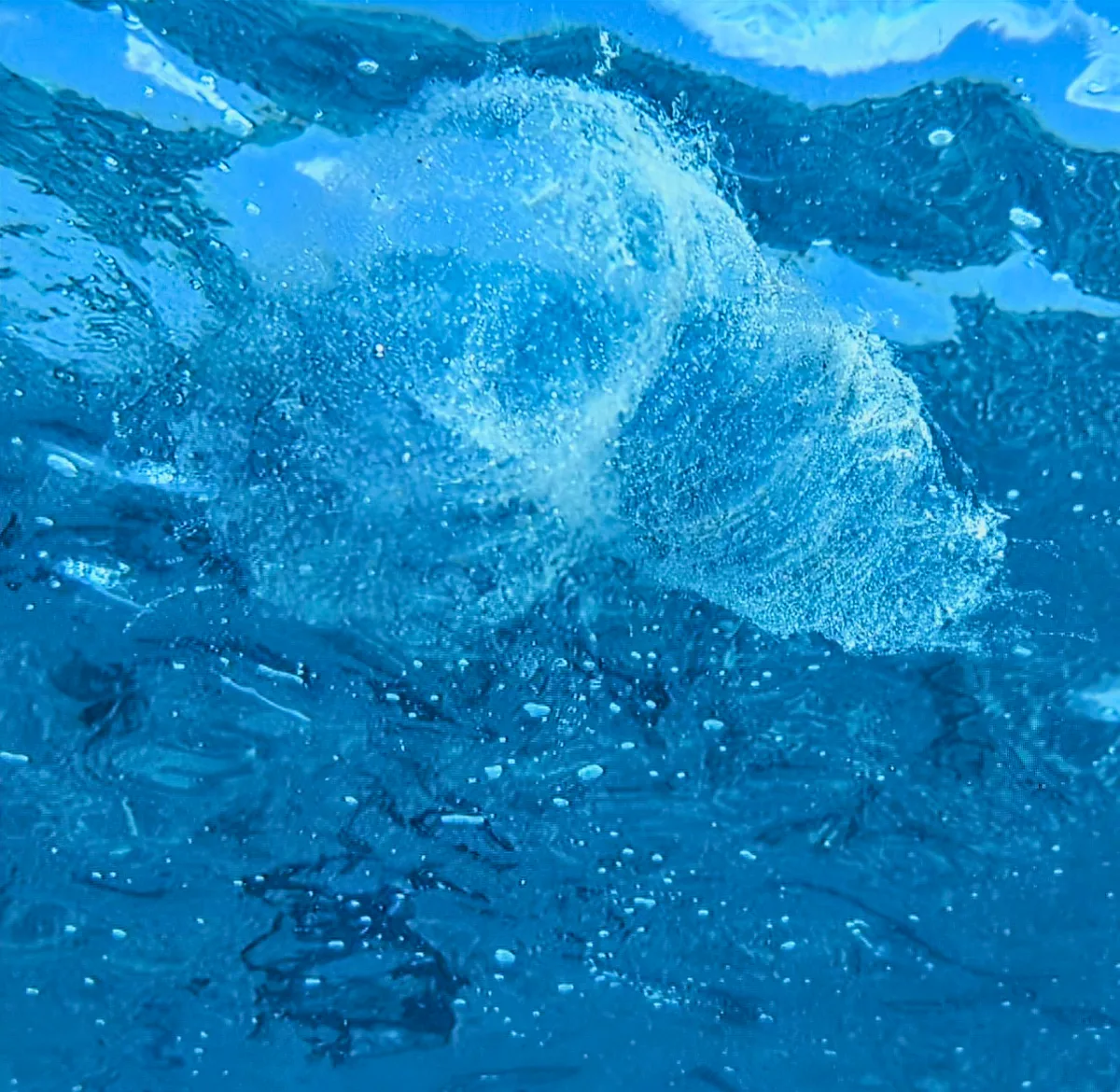
A transparent barrel about 2 cm (0.8 in) long with a dark knot of gut showing through, drifting in open water and pumping itself along by squeezing water through its own body. Most encounters are with a chain rather than an individual: dozens linked end to end, moving as one ribbon in the blue.
The species was described by Forsskål from this sea in 1775, and it is one of the fastest-growing multicellular animals known. In a bloom it can double its population in under a day, stripping the phytoplankton out of a patch of ocean and then vanishing as abruptly as it appeared.
That speed matters far beyond the animal. Salps package what they eat into dense pellets that sink fast, and a bloom pumps carbon from the surface to the deep sea faster than almost anything else in the plankton. A drifting animal that looks like a discarded piece of plastic is, at scale, part of how the ocean breathes.
- small transparent barrel with two projections at the rear
- dark gut visible as a knot inside a clear body
- often in chains of linked individuals
- individuals about 2 cm