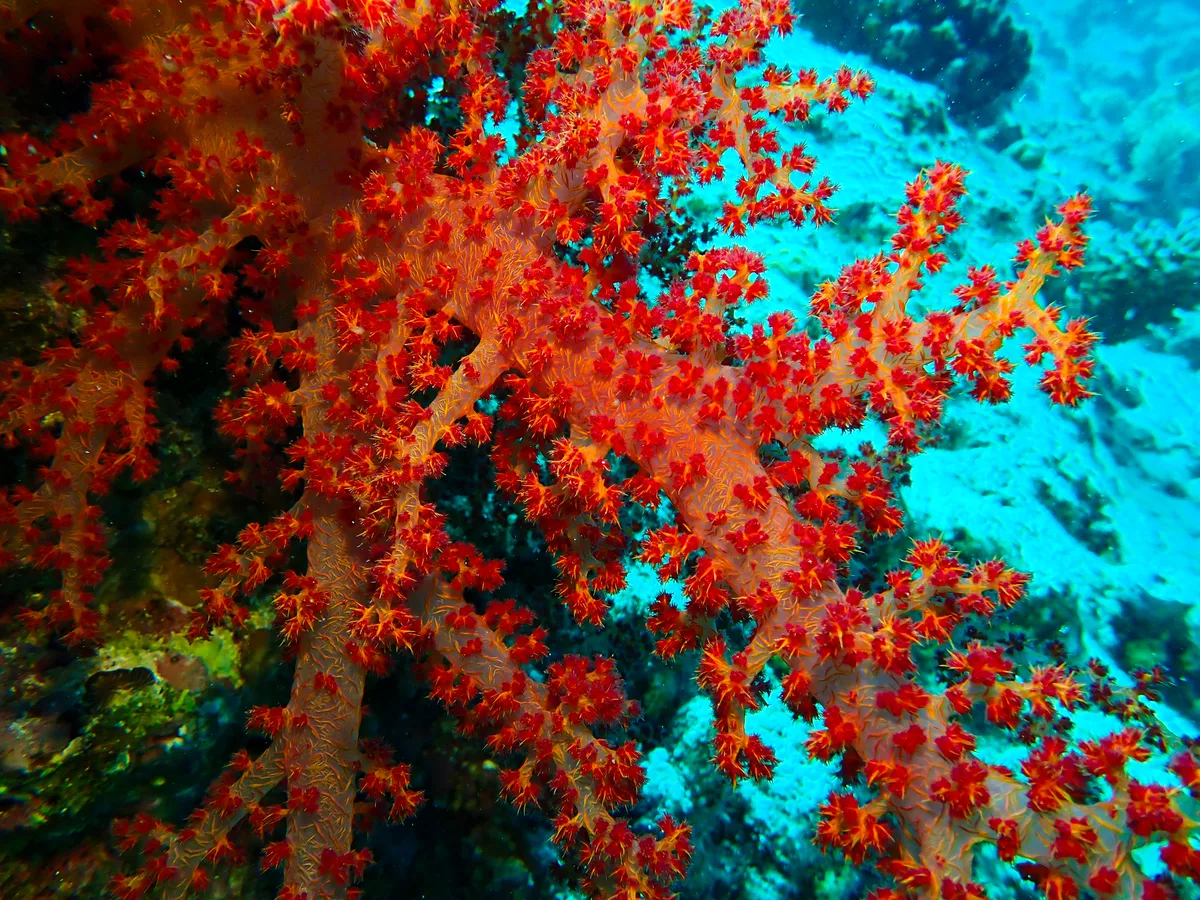
Nearly every conspicuous coral in this sea is a solar panel. Hard corals and most soft corals carry symbiotic algae in their tissue and get the bulk of their food from sunlight, which is why the reef is built where the light is.
This one has no algae at all. It feeds, and what it feeds on is phytoplankton, strained out of moving water by polyps standing in the flow. That single difference explains where you find it: not on the bright reef top but on steep slopes, walls and the shaded undersides of overhangs, wherever a current runs. Colonies on the current-hit faces of Eilat's oil jetties grow better than the ones on horizontal surfaces.
It has no skeleton either, only small scattered spicules. The colony stands up by pumping itself full of seawater, and when it lets that water go it collapses to a slumped bag a fraction of its size, so the same colony photographed in the morning and in the evening can look like two different animals.
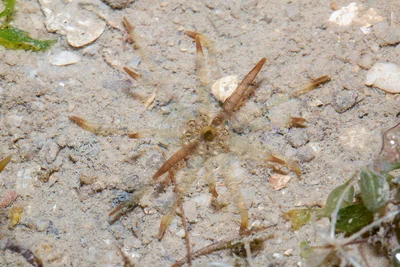
It also cheats at reproduction. Fragments two to five millimeters across break off, drift, and root themselves on whatever they land on, which is how a bare jetty pile turns pink within a couple of seasons.
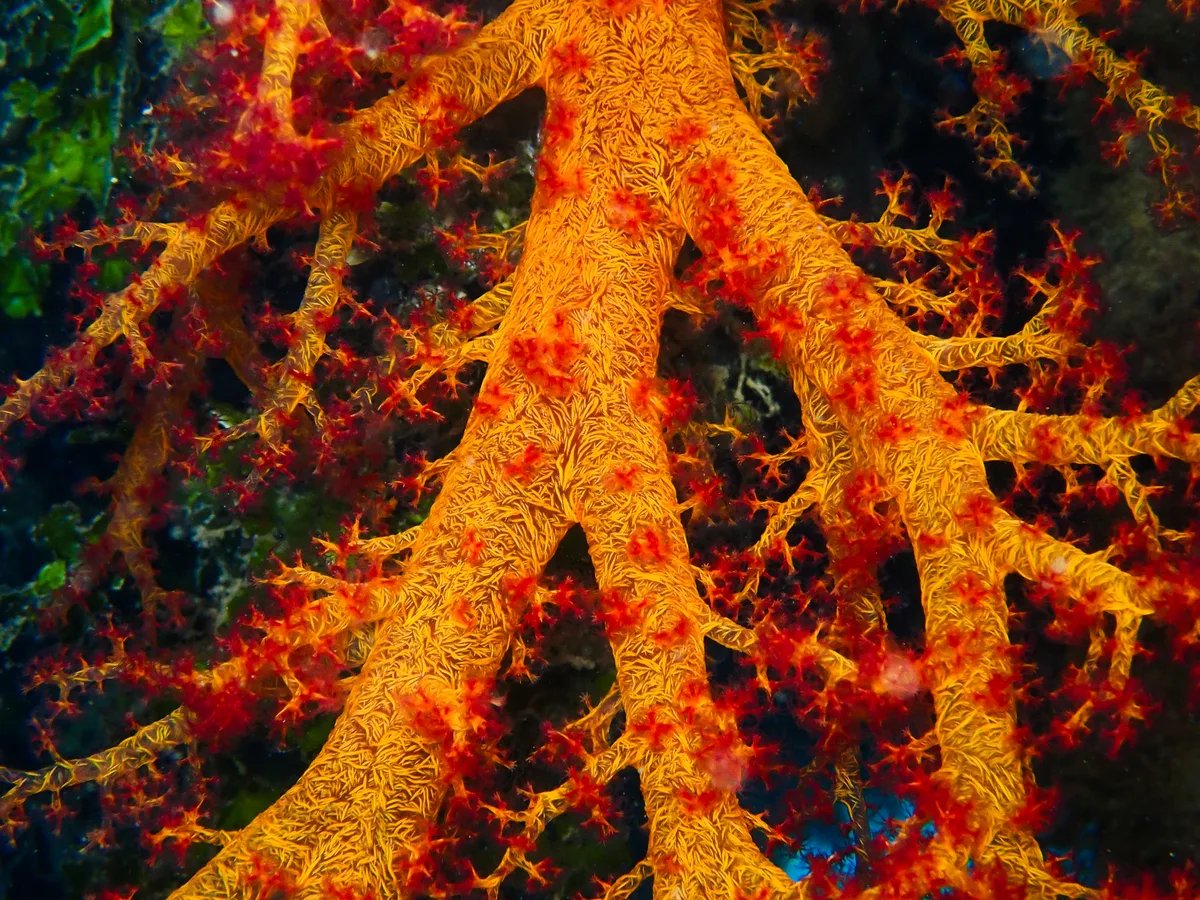
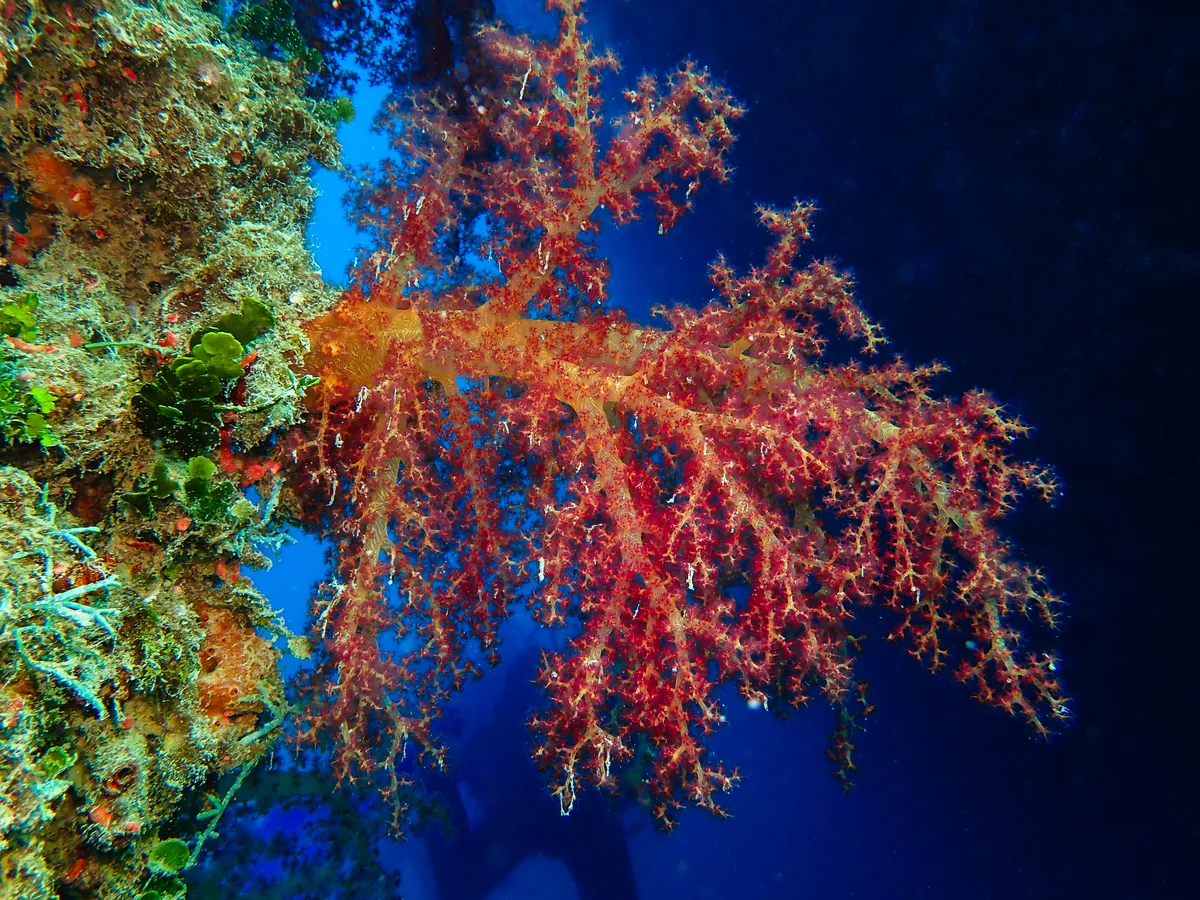
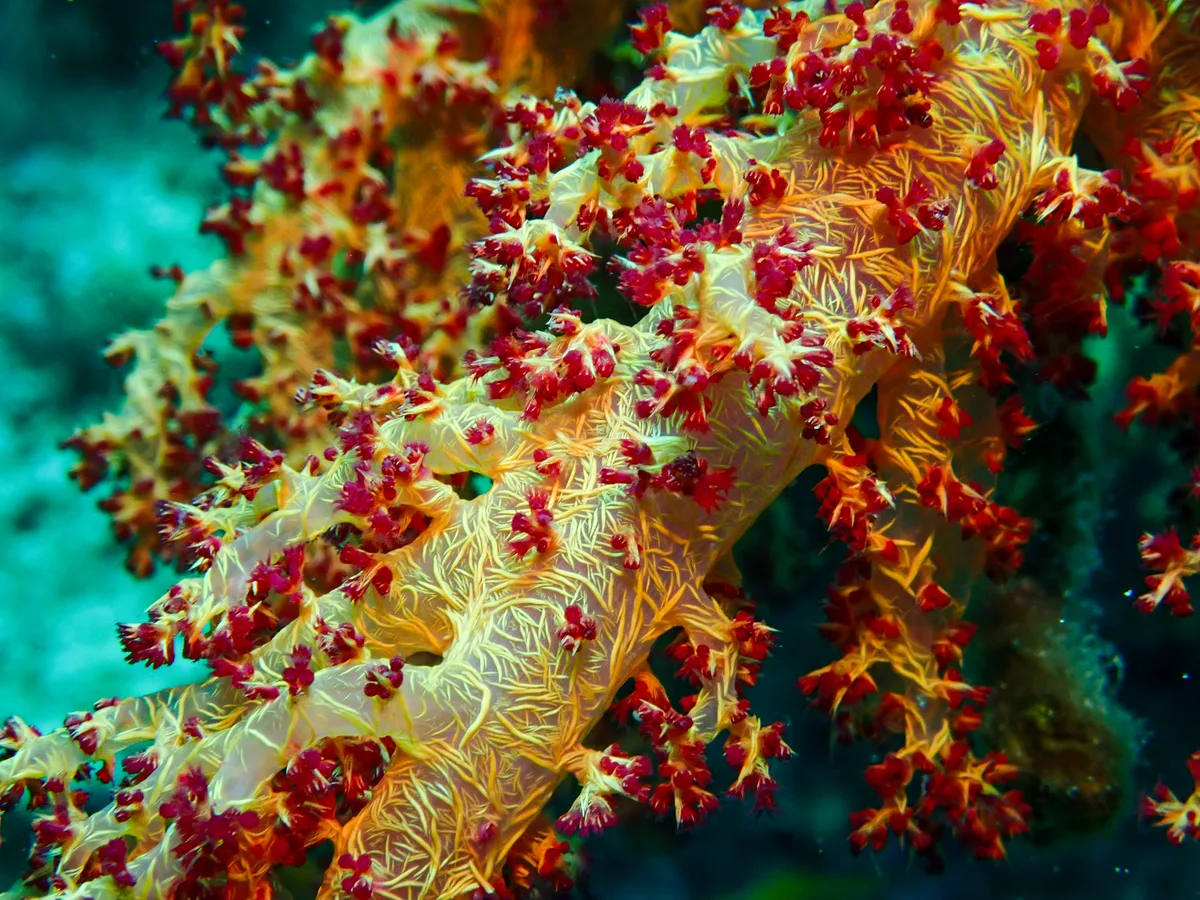
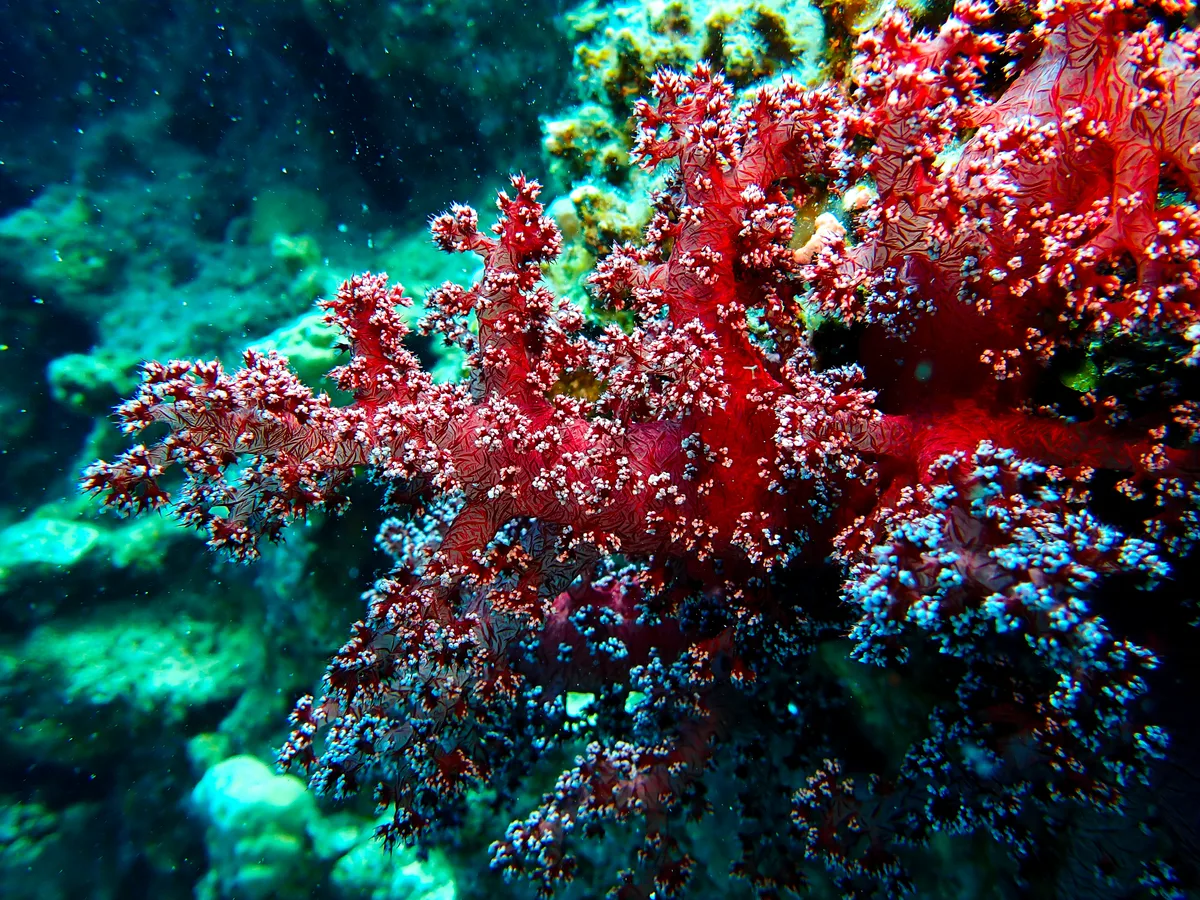
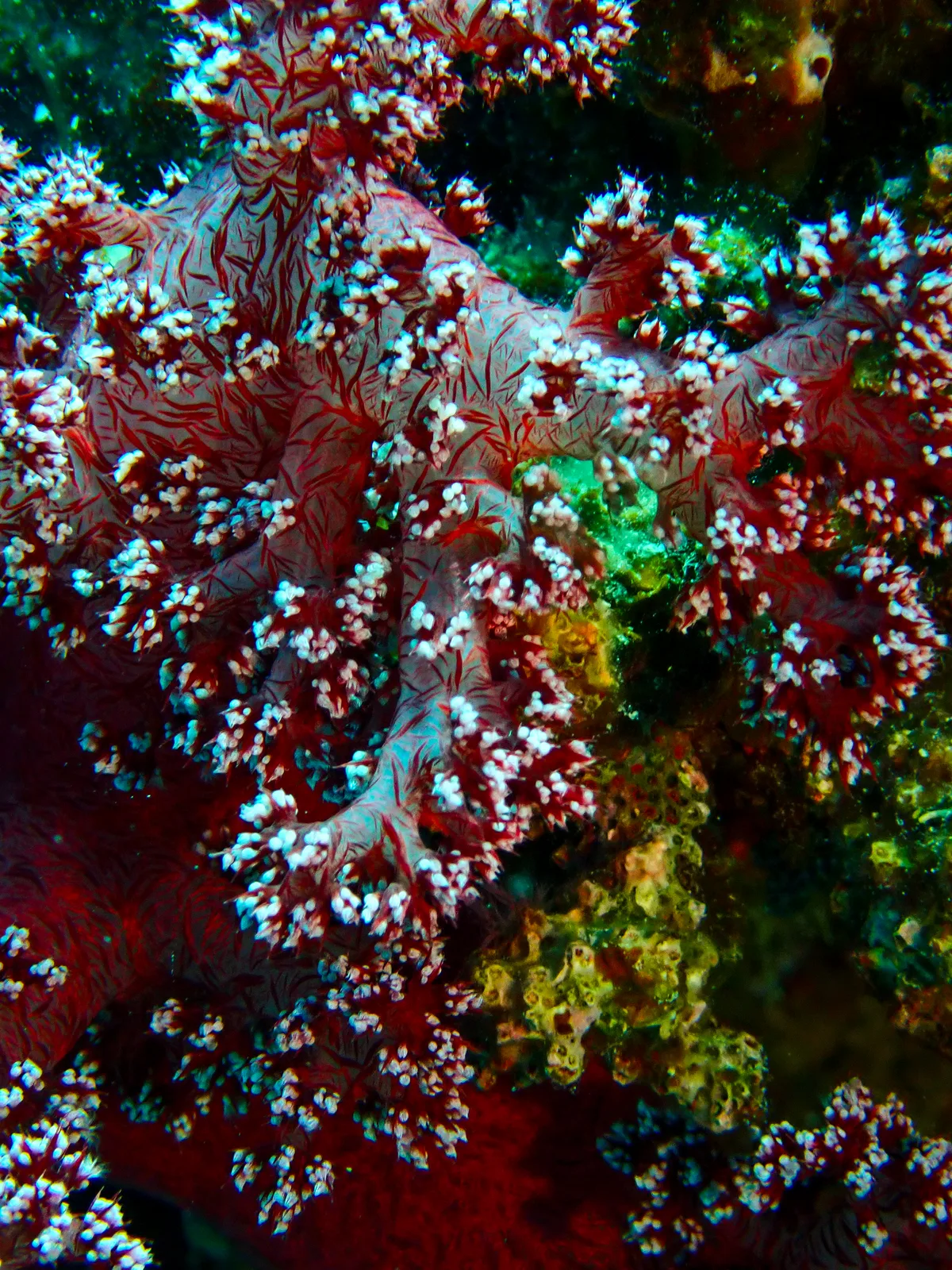
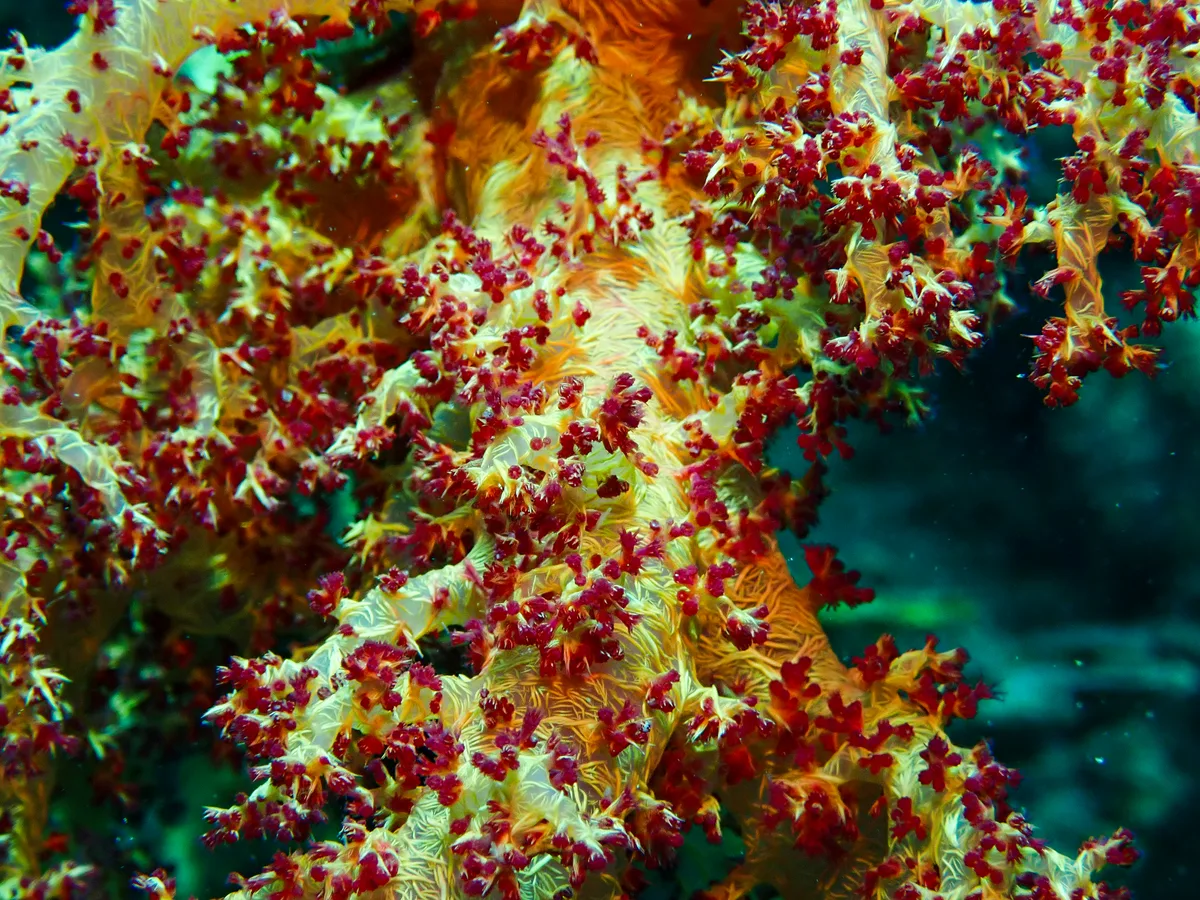
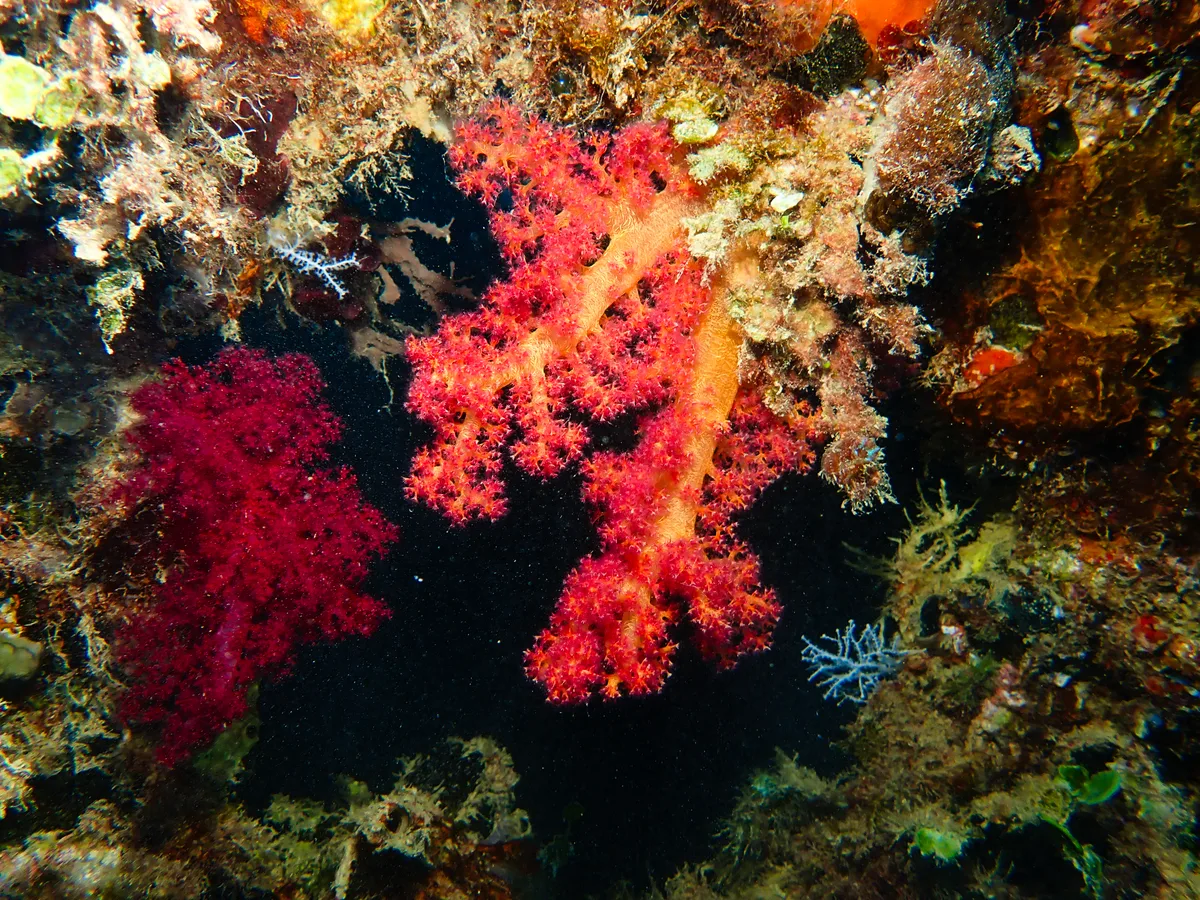
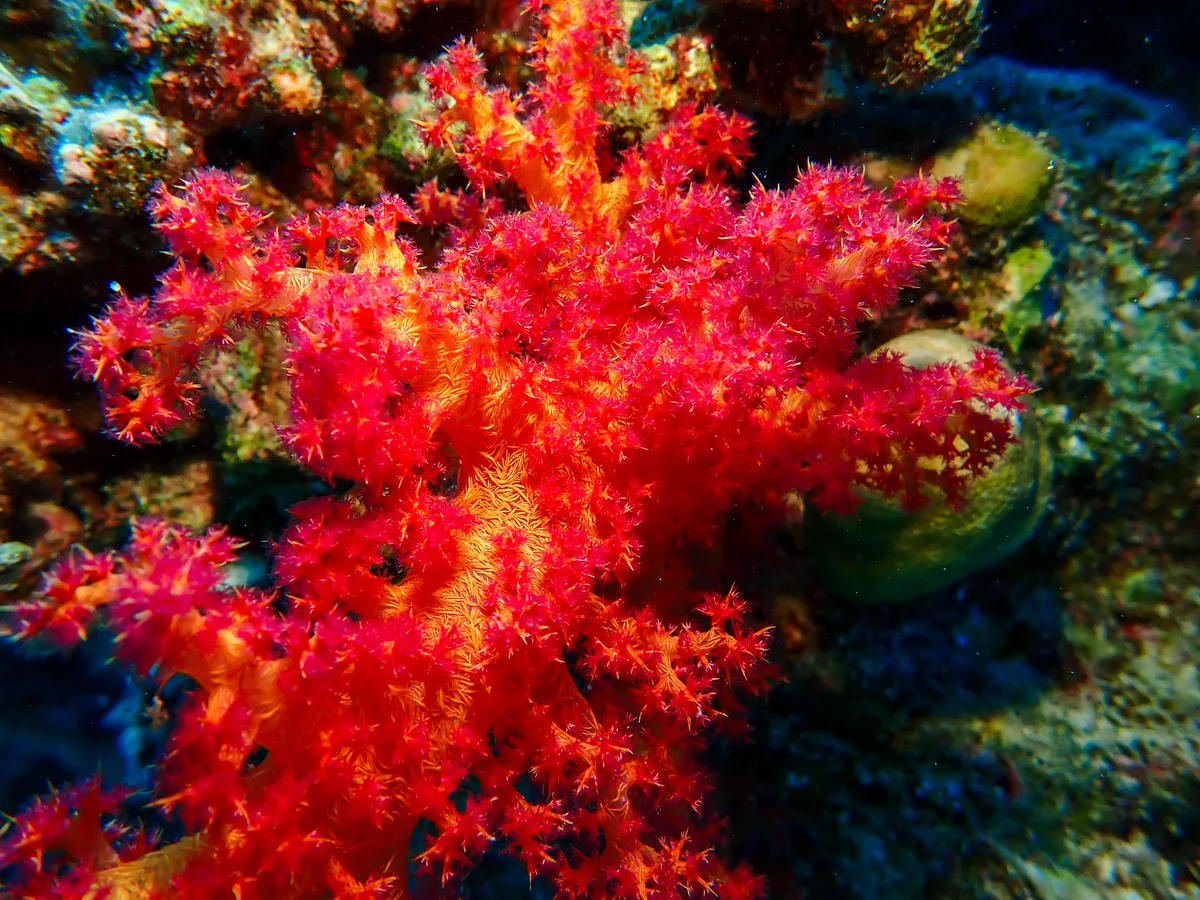
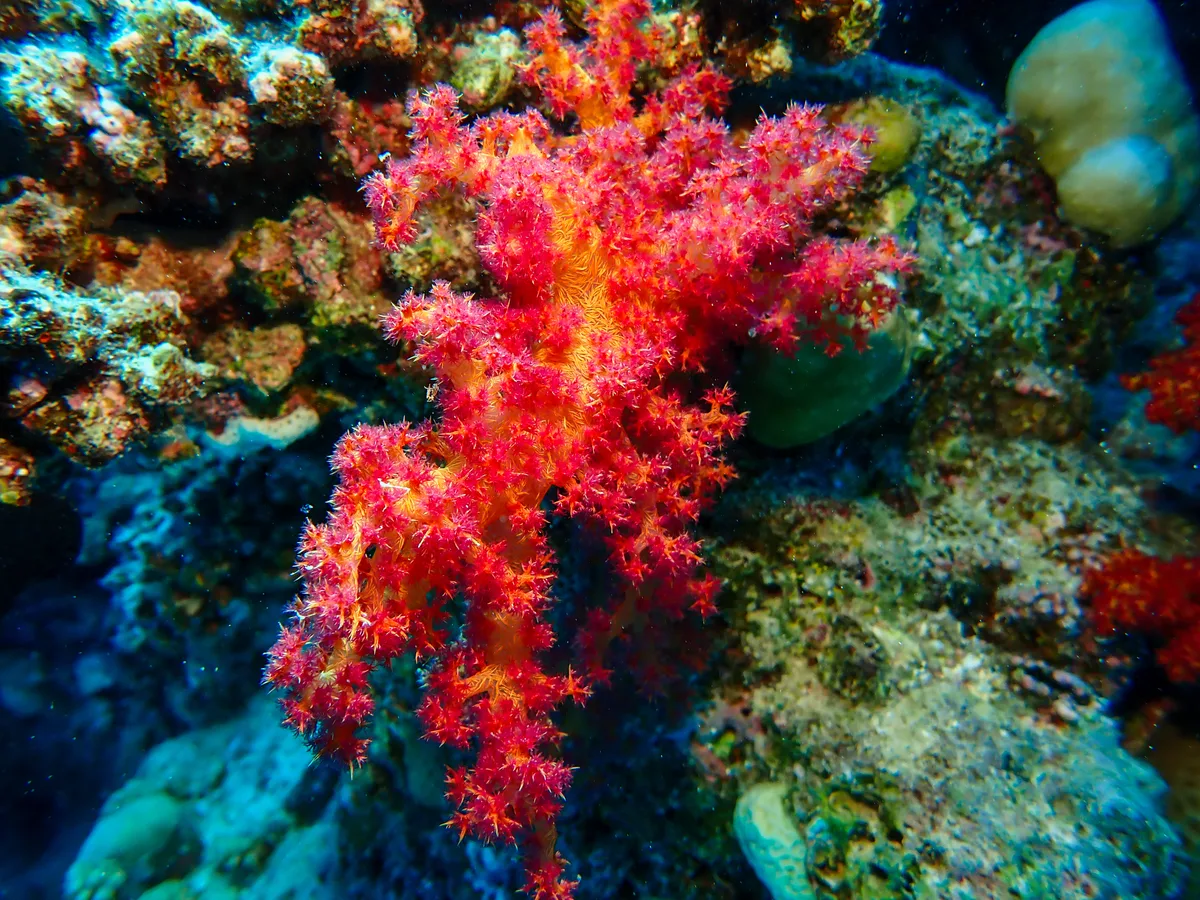
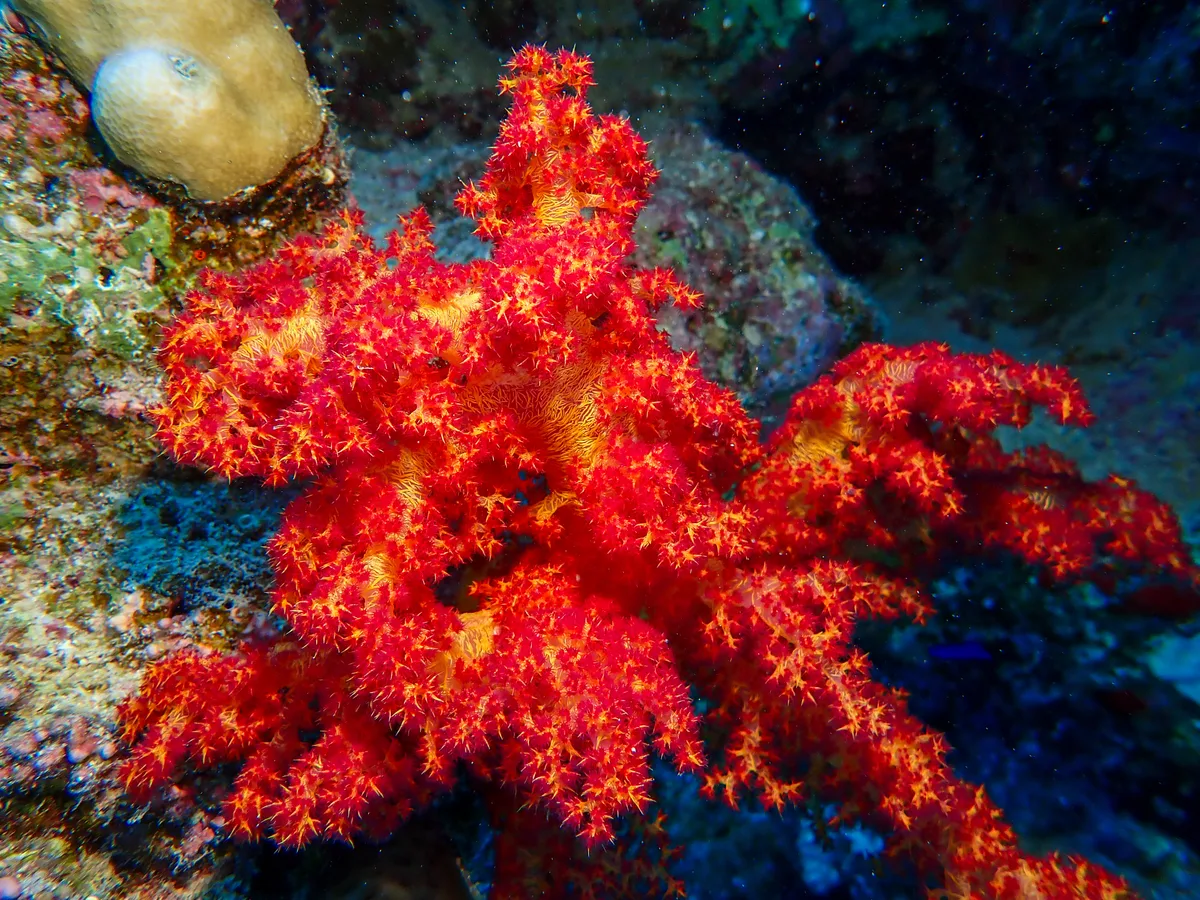
- pink to orange colony on a transparent trunk
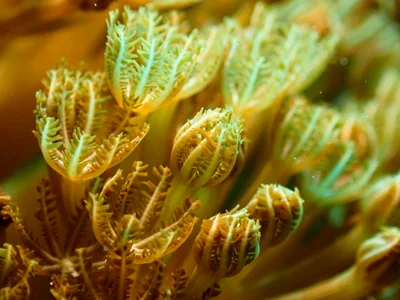
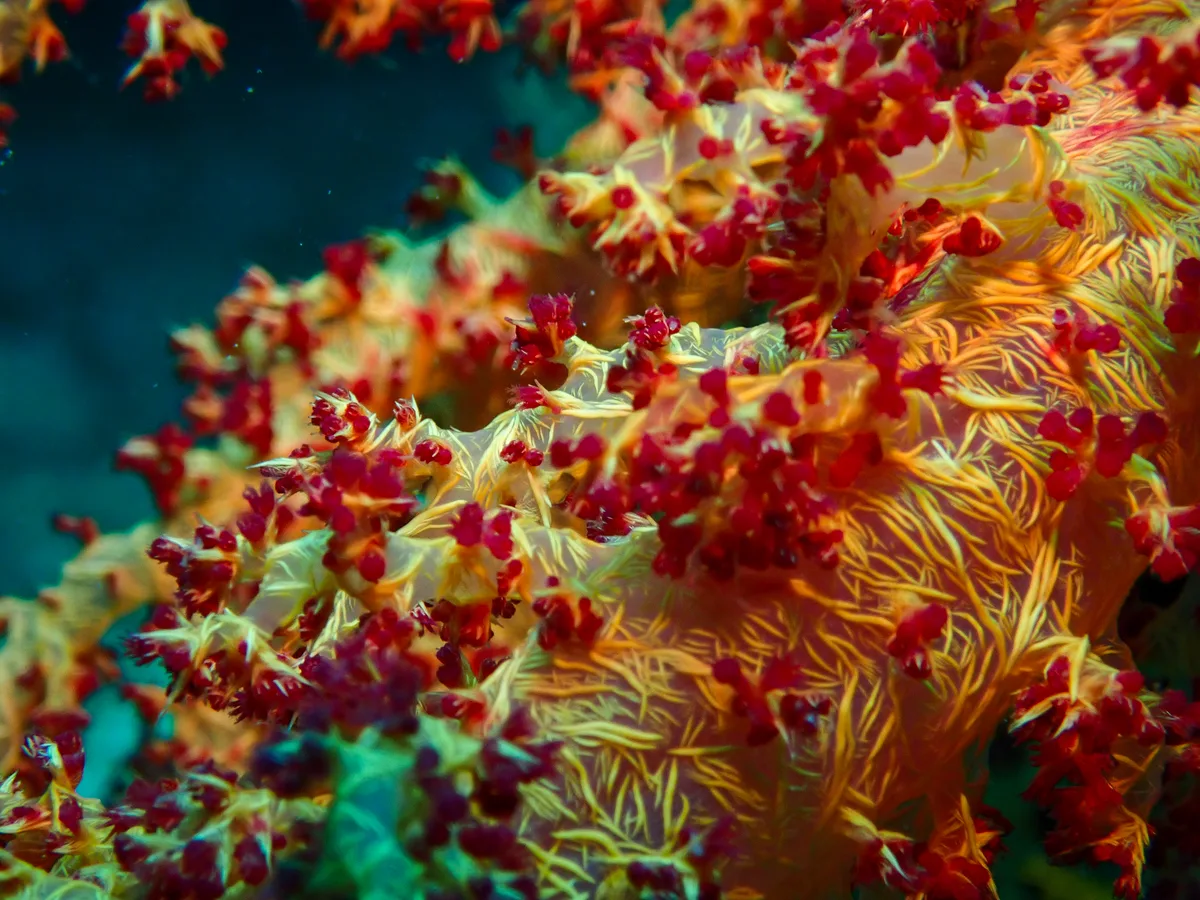
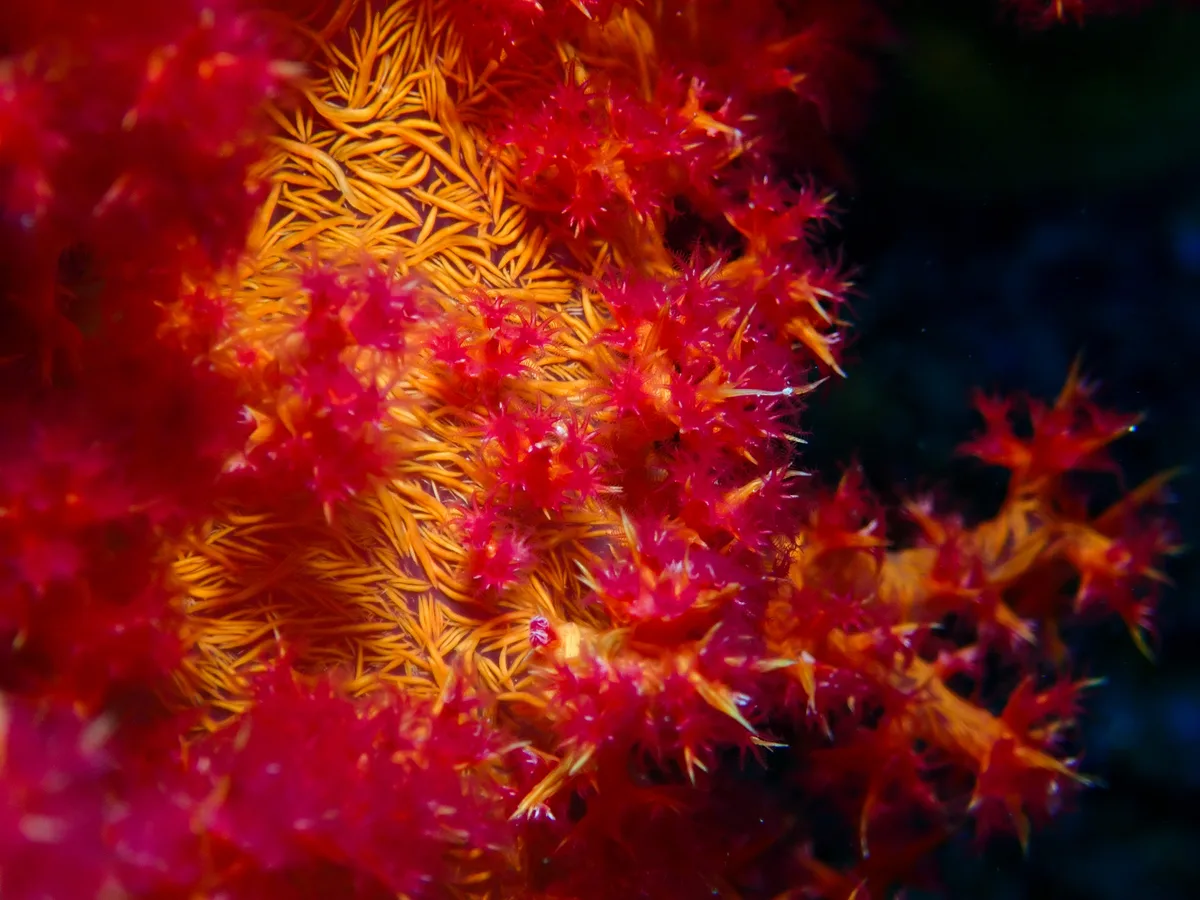
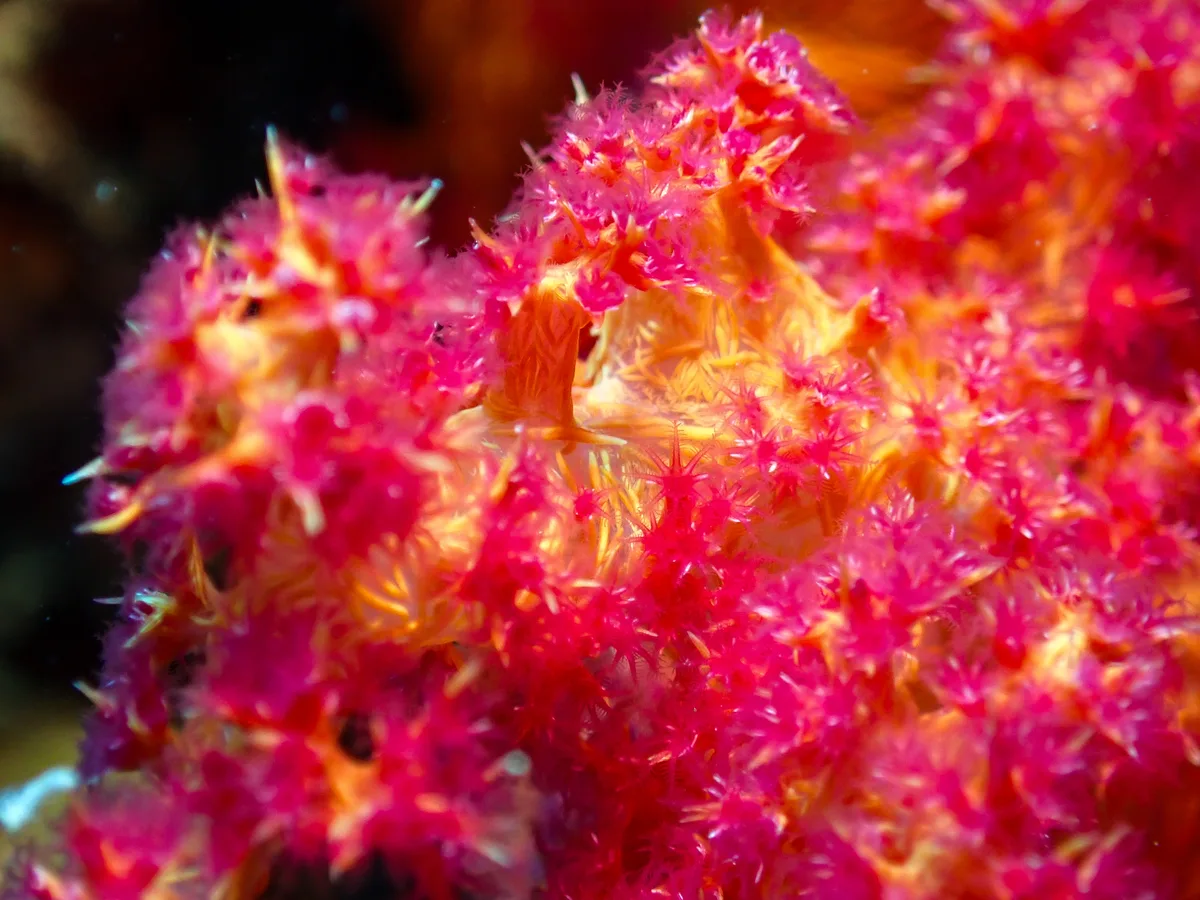
- polyps in bunches at the branch tips, each with eight feathery tentacles
- stands up when inflated with water and slumps into a fraction of its size when it deflates
- on current-swept walls and overhangs, not on the sunlit reef top
- up to 70 cm