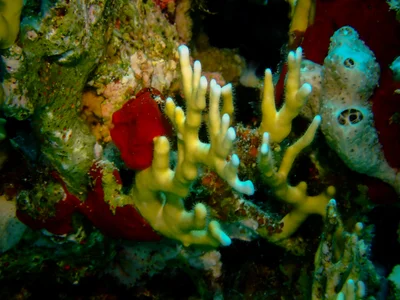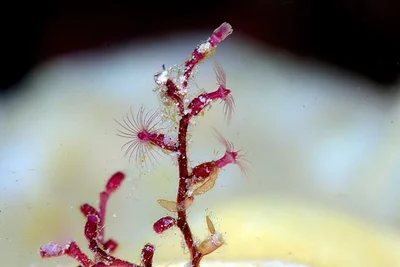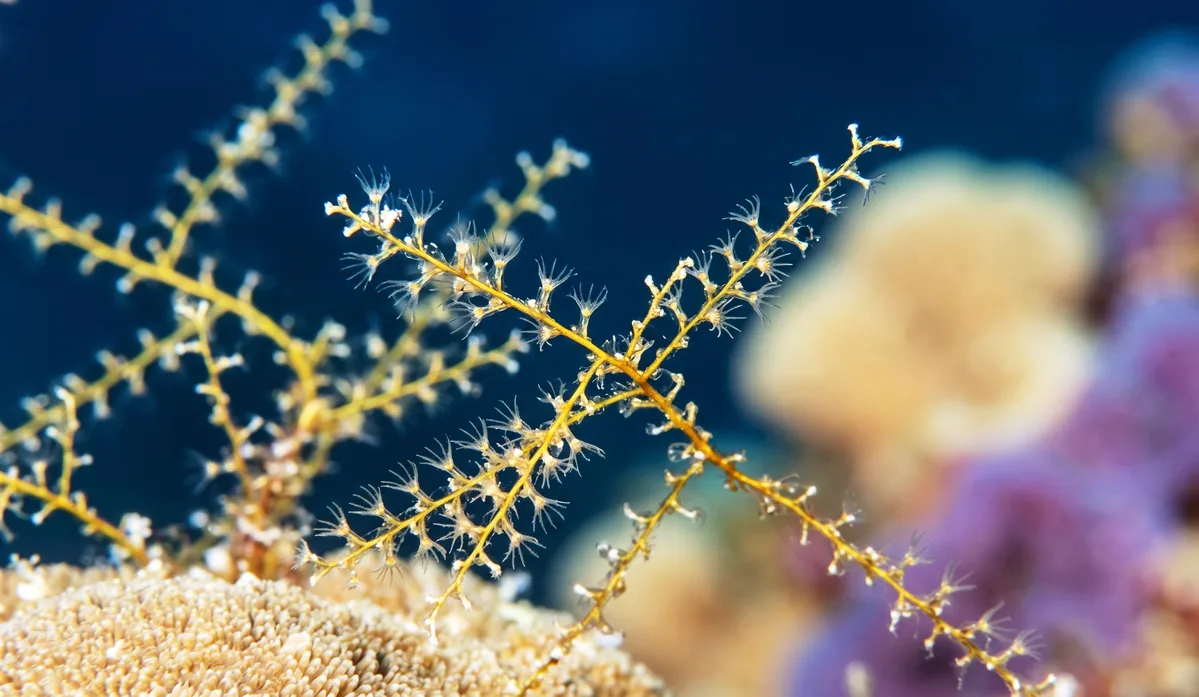
A sparser relative of the shrubby hydroid, reaching about 10 cm (4 in), with fewer branches and polyp cups that are large relative to the colony. It grows on shaded rock faces and under overhangs, generally deeper than 5 m (16 ft).
Separating hydroid species underwater is largely a matter of branching pattern and cup shape, and beyond a certain point it needs a microscope - which is why most photographs of hydroids on this coast are filed at genus level or worse. That is worth stating rather than glossing over: this catalogue names what can honestly be named, and a hydroid is one of the groups where a confident field identification is often not possible. What is reliable is the habit - stiff pale colonies in shade, facing the current, stinging cells present but mild.
- sparse pale colony, less densely branched than its relative
- polyp cups noticeably large for the size of the colony
- on shaded rock below about 5 m
- height up to 10 cm