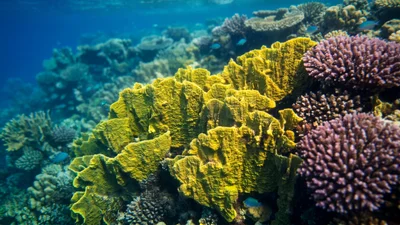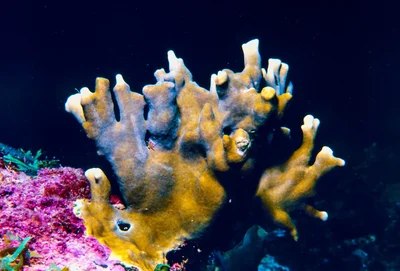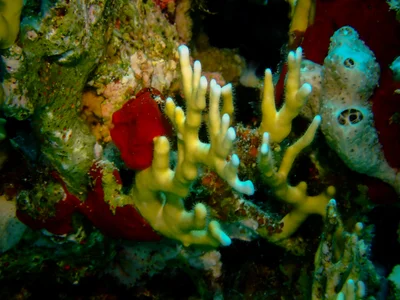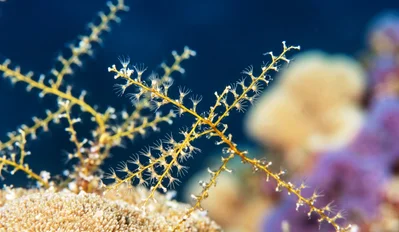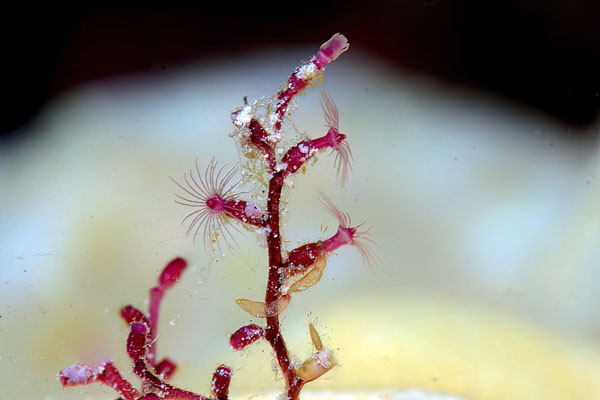
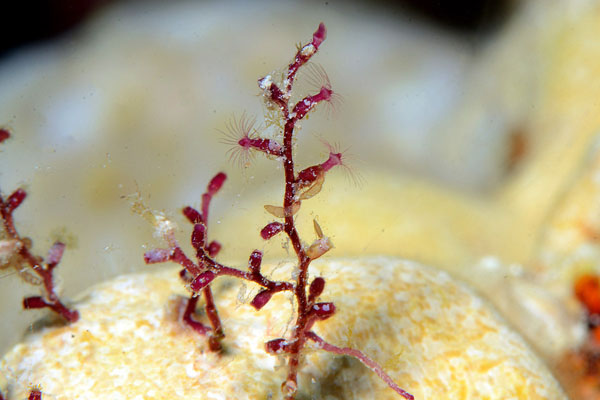
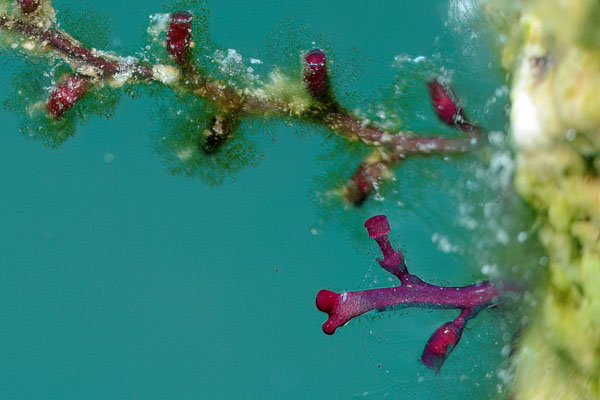
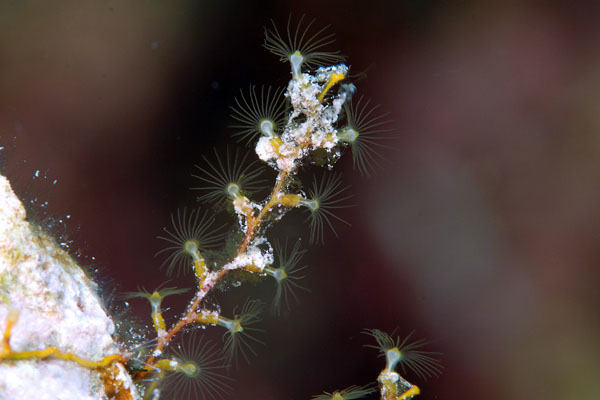
A stiff, pale, branching colony that grows from shaded rock or wreck metal like a small dry shrub, up to about 15 cm (6 in) tall. Look closely and each branch is lined with tiny cups, one polyp to a cup, all facing into the flow.
A hydroid colony is not one animal but a shared body: individual polyps feed, others specialise in defense or reproduction, and all of them draw on the same gut cavity running through the stems. They release free-swimming medusae - small jellyfish - which is the stage that disperses, so a shrub on a wreck can seed a reef hundreds of meters away. Nudibranchs of several families feed on hydroids and store the undischarged stinging cells in their own tissues, so a careful look at a colony like this often turns up the animal eating it. The sting is minor to a diver, though bare forearms brushed along a colony will feel it.
- stiff branching colony like a small pale shrub
- polyps sit in tiny cups along the branches, visible up close
- grows from shaded rock and wreck metal into the current
- height up to 15 cm