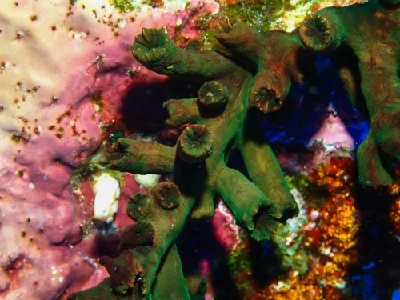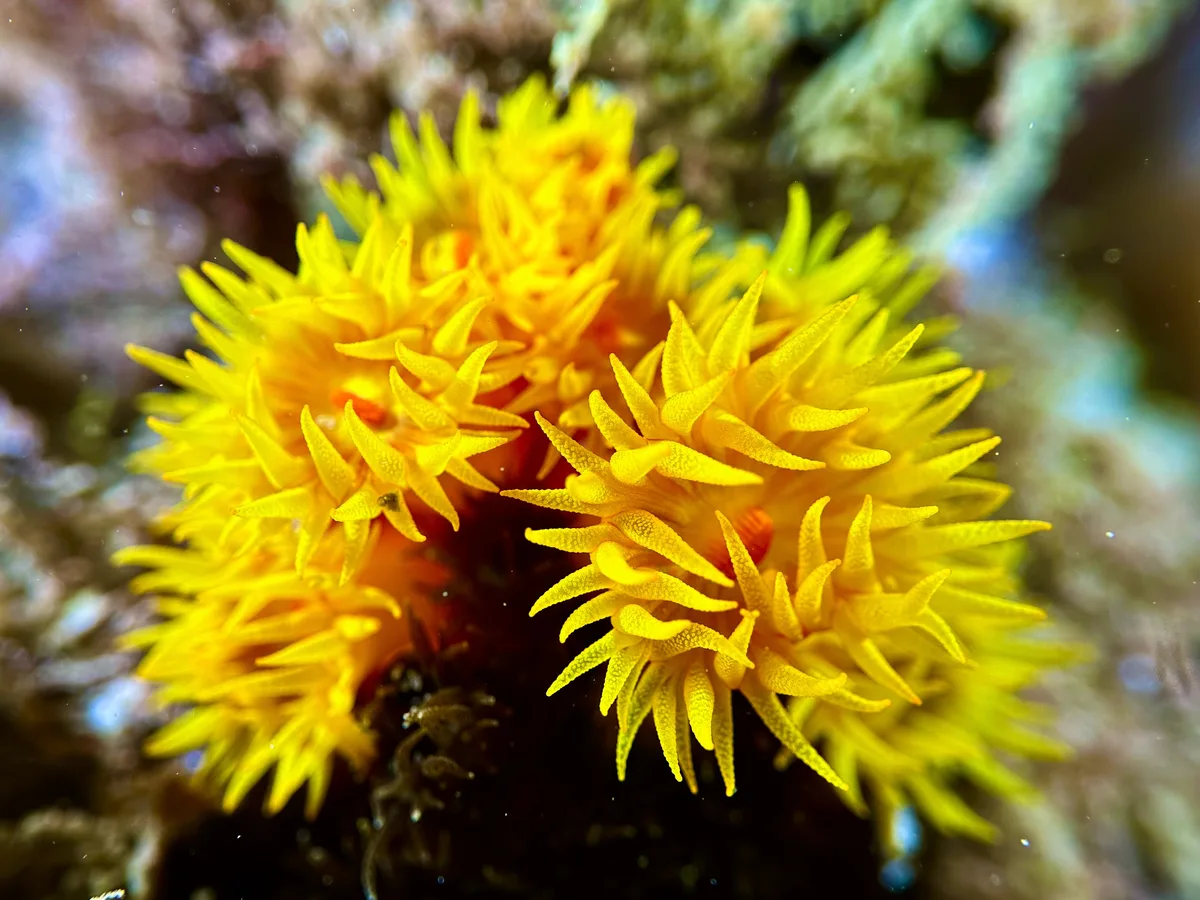
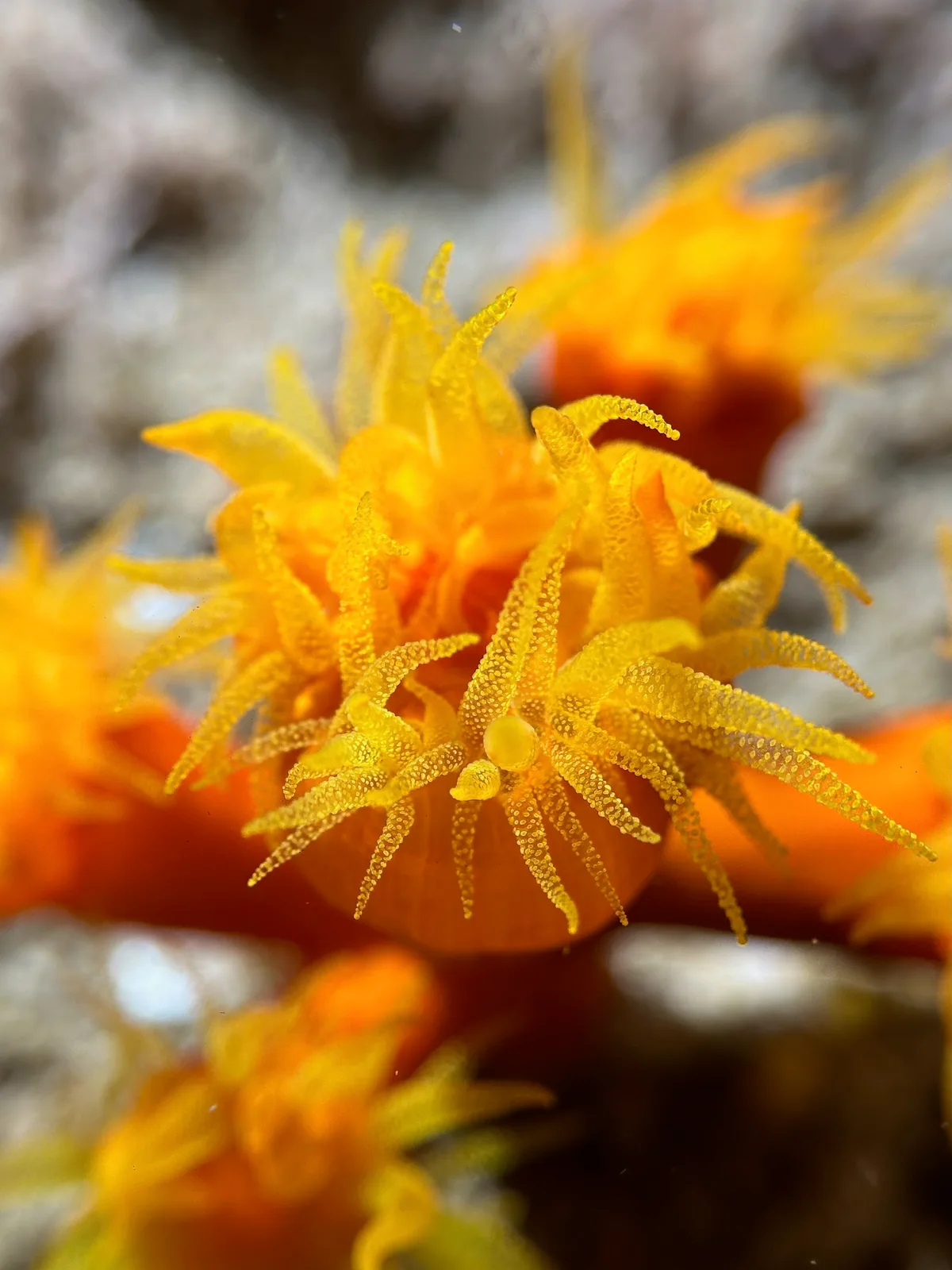
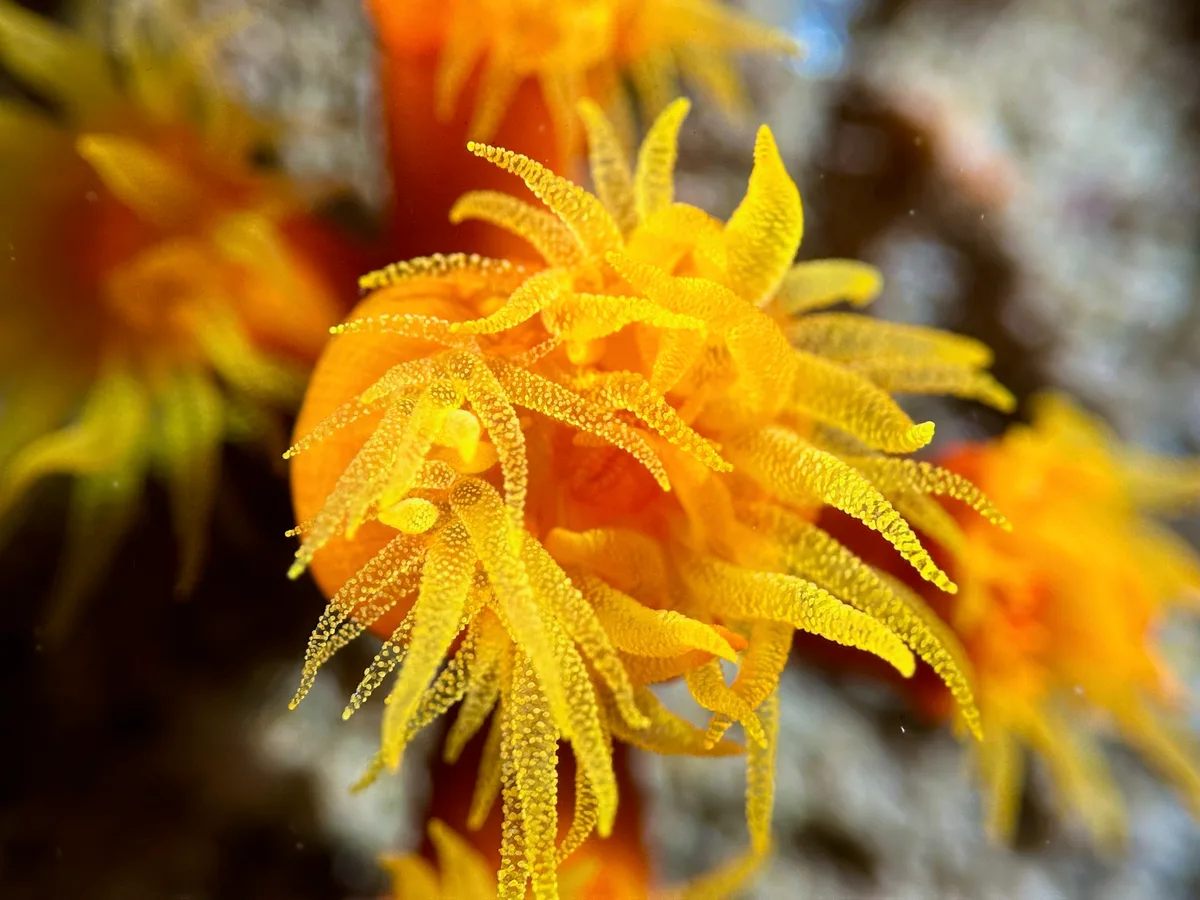
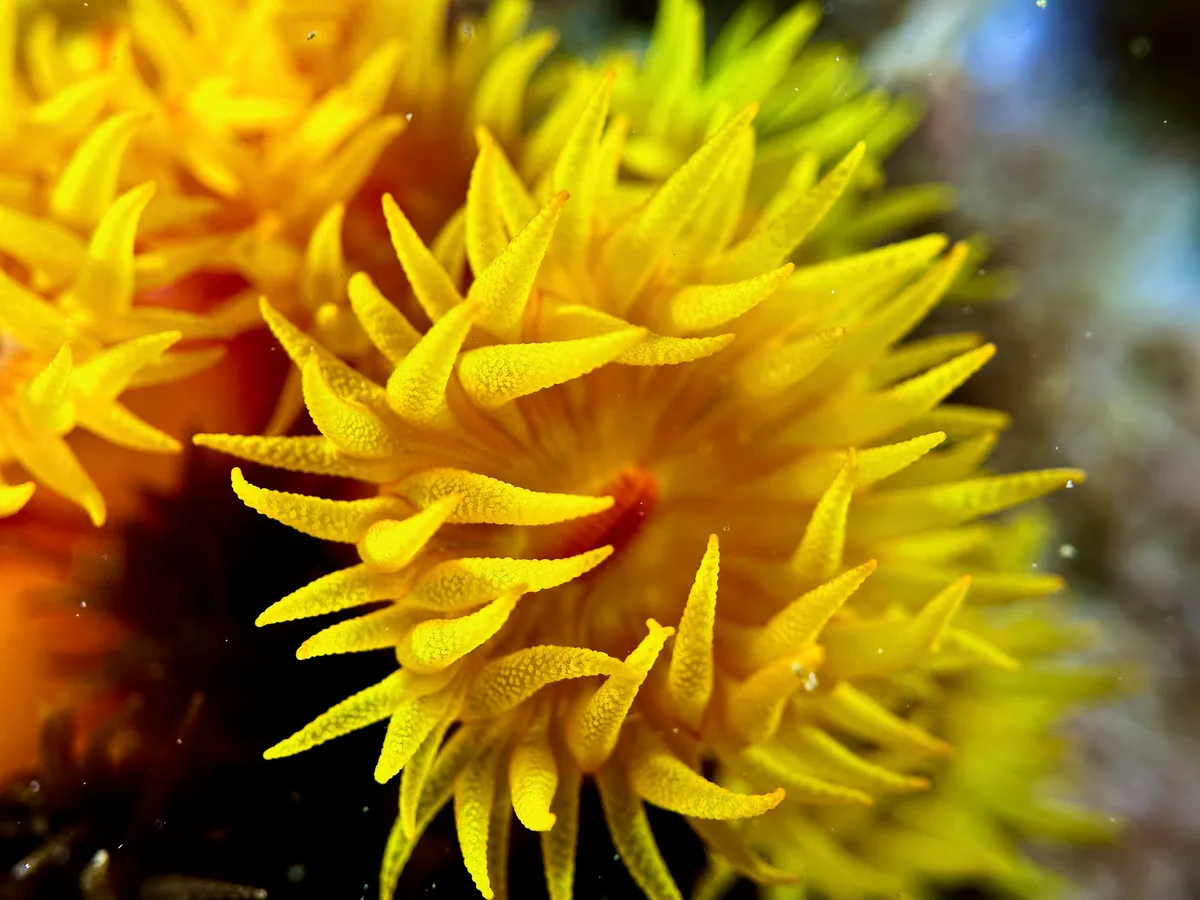
Tubastraea coccinea, known as Orange Cup Coral, forms colonies of tightly clustered, cylindrical corallites. Each polyp, when extended, measures 1-2 cm (0.4-0.8 in) in diameter and displays a bright orange to yellow-orange coloration. The colony's overall size can reach up to 30 cm (12 in) in diameter. Polyps are typically retracted into their stony skeletons during daylight hours, appearing as small, dark cups, but extend their numerous stinging tentacles for feeding at night or in low light conditions. Unlike most reef-building corals, this species is azooxanthellate, meaning it lacks symbiotic algae and does not rely on sunlight for energy.
This coral typically inhabits shaded environments such as cave ceilings, deep overhangs, and vertical reef walls, occurring from depths of 3 m (10 ft) down to at least 40 m (130 ft). Its independence from sunlight allows it to thrive in these dark, nutrient-rich locations. T. coccinea is a nocturnal feeder, capturing zooplankton with its extended tentacles when currents bring food particles within reach. Though found in various tropical waters globally, its presence in the 🌊 Red Sea is considered less common than in some other regions.
Tubastraea coccinea is gonochoric, with separate male and female colonies. It reproduces by brooding its larvae internally, releasing lecithotrophic planulae that settle rapidly after a short pelagic phase. This reproductive strategy allows for colonization of new surfaces without reliance on external fertilization or long-distance dispersal.
- vibrant bouquet of bright orange tentacles
- tightly clustered and closely spaced corallites
- brilliant neon-orange polyps