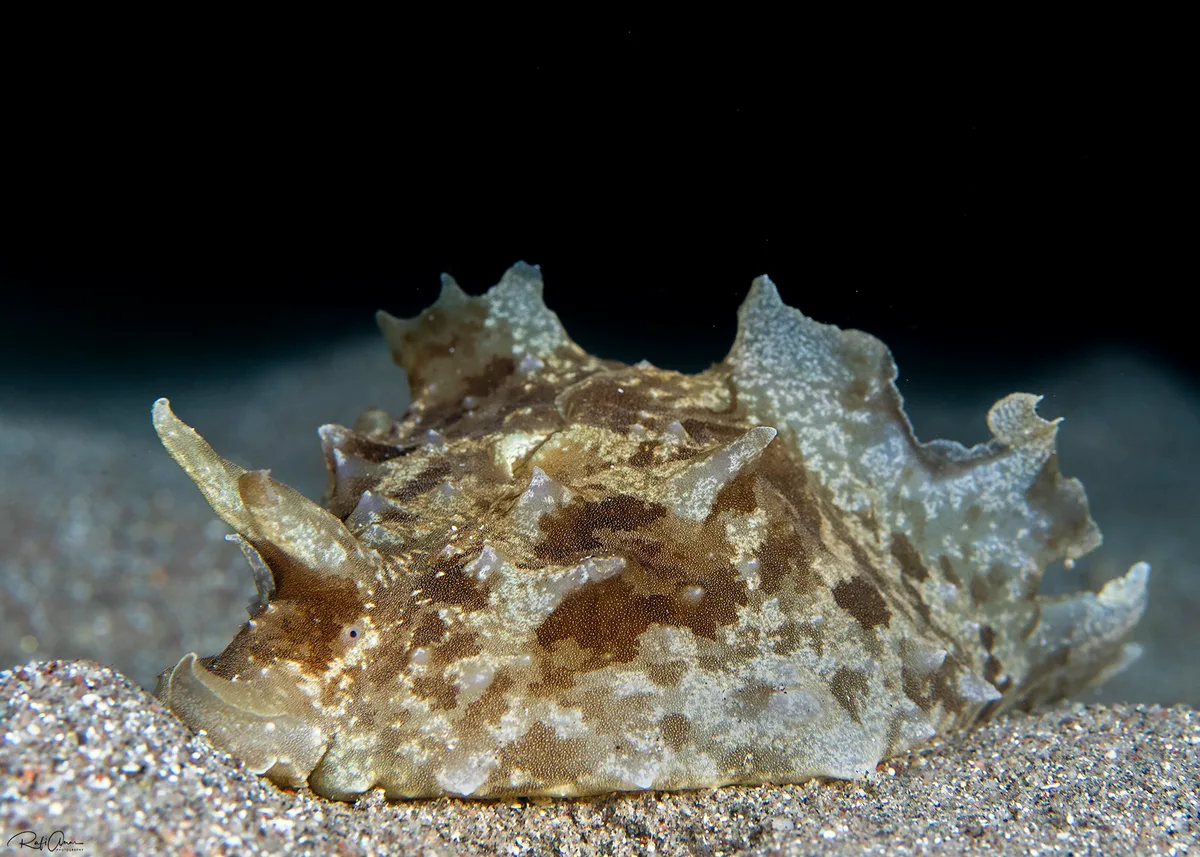
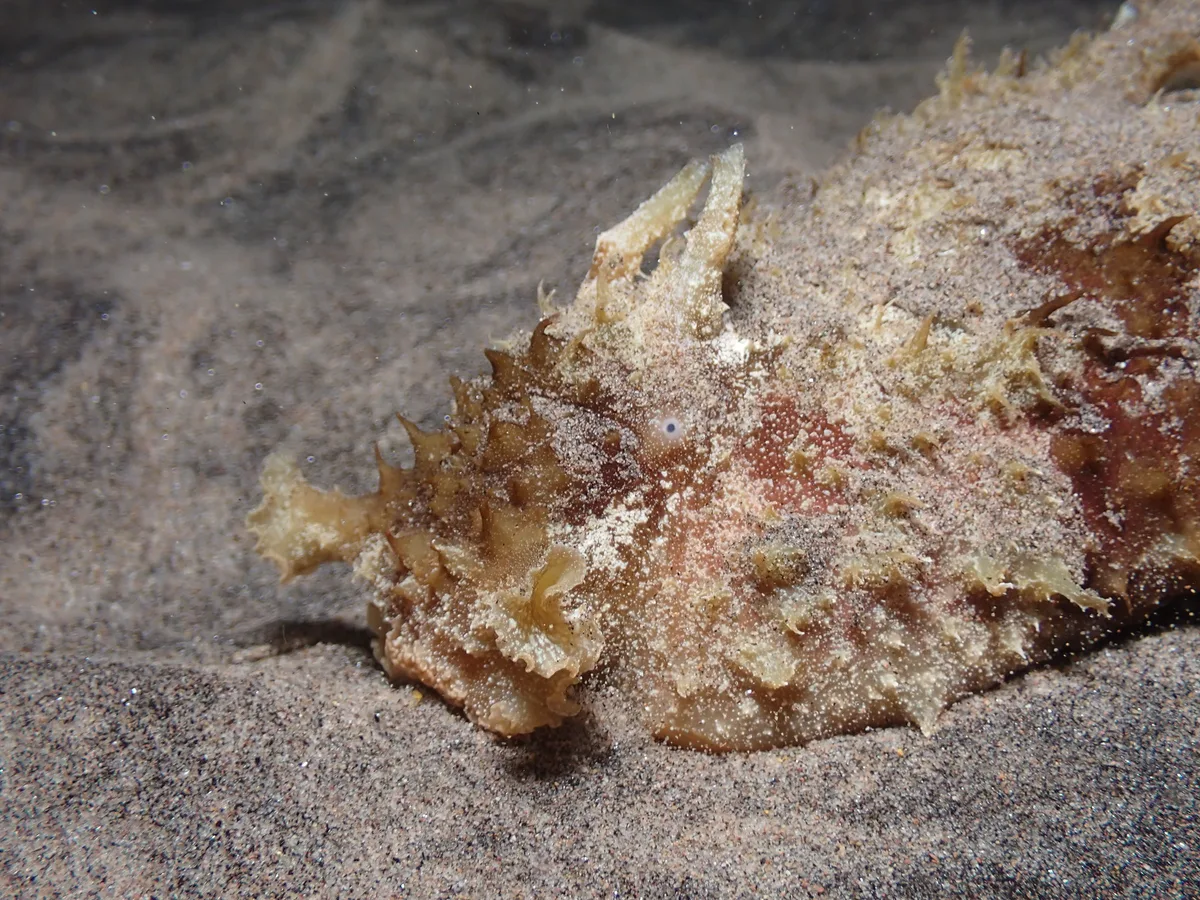
A slab of an animal, up to 50 cm (20 in) and heavy enough to be mistaken for a rock covered in weed. The rear end is cut off flat into a broad disc, the skin is a mess of tubercles and flaps, and the whole thing looks so unlike a snail that most people who find one have to be told what they are looking at.
It plows through sheltered lagoons and algae flats, grazing steadily, and leaves its eggs behind in tangled strings of orange or green noodles that are far easier to spot than the animal itself. A single mass can hold millions of eggs, and finding one usually means the parent is somewhere within a meter or two.
It is also a chemist's animal. Compounds isolated from this species - the dolastatins - became the basis of an approved anticancer drug, one of the clearest cases of marine natural-product research reaching an actual clinic. The molecules originate with cyanobacteria the sea hare eats and concentrates, which is the same trick it uses for its color and its defense.
- huge greenish-brown body ending in a broad flat disc at the rear
- skin covered in tubercles and skin flaps, looking like a lump of weed
- leaves tangled orange or green egg strings on the bottom
- length up to 50 cm