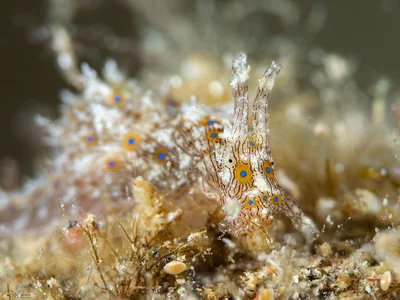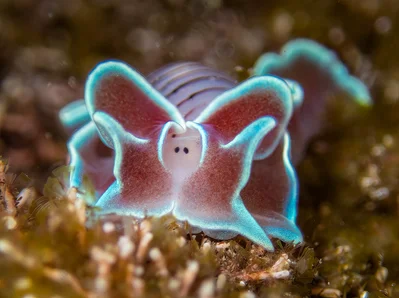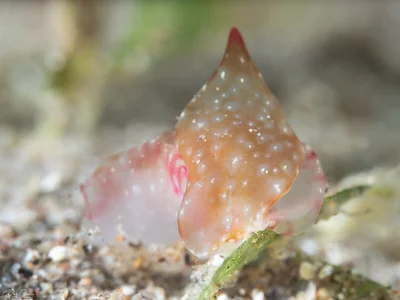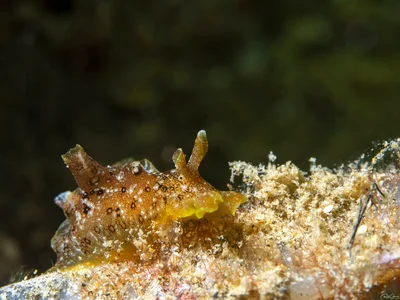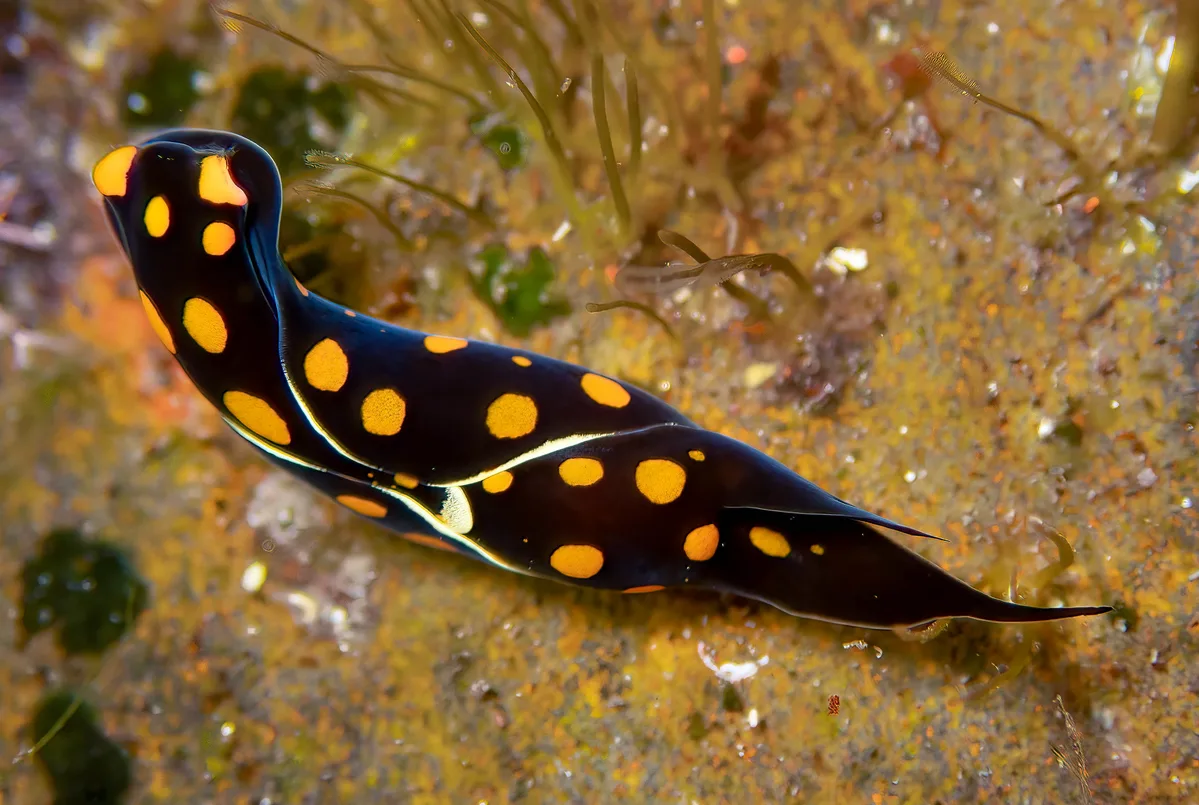
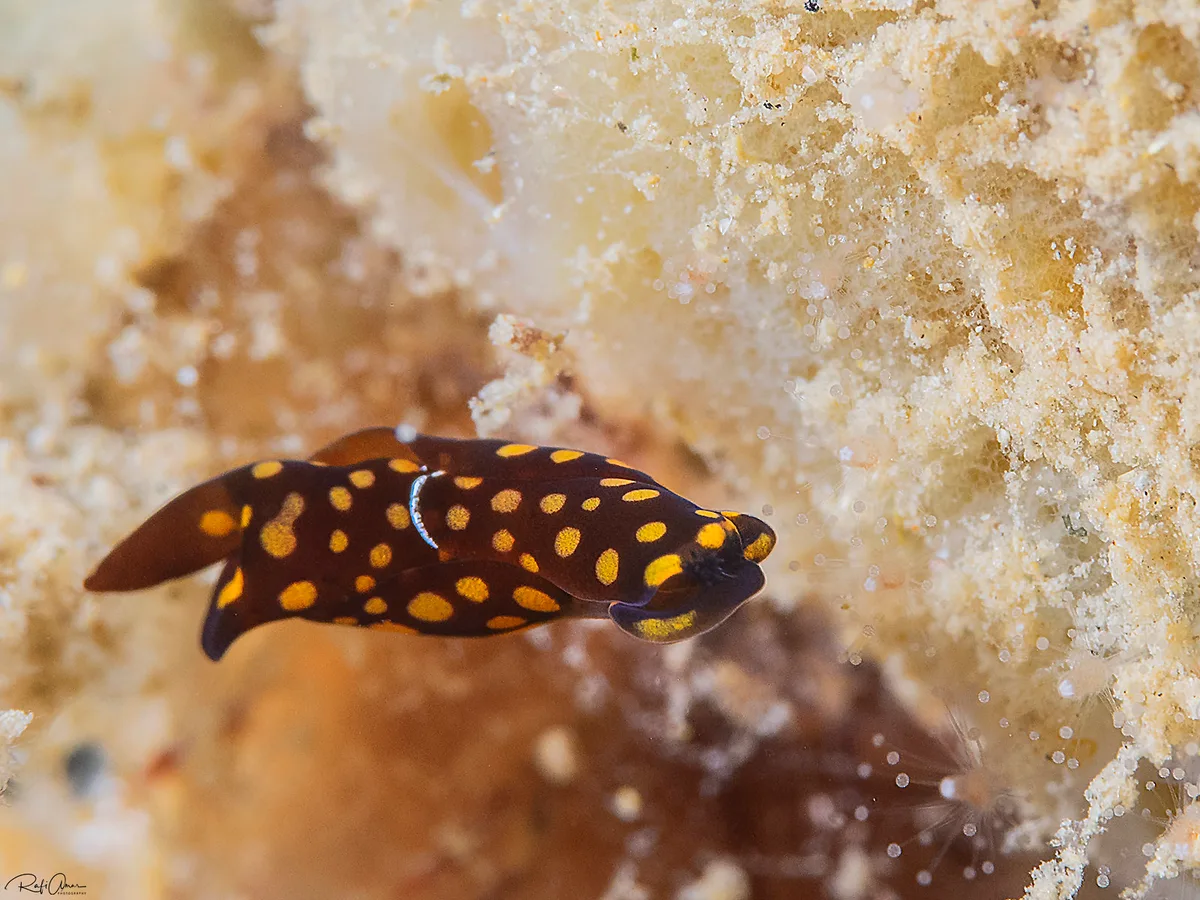
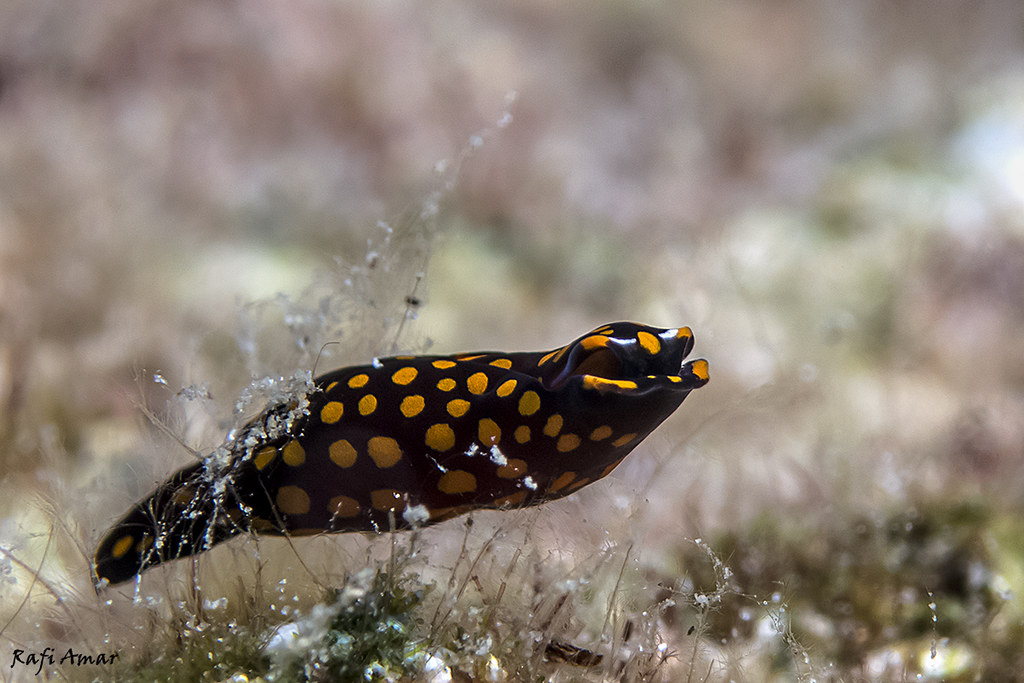
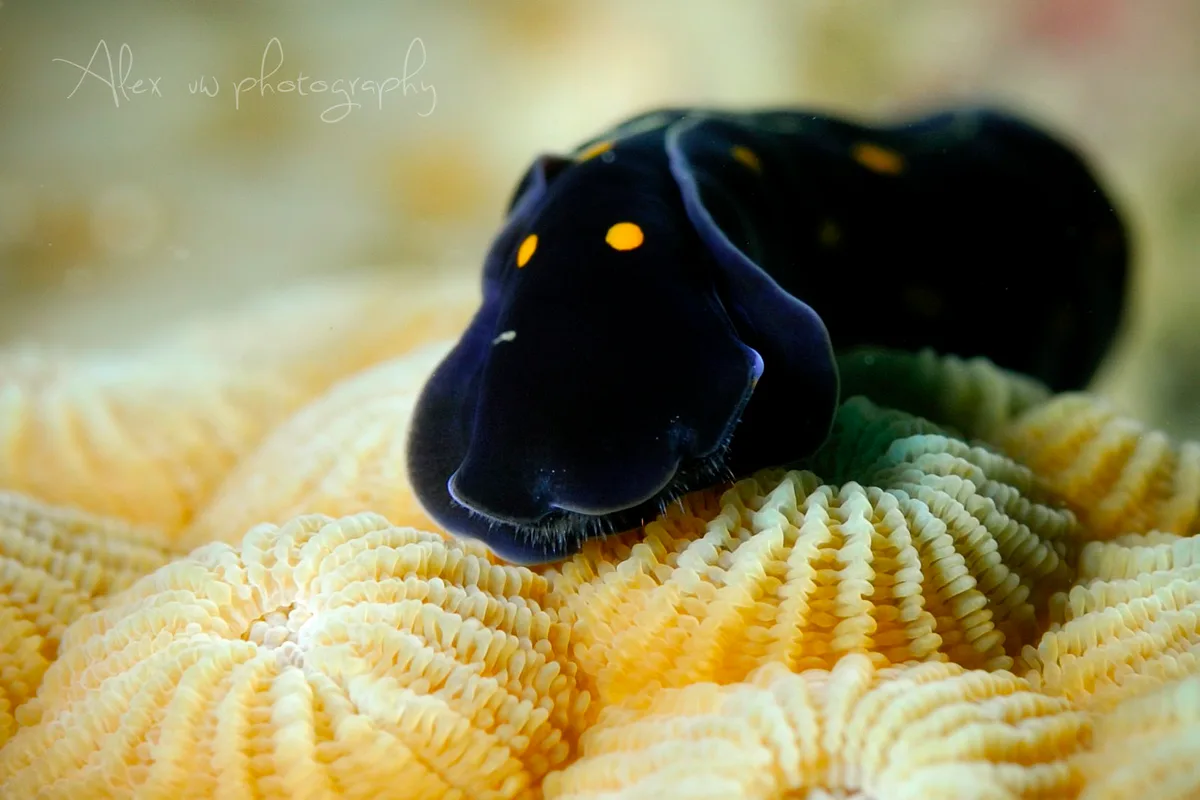
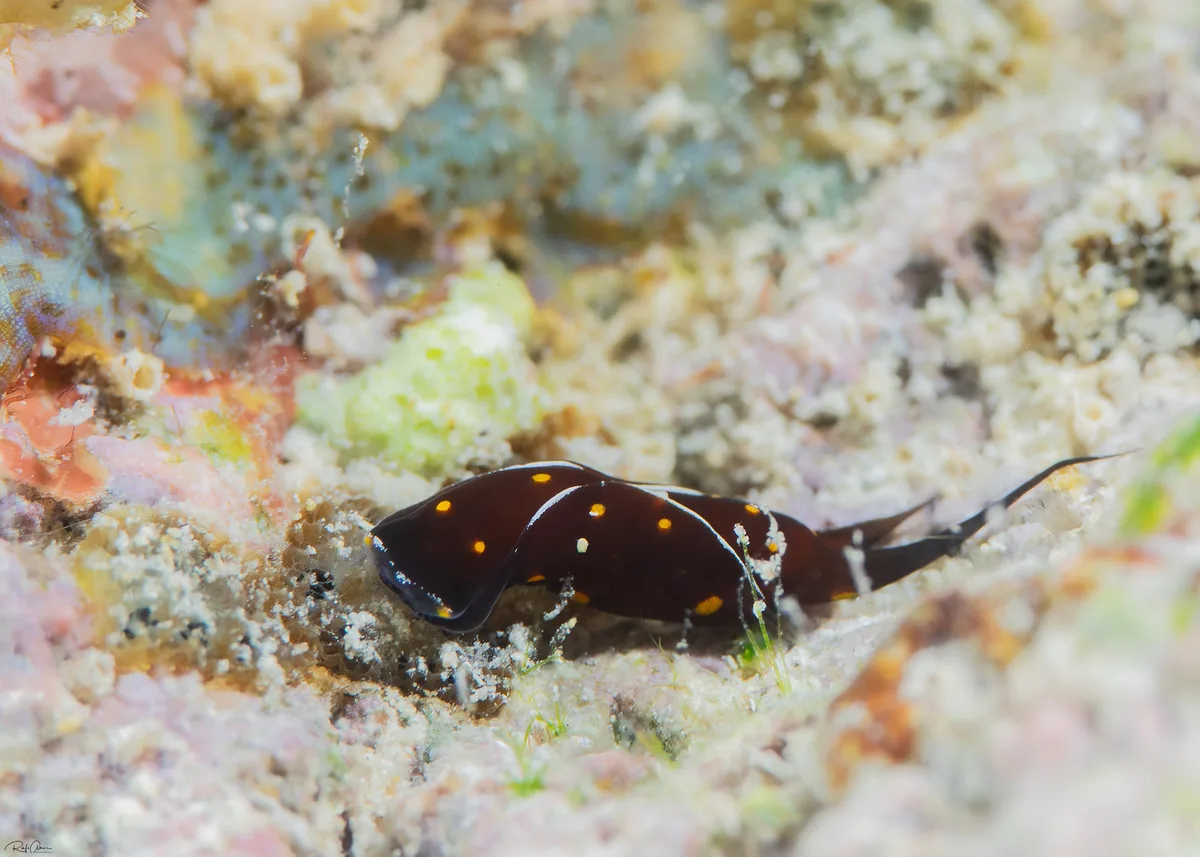
Black, scattered with small round white to pale blue spots, and outlined along the shield and lobes with a fine blue-white line. Up to 4 cm (1.6 in), and unmistakable against pale sand, which is where it spends its time.
The design is a warning rather than camouflage. Aglajids are not armored and cannot retract into anything, so they advertise instead: this family produces defensive compounds in the skin, and the black-and-white pattern shows up repeatedly across unrelated members of it, which is the signature of a shared warning signal rather than shared ancestry.
Eliot described it in 1903, in a period when British naturalists were working through 🌊 Indian Ocean collections at speed and this genus in particular was accumulating names faster than anyone could sort them. Several of those names have since collapsed into each other; this one held up, and the animal is now known across the Indo-Pacific with a solid population here.
- black body covered in small round white to pale blue spots
- pale blue-white line along the edge of the head shield and lobes
- forked tail with the left lobe drawn out much longer
- length up to 4 cm