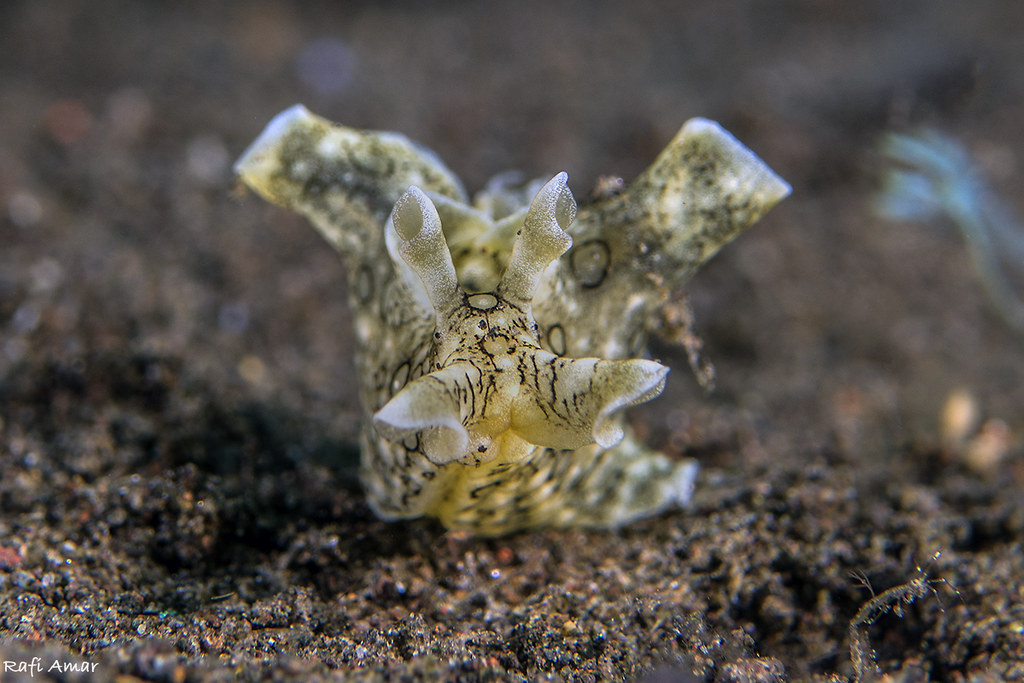
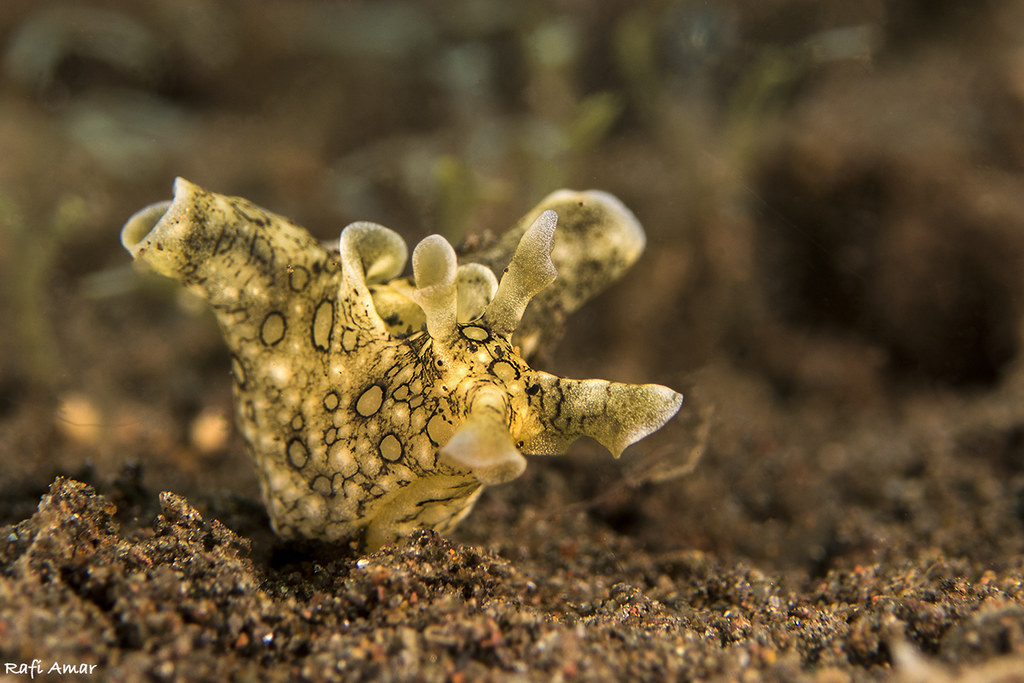
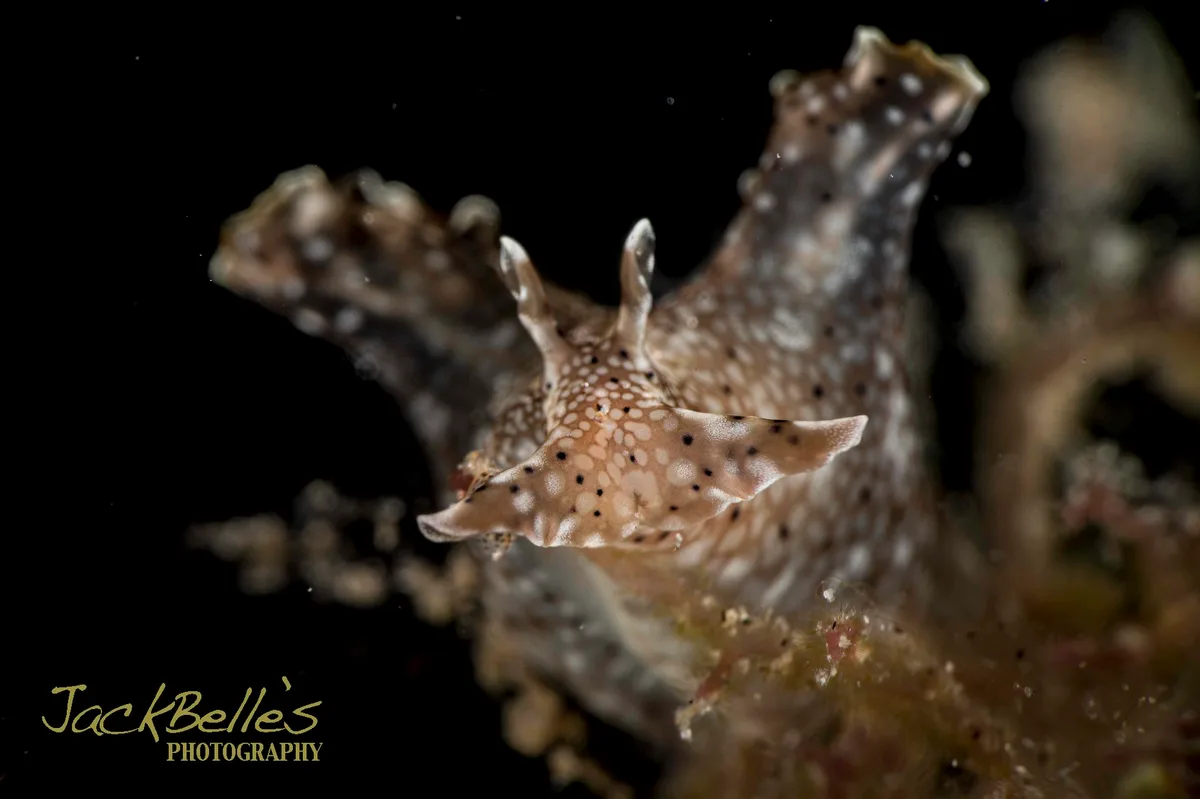
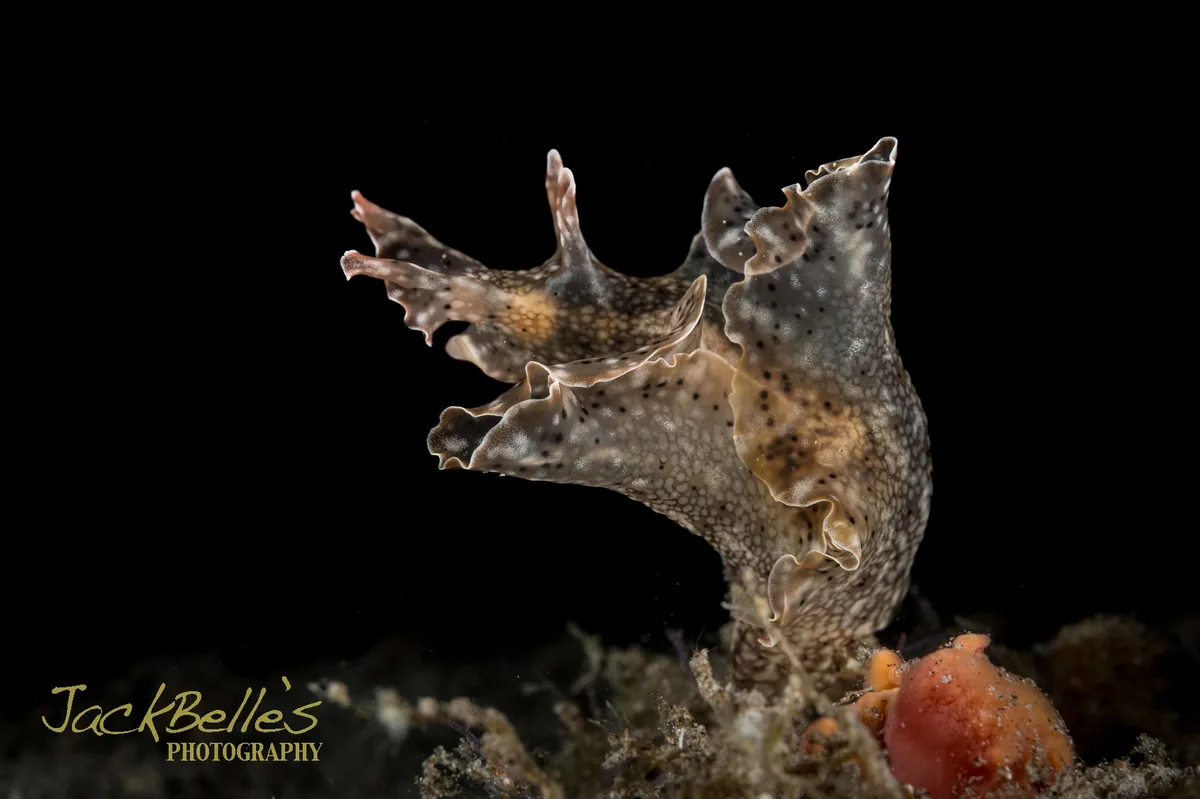
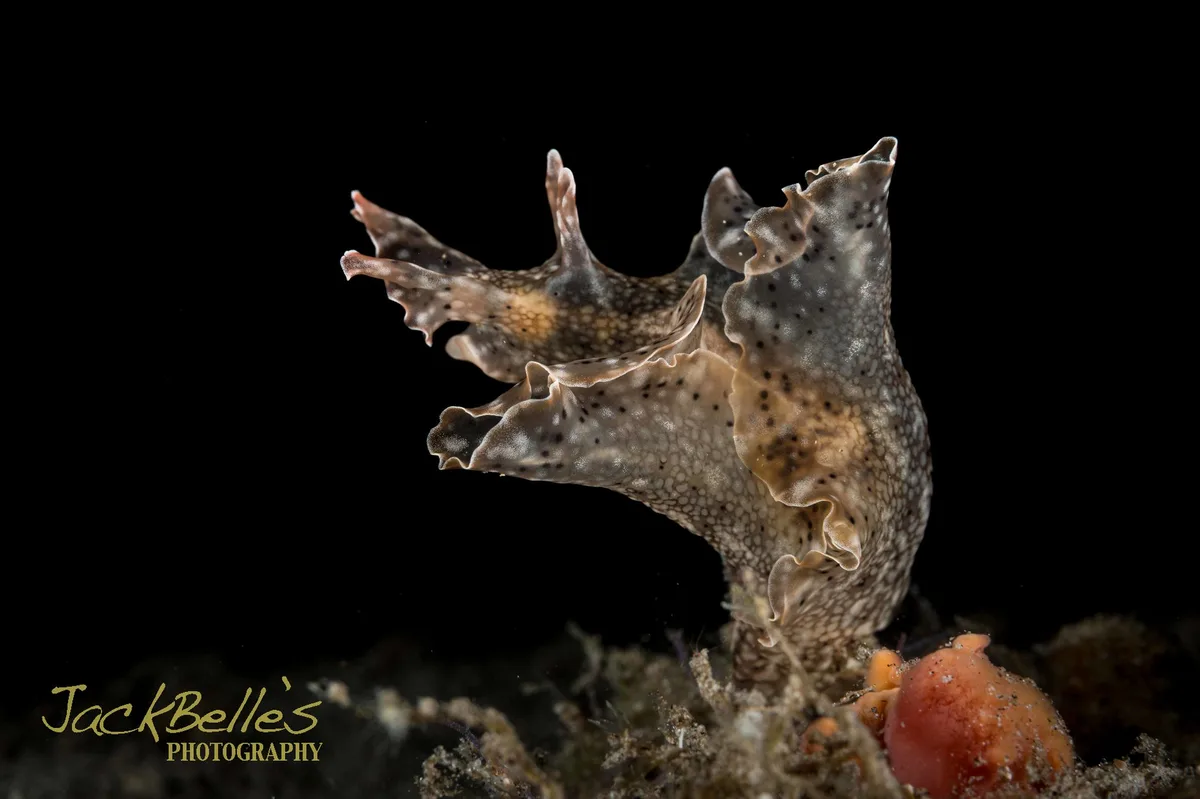
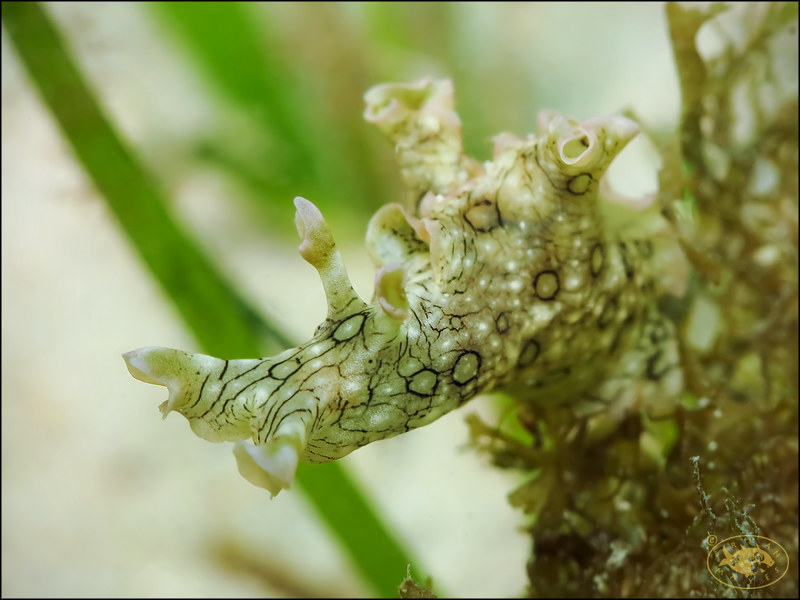
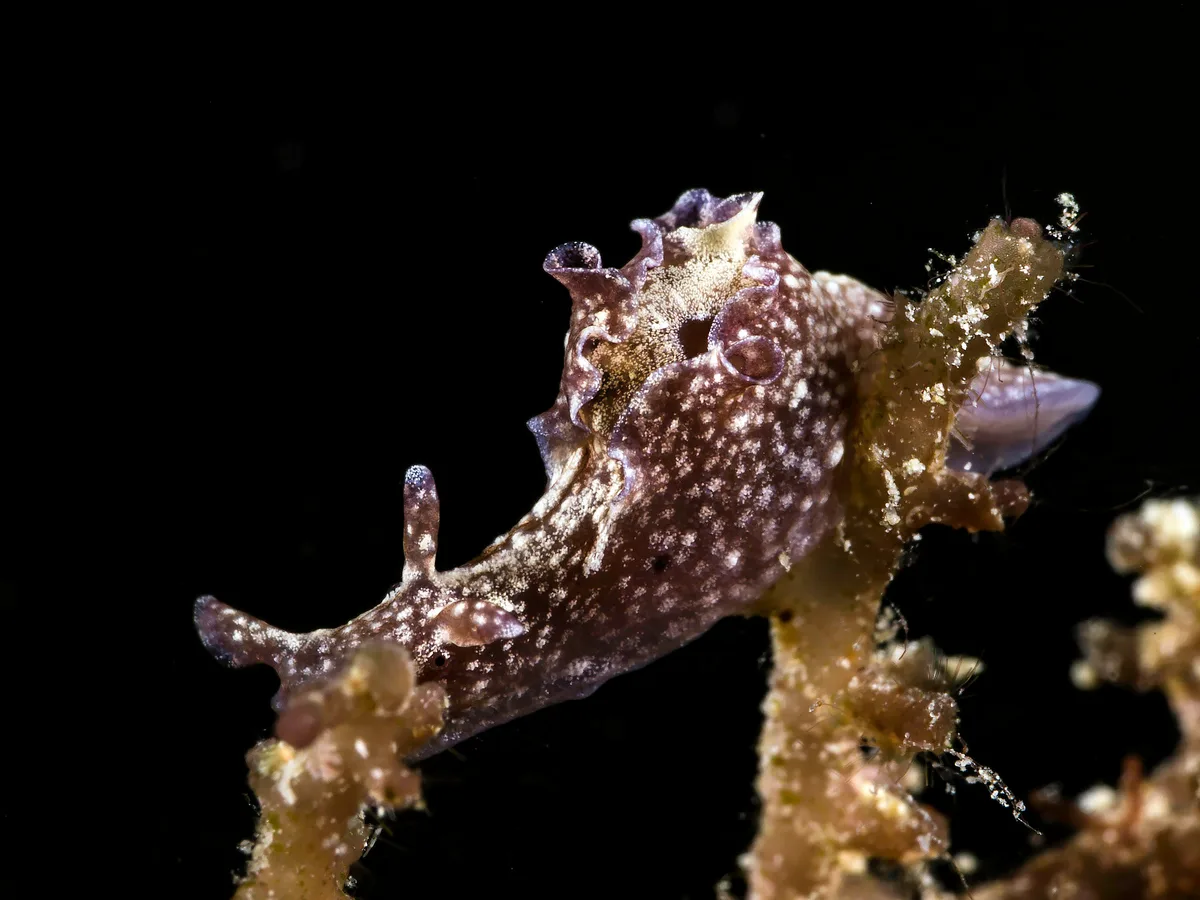
The big one: up to 20 cm (8 in) of soft brown-olive body scattered with large black rings, described from these waters by Rüppell and Leuckart in 1830. It hauls itself over shallow rock grazing red algae, and at that size it is one of the few molluscs a snorkeler notices without being told to look.
The flaps along its back are not decoration. Sea hares can flap them like wings and swim in short, clumsy bursts, usually to get off the bottom when something is bothering them. It is not fast and it does not last, but it works often enough to be worth having.
Mating is a spectacle in this genus. Every animal is both male and female at once, and they form chains: the one in front acts as female, the one behind as male, and each animal in the middle does both jobs at the same time. Chains of half a dozen animals are on record, which is efficient, if not dignified.
- large heavy-bodied sea hare, to 20 cm
- big black rings scattered over a brown to olive body
- broad parapodial flaps that can be used to swim in short bursts
- grazes red algae on shallow rock