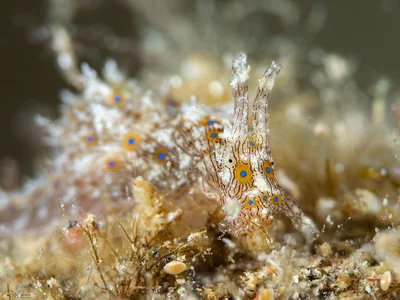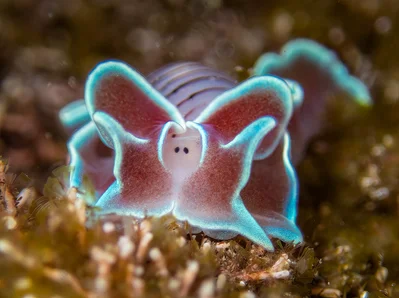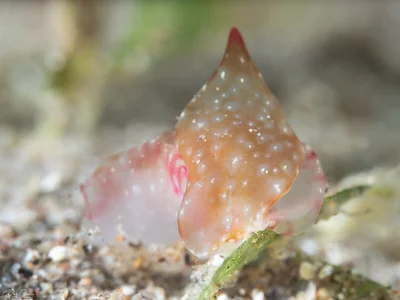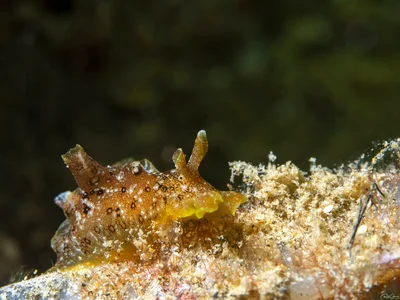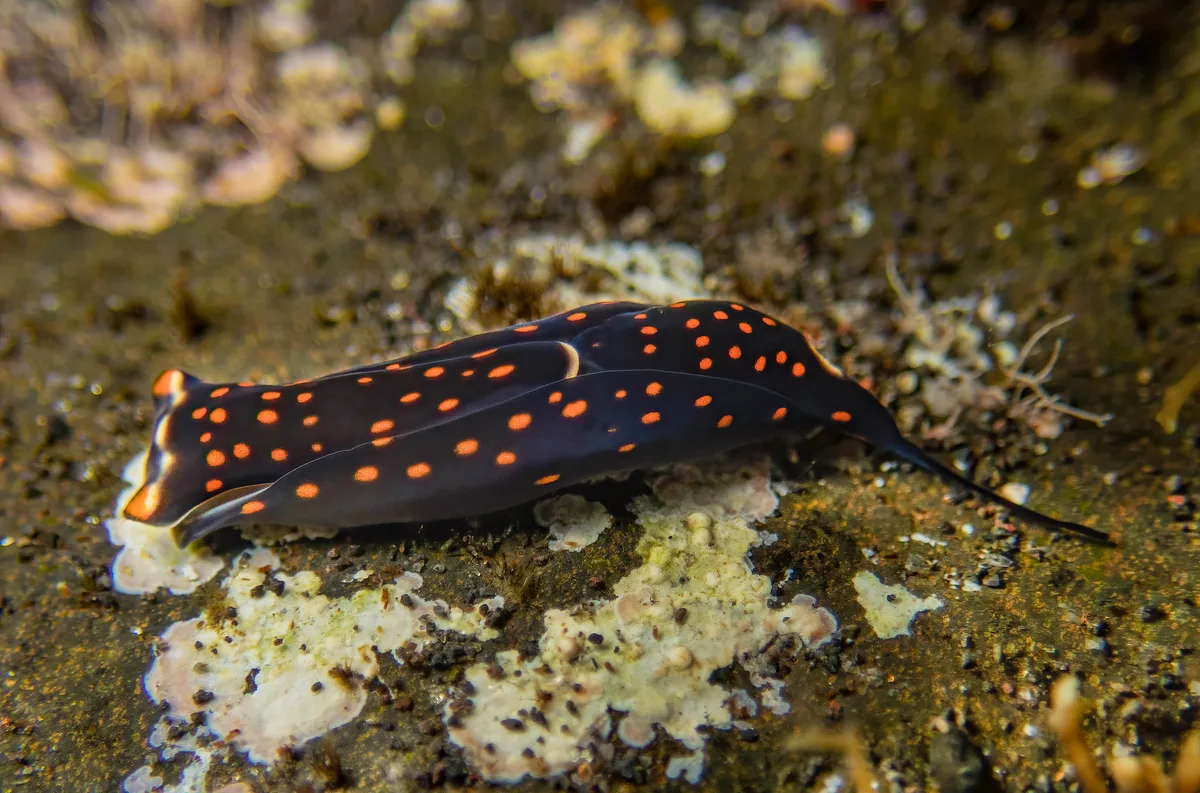
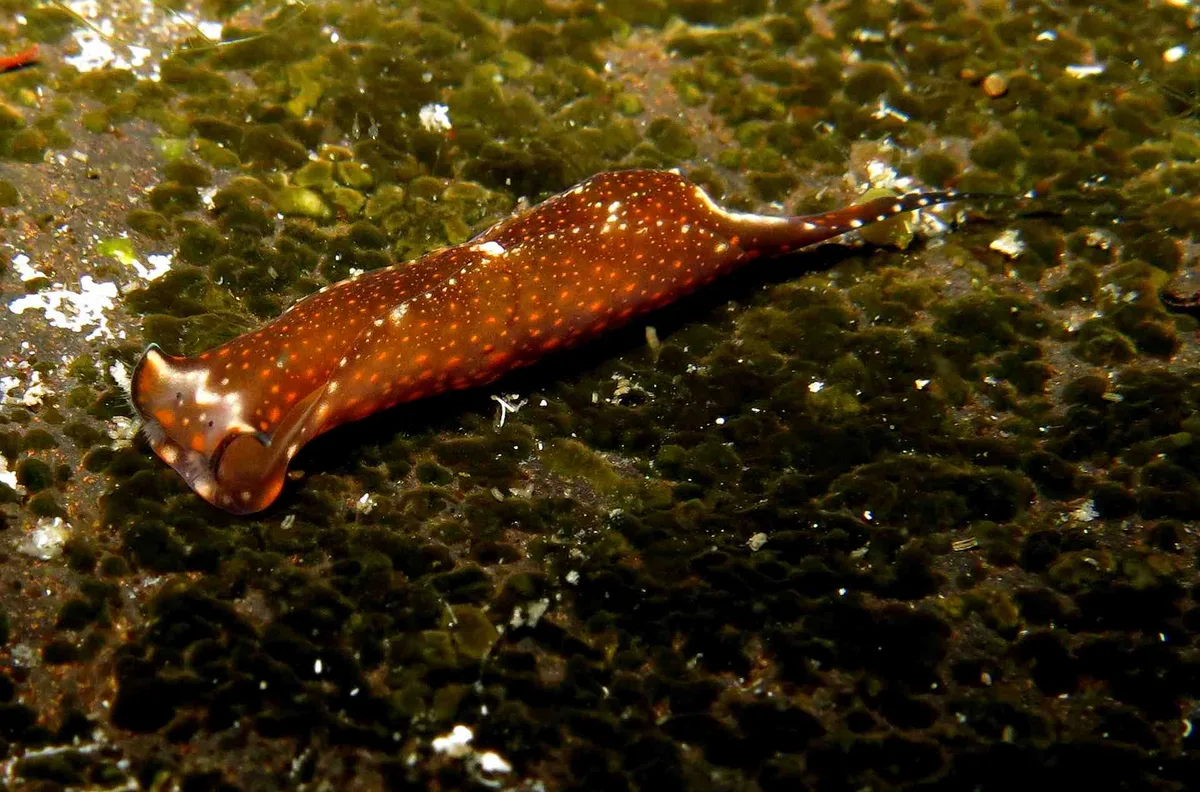
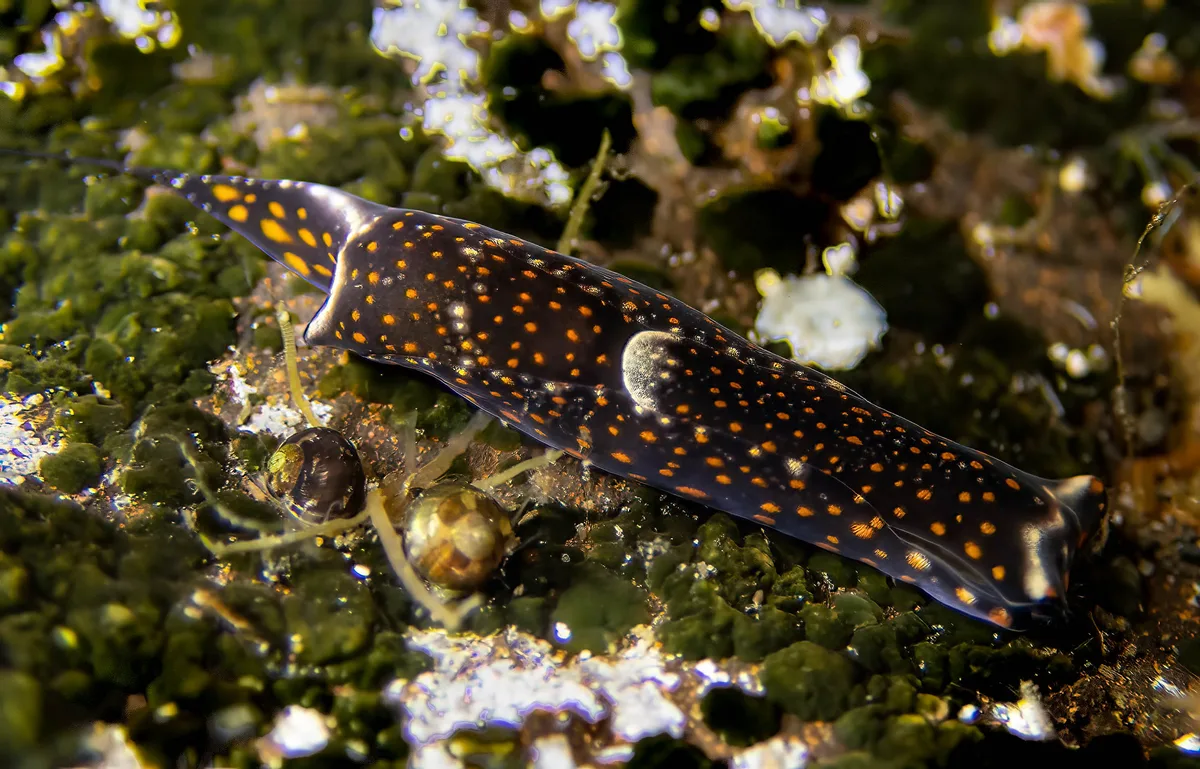
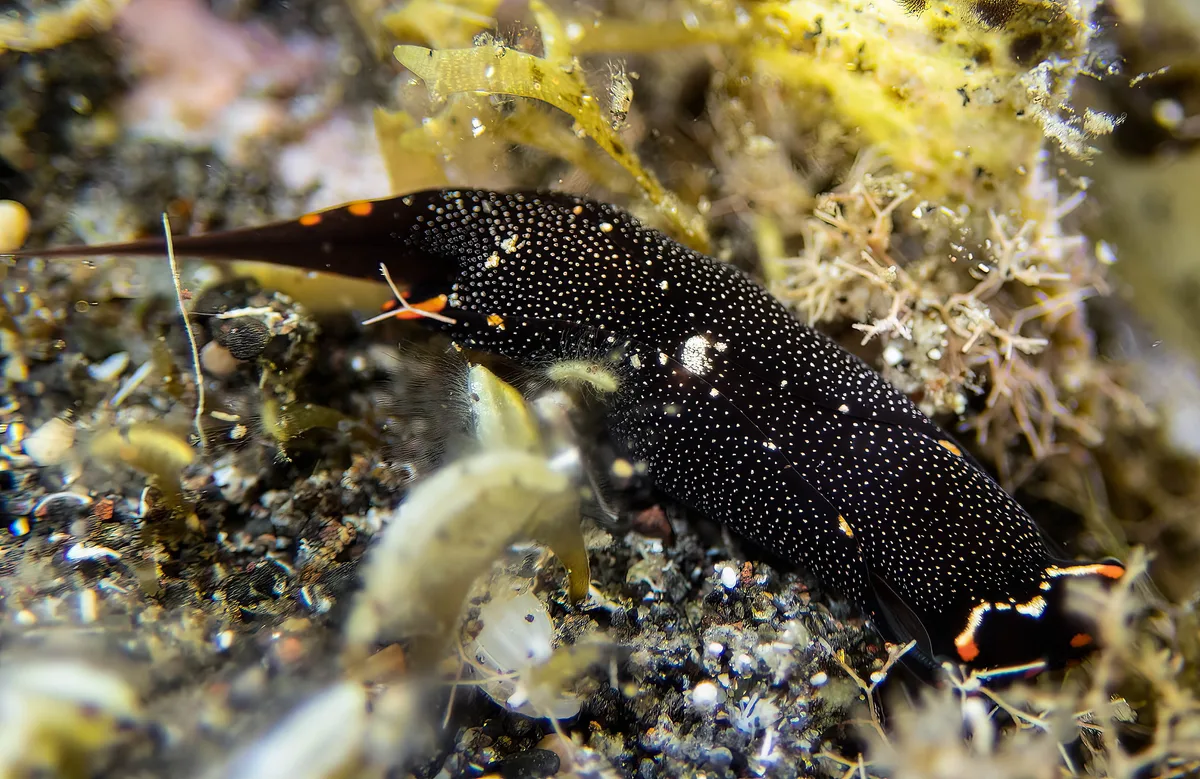
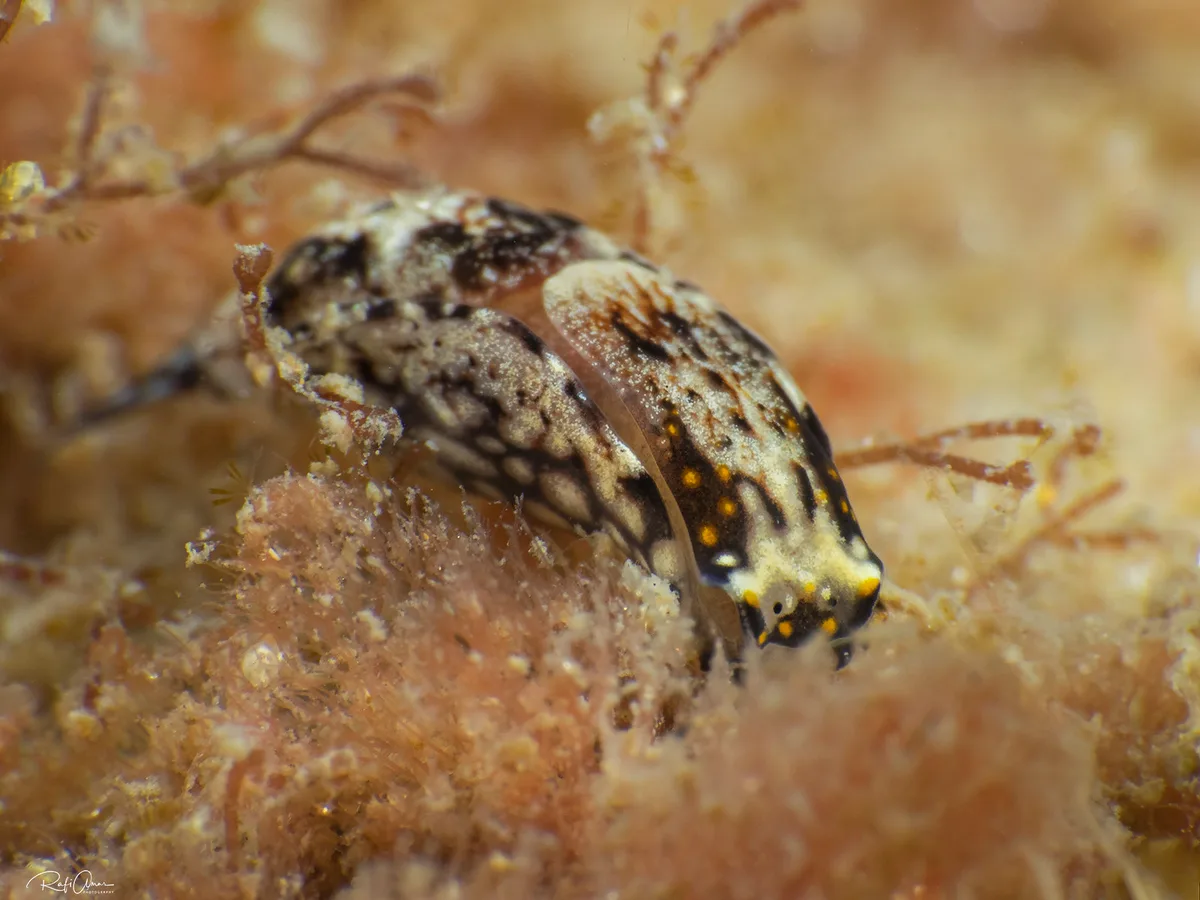
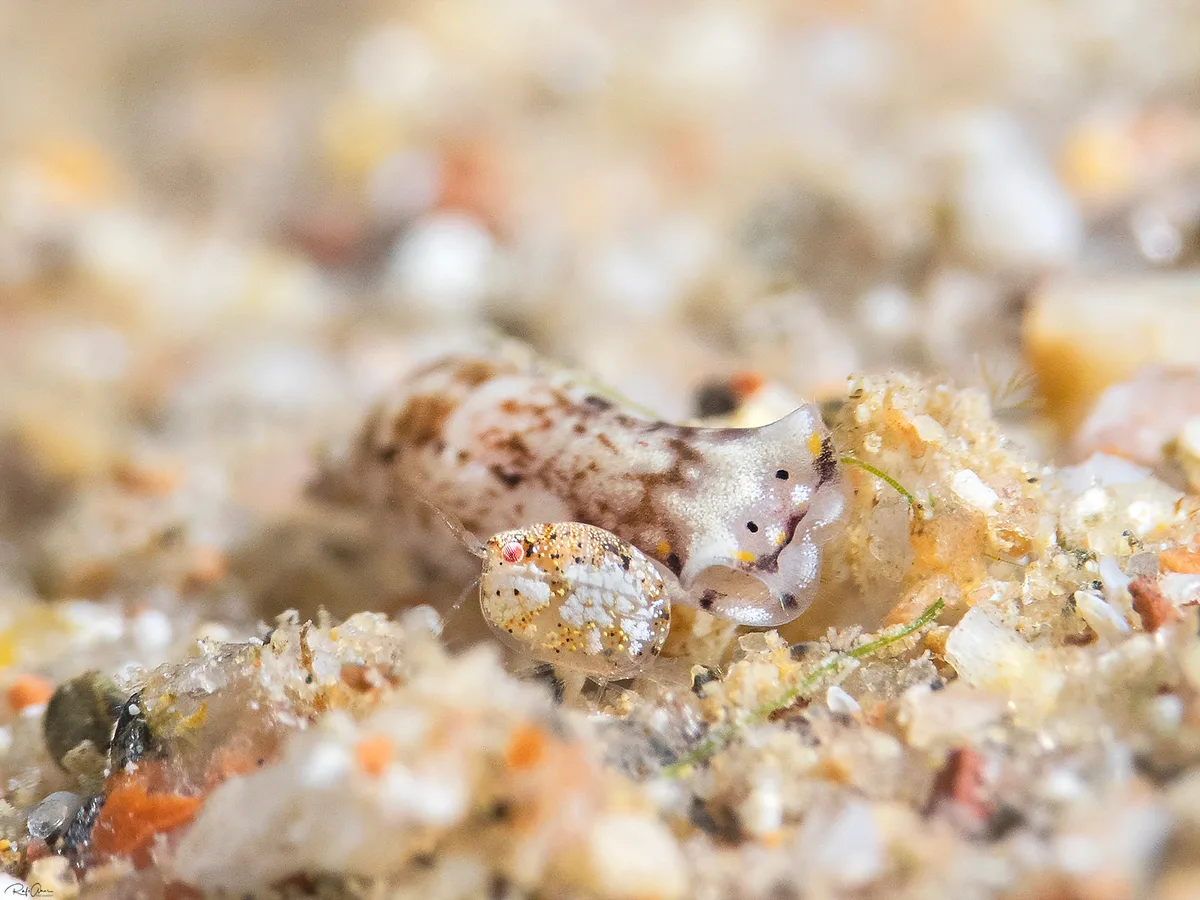
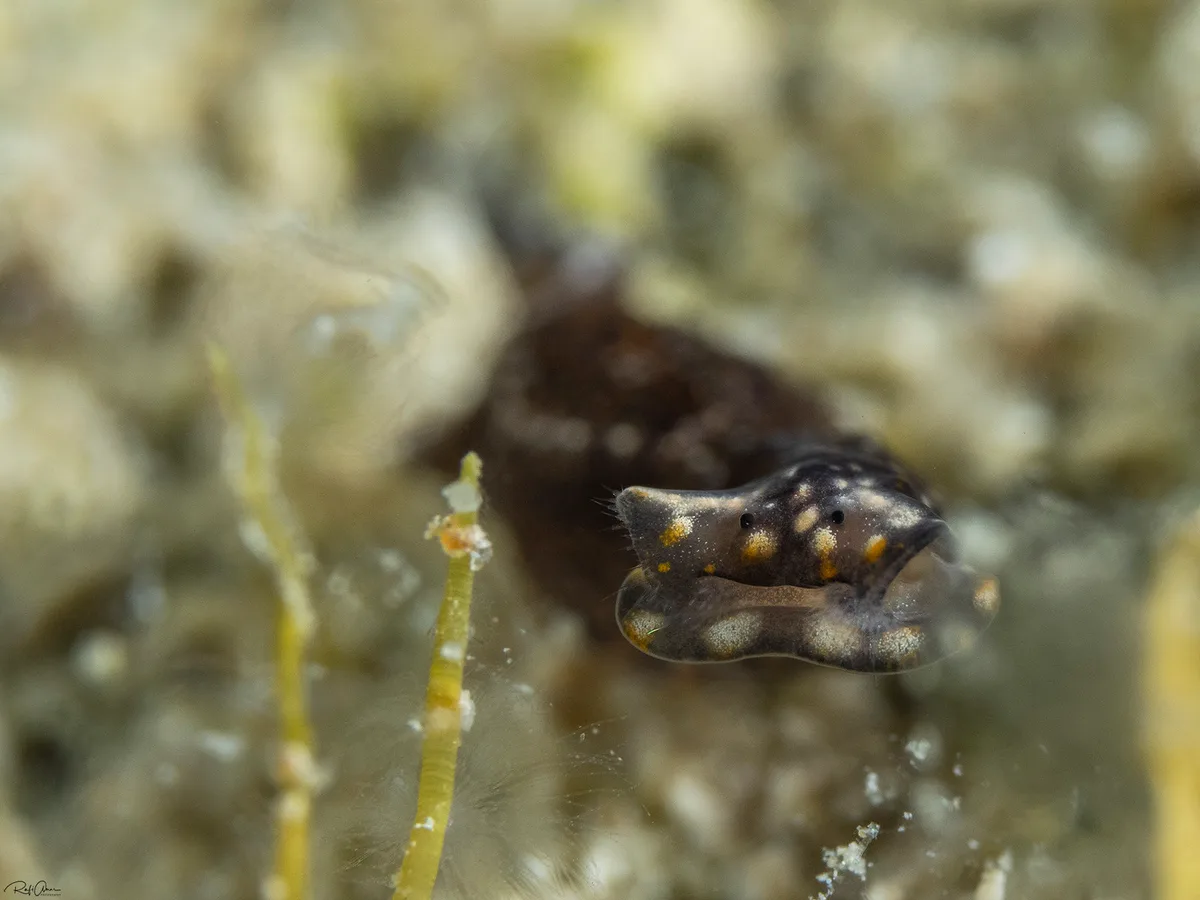
A small brown to olive slug, no more than 3 cm (1.2 in), dusted with orange and white specks and finished at the back with a tail split into two lobes of unequal length. That asymmetric tail is the quickest way to tell this whole group from anything else crossing the sand.
It hunts flatworms, specifically the tiny acoels that graze film on sand and rock, and it finds them by following their slime. The groove along the front of the head shield is lined with chemical sensors, and a hunting slug sweeps it side to side over the bottom like a metal detector, locking onto a trail and running it down. When it catches up, the prey is swallowed whole.
The name changed recently and the animal did not. For decades this was a Chelidonura; molecular work showed the genus was a grab bag of unrelated animals, and this one was moved to Biuve in 2018. Older guides, most photo databases and every dive-center wall chart still call it by the old name.
- small brown to olive slug speckled with orange and white dots
- tail split into two unequal lobes, the left one longer
- flat head shield with a shallow groove along the front edge
- length up to 3 cm