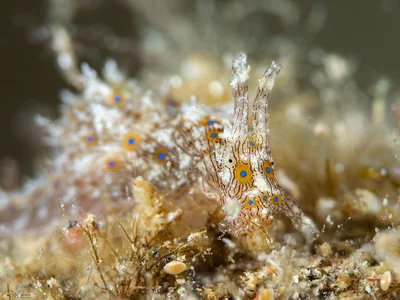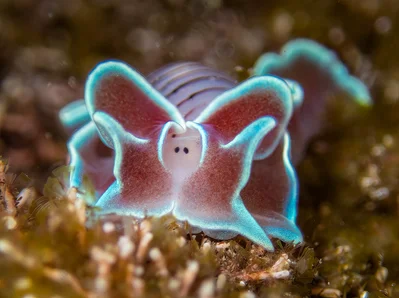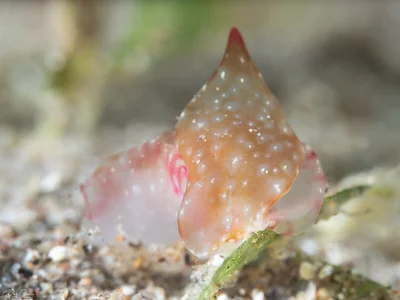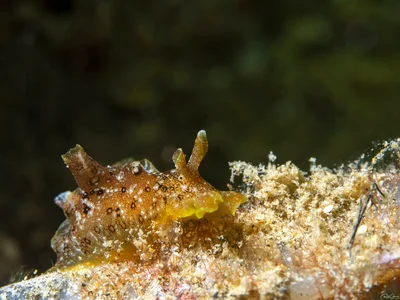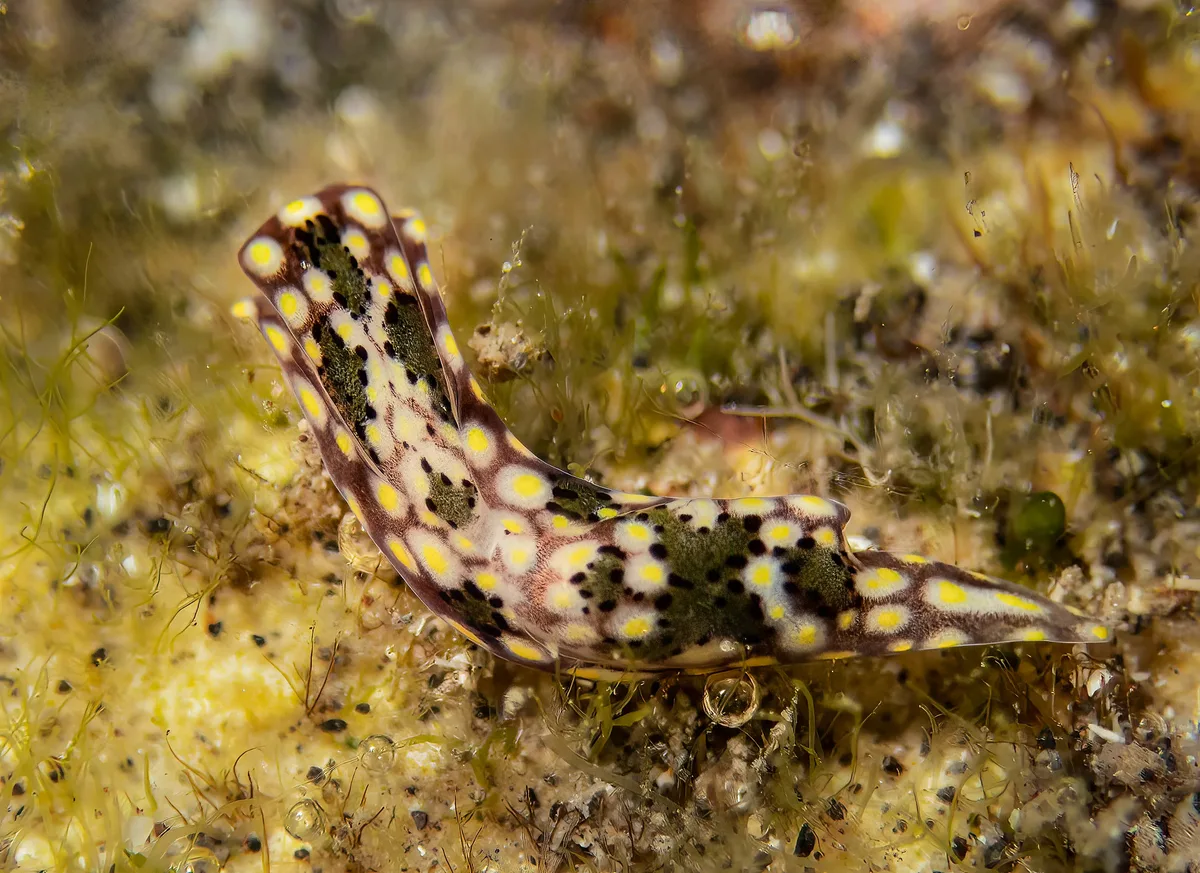
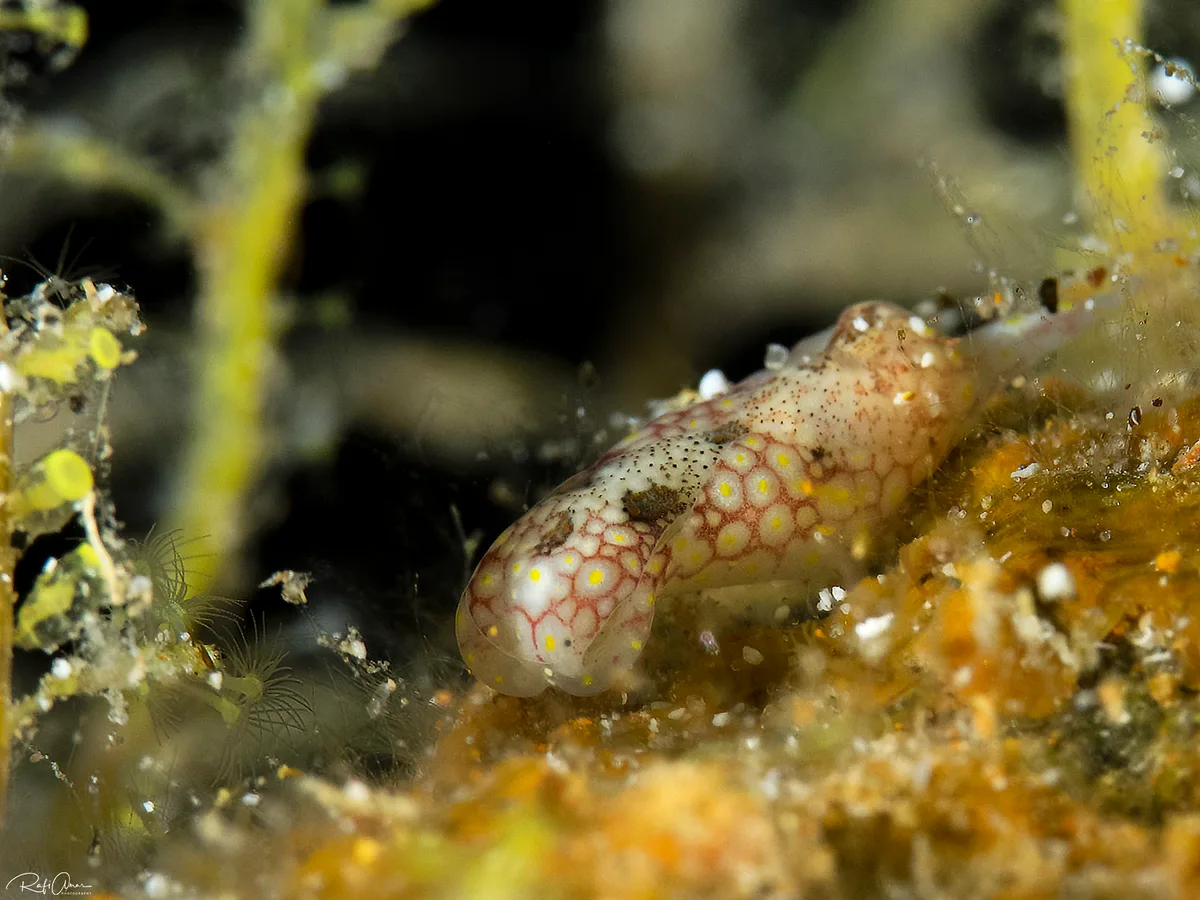
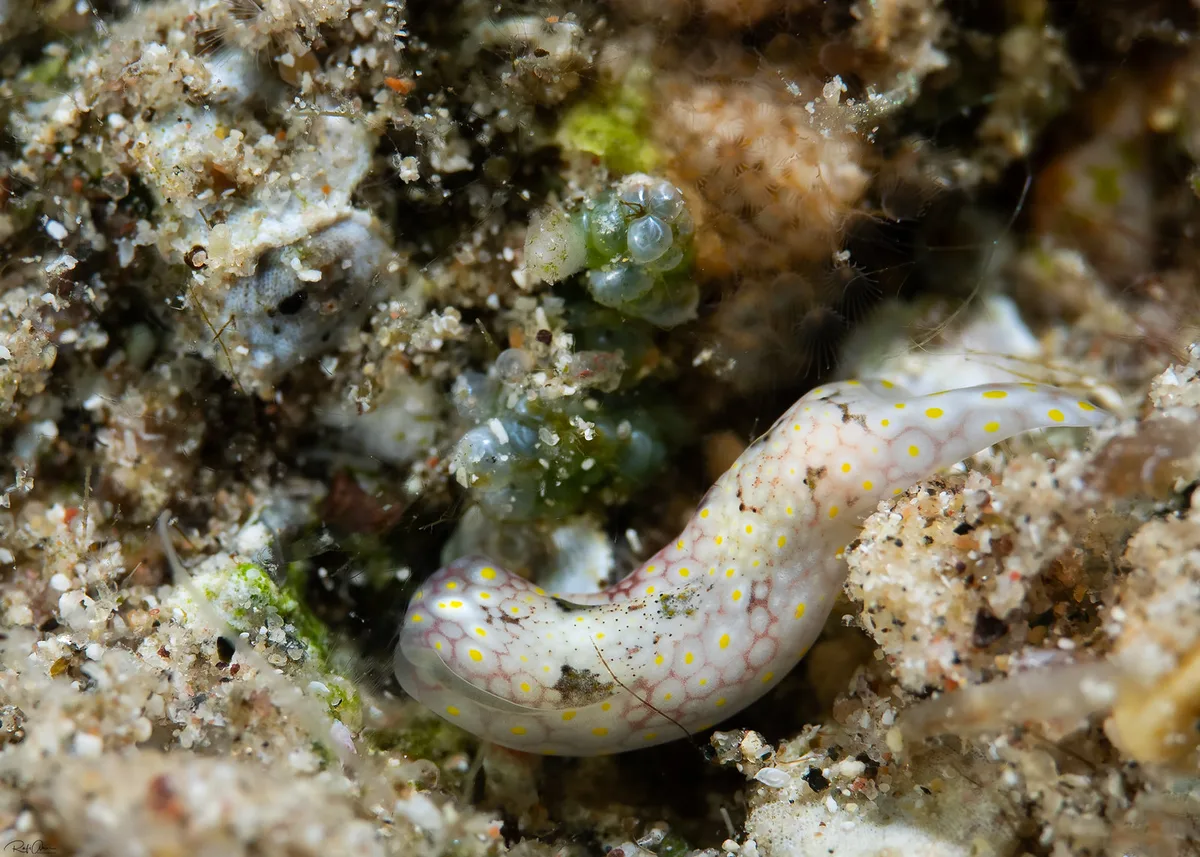
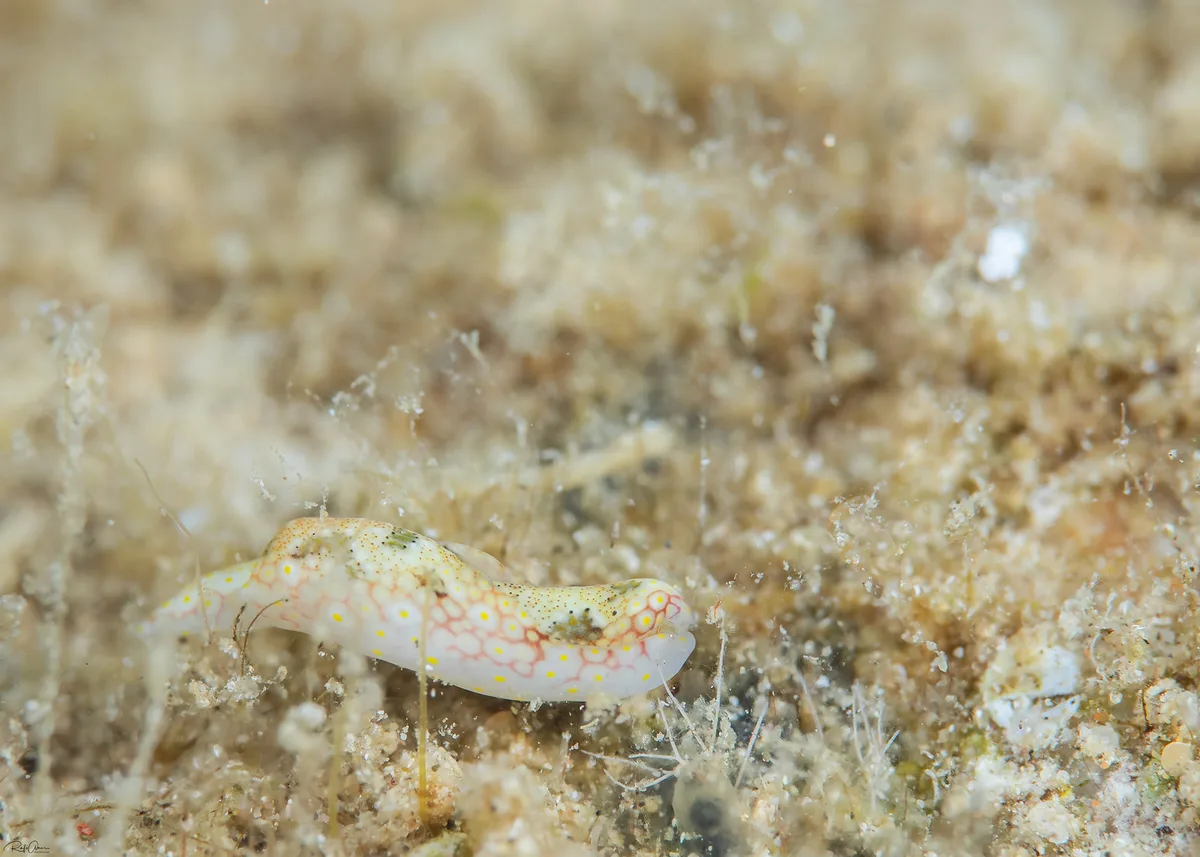
Barely 2 cm (0.8 in) and patterned in a mosaic of pale green, brown and white patches picked out by fine dark lines, which is exactly what the name records. On fine sand in a sheltered bay it disappears completely, and most people find one only after it moves.
The genus name is the interesting part. Odontoglaja means toothed glaja, and it was coined because these animals kept the radula - the rasping ribbon of teeth that almost every other member of the family has lost in favor of swallowing prey whole. In a group defined by abandoning its teeth, this is the one that kept them.
Gosliner described this species in 2011, part of a long-running effort to sort out the Indo-Pacific aglajids using anatomy and DNA together. That the fauna of a heavily dived sea was still producing new named slugs that recently says something about how small and how overlooked these animals are.
- tiny slug patterned in a mosaic of pale green, brown and white patches
- fine dark lines outlining the patches like grouting
- broad flat head shield, body barely 2 cm long
- usually on fine sand in sheltered water