For most of its scientific life this animal sat in a different genus, and the character that put it there was the position of its anus.
Wart slugs are already unusual at the back end. The family gave up the feathery gill rosette that nearly every other large sea slug carries and breathes instead through a row of leaflets tucked under the mantle rim, which leaves the rear of the animal free to be arranged differently from the rest of the order. In some of these species the anus opens on top, at the back of the mantle, where it normally would. In others it opens underneath, on the sole side, and in 1853 that one difference was judged important enough to be worth a genus of its own: Fryeria.
This species went into it, and then spent well over a century being moved around. The synonym list further down this page is the record of that argument - Fryeria pustulosa, Fryeria rueppelii, Phyllidia (Fryeria) rueppelii - and it ended when the character turned out to be a bad guide to relationship. Slugs with a ventral anus were not each other's closest relatives. They had arrived at the same plumbing more than once, independently, and a genus built on it was not a natural group. Fryeria was folded back into Phyllidia, and the animals kept living exactly as before under new labels.
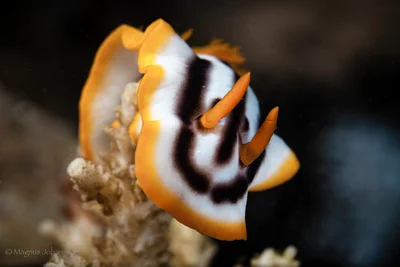
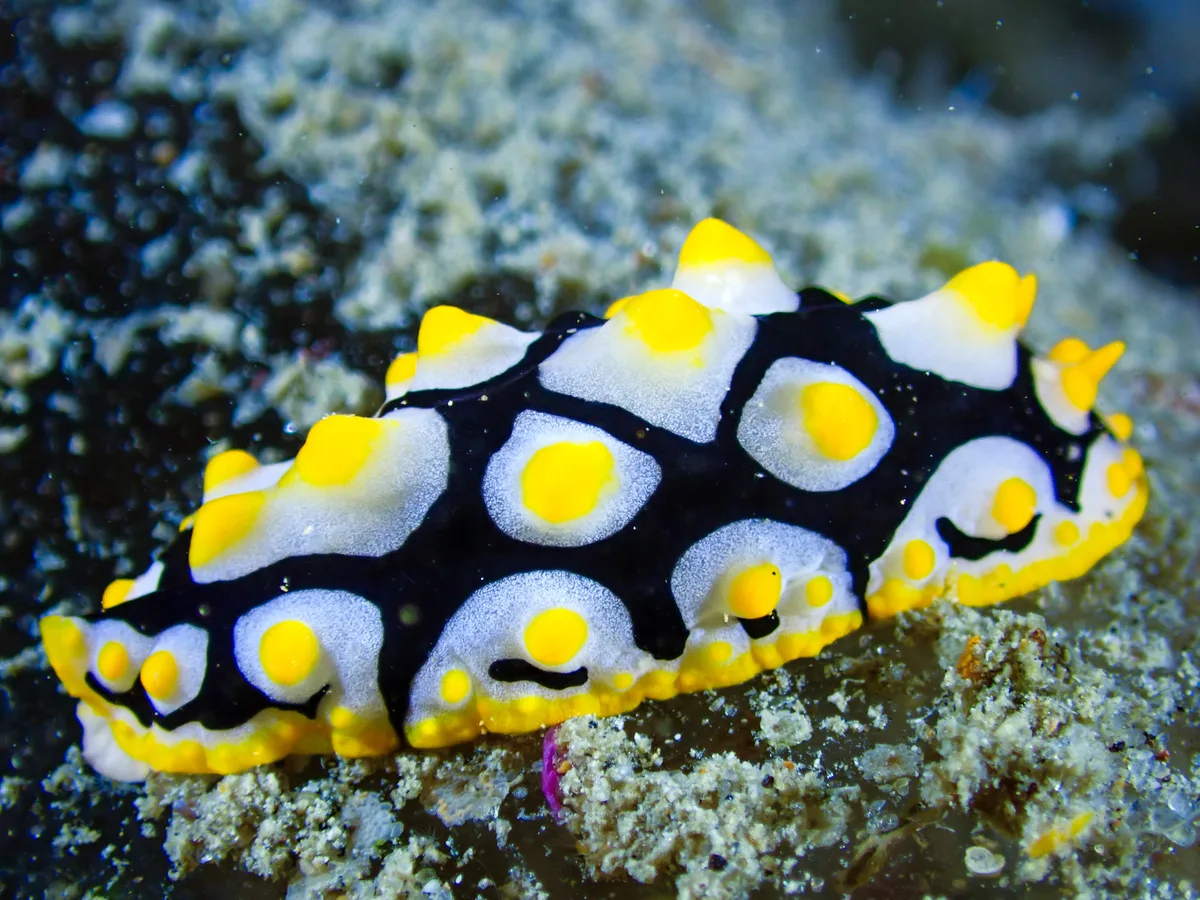
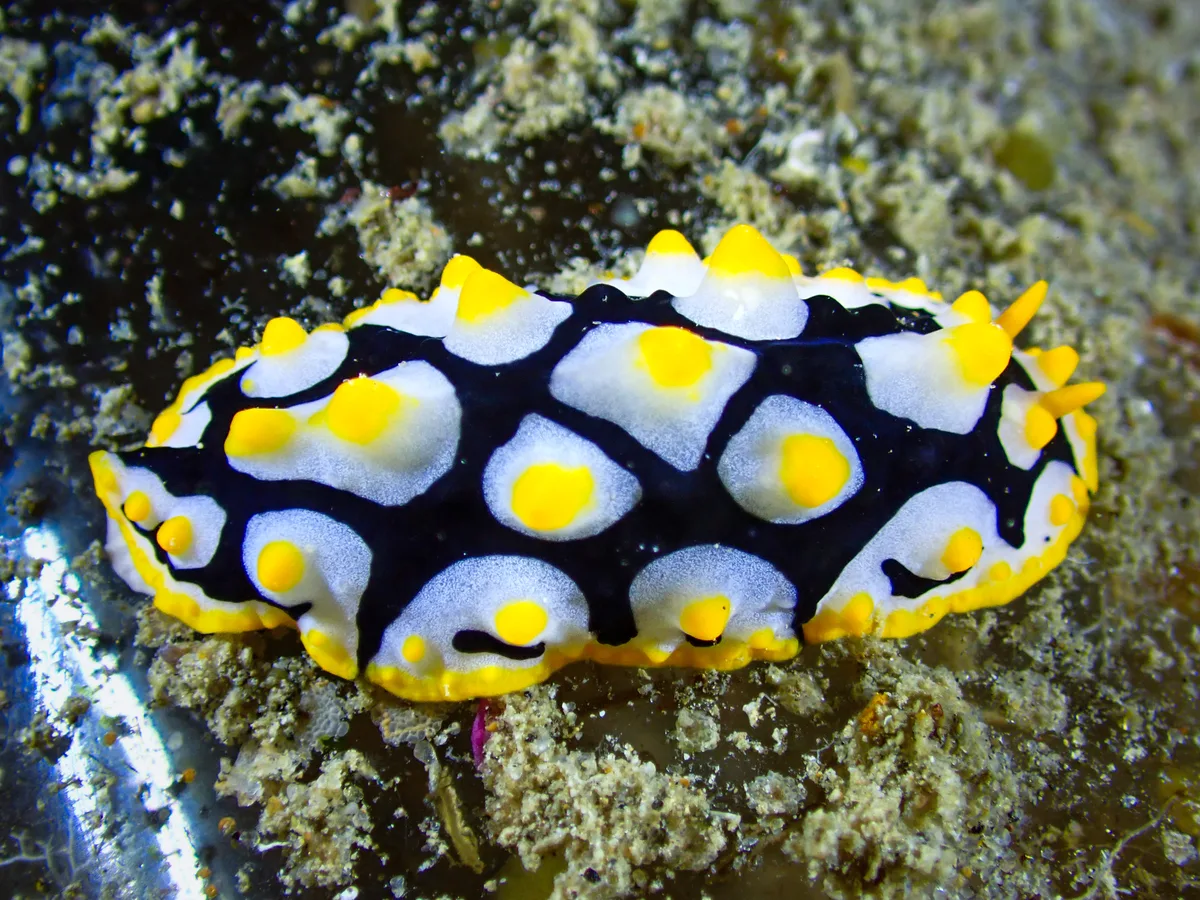
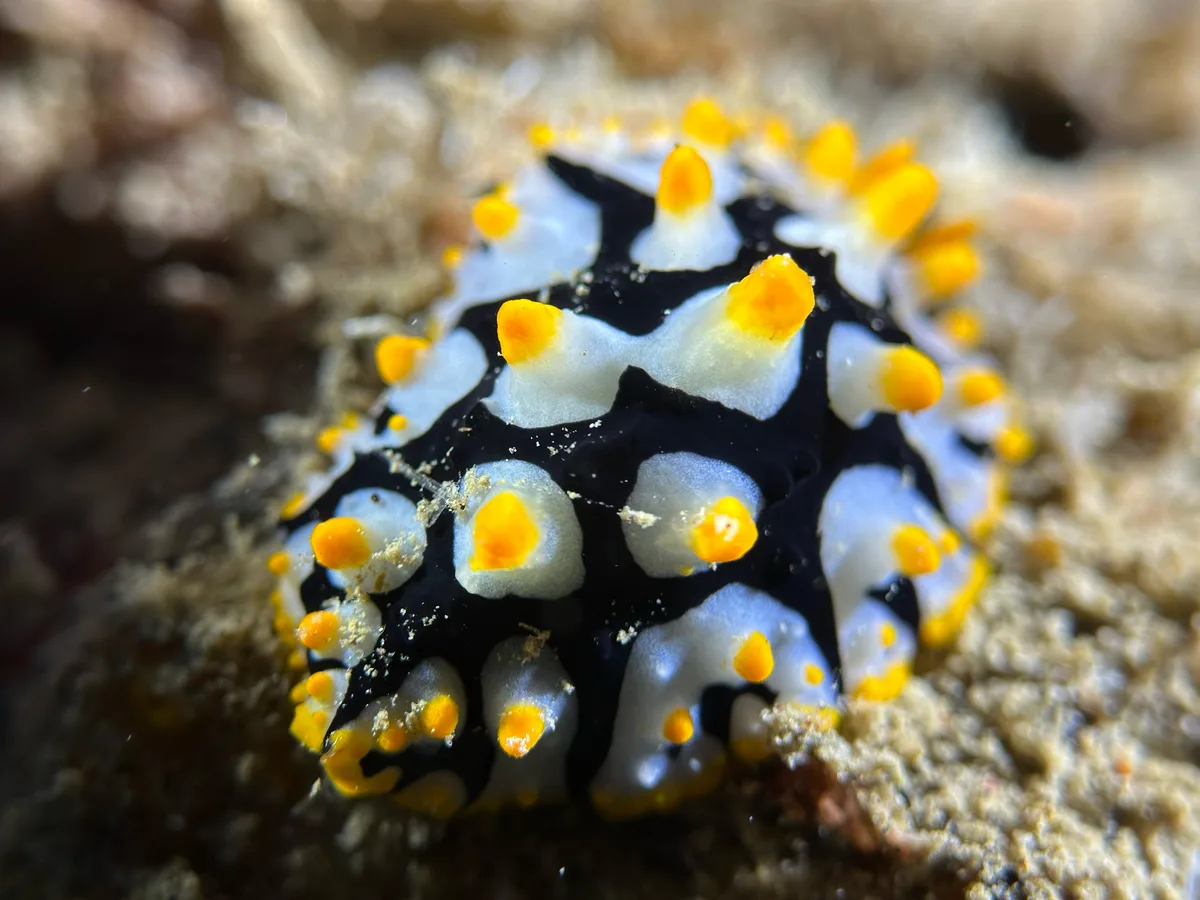
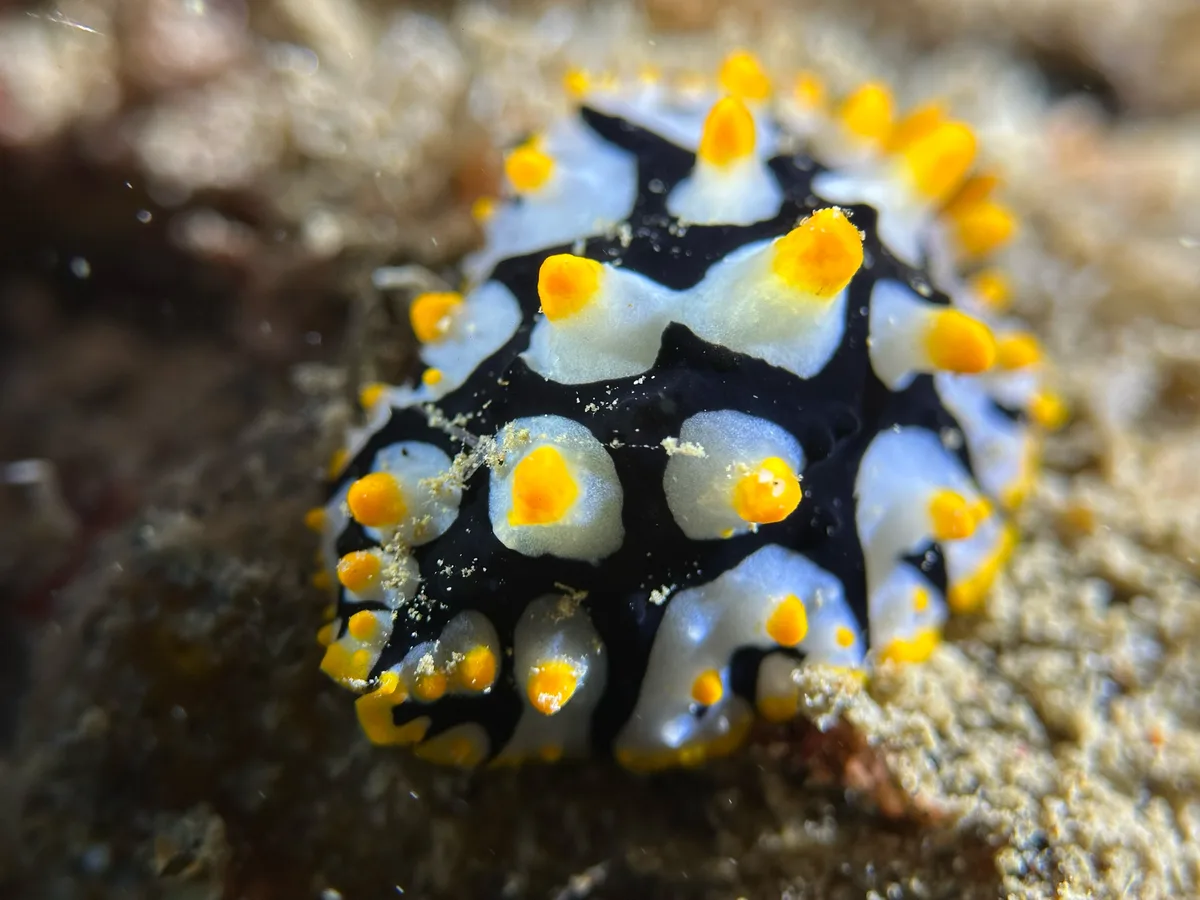
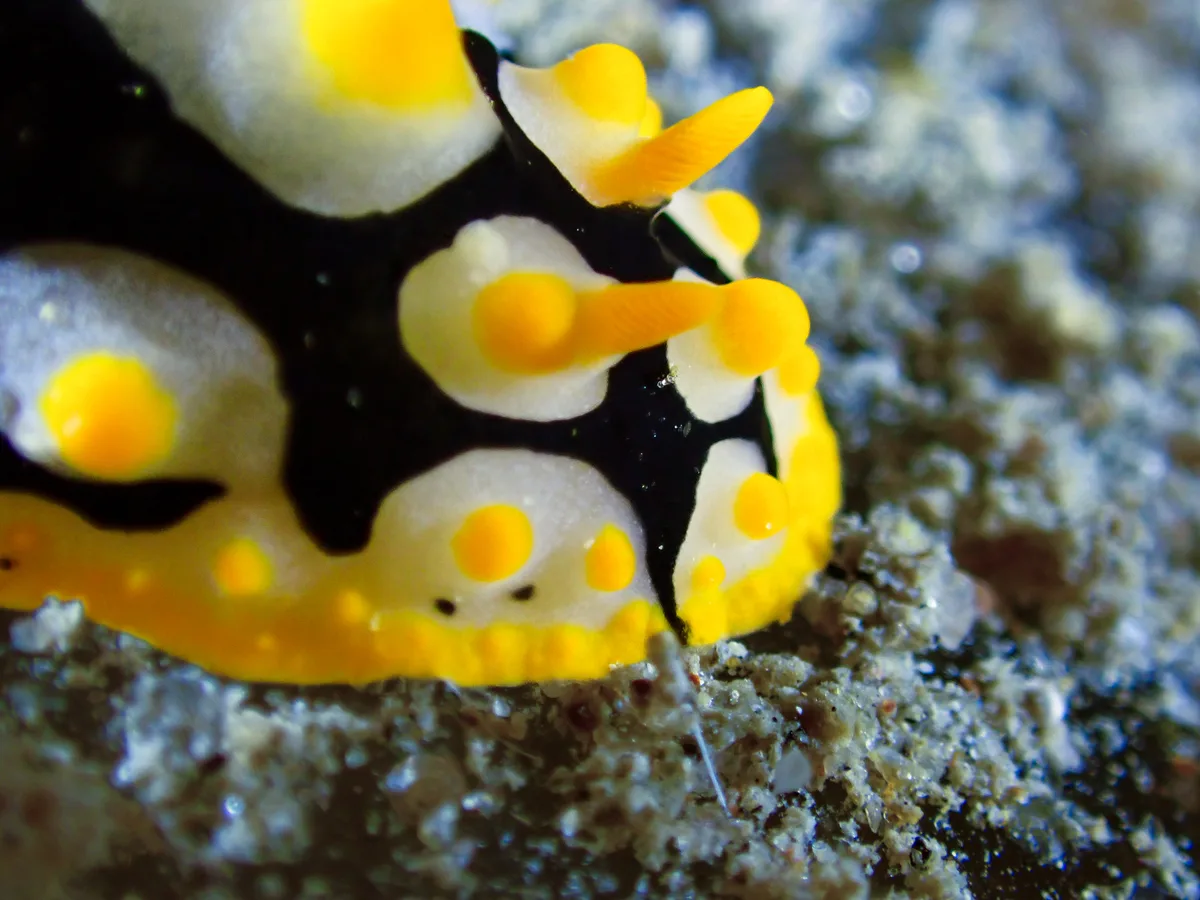
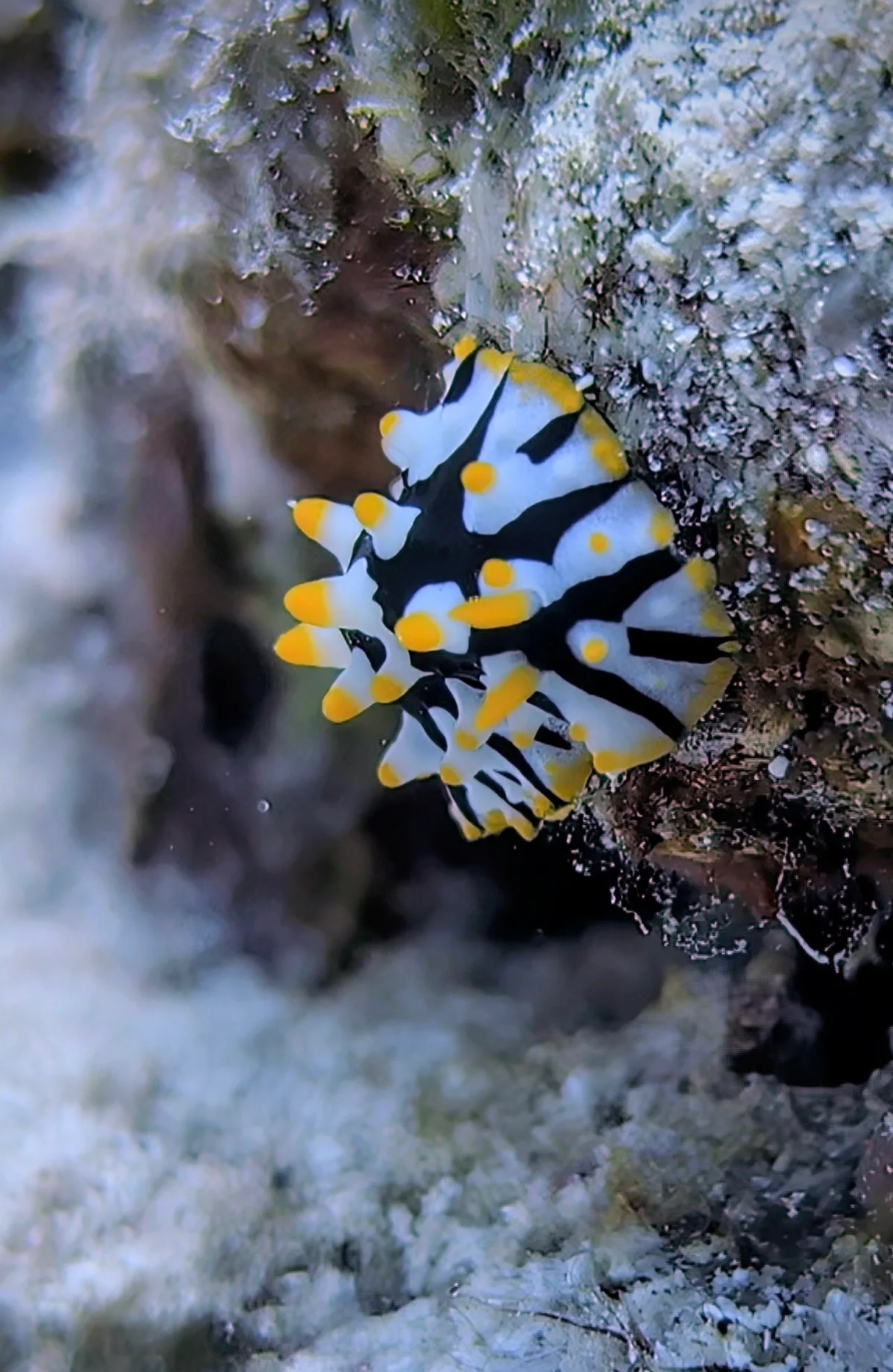
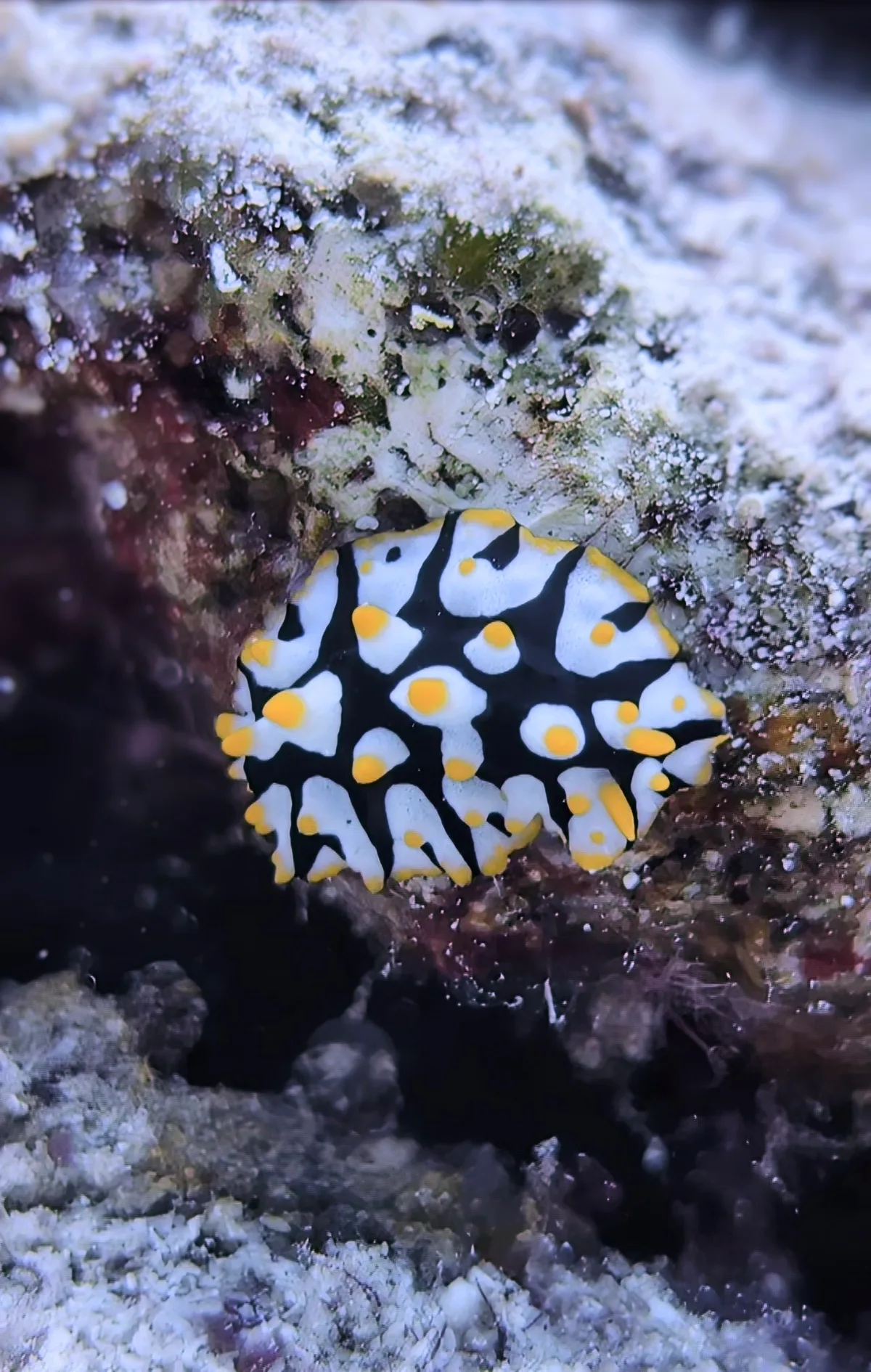
What you actually see is six centimeters (2.4 in) of creamy white to pale gray, trimmed entirely in orange. One unbroken orange line runs around the mantle margin, the pustules covering the back are capped in the same orange, and the rhinophores are orange as well. In a family where identification comes down to reading bumps, an animal with a continuous rim and orange caps on everything is one of the easier calls on the reef.
It grazes sponges, keeps their chemistry in its body the way the rest of the family does, and crawls in the open in daylight between about three and twenty-five meters. It does this slowly and without any attempt at cover, which is the behavior of something that has no reason to hurry.
The one it gets mixed up with is the netted wart slug, which lives in the same places and comes up on the same dives. Go to the caps on the pustules first. On this animal every cap is the same orange, over the whole back, edge to middle. On the other one only some of them are capped, mostly the raised ones toward the middle, and the rest stay plain white or gray. The margin will settle any doubt, because this species carries an unbroken orange line around the mantle and the other carries no marginal line at all, but the caps are what you see first. A rim is a thin line that a bad angle or a curled mantle can hide. The caps are spread over the entire animal.
- a continuous orange line around the mantle margin, only rarely broken into segments
- pustules on the back capped with orange, and orange rhinophores to match
- creamy white to pale gray body underneath all that orange
- no gill plume on the back, like the rest of the family