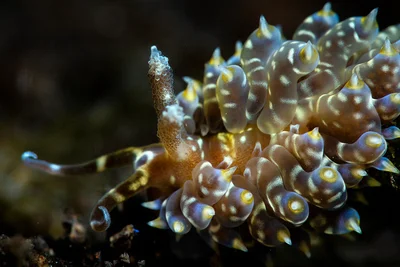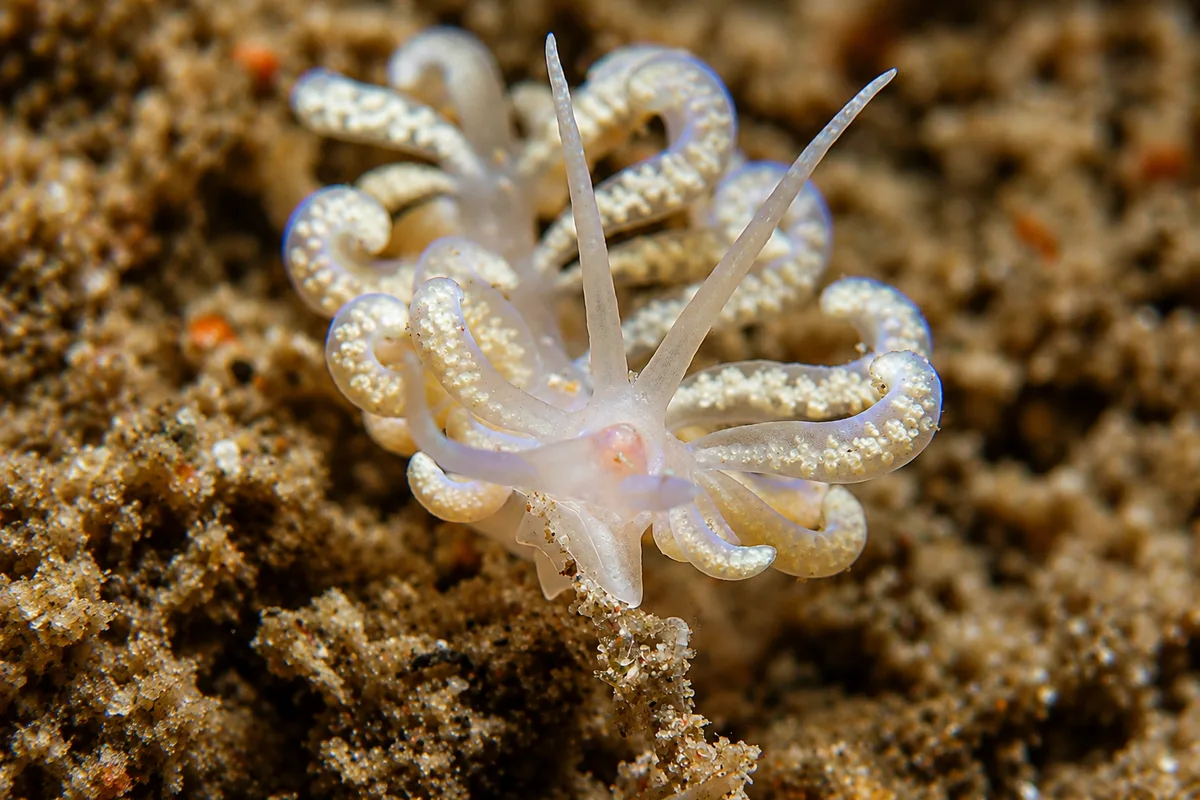
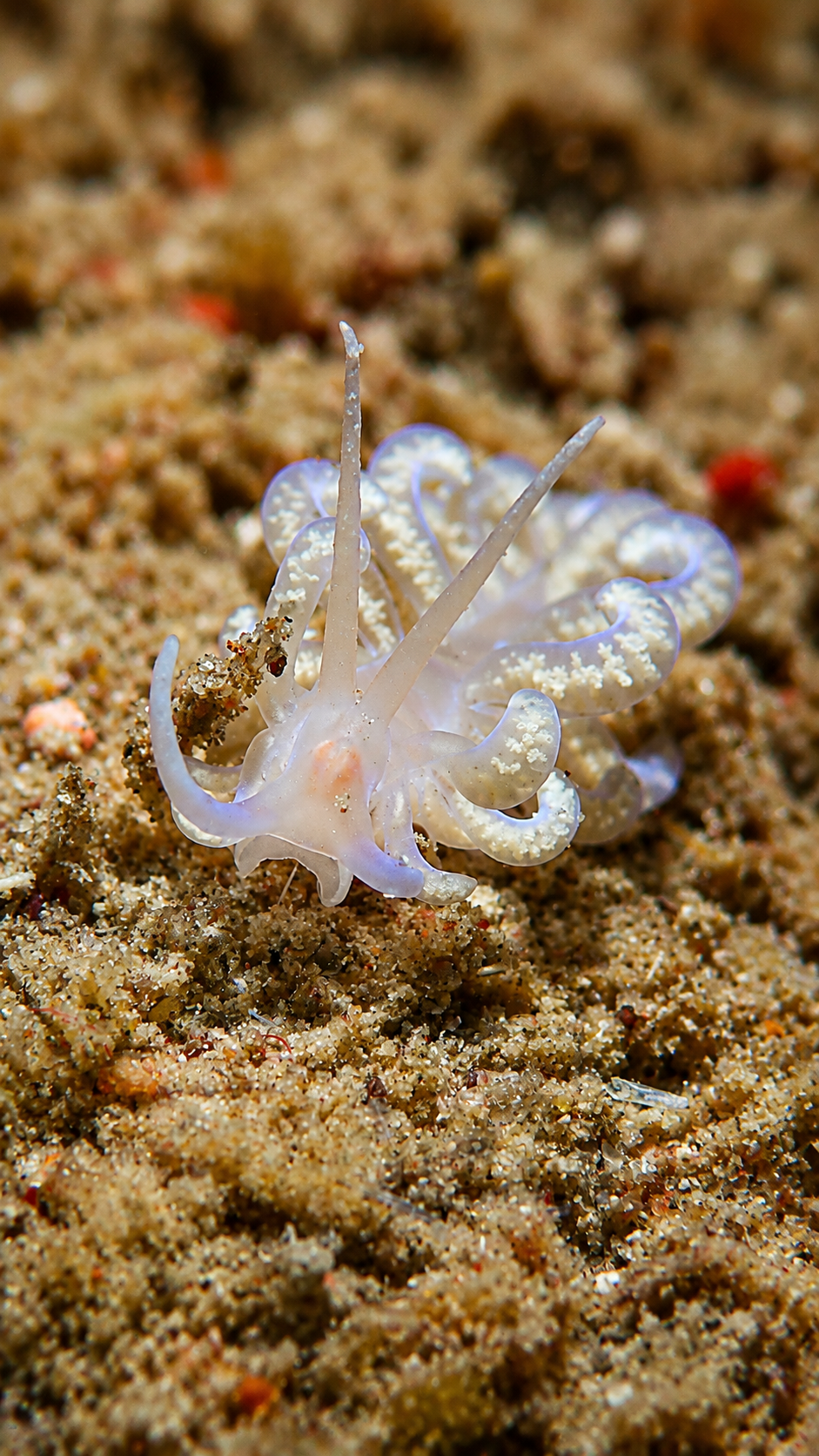
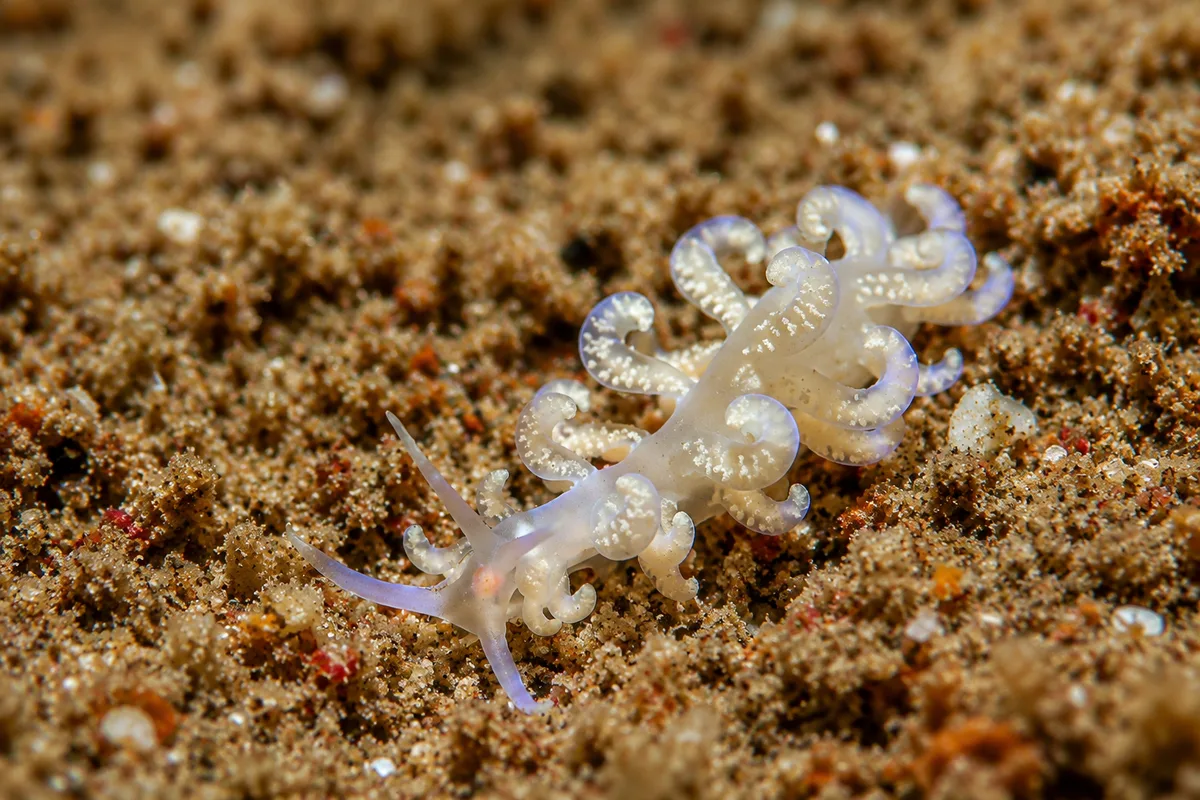
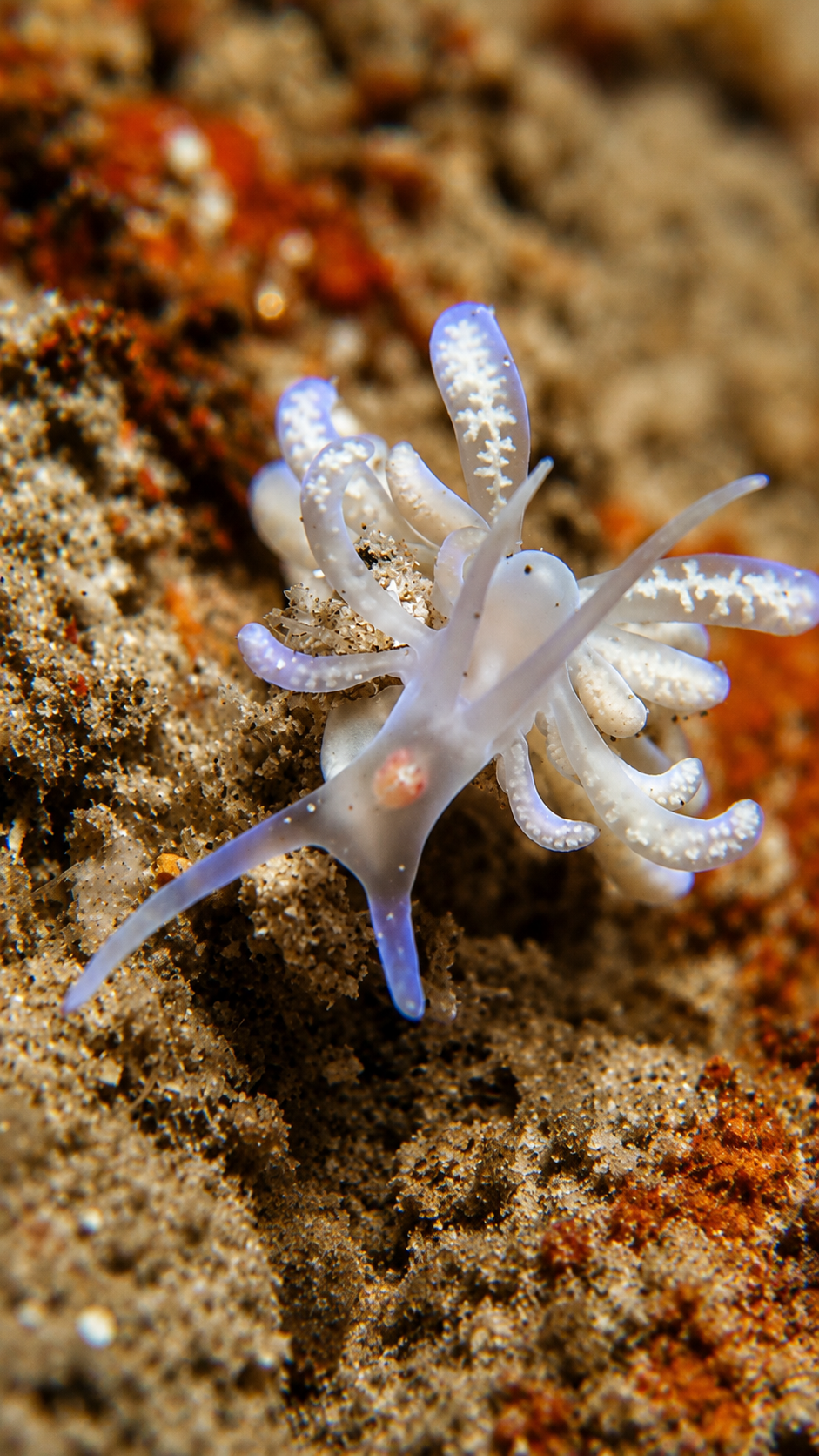
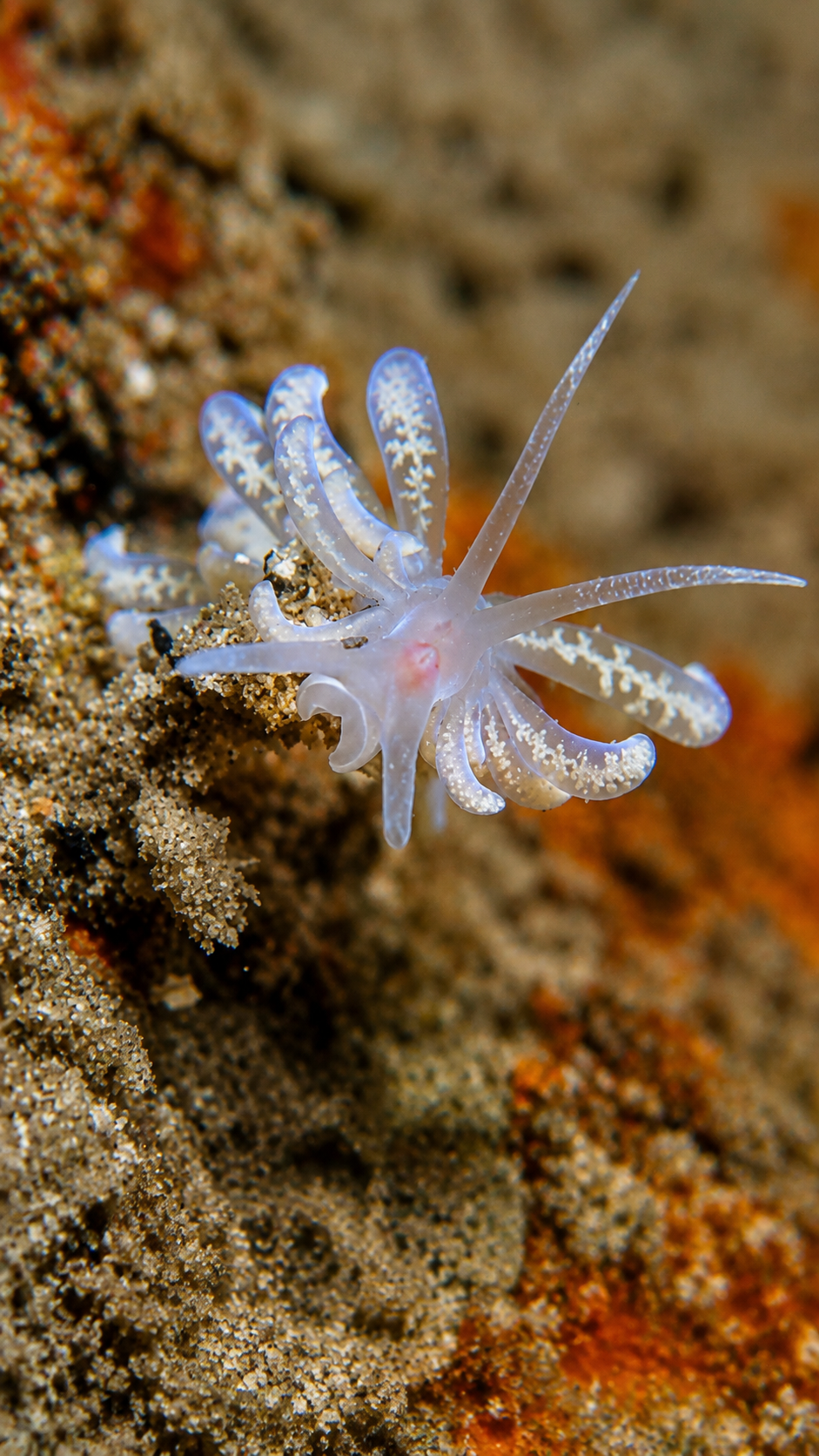
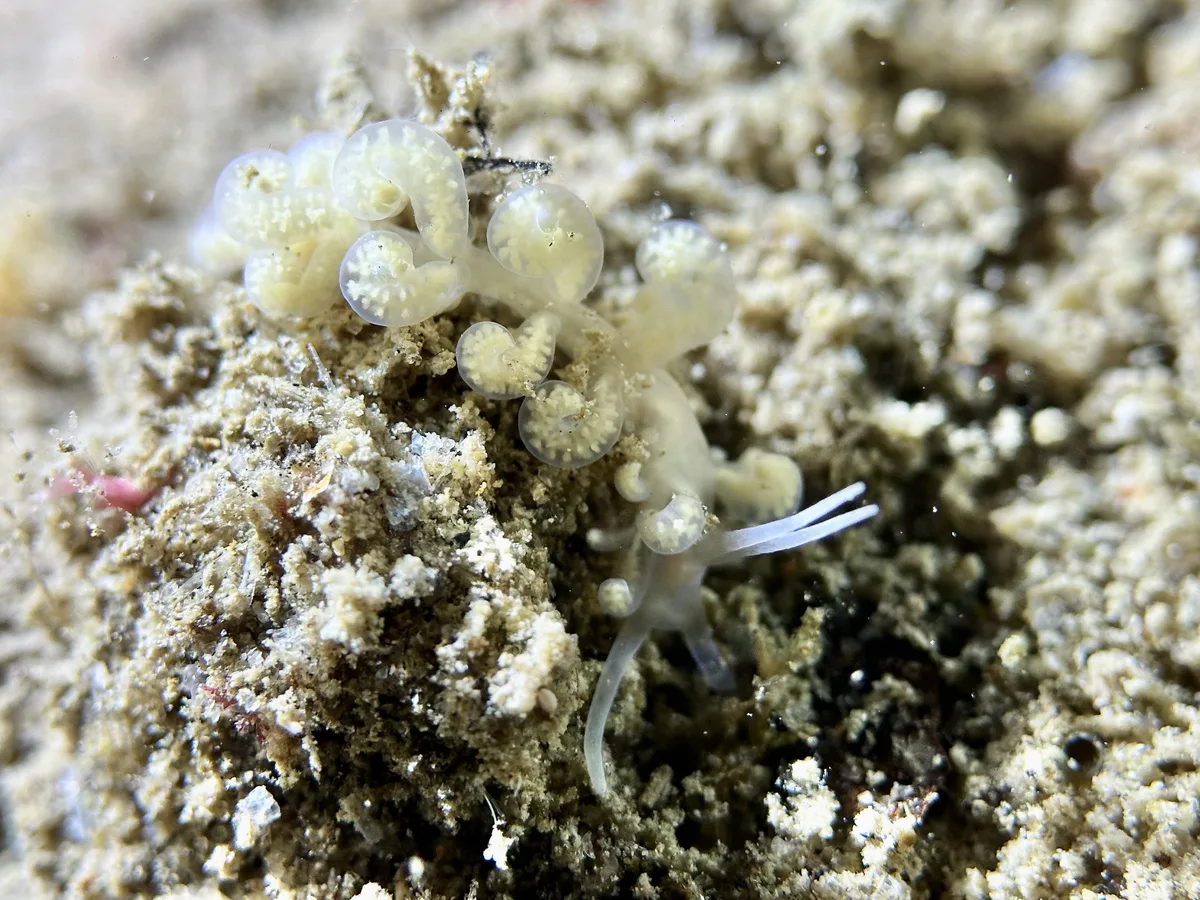
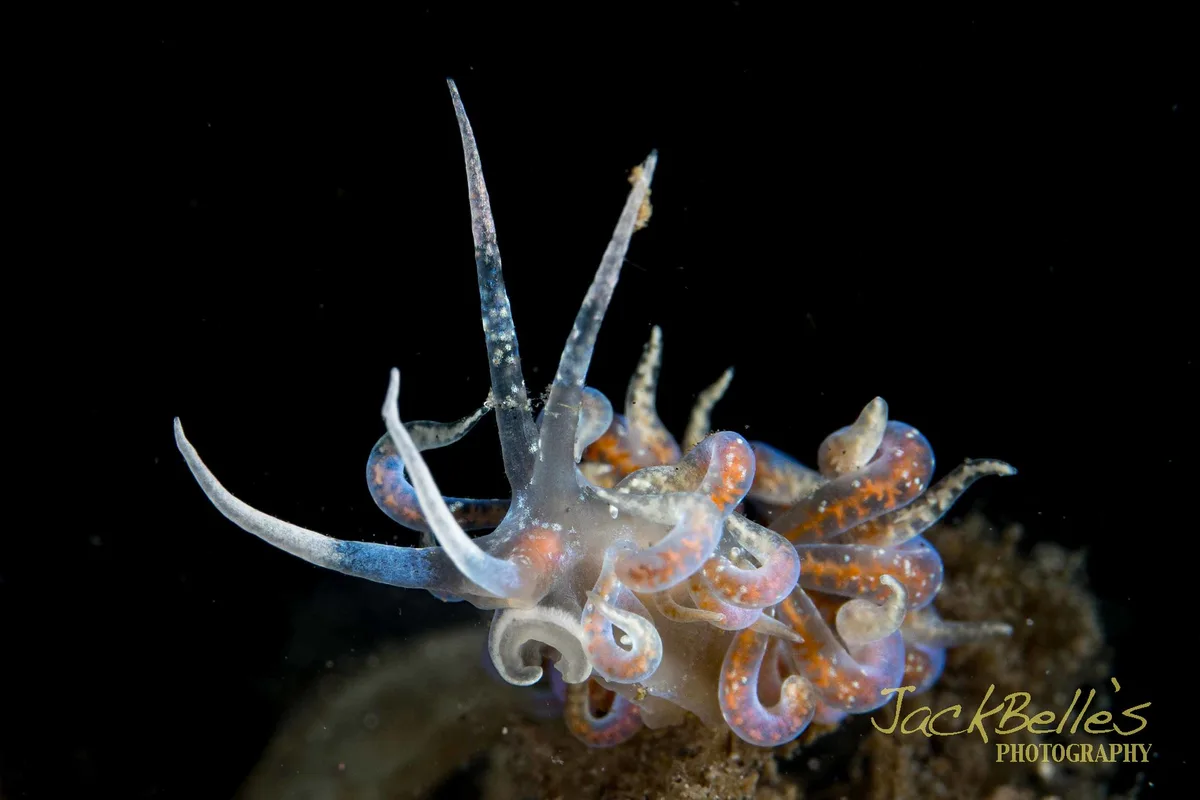
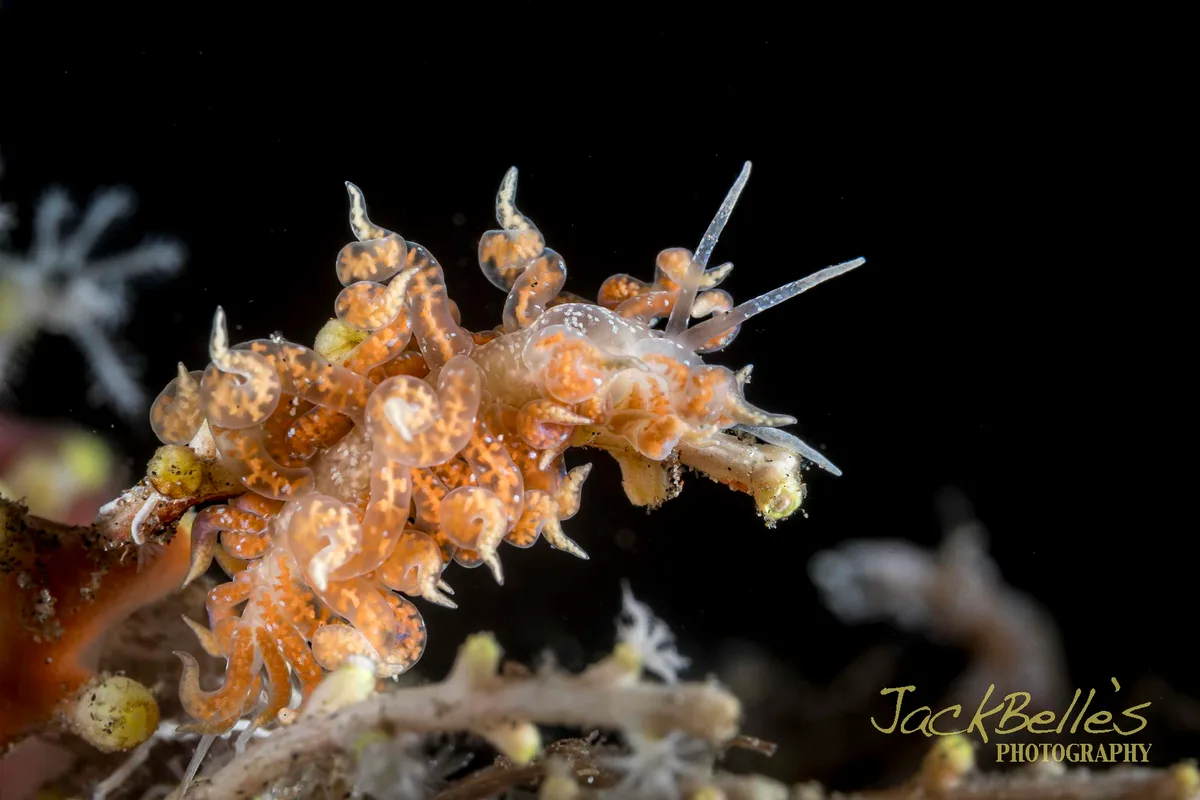
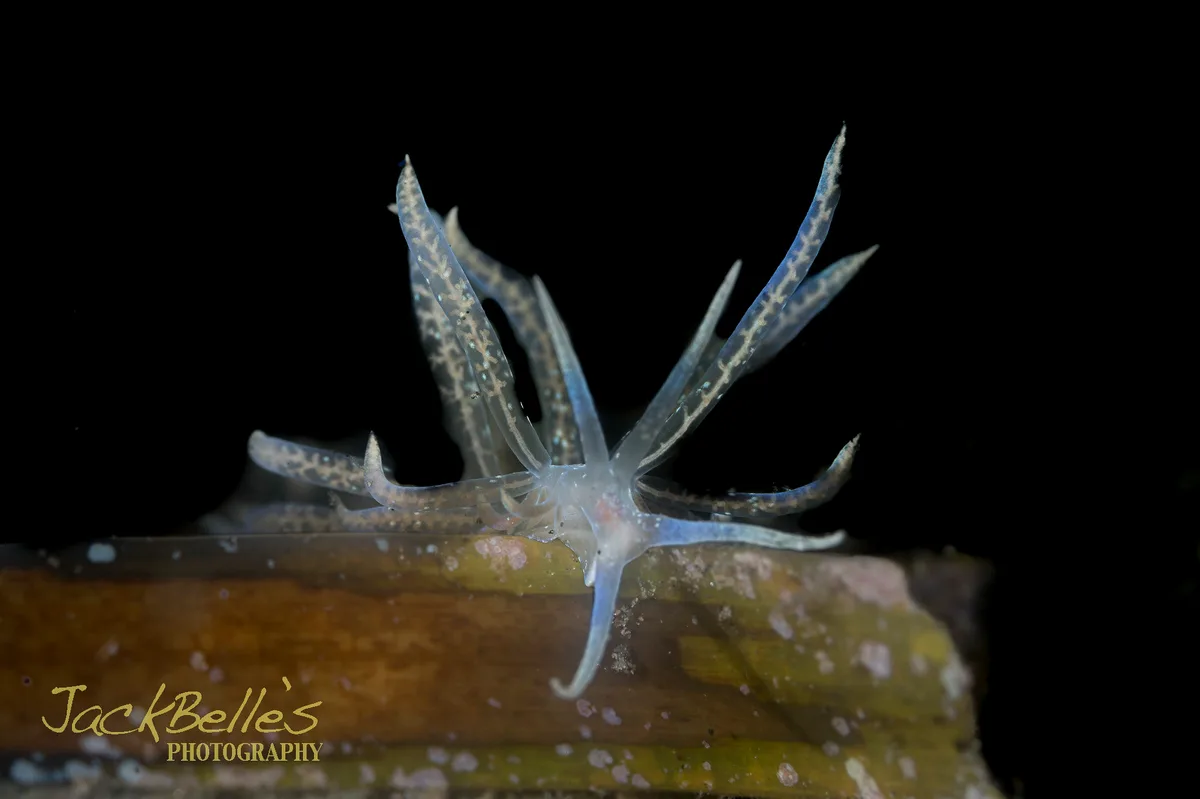
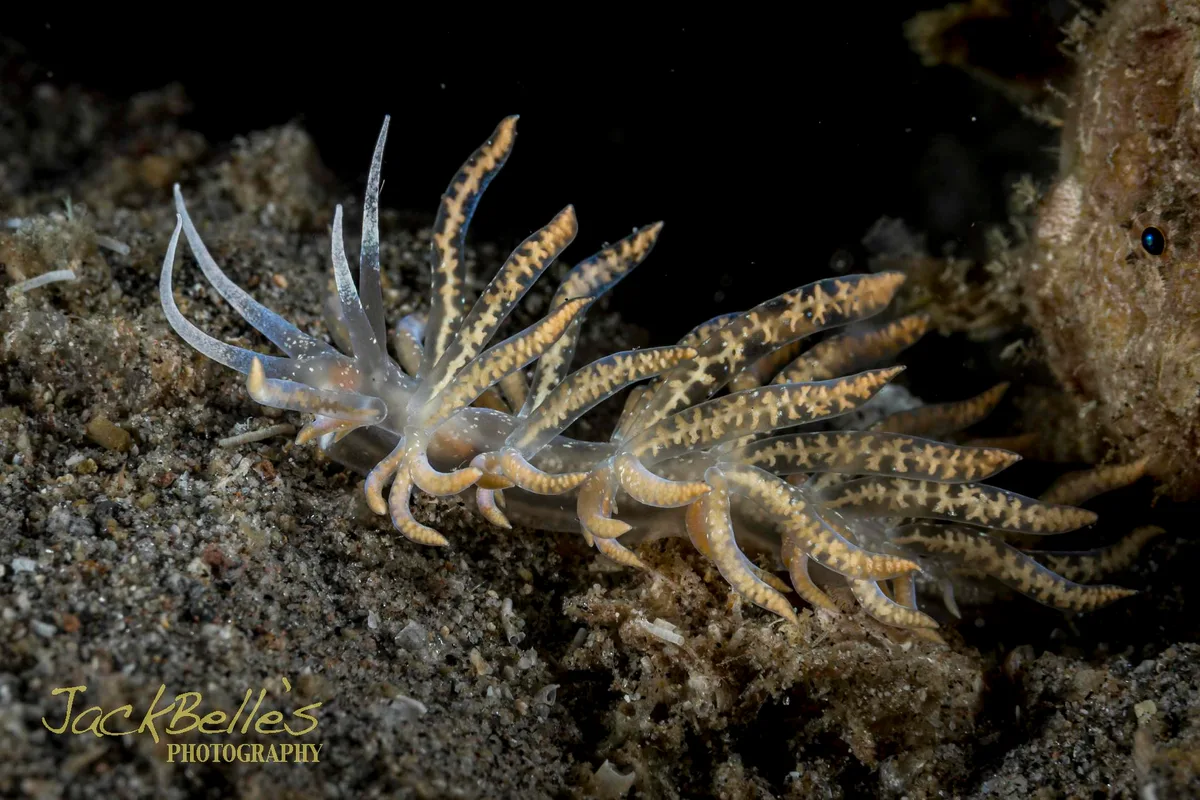
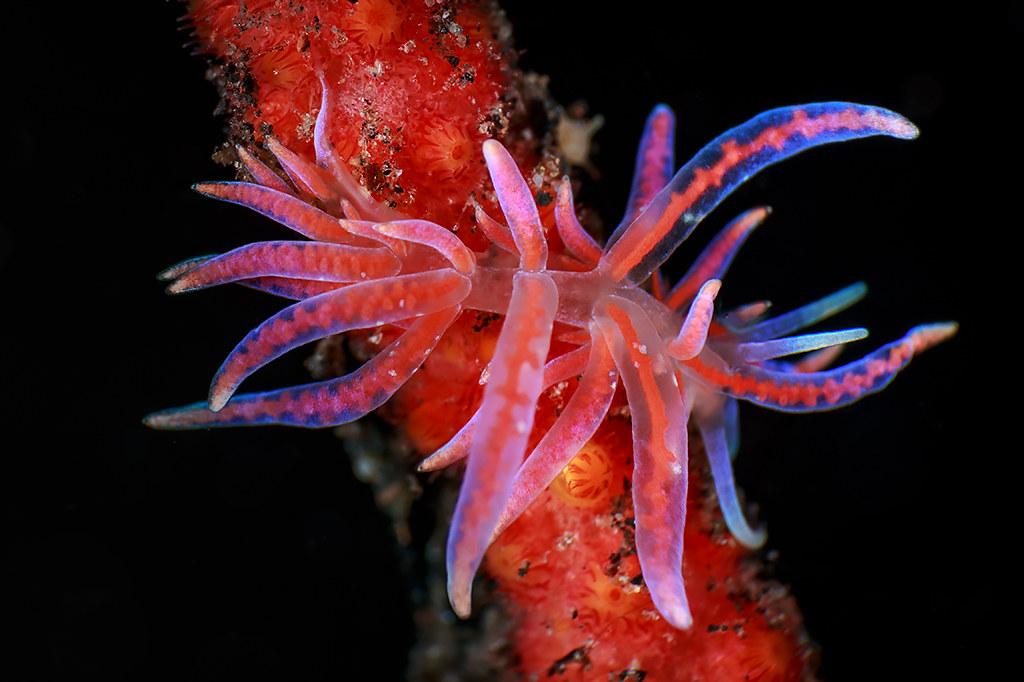
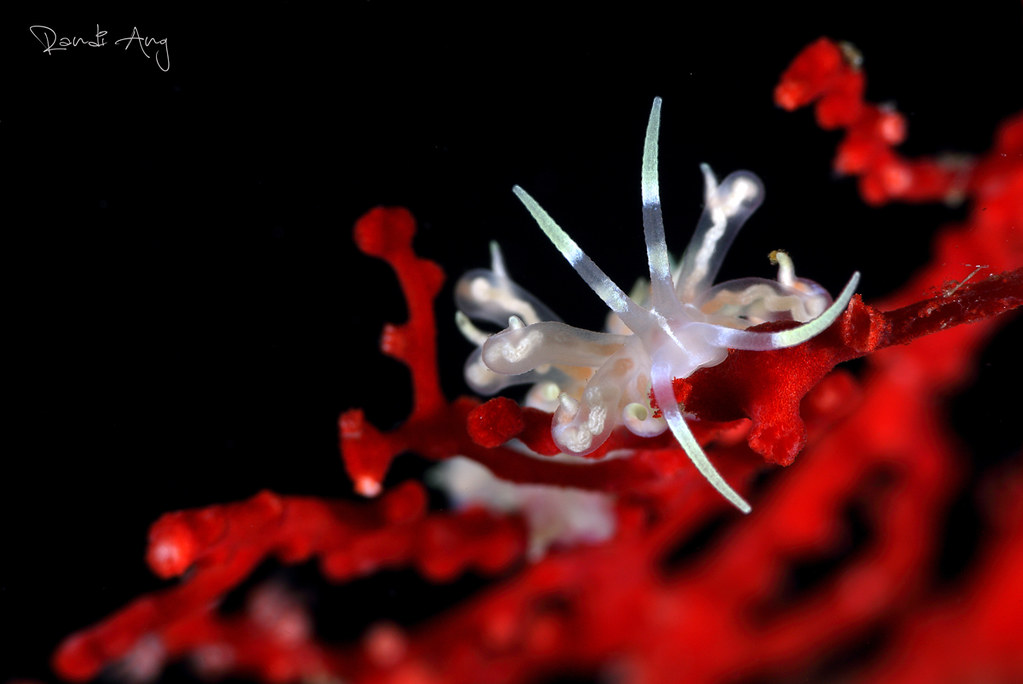
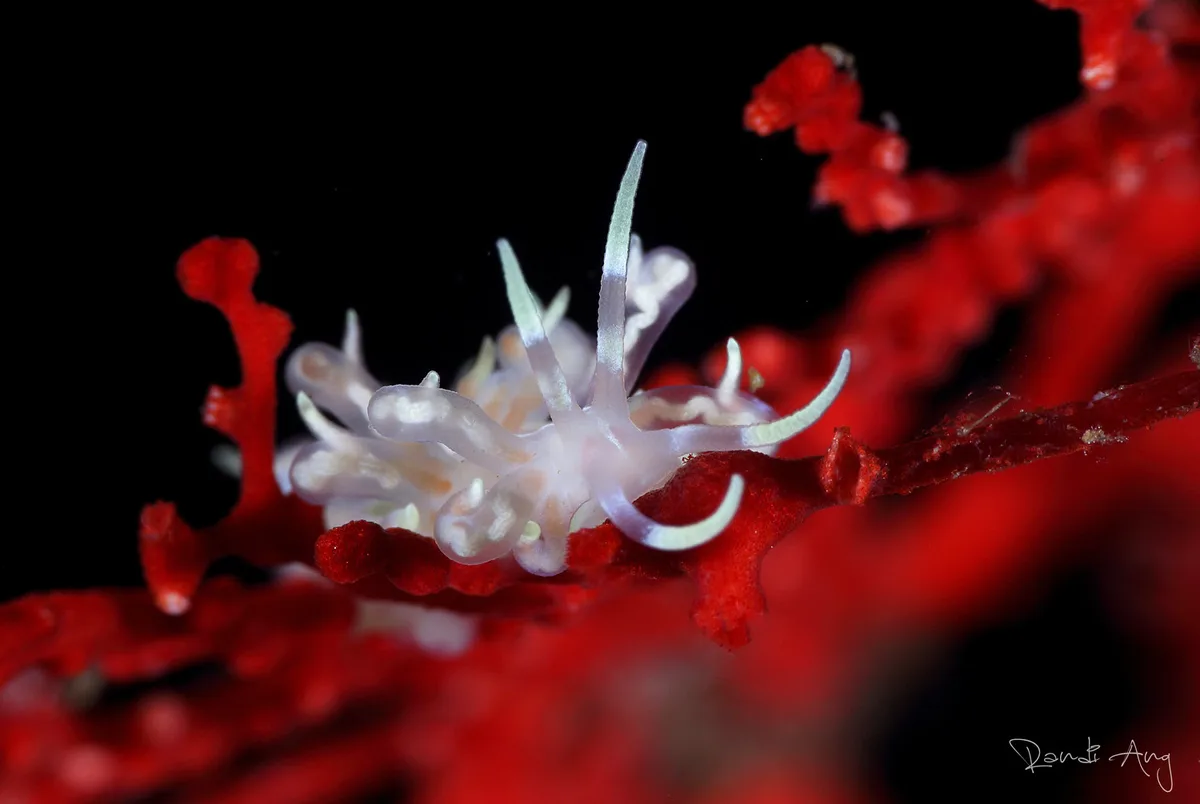
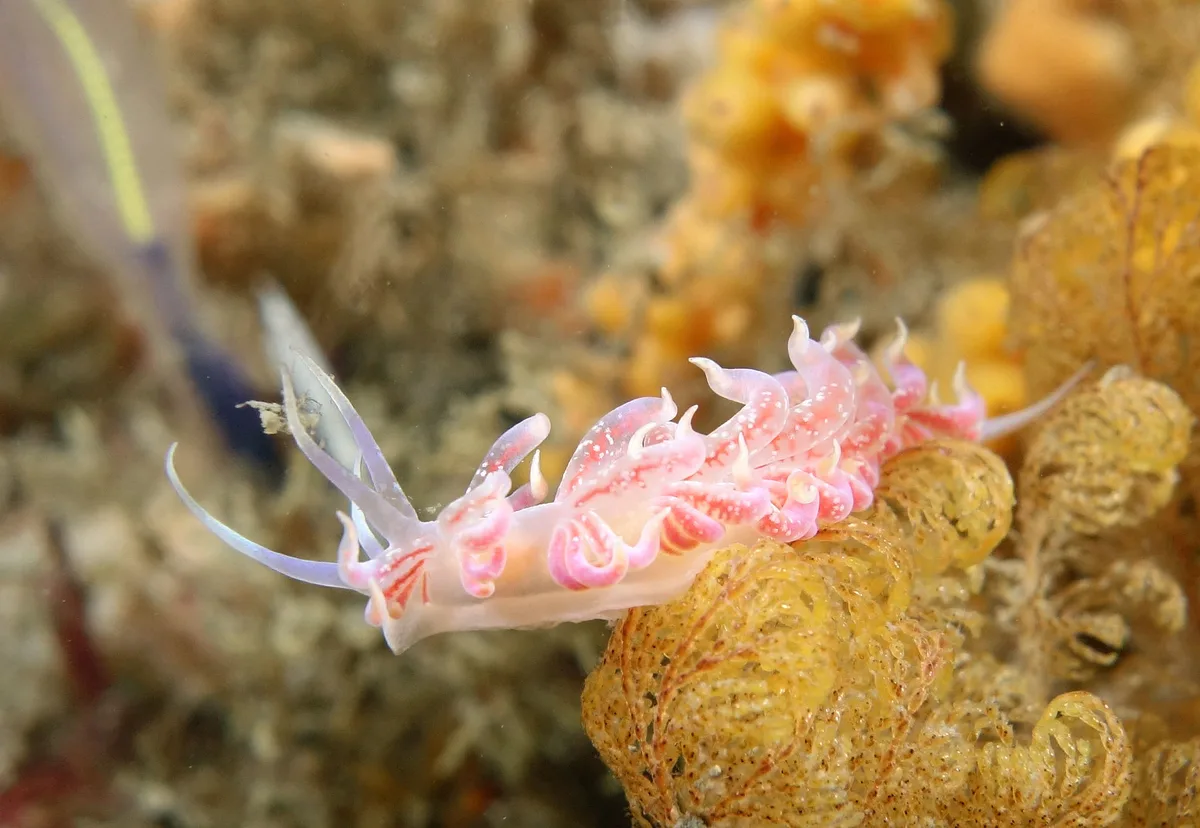
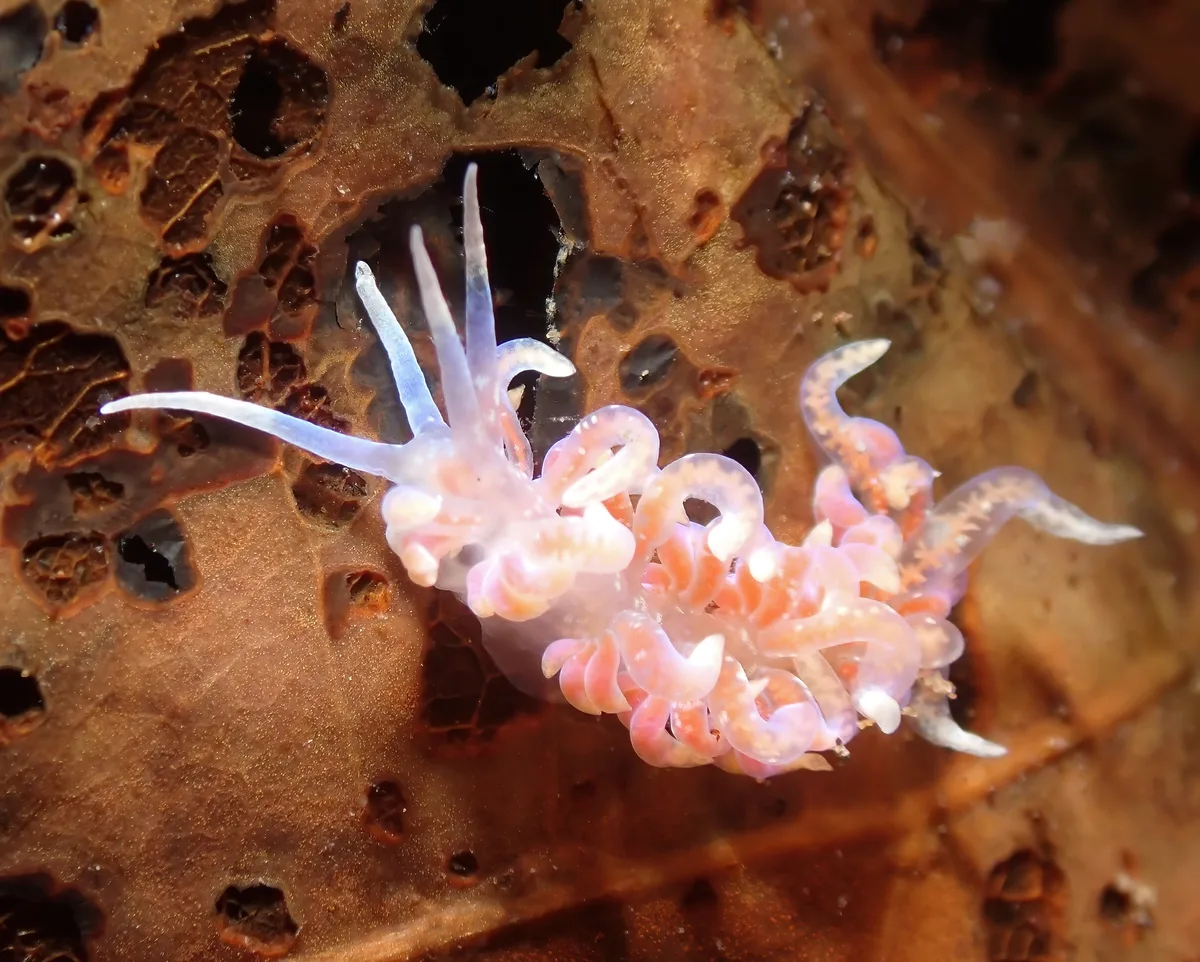
The Phyllodesmium poindimiei, affectionately known to some as the "Spun of Light" or "Branched Soft Coral Eater" is a captivating species of aeolid nudibranch, a type of sea slug belonging to the Gastropod family Myrrhinidae. These graceful creatures can reach up to 50 mm (about 2 inches) in length, showcasing a translucent white or bluish body, often adorned with delicate white spots across their back (notum) and cerata. Their cerata - the finger-like outgrowths on their upper side - are smooth, distinctively coiled or spiraled at the tips, and feature characteristic yellowish, branching digestive glands visible beneath the surface. Like many nudibranchs, P. poindimiei possesses two pairs of tentacles on its head, serving as an advanced olfactory system, each pair equipped with a small eye at its base to help navigate its underwater world.
Found in diverse tropical coastal regions, including vibrant coral reefs, estuaries, and coastal channels that offer ample shelter, the Spun of Light has a wide distribution across the Indo-Pacific, from the shores of 🇦🇺 Australia and Hawaii (🇺🇸 United States) all the way to the 🌊 Red Sea. These fascinating slugs are quite the connoisseurs when it comes to dining, primarily feeding on soft corals (Alcyonacea), such as species like Telesto and Carijoa. They use their very small radula, a ribbon-like structure with rows of chitinous teeth, to scrape off their meals. However, their selective palate means they can face challenges; sponges sometimes grow as epibionts or ectozoans on their preferred octocorallia prey, making it difficult for these picky eaters to access their food.
The cerata of P. poindimiei are more than just decorative; they are crucial for both respiration and digestion. However, unlike many other nudibranchs, and even some members of its own genus Phyllodesmium, this species has evolved a unique defensive strategy. Most nudibranchs that prey on cnidarians (like jellyfish or corals) incorporate the stinging cells, or nematocysts, from their prey into specialized sacs (cnidosacs) at the tips of their cerata for their own defense. P. poindimiei, however, lacks these cnidosacs and therefore cannot repurpose nematocysts. Similarly, it doesn't host symbiotic zooxanthellae (microscopic photosynthetic dinoflagellates) within its tissues, a common adaptation in some other nudibranchs. Instead, when threatened by predators like the swimming crab Thalamita integer, the Spun of Light can autotomize - or cast off - its cerata as a distraction, a remarkable form of physical defense. Scientists believe that non-symbiotic species like P. poindimiei may represent an earlier evolutionary lineage compared to those with such specialized developments.
With a relatively short lifespan of up to twelve months, these nudibranchs begin their lives as eggs, developing into free-swimming veliger larvae before maturing. Their brief life cycle and sensitivity to environmental changes, particularly oceanic temperature fluctuations and coral bleaching events, make them important study subjects in climate change research. Their presence in these sensitive biotopes provides valuable insights into the health of our tropical marine ecosystems.